
Acrocephalosyndactylia is a rare genetic condition that affects skull shape and hand and foot development. It often causes a tall, pointed head, widely spaced eyes, and fused or webbed fingers and toes. Features are present from birth and are lifelong, but the day-to-day impact varies. Children with acrocephalosyndactylia may need multiple surgeries and ongoing therapies to help breathing, vision, hearing, and function. The outlook depends on severity and care, and many people live long lives with timely treatment and support.
Overview
AcrocephalosyndactyliaSymptoms
Early signs of Acrocephalosyndactylia often appear at birth: a tall, misshapen skull from early suture fusion and fused fingers or toes. Many also have a flat midface, crowded teeth, and vision, hearing, breathing, or feeding difficulties. Developmental delays can occur.
Outlook and prognosis
Many living with acrocephalosyndactylia do well with coordinated, lifelong care. Early surgery for skull shape and fused fingers or toes, plus therapies and hearing or vision support, often improves function, comfort, and confidence. Needs vary by syndrome type and severity.
Causes and risk factors
Acrocephalosyndactylia usually stems from a change in the FGFR2 gene, present from conception. It follows an autosomal-dominant pattern, most cases being new mutations. Risk rises with an affected parent or older father; environmental or lifestyle factors aren’t known causes.
Genetic influences
Genetics play a central role in acrocephalosyndactylia; most cases are caused by inherited or new variants in FGFR genes. Variants can arise de novo or be passed in an autosomal dominant pattern. Genetic testing and counseling guide diagnosis, recurrence risk, and family planning.
Diagnosis
Doctors usually recognize acrocephalosyndactylia from clinical features at birth or during infancy. The diagnosis of acrocephalosyndactylia is confirmed with genetic tests and imaging, such as skull X‑rays or CT, and specialist exams. A genetics team guides testing and counseling.
Treatment and drugs
Treatment for acrocephalosyndactylia usually combines staged surgeries to reshape the skull and separate fused fingers or toes, plus therapy to support movement, feeding, speech, and learning. Care teams often include craniofacial, hand, and ENT surgeons. Regular follow‑up guides timing and additional procedures.
Symptoms
Living with acrocephalosyndactylia often means a mix of head shape differences and fingers or toes that are fused, which can affect vision, breathing, and hand use. Early features of acrocephalosyndactylia can include a tall or short-and-wide head shape, joined digits, and facial differences that may affect feeding or sleep. Features vary from person to person and can change over time. Care often aims to protect brain growth, support breathing and vision, and improve function for daily life.
In acrocephalosyndactylia, some skull seams close too early, creating a tall or short-and-wide head. This can crowd the growing brain and sometimes raise pressure that causes headaches or vomiting. Doctors monitor head growth closely.
Syndactyly joins two or more fingers or toes, sometimes creating a mitten-like hand. Gripping small objects, typing, or balance can be harder. Surgery often aims to separate digits and improve function.
A flatter midface and narrow nose bridge can change appearance and the way air flows. Teeth may crowd and the upper and lower jaws may not line up well. Over time, many people need orthodontic care.
In acrocephalosyndactylia, shallow eye sockets can make eyes look more prominent and feel dry or irritated. There is a higher risk of exposure-related redness or injury. Regular eye lubrication and checkups help protect vision.
How people usually first notice Acrocephalosyndactylia?
Many families first notice acrocephalosyndactylia at birth because a baby’s head looks unusually tall or pointed and some fingers or toes appear fused together, which doctors call syndactyly. Newborn exams or early check-ups often confirm these first signs of acrocephalosyndactylia with findings like a prematurely closed skull seam (craniosynostosis), wide-set or prominent eyes, and limited finger or toe separation. In some cases, clues appear even earlier on a prenatal ultrasound, where the head shape and hand or foot differences hint at how acrocephalosyndactylia is first noticed.
Types of Acrocephalosyndactylia
Acrocephalosyndactylia is a genetic/congenital condition with several well-recognized clinical variants that differ in skull shape changes and the presence and pattern of fused fingers or toes. Clinicians often describe them in these categories: the classic Apert, Crouzon, Pfeiffer, Saethre-Chotzen, and Jackson-Weiss syndromes, among a few others. These variants arise from different gene changes, which is why features can vary in severity and in which bones or soft tissues are affected. Knowing the types of acrocephalosyndactylia can help families understand what to expect and compare the variants of acrocephalosyndactylia when discussing care.
Apert syndrome
Early skull fusion with a tall, peaked head is common. Fingers and toes are often fused in a mitten-like pattern, usually on both hands and feet. Midface may be flatter, and airway or feeding issues can occur.
Crouzon syndrome
Early skull fusion affects head and face shape, often with prominent eyes and midface retrusion. Hands and feet are typically not fused. Hearing or dental issues may develop as the face grows.
Pfeiffer syndrome
Skull fusion occurs along with broad thumbs and big toes that may angle outward. Some have partial soft-tissue syndactyly of fingers or toes. Severity ranges from mild facial differences to more complex airway and neurologic concerns.
Saethre-Chotzen
Skull fusion is often milder and may involve the coronal sutures, with a low hairline and subtle facial asymmetry. Fingers may have mild webbing or shortness, and small differences in ear shape can appear. Development is often typical, but varies.
Jackson-Weiss
Skull fusion pairs with distinctive foot changes. Toes may be broad or deviated, with limited motion in some foot joints. Hands are usually less affected than feet.
Muenke syndrome
Often involves coronal suture fusion, sometimes on one side, leading to forehead asymmetry. Hands and feet are generally normal or only mildly affected. Hearing loss can occur.
Carpenter syndrome
Multiple skull sutures may fuse, sometimes with extra fingers or toes and webbing. Body shape differences and heart or other organ features may be present. Developmental needs can be broader due to the wider range of findings.
Greig cephalopolysyndactyly
Head shape differences tend to be milder, with widely spaced eyes. Extra digits and webbing of fingers or toes are common. Skull fusion is less central than in other types of acrocephalosyndactylia.
What genetics can tell you about symptoms
Some people with acrocephalosyndactylia have FGFR2 or FGFR3 changes that make skull bones fuse too early, leading to a tall, peaked head, crowded teeth, and facial differences. These same gene changes can also cause webbed or fused fingers and toes, limited motion, and pressure symptoms from tight skull spaces.
Causes and risk factors
Most genetic causes of Acrocephalosyndactylia involve a change in the FGFR2 gene.
Some risks are written in our DNA, passed down through families.
It can be inherited in an autosomal dominant way, and a parent with the condition has a 50% chance to pass it to each child.
Many cases happen as a new gene change with no family history.
Advanced paternal age raises the chance of a new FGFR2 change, and no specific lifestyle or exposure has been proven to cause Acrocephalosyndactylia.
Environmental and biological risk factors
Understanding what can raise the chance of Acrocephalosyndactylia can help with planning and prenatal care. Doctors often group risks into internal (biological) and external (environmental). Below are environmental and biological risk factors for Acrocephalosyndactylia seen in research, keeping in mind that absolute risk in any one pregnancy is usually low.
A higher father age at conception is linked to a small increase in risk. As sperm cells age, random changes during cell division become more likely, which can raise the chance of Acrocephalosyndactylia. Most pregnancies with older fathers still result in healthy babies.
Older maternal age has been tied to a modest rise in risk in some studies. Findings vary, and the overall chance remains low for any one pregnancy.
Overactive thyroid states in early pregnancy have been associated with a higher chance of this condition. The effect appears related to very high thyroid hormone levels very early in development.
Strong acne medicines that contain vitamin A derivatives, if taken in early pregnancy, are strongly linked to serious birth differences and may increase the chance of Acrocephalosyndactylia. Risk depends on dose and timing, with the earliest weeks carrying the greatest impact.
Genetic risk factors
Most cases trace back to changes in a small set of genes that control bone growth and limb development. Some risk factors are inherited through our genes. Others arise as new, one‑time changes that weren’t present in either parent. When early symptoms of Acrocephalosyndactylia are recognized in a newborn, pinpointing the gene can clarify prognosis and recurrence risk.

FGFR2 gene changes: Changes in a gene that helps guide bone growth commonly cause the skull to fuse too early and fingers or toes to join. This is a leading genetic cause of Acrocephalosyndactylia. Many cases happen as a brand-new change with no family history.
FGFR1 gene changes: Less common changes in a related growth gene can produce a similar pattern of skull and limb differences. These can be inherited in a dominant way or arise for the first time in a child. Severity can range from mild to more noticeable.
TWIST1 gene changes: Alterations in this head-and-limb patterning gene can lead to early skull fusion with webbed or shortened fingers. These are usually dominant with wide differences in how features show up. Genetic testing often includes TWIST1 when both head shape and hand differences are present.
RAB23 or MEGF8: Changes in these genes cause recessive forms within the Acrocephalosyndactylia spectrum, often with extra or joined digits. Both parents typically carry one silent copy and have no symptoms. Children are affected when they inherit both changed copies.
Family history present: Having a parent with the condition raises the chance a child will inherit Acrocephalosyndactylia. With dominant genes, each pregnancy has about a 1 in 2 chance to be affected. Features can be milder or more severe than in the parent.
New de novo change: Many children are the first in their family because the gene change happened at conception. Parents’ blood tests can be negative even when the child is affected. If early symptoms of Acrocephalosyndactylia appear at birth, confirming a de novo change can help guide care.
Paternal-age effect: Conception with an older father increases the chance of a brand-new change in certain genes linked to Acrocephalosyndactylia. This affects the chance of a first case but not how the condition is passed on afterward. Even then, the absolute risk per pregnancy remains low.
Parental mosaicism: A parent may carry the change in only some egg or sperm cells and have no features. This can slightly raise the chance of another affected child after one case in the family. Special testing may be discussed if recurrence risk is uncertain.
Recessive carrier couples: When both partners carry the same recessive gene change, they have a higher chance of a child with the condition. Each pregnancy has a 1 in 4 chance in that situation. Carrier screening can help identify such pairs in families with recessive forms.
Lifestyle risk factors
Acrocephalosyndactylia is a genetic condition; lifestyle habits do not cause it, but they can influence symptoms, day-to-day function, and complications. Understanding how lifestyle affects Acrocephalosyndactylia can help you support breathing, sleep, oral health, and surgical recovery. The elements below focus on practical habits that may modify symptom burden and long-term outcomes.
Maintaining a healthy weight can lessen obstructive sleep apnea burden and lower strain that can contribute to headaches or intracranial pressure symptoms. Adequate protein, iron, and vitamin D support wound healing and growth around craniofacial and hand surgeries.
Upright positioning, slower pacing, and appropriate textures can reduce reflux and aspiration risk with midface or palate differences. Consistent mealtime routines help maintain growth before and after surgical procedures.
Low-impact aerobic exercise can improve breathing efficiency and stamina despite airway narrowing from midface hypoplasia. Avoiding high-contact or head-impact sports may protect the skull after cranial surgery or shunt placement.
A regular sleep schedule and side-sleeping can reduce obstructive sleep apnea severity and daytime fatigue. Avoiding alcohol and sedatives near bedtime may help maintain airway tone.
Risk prevention
Acrocephalosyndactylia is a genetic condition present from birth, so you can’t prevent the condition itself. Prevention focuses on lowering the risk of complications and catching treatable issues early. Some prevention is universal, others are tailored to people with specific risks. Planning ahead and staying connected with a craniofacial team can make day-to-day life safer and more comfortable.
A genetics visit can explain inheritance and your family’s chances in future pregnancies. Options may include prenatal testing or IVF with preimplantation genetic testing to reduce the chance of passing on the condition.
Noticing early symptoms of acrocephalosyndactylia—like an unusual head shape or fused fingers—toes can prompt quick referral to a craniofacial team. Early assessment helps prevent problems with brain pressure, breathing, and feeding.
Ongoing visits with a craniofacial team, ENT, eye, and dental specialists can catch issues before they cause harm. Scheduled monitoring helps prevent complications like hearing loss, vision injury, and tooth crowding.
Staying up to date on routine vaccines, including flu and pneumococcal shots, lowers the risk of serious ear, sinus, and chest infections. Handwashing and prompt care for colds can reduce breathing setbacks.

Transmission
Acrocephalosyndactylia is a genetic, present‑from‑birth condition, not an infection, so it cannot be caught or spread through contact, coughing, sex, or breastfeeding. Most types follow an autosomal dominant pattern: if a parent lives with acrocephalosyndactylia, each child has a 50% chance of inheriting it. Many families first learn about the condition when a baby is born with it due to a new gene change (a “de novo” mutation), so there may be no prior family history. Some subtypes show a paternal‑age effect, with new mutations happening more often when the father is older. A genetics professional can explain how acrocephalosyndactylia is inherited and discuss the genetic transmission of acrocephalosyndactylia in future pregnancies.
When to test your genes
Consider genetic testing if you or a close relative has features of acrocephalosyndactyly (early skull fusion, hand or foot syndactyly) or if a clinician suspects a related syndrome like Apert or Crouzon. Test before pregnancy, during pregnancy, or early in childhood to guide surveillance, surgeries, and therapies. A genetics team can choose the right panel and explain results for your family.
Diagnosis
For many families, the first clues are an unusual head shape in a newborn and fingers or toes that seem joined. Doctors usually begin with a careful exam and a few targeted tests to understand what’s causing these findings. In acrocephalosyndactylia, a combination of clinical features, imaging, and genetic testing typically provides clear answers. This approach not only supports the diagnosis of Acrocephalosyndactylia but also helps plan early, coordinated care.
The care team looks for signs of early skull fusion, a tall or peaked head shape, and webbed or fused fingers and toes. They also note facial features, breathing sounds, and how the jaw and palate are formed. These patterns often point strongly to acrocephalosyndactylia.
A detailed family and pregnancy history can help clarify whether the condition is new in the child or may run in the family. This context guides which tests are most useful. It also helps with counseling about future pregnancies.
Low-dose 3D CT or MRI maps which skull joints have fused and how the brain and face are affected. These imaging findings help confirm syndromic craniosynostosis and guide surgical planning. They also help distinguish it from single-suture craniosynostosis.
Simple X-rays document which fingers or toes are joined and whether bones share a single opening. The pattern of fusion supports the clinical impression of acrocephalosyndactylia. It can also help tell it apart from related conditions.
Stages of Acrocephalosyndactylia
Acrocephalosyndactylia does not have defined progression stages. It’s a congenital pattern present from birth, so changes over time usually reflect growth and the timing of treatments rather than a step-by-step decline. Early and accurate diagnosis helps you plan ahead with confidence. Doctors typically diagnose it based on physical features, skull imaging (such as a CT scan), and sometimes genetic testing to clarify the specific type; if you’re wondering about early symptoms of acrocephalosyndactylia, these are often noticed in infancy by the care team during routine checks.
Outlook and prognosis
Looking ahead can feel daunting, but most children with Acrocephalosyndactylia grow and learn with the help of a coordinated care team. The outlook is not the same for everyone, but many do well when skull and hand differences are addressed early. Early care can make a real difference—timely skull surgery to relieve pressure, hand surgery to improve function, and support for breathing, feeding, hearing, and vision all help protect development and comfort.
Prognosis refers to how a condition tends to change or stabilize over time. For Acrocephalosyndactylia, outcomes vary based on which bones are fused, whether there is raised pressure on the brain, and whether heart, airway, or other organ differences are present. Some children have typical intelligence and attend mainstream school; others may need therapies and educational supports. Serious complications—like untreated skull pressure, sleep apnea, or repeated ear infections—can affect learning and behavior, so regular monitoring is important. In medical terms, the long-term outlook is often shaped by both genetics and lifestyle, including access to craniofacial surgery, therapy, and sleep care.
Many people ask, “What does this mean for my future?”, and most families can expect multiple procedures in childhood with fewer surgeries in the teen years. Life span is usually near typical when airway and brain pressure issues are recognized and treated, though risks are higher if severe breathing problems, heart defects, or uncontrolled intracranial pressure are present. Early symptoms of Acrocephalosyndactylia that warrant prompt attention include bulging eyes, worsening headaches, vomiting, pauses in breathing during sleep, or a rapid drop-off in school performance. Talk with your doctor about what your personal outlook might look like, including how your child’s specific gene change and clinical features guide the care plan.
Long-term effects
Acrocephalosyndactylia can shape daily life from infancy through adulthood, affecting skull growth, hand use, breathing, hearing, and vision. Long-term effects vary widely, and what one person experiences may not match another. Early symptoms of Acrocephalosyndactylia often appear in the first months of life, and some features shift with growth, especially in childhood and the teen years.
Fusion of skull seams can restrict head growth over time. This may raise pressure inside the skull, leading to headaches or vision strain.
Some children develop typically, while others have learning difficulties or attention challenges. Speech and language delays can occur in Acrocephalosyndactylia.
Shallow eye sockets and eye misalignment can cause light sensitivity, double vision, or eye irritation. Nearsightedness or farsightedness may persist into adulthood.
Frequent middle-ear infections in childhood can lead to temporary or long-term hearing loss. This may affect speech clarity and classroom learning.
How is it to live with Acrocephalosyndactylia?
Life with acrocephalosyndactylia often means navigating differences in head shape, hand and foot structure, and sometimes vision, breathing, hearing, or dental issues, with surgeries and therapies spaced through childhood and follow-up into adulthood. Daily life can include extra time for medical visits, adaptive tools for fine motor tasks, and support in school to address learning or speech needs, while many build strong routines that make care feel more manageable. Family members and caregivers become key partners, coordinating appointments, advocating in educational settings, and encouraging independence as skills grow. With a coordinated care team and community support, many people with this condition participate fully in family, school, work, and social life, adapting as needs change over time.
Treatment and drugs
Treatment for Acrocephalosyndactylia focuses on improving day-to-day function, appearance, and healthy growth, usually through a series of planned surgeries and supportive therapies across childhood. Early care often includes surgery to safely expand the skull and give the brain room to grow, followed by procedures to separate fused fingers or toes and address facial differences that can affect breathing, feeding, speech, or vision. Beyond operations, many people benefit from occupational and physical therapy, speech and feeding support, eye and dental care, and help with hearing as needed. Treatment plans often combine several approaches, and regular follow-up with a craniofacial team helps time each step as a child grows. Your doctor can help weigh the pros and cons of each option.
Non-drug treatment
Living with Acrocephalosyndactylia often means coordinating care across several specialists to support breathing, feeding, growth, learning, and hand function day to day. Non-drug treatments often lay the foundation for safer surgeries and better long-term development. Spotting early symptoms of Acrocephalosyndactylia can guide timely therapies and school supports. Plans are tailored to age and needs, and they typically evolve as a child grows.
A coordinated craniofacial team helps plan therapies and timing of procedures. This reduces duplicate appointments and keeps goals aligned.
Planned surgeries can create space for the brain and help the skull and face grow more evenly. These are staged over time and paired with therapies for breathing, vision, and speech.
Releasing fused fingers can improve grip, pinch, and independence with daily tasks. Hand therapy before and after surgery helps protect gains.
Gentle exercises build strength, balance, and safe movement. Therapists tailor play-based activities to age and energy levels.
Your genes may have an impact on how drugs work for you
Some medicines used around surgery, pain control, or infection in people with acrocephalosyndactylia can work differently based on genes that affect drug breakdown, transport, or targets. Genetic differences may change dose needs or side‑effect risk, so clinicians often individualize therapy.
Pharmacological treatments
Medications in Acrocephalosyndactylia focus on comfort, breathing, and infection control around surgeries and day-to-day care. They do not change bone shape, but they can ease early symptoms of Acrocephalosyndactylia like headaches, congestion, and eye irritation. Drugs that target symptoms directly are called symptomatic treatments. Choices depend on age, procedures planned, and specific features such as reflux, sleep-related breathing problems, or seizures.
Acetaminophen and ibuprofen are first choices for pain after surgery or daily discomfort. Short courses of opioids like morphine or oxycodone may be used after major procedures when needed.
Amoxicillin or amoxicillin-clavulanate are common for ear, sinus, or chest infections. Azithromycin is an alternative if penicillin isn’t suitable.
Steroid nasal sprays such as fluticasone or mometasone can ease swelling and stuffiness. Saline sprays or drops are often added for moisture.
Lubricating drops like carboxymethylcellulose and nighttime ointments help prevent dryness and scratches in people with Acrocephalosyndactylia. Erythromycin ointment or antibiotic drops may be used if irritation leads to infection.
Genetic influences
Acrocephalosyndactylia usually results from a single gene change that alters the signals guiding how the bones of the skull, hands, and feet form and join. Most cases follow a dominant pattern—one altered copy of the gene is enough to cause the condition—but many children are the first in their family because the change happened new at conception. If a parent is affected, each pregnancy has about a 50% chance of inheriting the change; when neither parent carries it, the chance of it happening again is generally low, though a genetics specialist may discuss a small residual risk. Different gene changes can lead to different subtypes, and the features can vary in severity even among relatives. Understanding the genetic causes of Acrocephalosyndactylia can help tailor care, inform timing of treatments, and support family planning discussions. DNA testing can sometimes identify these changes.
Is Acrocephalosyndactylia genetic?
Genetics play a central role in acrocephalosyndactylia; most cases are caused by inherited or new variants in FGFR genes. Variants can arise de novo or be passed in an autosomal dominant pattern. Genetic testing and counseling guide diagnosis, recurrence risk, and family planning.
Pharmacogenetics—how genetics influence drug effects
For people with Acrocephalosyndactylia, treatment is mostly surgical, so medicines are used around operations—for anesthesia, pain control, and infection prevention. The gene changes that affect skull and hand/foot growth don’t usually change how common medicines work, but separate genes that handle drug processing can matter.
Genes can influence how quickly you break down certain pain relievers and anesthesia medicines, which can affect whether a dose is too strong, too weak, or just right. One example is a liver enzyme gene called CYP2D6: differences here can make codeine or tramadol either ineffective or, in some children, too potent, so many surgical teams avoid these drugs and choose safer alternatives. If there’s a personal or family history of anesthesia complications, the care team may steer clear of specific agents and consider targeted testing for rare reactions, helping plan a safer anesthetic. Pharmacogenetic testing for Acrocephalosyndactylia isn’t routine, but when pain medicines don’t work as expected or cause side effects, it can help tailor medication choices and dosing.
Interactions with other conditions
People with Acrocephalosyndactylia often have breathing, hearing, and vision challenges, so other illnesses in those areas can have a bigger impact—for example, recurrent ear infections, sinus problems, or obstructive sleep apnea may hit harder and slow recovery. Doctors call it a “comorbidity” when two conditions occur together. Airway narrowing and midface differences can make colds, asthma, or allergies more troublesome, and untreated sleep apnea may also contribute to high blood pressure over time. Some forms share the same gene changes as related craniosynostosis conditions, so features can overlap and treatment for one issue (like skull or jaw surgery) can affect plans for dental care, ear tubes, or eye procedures. Because early symptoms of Acrocephalosyndactylia can resemble other craniofacial syndromes, coordinated assessment helps sort out which problems stem from skull differences versus separate concerns like speech-language delay or specific learning challenges. Medicines for reflux or allergies are usually fine, but sedating drugs can worsen sleep apnea, so care teams typically review all treatments together when Acrocephalosyndactylia is present.
How genes can cause diseases
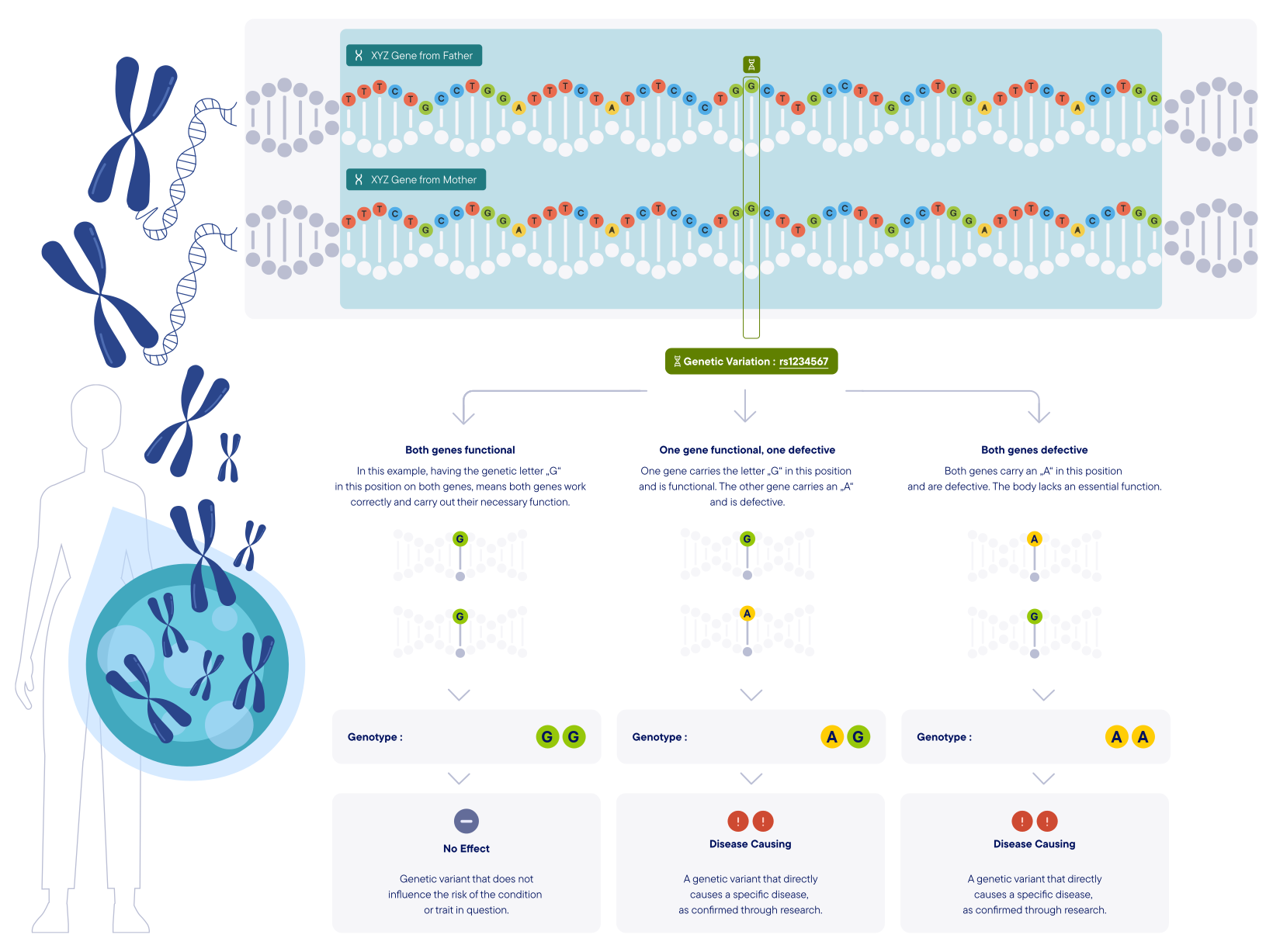
Humans have more than 20,000 genes, each carrying out one or a few specific functions in the body. One gene instructs the body to digest lactose from milk, another tells the body how to build strong bones and another prevents the body's cells from beginning to multiply uncontrollably and developing into cancer. As all of these genes combined are the building instructions for our body, a defect in one of these genes can have severe health consequences.
Through decades of genetic research, we know the genetic code of any healthy/functional human gene. We have also identified that in certain positions on a gene, some individuals may have a different genetic letter from the one you have. We call these hotspots "Genetic Variations" or "Variants" in short. In many cases, studies have been able to show that having the genetic letter "G" in the position makes you healthy, but having the letter "A" in the same position disrupts the gene function and causes a disease. Genopedia allows you to view these variants in genes and summarizes all that we know from scientific research, which genetic letters (Genotype) have good or bad consequences on your health or on your traits.
History
Throughout history, people have described babies born with unusually tall, pointed skulls and fingers or toes that seemed joined together. Midwives and families noticed these patterns long before genetics had a name for them. A parent might recall a grandparent with a narrow, high head shape and relatives with webbed toes, wondering if the features were connected across generations.
First described in the medical literature as acrocephalosyndactylia in the late 19th and early 20th centuries, the condition was initially grouped by outward features: a high, conical skull (from early fusion of skull seams) alongside syndactyly of the hands and feet. Early physicians drew careful portraits and made measurements, trying to separate it from other craniofacial syndromes. Over time, descriptions became more precise as doctors recognized consistent patterns—like differences in the fingers, toes, and face—that suggested more than one subtype lived under the same umbrella.
In recent decades, knowledge has built on a long tradition of observation. With X‑rays and later CT scans, clinicians could see how the skull bones fused too soon, which helped explain pressure symptoms and guided earlier surgery. Surgical teams refined timing and techniques to open fused seams, protect vision, and give the brain room to grow. Families began hearing the term “acrocephalosyndactyly” less often as distinct diagnoses—such as Apert and related craniosynostosis syndromes—gained clearer definitions.
Advances in genetics changed the story again. Researchers linked several forms of acrocephalosyndactylia to changes in genes that help signal how bones and sutures grow, showing why features could vary even within one family. Inheritance patterns were noticed long ago; DNA research now explains how a single altered gene can act like a stuck dimmer switch, turning bone growth signals up at the wrong time. This helped confirm diagnoses, guide counseling about recurrence risks, and focus screening for related features like airway or eye concerns.
Today, acrocephalosyndactylia is recognized as a historical term that describes a set of features rather than a single condition. Many living with these features receive a more specific diagnosis based on clinical signs and, when available, genetic testing. Despite evolving definitions, the through-line is clear: early recognition and coordinated care can support healthy development, protect vision and breathing, and address hand and foot function. Looking back helps explain why names changed, but it also shows how each step—from family stories to modern imaging and gene testing—built the path to today’s care.