
Achromatopsia 4 is a rare genetic eye condition that affects how the retina senses color and light. People with achromatopsia 4 typically have little or no color vision, light sensitivity, and reduced sharpness of sight. Signs usually begin in infancy and are lifelong, though severity can vary. Treatment focuses on management like tinted lenses, low-vision aids, and vision therapy, and many people adapt well. If you or a loved one is facing achromatopsia 4, talking with your healthcare provider can bring clarity and reassurance.
Overview
Achromatopsia 4Symptoms
Achromatopsia 4 causes lifelong color blindness from infancy, with rapid eye shaking, extreme light sensitivity, and poor clarity of central vision. Many see better in dim light and may squint or prefer tinted lenses. Features are noticed in early infancy.
Outlook and prognosis
Most people with achromatopsia 4 have stable vision over time, with severe color blindness, light sensitivity, and reduced sharpness beginning in infancy. Sunglasses, tinted lenses, and low-vision tools can greatly improve comfort and daily function. Regular eye care helps manage glare and track any changes.
Causes and risk factors
Achromatopsia 4 results from recessive GNAT2 gene variants inherited from carrier parents. Risk factors for Achromatopsia 4 are family history and parental consanguinity; no lifestyle or environmental causes are known.
Genetic influences
Genetics are central in Achromatopsia 4; inherited variants in a specific cone-vision gene cause the condition. Most cases are autosomal recessive, meaning two altered copies are needed. Genetic testing confirms diagnosis, guides counseling, and eligibility for emerging trials.
Diagnosis
Doctors suspect Achromatopsia 4 from early symptoms—absent color vision, strong light sensitivity, and low visual sharpness—supported by eye exam and specialized vision testing. Genetic tests confirm the diagnosis of Achromatopsia 4. Retinal imaging can document structure.
Treatment and drugs
Treatment for achromatopsia 4 focuses on easing light sensitivity, improving vision, and supporting daily activities. Tinted or filter glasses, bright‑light control, low‑vision aids, and task lighting often help; red or dark lenses can reduce glare outdoors. Regular eye care, orientation training, and emerging gene therapy trials may be options.
Symptoms
Bright light can be uncomfortable, colors may look muted or gray, and fine details can be hard to make out, often from the first months of life. Loved ones often notice the changes first. Achromatopsia 4 is present from birth, and early features of Achromatopsia 4 often include squinting in daylight and eyes that seem to wobble. Vision tends to feel easier in dim rooms or at dusk.
Colors may look washed out, muted, or gray instead of distinct reds, greens, and blues. Many with Achromatopsia 4 cannot tell certain colors apart, especially in bright settings.
Bright light can cause discomfort, squinting, or tearing. Sunglasses, tinted lenses, or hats can make outdoor time easier.
Fine details can be hard to see, making reading small print or seeing faces across a room challenging. This reduced sharpness is present from infancy in Achromatopsia 4.
The eyes may move quickly back and forth, making it harder to keep a steady focus. Clinicians call this nystagmus, which means involuntary eye movements.
How people usually first notice Achromatopsia 4?
Many families first notice achromatopsia when a baby seems unusually sensitive to light, squinting or turning away even in soft daylight, and the eyes appear to “wiggle” with rapid movements (nystagmus). As the child begins to reach for toys, caregivers may see trouble tracking or recognizing colored objects, with vision that seems much clearer in dim light than in bright settings. Pediatric checks often confirm reduced sharpness of vision and color vision loss, which raises the possibility of achromatopsia—these are the classic first signs of how achromatopsia is first noticed.
Types of Achromatopsia 4
People with achromatopsia often notice vision problems from infancy, but not everyone’s day-to-day experience is the same. Symptoms usually include very poor color vision, light sensitivity, and reduced sharpness, and these can range from mild to severe. Clinicians often describe them in these categories: gene-based variants that largely overlap in symptoms, with some differences in severity and how strongly light sensitivity or visual clarity shows up. When people search for types of achromatopsia, they’re usually asking about gene variants linked to CNGA3, CNGB3, GNAT2, PDE6C, PDE6H, or ATF6.
CNGA3 variant
This is one of the most common genetic causes, seen worldwide. People may have very poor color discrimination, significant light sensitivity, and reduced visual sharpness that tends to be stable over time. Night vision is often relatively preserved.
CNGB3 variant
Also very common, especially in certain populations. Symptoms mirror other variants with marked color vision loss and glare, though some report slightly different degrees of light sensitivity. Visual acuity is reduced from early childhood and usually remains fairly steady.
GNAT2 variant
Often linked to similar color and light sensitivity issues, sometimes with relatively milder changes in clarity. Some individuals report better-than-expected vision in dim light. Early symptoms of achromatopsia typically show up in infancy or early childhood.
PDE6C variant
May be associated with more pronounced central vision loss in some people. Color blindness and glare are prominent, and visual sharpness can be more affected than in other types. Eye exam features can show central retinal changes.
PDE6H variant
A rarer cause with overlapping symptoms of color loss and photophobia. Many experience reduced clarity that appears early and stays fairly stable. Night vision is often less affected than daytime vision.
ATF6 variant
Can present with achromatopsia-like features, sometimes with distinct retinal findings on imaging. People commonly notice severe light sensitivity and poor color vision. Visual acuity can be reduced to a similar degree as other variants.
What genetics can tell you about symptoms
People with Achromatopsia 4 often have extreme light sensitivity, reduced sharpness, and little to no color vision from birth, tied to CNGA3 gene changes that disrupt cone cell signaling. These variants keep cone “dimmer switches” stuck off, so cones can’t work.
Causes and risk factors
The main genetic cause of Achromatopsia 4 is a change in the GNAT2 gene that affects cone cells in the retina. It is usually inherited in an autosomal recessive pattern, so parents are often healthy carriers. When both partners carry a GNAT2 change, each pregnancy has a 25% chance of an affected child. Lifestyle or environmental exposures do not cause Achromatopsia 4, but having closely related parents can raise the chance that both carry the same change. Genetic testing can sometimes clarify your personal risk.
Environmental and biological risk factors
Achromatopsia 4 usually begins before birth, so many wonder whether anything in the environment or during pregnancy can raise the odds. Doctors often group risks into internal (biological) and external (environmental). Based on current research, there are no specific environmental risk factors for Achromatopsia 4, and known biological pregnancy factors show no clear link. Here’s what studies have and haven’t found so far about environmental risk factors for Achromatopsia 4.
No specific exposures are known to increase the chance of Achromatopsia 4. Studies have not linked air pollution, heavy metals, or common household chemicals to this diagnosis. Research continues, but no signal has emerged.
Unlike some chromosomal conditions, older maternal or paternal age has not been shown to raise risk for Achromatopsia 4. Large studies do not show an age-related pattern. Standard prenatal screening recommendations are unchanged.
Common conditions in pregnancy, like diabetes or thyroid disease, have not been tied to this condition. They can affect pregnancy in other ways, but no specific link to this diagnosis has been shown.
No consistent association has been found between infections in pregnancy and Achromatopsia 4. Some infections can affect the eyes differently, but they do not appear to change the likelihood of this condition.
Genetic risk factors
Achromatopsia 4 most often results from harmful changes in the GNAT2 gene, which disrupt cone cell signaling in the retina. It follows an autosomal recessive pattern, meaning a child is affected when both parents pass down a non-working copy. Some risk factors are inherited through our genes. Families sometimes first notice early symptoms of Achromatopsia 4 in the first months of life, but the underlying cause is genetic from birth.

GNAT2 gene changes: Harmful variants in the GNAT2 gene disrupt cone cell signaling and cause Achromatopsia 4. Most people are affected only when both GNAT2 copies have disease-causing changes.
Autosomal recessive: A child is affected when two non-working GNAT2 copies are inherited, usually one from each carrier parent. Each pregnancy between two carriers has a 25% (1 in 4) chance of Achromatopsia 4. Carriers typically have normal vision.
Carrier parents: When both parents carry a GNAT2 variant, the chance of an affected child is higher. Unaffected brothers and sisters of someone with Achromatopsia 4 have about a 67% (2 in 3) chance to be carriers.
Related parents: Parents who are closely related by blood are more likely to share the same rare GNAT2 variant. This raises the likelihood a child inherits two non-working copies and develops Achromatopsia 4.
Known family variant: If a disease-causing GNAT2 variant is known in the family, relatives have a higher chance of being carriers or affected. Genetic counseling can explain personal and reproductive risks.
Lifestyle risk factors
Achromatopsia 4 is a genetic condition; lifestyle habits do not cause it but can shape day-to-day visual comfort, symptom intensity, and participation in activities. This overview focuses on how lifestyle affects Achromatopsia 4 by highlighting choices that reduce glare, manage nystagmus, and support functional vision. Small adjustments to light, schedules, and substances often make a noticeable difference in reading, mobility, and exercise.
Bright sunlight overwhelms cone-deficient vision, worsening photophobia and reducing acuity. Planning shade, hats, and avoiding peak sun can improve comfort and function.
Red, brown, or dark filters limit excessive light and improve contrast perception in Achromatopsia 4. Consistent use outdoors and in bright interiors can reduce squinting and nystagmus amplitude.
High screen brightness and blue-rich light can intensify glare and visual fatigue. Using dark mode, large fonts, and matte screens supports longer reading and reduces symptoms.
Fatigue often increases nystagmus and makes focusing harder. Regular, sufficient sleep can stabilize eye movements and improve daytime visual performance.
Risk prevention
You can’t prevent Achromatopsia 4 itself, but you can reduce complications and make day-to-day vision more comfortable. Prevention is about lowering risk, not eliminating it completely. Spotting early symptoms of achromatopsia in infants—like strong light sensitivity and fast eye movements—helps families start supports sooner. Genetic counseling can also guide family planning options if you’re thinking about future pregnancies.
Wear UV-blocking sunglasses, a brimmed hat, and consider car or home window films to cut glare. Reducing bright light lowers eye strain and improves comfort for people with achromatopsia.
Try specialty tints or filter lenses that reduce light sensitivity and improve contrast. Some people with achromatopsia see better outdoors with deep red or magenta filters.
Use steady, indirect indoor lighting and avoid harsh overhead lights. A small desk lamp aimed at the task can help reading and crafts without adding glare.
Large-print materials, magnifiers, and high-contrast settings can make schoolwork and reading easier. A low-vision specialist can tailor tools to your daily needs.

Transmission
Achromatopsia 4 isn’t contagious and can’t be caught from someone else through touch, air, food, or blood. It’s passed down in an autosomal recessive way: when both parents carry one nonworking copy of the gene, each pregnancy has a 25% (1 in 4) chance of a child with the condition, a 50% chance the child will be a symptom-free carrier, and a 25% chance of neither.
Rarely, a child may have the condition due to a new genetic change that wasn’t present in either parent. If achromatopsia runs in your family, carrier testing and genetic counseling can explain how Achromatopsia 4 is inherited and the genetic transmission of Achromatopsia 4 in your family.
When to test your genes
Consider genetic testing if you or your child has early-onset vision symptoms like extreme light sensitivity, reduced clarity, and little or no color vision, especially from infancy. Testing helps confirm achromatopsia type 4, distinguish it from similar eye conditions, guide low-vision care, and assess eligibility for emerging trials. It’s also useful for family planning and testing at-risk relatives.
Diagnosis
For most people, the first clues come early in life—trouble with color, strong light sensitivity, and shaky eye movements that make reading signs or recognizing faces harder. Diagnosis of Achromatopsia 4 usually starts with these recognizable features and is then confirmed with specific eye tests and genetic testing. Early and accurate diagnosis can help you plan ahead with confidence. Because symptoms can overlap with other eye conditions, doctors put the whole picture together rather than relying on a single test.
Providers ask about early symptoms like severe light sensitivity, reduced clarity, and color vision problems appearing in infancy or early childhood. They also note any squinting in bright light and eye shaking (nystagmus).
Doctors check visual acuity, pupil reactions, and eye alignment, and look at the back of the eye. In Achromatopsia 4, the retina can look normal or show subtle changes in the central area.
Tests such as plate-based or arrangement tasks assess how well colors are distinguished. People with Achromatopsia 4 typically show marked color discrimination loss across many hues.
This measures how cone and rod cells respond to light. Achromatopsia 4 shows severely reduced or absent cone responses with relatively preserved rod function.
Stages of Achromatopsia 4
Achromatopsia 4 does not have defined progression stages. It’s usually present from infancy and tends to stay relatively stable, so early symptoms of Achromatopsia 4 like light sensitivity, reduced color vision, shaky eyes (nystagmus), and lower visual sharpness don’t steadily worsen over time. Different tests may be suggested to help confirm the diagnosis, including a detailed eye exam, color vision testing, electroretinography (ERG), and genetic testing. Regular follow-up visits focus on vision supports and lighting strategies rather than tracking a gradual decline.
Outlook and prognosis
Many people ask, “What does this mean for my future?”, and the short answer is that most people with Achromatopsia 4 live a normal lifespan and build full, active lives. Day to day, the condition mainly affects vision—reduced sharpness, extreme light sensitivity, and little to no color vision—so school, driving, and outdoor work may need adjustments like tinted lenses, hats, or indoor lighting tweaks. The outlook is not the same for everyone, but vision in achromatopsia typically stabilizes after early childhood rather than steadily worsening.
Prognosis refers to how a condition tends to change or stabilize over time. For Achromatopsia 4, central vision is usually reduced from early life and stays relatively stable, while bright light can remain a major trigger for glare and headaches. Early symptoms of Achromatopsia 4 often include nystagmus (shaky eyes) and squinting in sunlight, which can improve in comfort with filters and low-vision tools even if clarity doesn’t fully change. Serious complications like retinal damage beyond the cone problem are uncommon, and mortality is not increased.
Looking at the long-term picture can be helpful. With the right support, the future can include steady schooling, careers that fit visual demands, sports with adaptations, and independent living. Emerging options—such as tinted contact lenses, electronic magnifiers, accessibility features on phones and computers, and clinical trials of gene-directed therapies—aim to ease light sensitivity and boost functional vision. Talk with your doctor about what your personal outlook might look like, including whether low-vision rehab or participation in research could help you meet your goals.
Long-term effects
Achromatopsia 4 is a lifelong, usually stable cone‑vision condition. Many live with strong light sensitivity, reduced sharpness, and little or no color vision from childhood onward. Long-term effects vary widely, but most changes happen slowly, if at all. Parents often notice early symptoms of Achromatopsia 4 in bright settings during infancy.
Bright light often causes glare and discomfort that persists over a lifetime. Indoor daylight and outdoor sun can feel harsh even on cloudy days.
Fine detail typically stays lower than average from early life onward. Vision often remains relatively stable, with only small shifts over time.
Many people with Achromatopsia 4 have little to no color discrimination. Colors may blend into shades of gray or look washed out.
Early symptoms of Achromatopsia 4 can include rapid, shaky eye movements. These movements often ease with age but may continue to blur vision somewhat.
How is it to live with Achromatopsia 4?
Living with achromatopsia 4 often means navigating a world where bright light feels harsh, colors blur into shades of gray, and details soften, especially outdoors; many rely on tinted or red lenses, hats, and careful lighting to make daily tasks comfortable. School, work, and driving can require adjustments—enlarged text, high-contrast materials, screen magnification, flexible schedules, and, where applicable, alternative transportation. Friends, family, and coworkers may notice that plans shift to low-glare settings or daylight avoidance, but with small environmental tweaks and understanding, many build routines that protect their eyes and keep life active and connected.
Treatment and drugs
Treatment for Achromatopsia 4 focuses on easing day-to-day symptoms and protecting vision, since there’s currently no cure. Most people benefit from strong tinted or filtered lenses to cut glare and light sensitivity, wide-brimmed hats outdoors, and high-contrast, large-print tools for reading and screens. Prescription dark red or specialized filter contacts or glasses can improve comfort and sometimes help with seeing detail, while low-vision rehabilitation teaches practical strategies for school, driving alternatives, and work. Although living with Achromatopsia 4 can feel overwhelming, supportive care can make a real difference in how you feel day to day. Research is ongoing into gene-based therapies and cone-targeted treatments; ask your doctor about clinical trials and the best starting point for you, and avoid unproven supplements or stopping any medication without medical advice.
Non-drug treatment
People with Achromatopsia 4 often manage bright-light sensitivity, reduced clarity, and color vision differences in everyday ways. Non-drug treatments often lay the foundation for comfort, safety, and better function at school, work, and outdoors. Many notice early symptoms of achromatopsia such as squinting in daylight, needing shade, or bringing screens closer—practical supports target these day-to-day challenges.
Special red or deep-tinted filters can cut glare and make outdoor light more tolerable. They may also reduce eye strain and squinting in Achromatopsia 4.
High-quality sunglasses with 100% UV protection reduce harsh light and improve comfort outside. A brimmed hat or visor adds extra shade in bright conditions.
Dimmers, warm bulbs, and task lamps help tune brightness for comfort. Closing blinds or using room-darkening curtains can ease photophobia in Achromatopsia 4.
Handheld magnifiers, telescopic lenses, or high-add reading glasses can make text and signs easier to see. A low-vision optometrist can tailor choices to your daily tasks.
Your genes may have an impact on how drugs work for you
Some people with Achromatopsia 4 process certain vision‑related drugs differently because genetic changes can alter how enzymes activate, break down, or transport medications. Pharmacogenetic testing, when available, may guide dosing or drug choice, but evidence remains limited for this rare condition.
Pharmacological treatments
There’s no medication that restores color vision in Achromatopsia 4, but some drugs can ease specific symptoms like eye wobble (nystagmus) or rare retinal swelling. These options are usually off-label and tailored to what you’re experiencing day to day. Not everyone responds to the same medication in the same way. An eye specialist can help weigh benefits, side effects, and when to try or stop a medicine.
This anti-seizure medicine can reduce nystagmus in some people, helping reading and fixation feel steadier. It does not change early symptoms of Achromatopsia 4 like light sensitivity or color loss, but it may improve comfort and function. Common side effects include sleepiness and dizziness.
Originally used for memory disorders, memantine may lessen the intensity of congenital nystagmus for some. In Achromatopsia 4, this can mean fewer oscillations and slightly clearer moments of vision. Possible side effects include headache, dizziness, or confusion.
This carbonic anhydrase inhibitor may help if cyst-like swelling develops in the macula, a feature seen only sometimes with achromatopsia. It won’t restore color vision but can reduce retinal fluid and may sharpen detail slightly. Stinging after instillation or a bitter taste can occur.
When retinal swelling is more pronounced, oral acetazolamide is sometimes tried short term under close supervision. For people with Achromatopsia 4, it aims to dry the retina and protect remaining sharpness, though benefits vary. Tingling in fingers, frequent urination, or stomach upset are possible side effects.
Genetic influences
In Achromatopsia 4, inherited changes in the GNAT2 gene interfere with how cone cells in the retina pass along light signals, so color vision and sharp central vision are reduced from birth. This condition follows a recessive pattern: most people develop Achromatopsia 4 only if they receive one nonworking copy of the gene from each parent. A “carrier” means you hold the gene change but may not show symptoms. When both parents are carriers, each pregnancy has a 25% (1 in 4) chance of a child with Achromatopsia 4, a 50% (1 in 2) chance of a child who is a carrier, and a 25% (1 in 4) chance of a child with no GNAT2 change. Different GNAT2 changes can lead to different day‑to‑day impact—some people have partial color vision or slightly better clarity than others. Genetic testing can confirm Achromatopsia 4, distinguish it from other types of achromatopsia, and help with family planning and support resources.
Is Achromatopsia 4 genetic?
Genetics are central in Achromatopsia 4; inherited variants in a specific cone-vision gene cause the condition. Most cases are autosomal recessive, meaning two altered copies are needed. Genetic testing confirms diagnosis, guides counseling, and eligibility for emerging trials.
Pharmacogenetics—how genetics influence drug effects
For Achromatopsia 4, day-to-day care is mostly about light protection, tinted lenses, and vision aids rather than medicines that change the condition. Doctors can use your genetic information to confirm the subtype, explain why symptoms look the way they do, and guide you toward treatment options for Achromatopsia 4, including clinical trials built for that exact gene change. Knowing you have type 4 can also point your care team to gene therapies that may be a match in the future and help avoid trials meant for other subtypes that wouldn’t be expected to help.
Because there aren’t standard drugs that reverse achromatopsia itself, the usual “right dose for your genes” approach doesn’t typically change care today. Genetics still supports safety planning around procedures—for example, sharing your exact diagnosis helps the team manage bright lights and plan anesthesia to keep you comfortable—but it doesn’t dictate a specific medication. As research advances, gene-directed treatments for Achromatopsia 4 may become available, so genetic testing can keep you informed and eligible as new options emerge.
Interactions with other conditions
Achromatopsia 4 mostly affects the eyes and, on its own, isn’t usually linked with whole‑body diseases. Still, vision conditions often cluster: people with Achromatopsia 4 may also have significant nearsightedness or farsightedness, nystagmus, strabismus, or amblyopia, and these can compound day‑to‑day difficulties with reading, school, and driving. A condition may “exacerbate” (make worse) symptoms of another, so if diabetes, glaucoma, macular disease, or even a dense cataract is present, the added retinal or optic nerve stress can further reduce already limited color and detail vision. Severe light sensitivity can also trigger headaches or migraines in some, and treating those conditions can improve comfort even if color vision doesn’t change.
Eye‑surface problems such as allergies or dry eye can lead to frequent rubbing, which raises the chance of keratoconus; managing the surface irritation lowers that risk. Early symptoms of Achromatopsia 4 can resemble albinism or cone‑rod dystrophy, so if features don’t fit as expected, clinicians often check for overlapping eye disorders rather than assuming all changes come from one cause. If multiple issues are present, coordinated care between eye specialists and your primary team helps balance treatments like tinted lenses, low‑vision aids, and therapy for coexisting conditions.
How genes can cause diseases
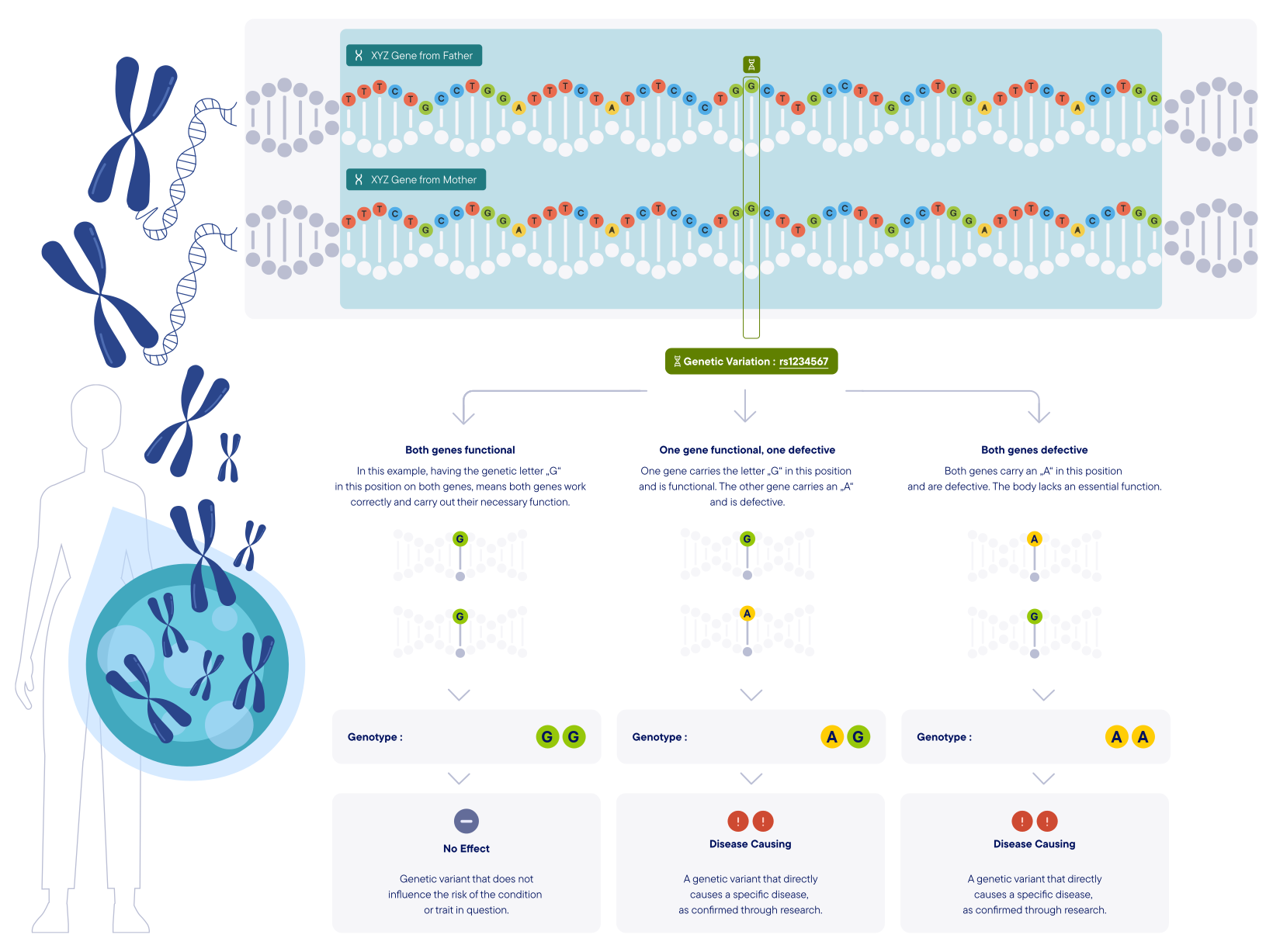
Humans have more than 20,000 genes, each carrying out one or a few specific functions in the body. One gene instructs the body to digest lactose from milk, another tells the body how to build strong bones and another prevents the body's cells from beginning to multiply uncontrollably and developing into cancer. As all of these genes combined are the building instructions for our body, a defect in one of these genes can have severe health consequences.
Through decades of genetic research, we know the genetic code of any healthy/functional human gene. We have also identified that in certain positions on a gene, some individuals may have a different genetic letter from the one you have. We call these hotspots "Genetic Variations" or "Variants" in short. In many cases, studies have been able to show that having the genetic letter "G" in the position makes you healthy, but having the letter "A" in the same position disrupts the gene function and causes a disease. Genopedia allows you to view these variants in genes and summarizes all that we know from scientific research, which genetic letters (Genotype) have good or bad consequences on your health or on your traits.
History
Throughout history, people have described living in a world of light and shadow, where bright daylight washed out detail and color never quite appeared. Families and communities once noticed patterns: relatives who preferred dusk, wore hats even indoors, and navigated best at twilight. These observations match what we now call achromatopsia 4, a form of inherited day blindness with poor color vision and increased light sensitivity.
First described in the medical literature as rare day blindness in small island populations, early reports focused on striking light sensitivity and near absence of color, without knowing the underlying cause. Over time, descriptions became more precise as doctors separated achromatopsia from other eye conditions that also cause blurred vision or night problems. Not every early description was complete, yet together they built the foundation of today’s knowledge.
In recent decades, knowledge has built on a long tradition of observation. As medical science evolved, careful testing showed that people with achromatopsia share a specific pattern: reduced sharpness from early childhood, very poor or absent color vision, and eyes that squint or move to reduce glare. These clinical features led researchers to the cone cells in the retina—the light‑sensing cells that provide color and detail—pointing to a problem in how these cells respond to light.
Advances in genetics then linked different families’ stories to different genes. One of these is GNAT2, tied to what is known as achromatopsia 4. This gene helps the cone cell’s signaling pathway work, like a key part in an electrical circuit. When GNAT2 does not work correctly due to inherited variants, cone cells cannot send a clear signal, especially in bright light. This explained why early symptoms of achromatopsia 4 often appear in infancy and why color perception is so limited.
With each decade, testing improved. What was once considered a single condition proved to include several genetic types that look similar in daily life but differ in their exact cause. Despite evolving definitions, the shared lived experience—seeking shade, preferring dim rooms, relying on contrast rather than color—remained central to diagnosis and support.
Today, the history of achromatopsia 4 connects careful observation with modern lab insights. Knowing the condition’s history helps explain why early eye exams, genetic counseling, and practical supports like tinted lenses became mainstays, and why research now explores targeted therapies built on what families and clinicians noticed long before gene names were known.