
Achalasia microcephaly syndrome is a rare genetic condition that affects growth and the nervous system. People with achalasia microcephaly syndrome often have trouble swallowing due to achalasia, small head size, and developmental delays. Signs usually begin in infancy or early childhood and tend to be lifelong, though severity can vary. Treatment focuses on managing feeding and swallowing with procedures or surgery for achalasia, nutrition support, therapies for development, and regular monitoring. The outlook depends on the degree of swallowing difficulties and neurological features, and specialized care can improve comfort and nutrition over time.
Overview
Achalasia microcephaly syndromeSymptoms
Achalasia microcephaly syndrome features early feeding and swallowing problems from achalasia, often with choking or vomiting. Babies have a smaller head size (microcephaly), poor growth, and developmental delays. Some may show reflux, breathing issues from aspiration, and frequent chest infections.
Outlook and prognosis
Most children with achalasia microcephaly syndrome face feeding problems, slow weight gain, and developmental delays that need ongoing, coordinated care. Early symptoms of achalasia microcephaly syndrome, like trouble swallowing and aspiration, often improve with tailored feeding strategies and esophageal procedures. Long‑term outlook varies; regular follow‑up with neurology, gastroenterology, nutrition, and therapy helps many achieve safer swallowing, better growth, and improved comfort.
Causes and risk factors
Achalasia microcephaly syndrome usually stems from inherited, autosomal-recessive gene changes present from conception. Risk rises when both parents are carriers, especially when parents are related by blood; lifestyle factors do not cause it but may influence complications.
Genetic influences
Genetics are central in Achalasia microcephaly syndrome; most cases result from inherited, loss‑of‑function variants in SLC20A2 or related genes. It typically follows an autosomal recessive pattern, so both parents carry a variant. Genetic testing confirms diagnosis and enables family planning.
Diagnosis
Diagnosis relies on recognizable clinical features—swallowing problems from achalasia, small head size, and developmental delays—supported by esophageal tests and brain imaging. Genetic testing confirms the diagnosis of Achalasia microcephaly syndrome.
Treatment and drugs
Treatment for achalasia microcephaly syndrome focuses on easing swallowing problems, supporting nutrition, and guiding development. Options can include esophageal dilation or myotomy for achalasia, feeding support, therapies for motor and speech skills, and individualized educational plans. Care is usually coordinated by gastroenterology, neurology, genetics, and rehabilitation teams.
Symptoms
Mealtime can be long and frustrating, with coughing or food coming back up, while development may feel slower than expected. Families sometimes notice early features of Achalasia microcephaly syndrome in infancy, such as poor feeding, slow growth, and a small head size. Features vary from person to person and can change over time.
Food and liquids move slowly down the food pipe. People may cough or gag, especially with thicker foods. In Achalasia microcephaly syndrome, both solids and liquids can be hard to swallow.
Undigested food can come back up minutes to hours after eating. This can happen at night when lying down. It may lead to a sour taste or bad breath.
Swallowed food or saliva can go toward the airway instead of the stomach. This raises the risk of food going “down the wrong way.” Repeated episodes can make eating feel stressful.
Feeding difficulties can lead to slow weight gain or weight loss. Babies may drop on growth charts, and older children may be smaller than peers. Clinicians call this failure to thrive, which means weight and growth are below expected for age.
How people usually first notice Achalasia microcephaly syndrome?
Families often first notice achalasia microcephaly syndrome when a newborn’s head seems smaller than expected (microcephaly) and feeding is unusually difficult, with coughing, choking, or milk coming back up soon after swallowing. In infancy or early childhood, trouble gaining weight, frequent vomiting, or recurrent chest infections can prompt doctors to check the esophagus, where achalasia—tightening at the lower end that blocks food—may be found. For many, the first signs of achalasia microcephaly syndrome are this combination of a small head size at birth plus early swallowing and feeding problems that don’t improve with typical reflux measures.
Types of Achalasia microcephaly syndrome
Achalasia microcephaly syndrome is a rare genetic condition. Variants of the condition are mainly defined by which gene is affected and whether people have the classic features from birth or a milder course. Not everyone will experience every type. Researchers describe these categories to better understand patterns of the condition.
Classic CCDC115-related
This variant often includes very small head size at birth and trouble swallowing due to achalasia in infancy or early childhood. Many also have growth concerns and developmental delays.
CCDC66-related variant
People may have small head size and achalasia, but eye movement problems and vision issues can be more prominent. Developmental needs vary from mild to more significant.
GAS2L2-related variant
This form can feature feeding difficulties and achalasia with smaller head size, alongside breathing or airway coordination problems. Some have frequent chest infections tied to swallowing challenges.
Severity spectrum
Some families report a milder course with later-onset swallowing problems and less marked microcephaly. Others have early, severe feeding issues and frequent hospital visits.
Unspecified/unknown gene
In some, genetic testing has not yet pinpointed the exact gene, but the clinical picture fits achalasia with microcephaly. Over time, re-analysis may clarify the gene and help categorize types of achalasia microcephaly syndrome.
What genetics can tell you about symptoms
Some people with Achalasia microcephaly syndrome inherit changes in the SLC20A2 or other phosphate-transport genes, which can disrupt brain growth and lead to microcephaly and developmental delays. The same variants can affect nerve control of the esophagus, causing achalasia with swallowing difficulties.
Causes and risk factors
Achalasia microcephaly syndrome stems from rare changes in a gene that affect nerve and muscle control from early development. These gene changes are present from birth and may be inherited or occur for the first time in a child. Some risks are written in our DNA, passed down through families. Risk factors for Achalasia microcephaly syndrome include a known family history, shared ancestry in parents, or having a sibling with the condition. Lifestyle or pregnancy habits do not cause the syndrome, but prenatal care and early nutrition support can lower complications.
Environmental and biological risk factors
For families facing Achalasia microcephaly syndrome, it’s natural to wonder what might raise or lower the chance of it occurring in a future pregnancy. Most evidence points to differences that arise very early in fetal development, and clear outside triggers have not been confirmed. Awareness of both biological and environmental influences helps you feel prepared. Here’s what research has and hasn’t linked to risk so far.
The differences behind this condition arise during the first stages of brain and esophagus formation in the womb. Risk appears to come from internal developmental processes rather than outside triggers. Achalasia microcephaly syndrome is present from birth.
There is no solid evidence that everyday exposures such as air pollution or common household chemicals raise the chance of this syndrome. Very high-level exposures like radiation or certain industrial chemicals can harm fetal development in general, but have not been linked to it.
Some infections during pregnancy can affect fetal brain growth, leading to microcephaly in other conditions. No direct link has been shown between these infections and this syndrome.
There is no clear evidence that older maternal or paternal age changes the chance of Achalasia microcephaly syndrome. Age-related risks are better established for certain chromosome problems, which are different from this condition.
Genetic risk factors
Achalasia microcephaly syndrome is rare, and evidence points to an inherited cause that runs in families. Some risk factors are inherited through our genes. Most reports suggest an autosomal recessive pattern, where a child is affected after receiving one nonworking copy from each parent. Understanding the genetic risk factors for Achalasia microcephaly syndrome can guide testing options and family planning.

Autosomal recessive: In most reported families, Achalasia microcephaly syndrome appears when a child inherits two nonworking copies of the same gene. Parents typically carry one nonworking copy each and usually have no symptoms. This pattern fits with repeated cases in siblings and unaffected parents.
Carrier recurrence risk: When both parents are carriers, each pregnancy has a 25% chance of a child with Achalasia microcephaly syndrome. There is a 50% chance the child will be a healthy carrier and a 25% chance of inheriting neither change. These probabilities reset with every pregnancy.
Family history: Having a sibling or close relative with the condition raises the likelihood that parents carry the same hidden gene change. In these families, newborns and siblings may benefit from early genetic evaluation. This can help with timely diagnosis and care planning.
Parental relatedness: When parents are biologically related (such as cousins), they are more likely to share the same rare gene change. This increases the chance of autosomal recessive conditions like Achalasia microcephaly syndrome in their children. The overall risk still depends on whether both parents carry the same change.
Genetic heterogeneity: Not all families have the exact same underlying genetic change, and the responsible gene may differ from family to family. Because of this, confirmation often relies on broad genetic testing rather than a single-gene test. Research is ongoing to clarify the full set of genes involved.
Variable expression: Even with the same gene changes, features can differ between children in the same family. Some may have more severe swallowing problems or smaller head size, while others are milder. This variation does not change how the condition is inherited.
De novo changes: Most cases do not result from a brand-new change that only occurred in the child. Instead, the usual pattern is gene changes inherited separately from each parent. True de novo causes are considered uncommon for recessive conditions.
Lifestyle risk factors
Achalasia microcephaly syndrome is a congenital condition; lifestyle habits do not cause it, but they can strongly influence symptoms, nutrition, and complications. Daily routines around eating, positioning, and activity can reduce choking, regurgitation, and respiratory problems. Careful choices may also support growth and comfort. Understanding how lifestyle affects Achalasia microcephaly syndrome helps families target the most impactful changes.
Softer, moist, or pureed foods and small, frequent meals reduce esophageal stasis and regurgitation. Large, dry, or fibrous foods are more likely to lodge and trigger chest pain or vomiting.
Slow eating with thorough chewing and small bites helps food pass the tight lower esophageal sphincter. Rapid meals or rushed feeding increase choking and aspiration risk.
Sipping water between bites can help propel solids through the esophagus. Dehydration thickens secretions and can worsen impaction and discomfort.
Sitting fully upright during meals and for at least 30–60 minutes afterward reduces regurgitation and aspiration. Elevating the head of the bed at night can lessen nocturnal cough and reflux.
Risk prevention
Achalasia microcephaly syndrome is a rare genetic condition present from birth. You can’t fully prevent the condition itself, but you can lower the chance of complications with timely care and practical home steps. Different people need different prevention strategies—there’s no single formula. The focus is on safer feeding, infection prevention, good nutrition, and coordinated check-ups.
A genetics visit can explain inheritance, carrier testing, and chances in future pregnancies. Some families may consider options like prenatal or preimplantation testing.
Spotting early symptoms of Achalasia microcephaly syndrome—such as choking with feeds, vomiting, or poor weight gain—can speed diagnosis and reduce complications. Ask for prompt assessment if swallowing seems difficult or meals are stressful.
Upright positioning during and after feeds and slower pacing can lower choking and aspiration risk. Thickening liquids or using texture changes may help when recommended by your care team.
Staying up to date with routine vaccines (including flu and pneumococcal per guidelines) helps prevent serious chest infections. Handwashing and avoiding smoke exposure also protect the lungs.

Transmission
Achalasia microcephaly syndrome is a genetic condition, not an infection. You can’t catch it or pass it on through everyday contact, sex, pregnancy, or breastfeeding.
Most cases are inherited in an autosomal recessive way: a child is affected when they receive one nonworking copy of the gene from each parent, who are usually healthy carriers. When both parents carry the change, each pregnancy has a 25% (1 in 4) chance of Achalasia microcephaly syndrome, a 50% (1 in 2) chance the child will be a carrier, and a 25% (1 in 4) chance of neither; a genetics professional can help explain how Achalasia microcephaly syndrome is inherited in your family.
When to test your genes
Achalasia microcephaly syndrome is genetic, so consider testing if there’s a family history, a known parental variant, or a child shows early signs like feeding difficulties with narrowing esophagus plus small head size. Prenatal or preconception carrier testing can guide planning. Confirmatory molecular testing helps tailor nutrition, surveillance, and supportive therapies.
Diagnosis
Daily life clues often come first: babies may struggle to feed, cough or choke with liquids, or bring food back up, and growth may lag as head size measures small for age. Doctors usually piece together these patterns with focused exams and tests to confirm whether Achalasia microcephaly syndrome is the cause. Because it’s rare, diagnosis leans on recognizing the combination of swallowing problems (achalasia) and a small head size (microcephaly), then confirming with specific studies. Early and accurate diagnosis can help you plan ahead with confidence.
Providers look for the combination of feeding or swallowing difficulty with a persistently small head size. This pattern raises suspicion for Achalasia microcephaly syndrome.
Head circumference is charted over time to confirm microcephaly relative to age and body growth. Consistently low percentiles support the clinical picture.
Observation during feeds helps identify coughing, choking, or regurgitation consistent with swallowing dysfunction. This can guide which tests come next.
X‑ray images after swallowing contrast can show a narrowed lower esophagus with delayed emptying. Findings that suggest achalasia help point toward Achalasia microcephaly syndrome when paired with microcephaly.
Stages of Achalasia microcephaly syndrome
Achalasia microcephaly syndrome does not have defined progression stages. It is a rare genetic condition where a small head size is present from birth, and swallowing problems from achalasia can appear early, so changes tend to reflect specific symptoms rather than a steady, step-by-step decline. Clinicians usually diagnose it by combining early symptoms of achalasia microcephaly syndrome—such as feeding difficulty, vomiting, poor weight gain, and developmental delay—with exams and studies like a barium swallow, endoscopy, and head growth measurements. Different tests may be suggested to help confirm the cause, including swallow studies, imaging, and, in some cases, genetic testing.
Outlook and prognosis
Looking at the long-term picture can be helpful. For many people with Achalasia microcephaly syndrome, everyday life centers on managing feeding, growth, and developmental support. Swallowing problems and poor weight gain can start early, and surgeries or procedures for achalasia may be needed more than once over time. Some children face significant developmental delay and seizures, which can affect school and independence later on.
Prognosis refers to how a condition tends to change or stabilize over time. Because Achalasia microcephaly syndrome is rare, published data are limited, but reports suggest a wide range of outcomes. Some children have severe medical needs and are vulnerable to complications like aspiration pneumonia and nutrition-related issues, which can affect survival, especially in early childhood. Others, with careful feeding strategies, reflux control, seizure management, and physical and speech therapy, can make steady gains and participate in family routines and schooling with accommodations.
The outlook is not the same for everyone, but early symptoms of Achalasia microcephaly syndrome that are recognized and treated—such as trouble swallowing, reflux, or seizures—can shape the long-term course. Mortality risk appears tied to complications from the esophagus and lungs and to overall neurologic involvement; when those are well controlled, many children live into adolescence and adulthood. Genetic testing can sometimes provide more insight into prognosis, especially when a specific gene change is known in the family. Talk with your doctor about what your personal outlook might look like.
Long-term effects
Achalasia microcephaly syndrome can lead to ongoing challenges that affect growth, development, swallowing, and lung health from infancy into adulthood. Long-term effects vary widely, and needs can change across life stages. Some features remain stable over time, while others may become more noticeable as school and daily demands increase. Thinking about the long-term effects helps families anticipate care needs and plan follow-up over the years.
Ongoing swallowing difficulty can make it hard to gain and maintain weight. Many with Achalasia microcephaly syndrome have smaller-than-expected growth over time.
Motor, language, and learning skills often develop more slowly than peers. Families sometimes notice early symptoms of Achalasia microcephaly syndrome in the first year, like feeding trouble and a smaller head size.
Balance and fine-motor control may remain limited, affecting tasks like running, writing, or self-care. Some continue to need supports for mobility or daily activities.
Food and liquids can go down the wrong way, raising the risk of coughing, choking, or chest infections. In Achalasia microcephaly syndrome, these swallowing issues can persist into adulthood.
How is it to live with Achalasia microcephaly syndrome?
Living with Achalasia microcephaly syndrome often means navigating feeding and swallowing challenges, frequent medical appointments, and developmental therapies woven into daily routines. Many families build structured mealtimes with careful food textures, watch for signs of choking or reflux, and coordinate speech, physical, and occupational therapy to support growth and learning. Loved ones—parents, siblings, caregivers—become part of a close team, sharing training on safe feeding and communication strategies, celebrating small milestones, and adjusting plans as needs change. While the care load can be heavy at times, connecting with specialists, early intervention services, and peer support can make daily life more manageable and less isolating.
Treatment and drugs
Treatment for achalasia microcephaly syndrome focuses on easing swallowing problems from achalasia and supporting development and overall health. For achalasia, options aim to relax or open the tight lower esophageal muscle: endoscopic balloon dilation, botulinum toxin injections, or a surgical procedure to cut the muscle (Heller myotomy), sometimes paired with a partial anti-reflux wrap; medicines that relax smooth muscle may help a few people but often give only short-term relief. Because reflux can follow these procedures, acid-suppressing therapy is common, and nutrition support—thickened foods, high-calorie formulas, or a feeding tube when needed—helps with growth and energy. Ongoing care for microcephaly includes early intervention, physical, occupational, and speech therapies, seizure management if seizures occur, vision and hearing care, and individualized educational support; genetic counseling can guide family planning. Not every treatment works the same way for every person, so you and your care team will adjust the plan over time to match symptoms, goals, and age.
Non-drug treatment
Care focuses on making swallowing safer, supporting nutrition and growth, and building everyday skills at home and school. Beyond prescriptions, supportive therapies can ease symptoms and help families manage routines day to day. Because Achalasia microcephaly syndrome affects both the esophagus and development, plans usually combine procedures for swallowing with therapies for movement, communication, and learning. Care needs often change over time, so teams adjust strategies as children grow.
An endoscopic procedure gently stretches the tight lower esophagus so food can pass more easily. It can reduce chest discomfort, regurgitation, and vomiting. Some people need repeat sessions if symptoms return.
A minimally invasive operation loosens the tight muscle at the esophagus entrance to the stomach, making swallowing easier. It can be done through small incisions or by endoscopy. Many living with Achalasia microcephaly syndrome still use meal strategies afterward to stay comfortable.
A therapist teaches safer swallowing, pacing, and food textures tailored to the person’s skills. This can lower choking risk and make mealtimes less stressful. Because early symptoms of Achalasia microcephaly syndrome often include feeding trouble, therapy can start early.
Adjusting drink thickness slows flow and helps protect the airway. A therapist can help choose the right thickness and cup or straw. Needs may change as swallowing improves or during illness.
Your genes may have an impact on how drugs work for you
Medicines for achalasia microcephaly syndrome can work differently based on a person’s genes, which influence drug processing, targets, and side‑effect sensitivity. Genetic testing may guide dosing or choice, but decisions still rely on clinical response and specialist judgment.
Pharmacological treatments
Medicines for Achalasia microcephaly syndrome aim to relax the tight valve at the bottom of the esophagus, ease swallowing, and lower risks like reflux or chest infections from aspiration. Drugs that target symptoms directly are called symptomatic treatments. These options are often used while planning procedures or when surgery isn’t possible, and dosing is tailored to what you can tolerate. They won’t reverse early symptoms of Achalasia microcephaly syndrome, but they may make eating and drinking safer and more comfortable.
This calcium‑channel blocker can relax the lower esophageal sphincter when taken shortly before meals. It may reduce chest tightness and help food pass more easily. Possible side effects include headache, flushing, or low blood pressure.
Isosorbide dinitrate or nitroglycerin (under the tongue) can briefly relax the swallowing valve before eating. These act quickly but wear off fast, so timing with meals matters. Headache and lightheadedness are common.
An endoscopic injection of botulinum toxin into the lower esophageal sphincter can ease swallowing for weeks to months. It’s often used if surgery or dilation isn’t an option, and repeat injections may be needed. Not everyone responds to the same medication in the same way.
Medicines like omeprazole, esomeprazole, or pantoprazole lower stomach acid to reduce reflux and protect the esophagus. They help with heartburn and inflammation, especially after dilation or myotomy. They do not fix the blockage itself.
Genetic influences
Achalasia microcephaly syndrome is most often linked to changes in a gene that are inherited from both parents. This “two copies” pattern is known medically as autosomal recessive. It’s natural to ask whether family history plays a role. When both parents silently carry one nonworking copy, they usually have no symptoms, but with each pregnancy there’s a 25% chance their child will have Achalasia microcephaly syndrome. Genetic testing can confirm the diagnosis, identify carriers in the family, and guide future pregnancy planning. Test results can’t reliably predict how severe the swallowing problems or developmental differences will be, and features may vary even among siblings. If you’re considering genetic testing for Achalasia microcephaly syndrome, a genetic counselor can walk through the benefits, limits, and next steps.
Is Achalasia microcephaly syndrome genetic?
Genetics are central in Achalasia microcephaly syndrome; most cases result from inherited, loss‑of‑function variants in SLC20A2 or related genes. It typically follows an autosomal recessive pattern, so both parents carry a variant. Genetic testing confirms diagnosis and enables family planning.
Pharmacogenetics—how genetics influence drug effects
People living with Achalasia microcephaly syndrome often need procedures and supportive medicines, and their inherited gene changes mainly explain the condition rather than how drugs are broken down. Even so, common differences in liver enzyme genes can affect medicines used around achalasia care—like pain relievers after dilation or surgery, anti-nausea treatments, and acid reducers. For example, some gene patterns can make codeine or tramadol too weak or too strong, and other variants can change how well proton pump inhibitors such as omeprazole control reflux. The same is true for ondansetron: some clear it quickly and get less nausea relief, while others process it more slowly and may notice more side effects. Alongside medical history and current medicines, genetic testing can sometimes identify how your body is likely to handle these medicines. These insights can help doctors fine-tune drug treatment for Achalasia microcephaly syndrome, while also factoring in age, body size, nutrition, and other health issues.
Interactions with other conditions
Feeding and swallowing challenges in Achalasia microcephaly syndrome can interact with other health issues, especially those involving the lungs. When asthma, chronic lung disease, or frequent colds are also in the picture, food or liquid going down the wrong way can trigger coughing fits or chest infections; a condition may “exacerbate” (make worse) symptoms of another. Neurologic conditions such as epilepsy or differences in muscle tone can further affect safe swallowing and make sedation or anesthesia for procedures riskier. Because early symptoms of Achalasia microcephaly syndrome include poor feeding and vomiting, coexisting reflux or food allergies can be hard to tell apart, and treatments for one may need adjustment to avoid worsening the other. After surgery to relieve achalasia, reflux can develop, which may interact with asthma or chronic sinusitis by increasing nighttime cough or raising the chance of aspiration. Coordinated care with gastroenterology, neurology, pulmonology, and nutrition can help tailor plans when Achalasia microcephaly syndrome occurs alongside other conditions.
How genes can cause diseases
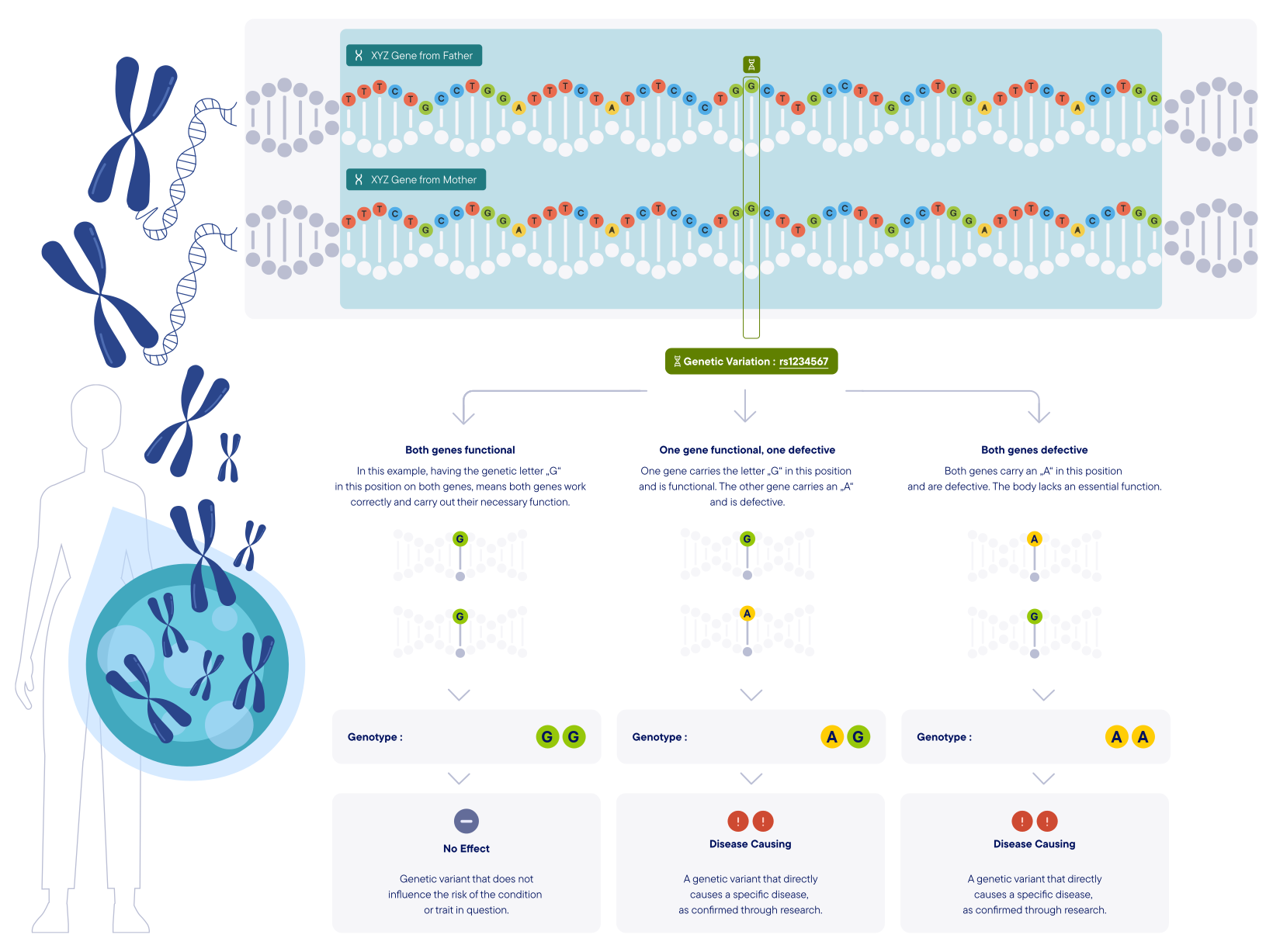
Humans have more than 20,000 genes, each carrying out one or a few specific functions in the body. One gene instructs the body to digest lactose from milk, another tells the body how to build strong bones and another prevents the body's cells from beginning to multiply uncontrollably and developing into cancer. As all of these genes combined are the building instructions for our body, a defect in one of these genes can have severe health consequences.
Through decades of genetic research, we know the genetic code of any healthy/functional human gene. We have also identified that in certain positions on a gene, some individuals may have a different genetic letter from the one you have. We call these hotspots "Genetic Variations" or "Variants" in short. In many cases, studies have been able to show that having the genetic letter "G" in the position makes you healthy, but having the letter "A" in the same position disrupts the gene function and causes a disease. Genopedia allows you to view these variants in genes and summarizes all that we know from scientific research, which genetic letters (Genotype) have good or bad consequences on your health or on your traits.
History
Throughout history, people have described babies born unusually small with feeding troubles, stiff movement, and later learning challenges, long before anyone knew these signs could be linked. Families and midwives noticed patterns across siblings or cousins, and some communities kept careful notes when several children had a strikingly small head size at birth along with severe difficulties gaining weight.
First described in the medical literature as a cluster of findings rather than a single disorder, early reports focused on microcephaly—an unusually small head and brain growth—and severe failure to thrive. Only later did clinicians connect the swallowing problem called achalasia, where the lower esophagus doesn’t open well, to the same condition. As records accumulated from different hospitals and countries, doctors realized this wasn’t just coincidence but a recognizable syndrome affecting growth, feeding, and development.
From early theories to modern research, the story of achalasia microcephaly syndrome has been one of gradually fitting pieces together. In the mid to late 20th century, careful case descriptions highlighted shared features: very small head size from birth, marked difficulty swallowing and vomiting after feeds, poor weight gain, and profound developmental delay. Genetic clues emerged when several affected children were born to parents who were healthy and often related to each other, suggesting an autosomal recessive pattern—both parents carrying one silent copy of a gene change.
Advances in genetics helped turn those clues into firmer answers. As DNA testing became available in the 1990s and 2000s, researchers could compare affected children and identify changes in the same gene across unrelated families. This confirmed that achalasia microcephaly syndrome is inherited and clarified why symptoms tend to be severe from early life: the involved gene is essential for brain growth and for the nerve control that coordinates the esophagus. In recent decades, knowledge has built on a long tradition of observation. With each new family described, the range of features became clearer, including profound growth restriction, distinctive facial features noted by clinicians, and the specific pattern of esophageal narrowing seen on imaging.
Over time, the way the condition has been understood has changed as well. What was once reported under several different names is now grouped more consistently, helping doctors give families clearer information and plan care. Not every early description was complete, yet together they built the foundation of today’s knowledge. This history also explains why diagnosis can still be delayed: early symptoms of achalasia microcephaly syndrome—trouble feeding, vomiting, poor weight gain—overlap with more common conditions. Knowing the condition’s history reminds us to look for the full pattern, consider family background, and use genetic testing to confirm the diagnosis so that supportive care can begin as early as possible.