
Abducens nerve neoplasm is a rare tumor involving the sixth cranial nerve, which controls outward eye movement. People with an abducens nerve neoplasm often notice double vision and an eye that turns inward, and doctors may see limited eye movement. It can occur at any age, and symptoms may develop gradually or progress over time depending on the tumor type. Treatment often includes surgery, radiation, or chemotherapy, and some people also need prism glasses or eye therapy for double vision. The outlook varies with tumor size, location, and type, but timely care can reduce symptoms and prevent complications.
Overview
Abducens nerve neoplasmSymptoms
Early symptoms of Abducens nerve neoplasm often include new double vision, trouble moving one eye outward, and an inward-turning eye. Headache, eye or facial pain, and nausea can occur; some notice balance issues or facial numbness.
Outlook and prognosis
Outlook depends on the tumor’s type, size, and location, and how early abducens nerve neoplasm is treated. Many improve with timely surgery, radiation, or targeted therapy, though double vision or eye movement limits can persist. Ongoing follow‑up helps spot recurrences early.
Causes and risk factors
Abducens nerve neoplasm often stems from skull base tumors (meningioma or schwannoma) or metastasis. Risks include prior cranial radiation, neurofibromatosis type 2, and a history of cancer. Older age, hormonal factors, and obesity modestly increase meningioma-related risk.
Genetic influences
Genetics plays a limited role in most abducens nerve neoplasm cases; many are sporadic. Rarely, inherited tumor syndromes (like neurofibromatosis type 2) increase risk. Tumor behavior depends more on type, location, and pathology than common genetic variations.
Diagnosis
Doctors suspect Abducens nerve neoplasm based on double vision and eye movement weakness on exam. MRI with contrast (sometimes CT) maps the tumor’s location and spread. Diagnosis of Abducens nerve neoplasm is confirmed with imaging, and occasionally biopsy if safe.
Treatment and drugs
Treatment for abducens nerve neoplasm focuses on preserving eye movement, protecting vision, and easing double vision. Options may include careful monitoring, targeted surgery, precision radiation (such as stereotactic radiosurgery), and medicines for swelling, pain, or related symptoms. Prism glasses, patching, or eye‑muscle surgery can help alignment.
Symptoms
Double vision and trouble moving one eye outward are the most common problems when a tumor involves this nerve. In Abducens nerve neoplasm, the nerve that turns the eye toward the ear is pressed or damaged, so the eyes may no longer line up well. Early symptoms of Abducens nerve neoplasm often show up during driving, reading street signs, or scanning side to side, and may come and go at first. Symptoms vary from person to person and can change over time.
Seeing two side-by-side images, especially when looking to the affected side or into the distance. Closing one eye usually makes the double image disappear. Bright lights or busy backgrounds can make it more noticeable.
With Abducens nerve neoplasm, one eye has difficulty moving outward toward the ear. You may notice it when checking mirrors, crossing a street, or watching sports. This can make judging distance or steps harder.
The affected eye may drift inward at rest, giving a crossed-eye look at times. Loved ones often notice the changes first.
People with Abducens nerve neoplasm may turn their head toward the affected side to keep vision single. Holding this posture all day can lead to neck stiffness or fatigue.
How people usually first notice Abducens nerve neoplasm?
Many people first notice something is off when one eye won’t move outward properly, leading to new double vision, especially when looking to the side, or they start turning their head to avoid seeing two images. Friends or family may point out a new inward eye turn or a subtle eye misalignment on photos, and some develop eye or facial pain, headaches, or numbness that prompt a checkup. Because these can be early first signs of abducens nerve neoplasm and overlap with more common causes of sixth nerve palsy, sudden or persistent double vision or an eye that won’t track outward should be evaluated promptly.
Types of Abducens nerve neoplasm
Abducens nerve neoplasm can affect eye movement and daily tasks like reading or driving, since the sixth nerve controls the muscle that pulls the eye outward. People may notice double vision, an eye that drifts inward, or trouble focusing, but the pattern can vary by tumor type and location. Clinicians often describe them in these categories: benign nerve sheath tumors, vascular tumors, and malignant tumors that either start near the nerve or spread from elsewhere. If you’re comparing types of abducens nerve neoplasm, the symptoms often differ in how fast they appear, whether pain is present, and how much double vision changes during the day.
Benign schwannoma
Usually grows slowly along the nerve covering. Double vision tends to develop gradually, sometimes with an inward-turning eye. Pain is uncommon unless the tumor presses nearby structures.
Cavernous hemangioma
A vascular growth that can cause stepwise or sudden changes in double vision. Symptoms may fluctuate if the lesion bleeds slightly or changes in size. Headache or eye discomfort can occur if pressure rises in the area.
Meningioma
Arises from the lining around the brain and can involve the abducens nerve where it travels near the skull base. People often develop steadily worsening double vision over months. Facial numbness or hearing changes are less common but can appear if neighboring nerves are affected.
Primary malignant tumor
Faster-growing cancers in the skull base can involve the sixth nerve. Symptoms may progress quickly with constant double vision and new headaches. Eye movement may become more limited in multiple directions.
Metastatic disease
Cancer that spreads from another organ to the skull base can affect the abducens nerve. Symptoms often come on relatively quickly and may include new or worsening double vision plus weight loss or fatigue from the underlying cancer. Not everyone will experience every type.
What genetics can tell you about symptoms
Some people with abducens nerve neoplasm develop double vision and inward eye turning because the tumor disrupts the sixth cranial nerve’s control of the lateral rectus muscle. Rare inherited tumor‑predisposition syndromes, like NF2, can increase risk, linking specific gene changes to these eye-movement symptoms.
Causes and risk factors
Abducens nerve neoplasm can start in the nerve’s covering cells or in nearby skull base tumors that grow into the nerve.
Cancer from other parts of the body can also spread to this area and affect the sixth nerve.
Doctors distinguish between risk factors you can change and those you can’t.
Key risk factors for abducens nerve neoplasm include past head radiation, older age, and female sex for some related tumors like meningioma.
Smoking and heavy alcohol use raise head and neck cancer risk, and an inherited condition called neurofibromatosis type 2 increases the chance of nerve sheath tumors.
Environmental and biological risk factors
Abducens nerve neoplasm is rare, but when it happens, it can affect eye movement in ways that disrupt everyday tasks like reading, driving, or working on a screen. This section focuses on environmental and biological factors that may raise the chance of these tumors. Doctors often group risks into internal (biological) and external (environmental). Understanding these risks may also explain why early symptoms of abducens nerve neoplasm sometimes show up years after an exposure such as radiation.
Prior radiation therapy to the head or neck can increase the chance of tumors along cranial nerves, including abducens nerve neoplasm. Effects can appear years after treatment as radiation-related changes build up. Higher doses generally carry higher risk.
Workplaces with ionizing radiation, such as certain medical or industrial settings, can add to lifetime exposure if protections are inadequate. Cumulative dose can matter even when each exposure is small.
Risk of tumors affecting nerve coverings tends to rise with age. Over time, cells have more chances to develop the changes that let a tumor form.
Cancers that start elsewhere in the body can rarely spread to the skull base and involve the abducens nerve, leading to a neoplasm in that area. This is more likely when the original cancer is advanced.
Genetic risk factors
Abducens nerve neoplasm is rare, and when it occurs, genes can influence both risk and how the tumor behaves. Some risk factors are inherited through our genes. The clearest inherited links involve conditions like NF2-related schwannomatosis and certain meningioma‑predisposition syndromes, while many tumors also acquire gene changes only within the tumor itself. Understanding genetic risk factors for abducens nerve neoplasm can guide who might benefit from genetic testing and how families plan follow-up.

NF2 gene changes: Inherited changes in the NF2 gene raise the chance of schwannomas and meningiomas along cranial and spinal nerves, which can include the abducens nerve. People with mosaic NF2 can have fewer, later-onset tumors, but cranial nerve tumors may still occur. A family history of NF2 features can be a clue.
Schwannomatosis genes: Inherited changes in SMARCB1 or LZTR1 can lead to multiple schwannomas outside the balance nerve, sometimes affecting other cranial nerves. While sixth‑nerve tumors are uncommon, this pathway can still involve the abducens nerve. Genetic counseling is often recommended for families with multiple schwannomas.
Familial meningiomas: Some families carry changes in genes such as SMARCE1, NF2, or SUFU that increase the chance of meningiomas near the skull base. A meningioma near the abducens nerve can press on or involve the nerve itself. Testing is considered when meningiomas occur young, recur, or cluster in a family.
PTEN/Cowden syndrome: PTEN hamartoma tumor syndrome (also called Cowden syndrome) can raise the risk of brain tumors, including meningiomas that may arise near cranial nerves. Features like multiple noncancerous growths, thyroid issues, or breast changes may prompt a genetics referral. Not everyone with PTEN changes develops nerve‑related tumors.
Somatic tumor changes: Many abducens nerve neoplasms, especially schwannomas and meningiomas, show NF2 loss or related pathway changes only within the tumor cells. These are not inherited and usually do not affect relatives’ risk. Doctors may analyze the tumor to help confirm the diagnosis.
Mosaic inheritance: When only some cells carry an NF2 change, signs may be patchy or milder, but cranial nerve tumors can still form. Mosaicism can make standard blood testing miss the change, so testing tumor tissue or multiple tissues may be needed. A genetics team can advise on the best approach.
Family history clues: Multiple relatives with schwannomas, meningiomas, or early‑onset brain or nerve tumors can signal an inherited syndrome. Patterns such as bilateral vestibular schwannomas or several tumors over time are especially suggestive. If present, targeted testing can clarify risk.
Chromosome 22 role: The NF2 gene sits on chromosome 22, which is commonly altered in schwannomas and meningiomas. Loss of this region is a frequent early step in these tumors, whether inherited or acquired. This helps explain why NF2‑related pathways appear across different tumor types.
Lifestyle risk factors
Evidence linking specific lifestyle risk factors for Abducens nerve neoplasm is limited. Habits do not appear to cause these tumors, but they can influence symptoms like double vision, treatment tolerance, and recovery. The elements below focus on behaviors that may worsen or improve day-to-day function and safety. Discuss any changes with your care team.
Smoking impairs wound healing and increases infection risk after cranial surgery. It may also reduce microvascular blood flow to the sixth nerve, potentially delaying recovery.
Alcohol can worsen double vision and balance problems, increasing fall and injury risk. It can also interact with steroids, pain medicines, or anti-seizure drugs used in care.
Low activity leads to deconditioning, which can magnify fatigue and balance issues from diplopia. Gentle, regular movement can support stamina and post-treatment recovery.
Sleep loss can intensify headaches and make ocular misalignment harder to compensate. Consistent sleep supports neurologic healing and daytime functioning.
Risk prevention
Abducens nerve neoplasm is rare, and there’s no guaranteed way to prevent it. The best approach is to lower known risks where possible and act quickly if new eye-movement symptoms appear. Prevention is about lowering risk, not eliminating it completely. People with certain inherited conditions or past radiation exposure may benefit from tailored monitoring.
Limit unnecessary head and neck radiation when possible. Ask if MRI (no radiation) is suitable instead of CT, and use shielding for dental X-rays. This may lower the small, long-term risk of abducens nerve neoplasm.
If you or close relatives have NF2 or multiple schwannomas/meningiomas, ask about genetic counseling and testing. Prevention works best when combined with regular check-ups. Planned MRI and eye exams can catch an abducens nerve neoplasm earlier.
New double vision, an eye turning inward, or headaches should prompt medical review. Early symptoms of abducens nerve neoplasm can be subtle. Quick evaluation can lead to earlier imaging and treatment options.
Avoid smoking and keep alcohol low to moderate. This reduces overall head and neck cancer risk that can involve nearby nerves. It also supports healing if treatment for an abducens nerve neoplasm is needed.

Transmission
Abducens nerve neoplasm is not contagious and cannot be transferred between people. It does not spread through coughing, touch, sex, blood, or everyday contact.
Most Abducens nerve neoplasms arise sporadically—changes in cells that happen over time, not something you were exposed to or could pass on. In a minority, Abducens nerve neoplasm can occur as part of rare inherited syndromes that raise the chance of tumors on cranial nerves; in those families, how Abducens nerve neoplasm is inherited follows the pattern of the underlying syndrome. Outside of those syndromes, genetic transmission of Abducens nerve neoplasm is uncommon.
When to test your genes
Consider genetic testing if you have a personal or family history of nerve tumors (like schwannomas), multiple tumors, early-onset disease, or features suggesting inherited syndromes such as neurofibromatosis type 2 or schwannomatosis. Testing can guide surveillance plans, surgical timing, and targeted therapies. Discuss timing with a genetics-informed clinician before and after imaging.
Diagnosis
Abducens nerve neoplasm is usually suspected when double vision and trouble moving one eye outward appear or get worse over time. After reviewing your symptoms, the next step often involves targeted eye and nerve exams followed by imaging. In many cases, the diagnosis of abducens nerve neoplasm relies on brain and orbit scans to see the nerve and nearby structures clearly. Pathology testing may be needed to confirm the exact tumor type.
Your doctor asks about symptom timing, head or ear pain, prior cancers, infections, and injuries. A clear timeline helps separate a tumor from more common causes like nerve inflammation or diabetes.
Doctors check all cranial nerves, facial sensation and strength, and balance. Finding weakness in outward eye movement with or without other nerve changes helps narrow the cause.
Careful gaze testing maps when double vision appears and how it changes with direction of look. A pattern pointing to a sixth-nerve palsy raises concern for compression along the nerve’s long pathway.
An eye exam looks for unequal pupils and swelling of the optic nerve head. These features can suggest pressure inside the skull that warrants urgent imaging.
Stages of Abducens nerve neoplasm
Abducens nerve neoplasm does not have defined progression stages. This is because the course varies by tumor type (often benign vs. rarely cancerous), size, and exact location along the sixth nerve rather than following a shared, stepwise pattern. Early symptoms of abducens nerve neoplasm can include double vision and trouble moving one eye outward; MRI with contrast is the main test, and different tests may be suggested to help confirm the cause and look for spread. Follow-up typically involves regular eye and neurological exams with repeat imaging, and in select cases a biopsy if the diagnosis remains uncertain.
Outlook and prognosis
Looking ahead can feel daunting, but most people want to know what the future may hold with an abducens nerve neoplasm. The outlook depends on what type of tumor it is (benign or cancerous), how fast it grows, and whether it can be fully treated with surgery, radiation, or medicines. Doctors call this the prognosis—a medical word for likely outcomes. When the tumor is slow-growing and confined to the nerve, vision problems like double vision may improve with treatment and supportive care such as prism glasses or targeted eye therapy.
Here’s what research and experience suggest about the future. If the tumor is malignant or extends into nearby brain structures, treatment often aims to control growth and protect nerve function over time. Mortality varies widely by tumor type and stage; benign lesions rarely affect life expectancy, while aggressive cancers can carry a higher risk, especially if they spread or press on critical areas. Many people ask, “What does this mean for my future?”, and the answer is usually a personalized plan focused on tumor control, easing symptoms, and preserving daily activities like reading, driving short distances, or working at a computer.
Early care can make a real difference, particularly when new double vision, eye movement changes, or headaches appear—these early symptoms of abducens nerve neoplasm should prompt timely evaluation. With ongoing care, many people maintain good quality of life, even if some eye movement limitation persists. Talk with your doctor about what your personal outlook might look like, including how your specific tumor type, imaging results, and response to treatment shape the long-term picture.
Long-term effects
Abducens nerve neoplasm can leave lasting vision and eye-movement changes because this nerve drives the eye’s outward gaze. Long-term effects vary widely, and they may shift over time depending on the tumor type and treatment. Early symptoms of abducens nerve neoplasm often include new double vision or a turned-in eye, and some of these issues may persist even after treatment. Outlook depends on tumor behavior, its location, and how well therapies control growth; some people regain steady function, while others have ongoing nerve weakness or treatment-related changes.
Double vision can continue, especially when looking far to the side or at distant objects. It may fluctuate with fatigue or illness.
One eye may turn inward because the outward-moving muscle stays weak. The misalignment can be subtle at rest and more noticeable when tired or focusing far away.
The affected eye may not move fully outward. People often describe a lag or pulling sensation when trying to look to the side.
Many turn their head toward the weak side to bring images together. Over time, this can lead to neck and shoulder strain.
How is it to live with Abducens nerve neoplasm?
Living with an abducens nerve neoplasm often means dealing with double vision, eye misalignment, and eye strain that worsens with reading or looking to the side. Daily life can involve practical adjustments like covering one eye at times, using prism glasses, taking more breaks for visual tasks, and planning around appointments, imaging, and possible treatments. Many find driving, navigating crowded spaces, or working at screens more tiring, and headaches or balance worries can add to the load. Family, friends, and coworkers may notice the eye turning inward or outward and can help by offering rides, being patient during visual tasks, and understanding that fatigue and depth‑perception challenges are part of the condition, not a lack of effort.
Treatment and drugs
Treatment for abducens nerve neoplasm focuses on controlling the tumor and protecting eye movement and vision, since this nerve steers the eye outward. The plan depends on the tumor’s type (benign or malignant), size, location, and whether it involves nearby brain or skull-base structures; options may include surgery to remove or debulk the tumor, targeted radiation (such as stereotactic radiosurgery), or a combination, and malignant tumors may also need chemotherapy or targeted therapies. Doctors sometimes recommend a combination of lifestyle changes and drugs, with medicines used to reduce swelling around the nerve (like corticosteroids), ease pain, treat nausea, or manage double vision with prism lenses or an eye patch. Rehabilitation can help with eye alignment and balance, and some people benefit from temporary botulinum toxin injections or, less often, strabismus surgery once the condition is stable. Finding the right therapy can take some time, so keep track of how you feel, and share this with your care team.
Non-drug treatment
Double vision and eye misalignment can make reading, screens, and driving stressful when you’re living with an abducens nerve neoplasm. Treatments that don’t involve medicines focus on easing symptoms, protecting the eyes, and keeping day‑to‑day life safe and manageable. Non-drug treatments often lay the foundation for comfort while you and your care team decide on surgery, radiation, or other medical steps.
Regular eye exams and MRI checks can track changes if the tumor is slow-growing and symptoms are mild. Your team will watch for new or worsening double vision, eye turn, or headaches.
Special prisms can shift images to reduce double vision while your eyes heal or adapt. These may be temporary stick‑on prisms that can be adjusted as symptoms change.
Covering one eye part‑time can immediately stop double vision and reduce nausea or headaches. This can help if early symptoms of abducens nerve neoplasm include sudden double vision that makes reading or walking difficult.
Simple visual strategies can reduce eye strain and teach safer head positions that line up your sight better. An orthoptist may guide you on when and how to use these approaches.
Your genes may have an impact on how drugs work for you
Two people can take the same medicine for an abducens nerve tumor and respond differently because genes affect how fast the body activates, breaks down, or clears drugs. Genetic differences can influence dosing, side effects, and whether targeted therapies are likely to work.
Pharmacological treatments
Medicines for abducens nerve neoplasm mainly ease swelling, pain, and double vision while surgery or radiation address the tumor itself, depending on type. Drugs that target symptoms directly are called symptomatic treatments. Some medications can also be part of cancer treatment when the tumor comes from, or behaves like, a cancer that responds to chemotherapy or targeted therapy. Steroids may quickly calm pressure-related headaches and may lessen early symptoms of abducens nerve neoplasm, but their effect is usually temporary.
Reduce swelling around the tumor to lower pressure and headache. This can briefly improve double vision from abducens nerve neoplasm. Doctors often taper the dose to limit side effects like high blood sugar or sleep changes.
Acetaminophen and NSAIDs (like ibuprofen or naproxen) can help with headache or facial discomfort. Use the lowest effective dose and avoid long-term NSAID use if you have stomach, kidney, or bleeding risks.
Gabapentin, pregabalin, duloxetine, or amitriptyline can calm nerve-related pain from abducens nerve neoplasm. Dosing may be increased or lowered gradually to balance relief with side effects such as sleepiness or dizziness.
Targeted injections can temporarily weaken the eye muscle that overpulls against the weak sixth nerve to reduce double vision. Effects build over days and last about 2–3 months, and a specialist usually performs this treatment.
Genetic influences
Many wonder whether Abducens nerve neoplasm is hereditary; most cases happen by chance without a family link. It’s natural to ask whether family history plays a role. When genetics do contribute, it’s often through broader conditions such as neurofibromatosis type 2 (NF2) or schwannomatosis, which raise the chance of nerve sheath tumors (schwannomas) and sometimes meningiomas along the skull base, any of which can involve the sixth (abducens) nerve. These conditions can be passed from a parent, but many people are the first in the family because the gene change arises new or is present only in some cells. Even within these disorders, tumor types and severity vary widely from person to person. Genetic testing for Abducens nerve neoplasm isn’t routine, but doctors may consider it when tumors appear at a young age, on both sides, or when there are multiple nerve or brain tumors. To put these pieces together, doctors may suggest genetic counseling.
Is Abducens nerve neoplasm genetic?
Genetics plays a limited role in most abducens nerve neoplasm cases; many are sporadic. Rarely, inherited tumor syndromes (like neurofibromatosis type 2) increase risk. Tumor behavior depends more on type, location, and pathology than common genetic variations.
Pharmacogenetics—how genetics influence drug effects
Drug choices for abducens nerve neoplasm are shaped by the exact tumor type and its genetics, especially if it’s a schwannoma, meningioma, or a metastasis from another cancer. Doctors may test the tumor’s DNA — and sometimes your inherited DNA if a condition like NF2 is suspected — to help match targeted medicines or clinical trials. For example, NF2‑related schwannomas and some meningiomas carry specific gene changes that researchers use to guide targeted approaches; these options don’t replace surgery or radiosurgery but may add another path if the tumor grows after local treatment. If the tumor is a metastasis, the primary cancer’s genetics usually guide systemic treatment. Genes can influence how quickly you clear medicines like steroids, pain relievers, anti‑nausea drugs, or targeted treatments, which can affect side effects and dose needs. Pharmacogenetics for abducens nerve neoplasm is still developing, so having your care team coordinate any testing helps ensure results are used appropriately.
Interactions with other conditions
Day to day, people with double vision from an abducens nerve neoplasm may also be managing other issues that affect eye movement, which can blur what’s causing what. Early symptoms of abducens nerve neoplasm can look similar to a temporary sixth‑nerve palsy from diabetes or high blood pressure, and these vascular problems can coexist and make recovery slower. Doctors call it a “comorbidity” when two conditions occur together. Some inherited disorders, such as neurofibromatosis type 2, raise the chance of tumors on cranial nerves and the lining of the brain, so more than one growth can influence the same nerve pathways at once. Cancers elsewhere in the body can spread to the skull base and cavernous sinus, where they may compound pressure on the sixth nerve and shape treatment choices. Infections or inflammatory diseases like meningitis or sarcoidosis can irritate the coverings of the brain and further weaken the nerve, while increased intracranial pressure—from another brain tumor or fluid buildup—can make double vision worse. Interactions can look very different from person to person, so coordinated care between neurology, oncology, and eye specialists helps sort out overlapping causes and tailor treatment.
How genes can cause diseases
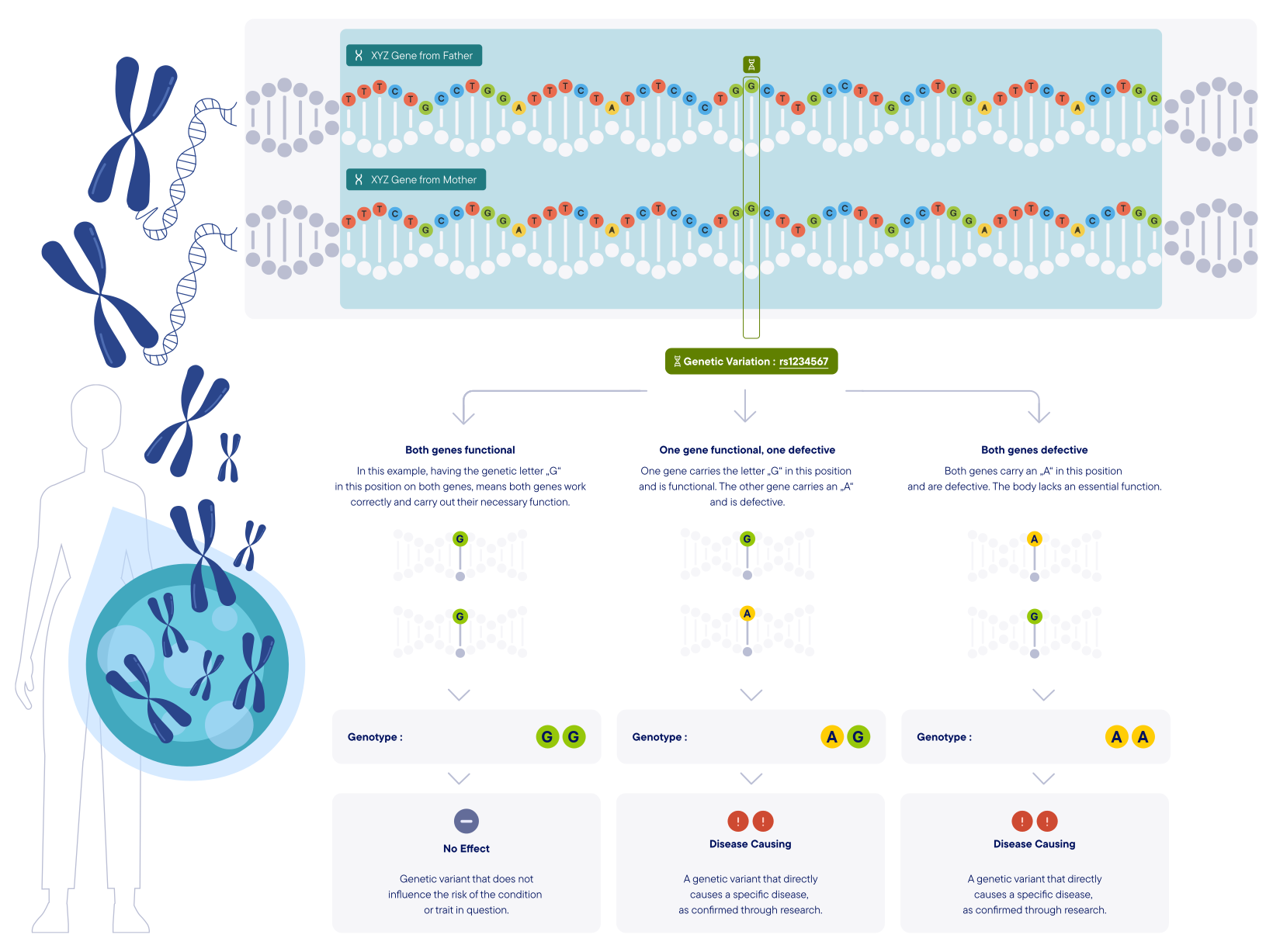
Humans have more than 20,000 genes, each carrying out one or a few specific functions in the body. One gene instructs the body to digest lactose from milk, another tells the body how to build strong bones and another prevents the body's cells from beginning to multiply uncontrollably and developing into cancer. As all of these genes combined are the building instructions for our body, a defect in one of these genes can have severe health consequences.
Through decades of genetic research, we know the genetic code of any healthy/functional human gene. We have also identified that in certain positions on a gene, some individuals may have a different genetic letter from the one you have. We call these hotspots "Genetic Variations" or "Variants" in short. In many cases, studies have been able to show that having the genetic letter "G" in the position makes you healthy, but having the letter "A" in the same position disrupts the gene function and causes a disease. Genopedia allows you to view these variants in genes and summarizes all that we know from scientific research, which genetic letters (Genotype) have good or bad consequences on your health or on your traits.
History
Throughout history, people with double vision or an eye that drifted inward were often described in diaries and clinic notes, long before the cause was understood. A child might tilt their head to keep objects single, or an adult might cover one eye to read street signs. These everyday adjustments hinted at trouble with the sixth cranial nerve, which controls the muscle that moves the eye outward. When a growth formed along this nerve or pressed on it, the nerve could weaken, and the eye would pull inward.
First described in the medical literature as tumors affecting the “abducens” pathway, early reports relied on bedside observation: new double vision, headaches, or eye movement limits that pointed doctors toward the skull base. Before modern imaging, clinicians used careful exams and, at times, risky exploratory surgery to locate an abducens nerve neoplasm. Pathology from these operations gradually clarified that several tumor types—some starting on the nerve’s covering, others nearby—could injure the same small nerve.
As medical science evolved, skull X-rays and pneumoencephalography offered the first glimpses of pressure near the nerve’s route. The real shift came with CT scanning in the 1970s and MRI in the 1980s–1990s, which let doctors see small lesions in the cavernous sinus and along the brainstem without surgery. From these first observations, specialists recognized patterns: a slow, painless inward eye turn from a benign nerve‑sheath tumor versus a faster change with more widespread symptoms from an aggressive growth nearby.
Microsurgical tools and operating microscopes improved outcomes through the late 20th century, making it safer to reach tumors at the skull base while trying to preserve the abducens nerve. At the same time, radiation techniques such as stereotactic radiosurgery offered a noninvasive option for select tumors, sometimes stabilizing or improving eye movement. Advances in anesthesia and postoperative care also reduced complications, allowing more tailored treatment.
In recent decades, knowledge has built on a long tradition of observation. MRI with contrast, diffusion sequences, and high‑resolution nerve imaging refined diagnosis; pathology adopted immunostains and molecular markers to sort tumor types more precisely. These steps mattered for people living with abducens nerve neoplasm, because treatment choices and recovery chances depend on what the tumor is and exactly where it sits. Today, clinicians combine detailed eye‑movement testing with imaging and targeted therapies, aiming not only to control the tumor but also to restore single vision when possible.
Looking back helps explain why modern care emphasizes early recognition of double vision, careful imaging of the skull base, and multidisciplinary planning. The journey from bedside sketches to high‑resolution scans has turned a once‑hidden problem into one that can be identified earlier and, in many cases, managed with greater precision.