
7q31 microdeletion syndrome is a rare genetic condition caused by a small missing piece of chromosome 7. It often leads to developmental delays, speech and language difficulties, and learning challenges, and doctors may also note low muscle tone or feeding issues in infancy. Features usually begin in early childhood and tend to be lifelong, but progress and day-to-day impact can vary. Many people with 7q31 microdeletion syndrome benefit from speech, occupational, and physical therapy, and some may need educational support or treatment for associated issues like hearing, vision, or seizures. The outlook can vary, but many people live long and full lives with supportive care.
Overview
7q31 microdeletion syndromeSymptoms
7q31 microdeletion syndrome features often include speech and language delay, global developmental delay, and low muscle tone. Some have learning difficulties, social-communication challenges, feeding issues, mild facial differences, seizures, or hearing loss; signs are typically noticed in early childhood.
Outlook and prognosis
Many people with 7q31 microdeletion syndrome grow and learn at their own pace, often with speech and language delays that improve with therapy. Medical needs vary, but coordinated care helps children gain skills and independence. Regular follow-up guides school supports and health monitoring.
Causes and risk factors
7q31 microdeletion syndrome results from a small missing piece of chromosome 7 (region q31). It most often happens as a new change, but can be inherited from a parent with a chromosomal rearrangement. No proven lifestyle or environmental risk factors.
Genetic influences
Genetics are central in 7q31 microdeletion syndrome: the condition results from a small missing piece on chromosome 7. The exact genes deleted vary, shaping severity and features. Most cases are sporadic, but parental testing can clarify recurrence risk.
Diagnosis
Clinicians suspect 7q31 microdeletion syndrome from developmental and growth patterns plus exam findings, then confirm with chromosomal microarray or targeted genetic tests. The genetic diagnosis of 7q31 microdeletion syndrome may also follow prenatal screening or abnormal imaging.
Treatment and drugs
Treatment for 7q31 microdeletion syndrome focuses on each person’s needs, often combining developmental therapies, educational supports, and speech and language therapy. Doctors may add physical and occupational therapy, behavioral supports, and feeding or sleep care as needed. Regular hearing, vision, growth, and heart checks help guide adjustments over time.
Symptoms
Features of 7q31 microdeletion syndrome often show up in early development, especially in speech, language, and motor skills. Parents often notice early features of 7q31 microdeletion syndrome in infancy or the toddler years, such as feeding difficulty, delayed babbling, or late first words. Loved ones often notice the changes first. Needs vary widely, and supports like speech, occupational, and physical therapy can make a meaningful difference over time.
First words may come late and sentences may develop slowly. Speech may be brief or hard to understand, especially when the child is tired or excited. Many living with 7q31 microdeletion syndrome benefit from early, intensive speech therapy.
Coordinating mouth movements for sounds can be challenging. Words may come out inconsistently from one attempt to the next, with visible effort. Clinicians call this childhood apraxia of speech, which means trouble planning the movements for clear speech.
Understanding may be stronger than speaking; kids might follow simple directions but struggle to express thoughts. Vocabulary and grammar can lag behind peers. People with 7q31 microdeletion syndrome often use gestures or assistive communication to bridge the gap.
Sitting, crawling, or walking can happen later than average. Low muscle tone can make big movements feel effortful. Physical therapy can help build strength and balance.
How people usually first notice 7q31 microdeletion syndrome?
Many families first notice 7q31 microdeletion syndrome when a baby has low muscle tone that makes them feel “floppy,” feeds slowly, or misses early milestones like rolling or sitting on time. As toddlers, the first signs of 7q31 microdeletion syndrome often include delayed speech or very few words, sometimes paired with developmental delays or features a clinician notes, such as subtle facial differences or smaller head size. Doctors usually put the pieces together after a developmental check-up prompts genetic testing, or when hearing concerns, learning differences, or autism‑like social and communication challenges lead to an evaluation that reveals the deletion.
Types of 7q31 microdeletion syndrome
People with 7q31 microdeletion syndrome can share a core pattern—developmental delay, speech and language difficulties, and sometimes autism features—but the exact picture varies a lot from person to person. The size and position of the missing DNA segment at 7q31 matter, because different genes can be affected. In medical terms, these are called variants, which describe which key genes are deleted and help explain differences in learning, communication, growth, and medical issues. Not everyone will experience every type.
FOXP2-involving variant
The deletion includes the FOXP2 gene, often leading to marked speech and language impairment. People may have difficulties planning the mouth movements needed for clear speech and may rely more on therapy and alternative communication. Other learning challenges can be present but speech issues usually stand out.
MET-involving variant
The missing segment covers the MET gene, which has been linked to social communication differences and autism features in some. People may show challenges with social interaction, flexible thinking, or sensory processing. Language delay can occur but may be less severe than in FOXP2-involving deletions.
WNT2-involving variant
Loss of the WNT2 gene can be associated with broader neurodevelopmental differences, including language delay and social communication traits. Some may also have mild coordination issues or differences in muscle tone. Behavioral and learning profiles vary from mild to more noticeable needs.
CNTNAP2-near variant
Deletions extending toward the CNTNAP2 region can relate to language delay, attention differences, and sometimes seizures. Early supports may target both communication and behavior regulation. Seizure risk is variable and should be guided by clinical evaluation.
Small focal 7q31
A small microdeletion limited to part of 7q31 may cause milder learning and speech delays. Growth and head size are often typical, and medical complications are fewer. Daily supports may focus on language therapy and school accommodations.
Broad 7q31–q32
A larger deletion spanning 7q31 into 7q32 tends to bring more global developmental delays and a higher chance of medical features like feeding difficulties or low muscle tone. For many, certain types stand out more than others. Early symptoms of 7q31 microdeletion syndrome in this variant can include delayed sitting or walking and limited words by toddler years.
What genetics can tell you about symptoms
Some people with 7q31 microdeletion syndrome have speech and language delays, learning differences, and autism-like traits because missing genes in this region (often including FOXP2) disrupt brain circuits that coordinate speech and social communication. Others may show low muscle tone, feeding difficulties, or mild facial differences, which reflect how the size and exact genes deleted vary from person to person.
Causes and risk factors
The main cause is a small missing piece on chromosome 7 in the q31 region. This deletion most often arises as a new change in the egg or sperm. Less often, it is passed down from a parent with the same deletion or a balanced chromosome change, which raises recurrence risk in the family. Early symptoms of 7q31 microdeletion syndrome can vary because the size of the deletion and the genes involved differ. Genes set the stage, but environment and lifestyle often decide how the story unfolds.
Environmental and biological risk factors
7q31 microdeletion syndrome happens when a small piece is missing from a specific spot on chromosome 7. If you’re reading about early symptoms of 7q31 microdeletion syndrome, it can also help to understand what can raise the chance of it occurring. Some risks are carried inside the body, others come from the world around us. Below are the environmental and biological factors linked to how this change can arise.
Many cases start as a one-time change when an egg or sperm is forming. This change isn’t caused by anything the parents did. Overall chance for 7q31 microdeletion syndrome is low.
The 7q31 area has repeat segments that make small missing pieces more likely during cell division. This natural layout can raise the chance of the deletion forming. It does not affect a parent’s day-to-day health.
As sperm-producing cells age, new chromosome changes can occur a bit more often. This may slightly increase the chance of conditions like 7q31 microdeletion syndrome. The absolute risk remains small.
Strong ionizing radiation to the ovaries or testes before conception can increase chromosome breakage. Medical teams use shielding and dose limits to keep this risk very low. Everyday background radiation is not a concern.
Genetic risk factors
Risk depends on how the missing segment at 7q31 arose and which genes it includes. In practice, the genetic causes of 7q31 microdeletion syndrome include a new (de novo) deletion or an unbalanced change inherited from a parent with a chromosome rearrangement. People with the same risk factor can have very different experiences. Genetic testing can clarify the exact breakpoints and recurrence risk.

De novo deletion: Most cases happen as a one-time change when egg or sperm cells form. No parent did anything to cause it. The chance of it happening again in a future pregnancy is usually low.
Inherited unbalanced change: Sometimes the missing piece is passed on if a parent carries a subtle chromosome change that leaves extra or missing material. In this case, recurrence risk for 7q31 microdeletion syndrome can be higher. Testing parents’ chromosomes can identify this pattern.
Parental balanced translocation: A parent may have all the right chromosome material arranged differently, called a balanced translocation. They are typically healthy but can have a child with 7q31 microdeletion syndrome if the swap passes on unevenly. A karyotype or microarray can check for this.
FOXP2 gene loss: Losing one copy of the FOXP2 gene within 7q31 is strongly linked to speech and language difficulties. This gene can act like a dimmer switch for circuits involved in planning mouth and tongue movements. Whether FOXP2 is included helps explain differences between individuals.
Deletion size matters: Larger deletions remove more genes and may lead to broader developmental needs. Smaller deletions that spare key genes can have milder effects in 7q31 microdeletion syndrome. Lab reports usually list which genes are missing.
Germline mosaicism: Rarely, a parent has a small number of egg or sperm cells with the deletion while blood tests look normal. This can slightly raise recurrence risk even when parents test negative. A genetic counselor can discuss options.
CFTR gene impact: If the deletion includes CFTR, the person has only one working copy of this cystic fibrosis gene. This does not cause cystic fibrosis by itself, but it would if the remaining copy also has a harmful change. Clarifying CFTR status can guide family testing.
Variable expression: Features can vary widely even with a similar 7q31 change. Age, sex, and which genes are involved all influence the picture. Not every feature appears in every person.
Lifestyle risk factors
7q31 microdeletion syndrome is a genetic condition; lifestyle habits do not cause it, but they can influence day-to-day function, symptom control, and developmental progress. Focusing on how lifestyle affects 7q31 microdeletion syndrome can support communication, motor skills, feeding, sleep, and behavior. While there are no lifestyle risk factors for 7q31 microdeletion syndrome in the causal sense, routines around nutrition, activity, and therapies can reduce complications and improve quality of life. Work with your clinicians to tailor these strategies to your child’s needs.
Consistent, nutrient-dense meals support growth in children with feeding challenges or low muscle tone. Dietitian-guided strategies can reduce choking risk and ensure adequate calories and micronutrients.
Adequate fluids and fiber can ease constipation, which is common with low muscle tone and limited mobility. Regular bowel routines may reduce discomfort that can worsen behavior and sleep.
Daily movement and physiotherapy can improve core strength, coordination, and endurance in hypotonia. Better motor control can expand participation in play, school, and self-care.
Frequent, play-based language practice and use of AAC at home can accelerate communication gains. Consistency across home and therapy settings helps generalize new skills.
Risk prevention
7q31 microdeletion syndrome can’t be prevented at its genetic source, but you can lower the chance of complications and support healthy development. Plans work best when tailored to the person’s strengths and needs. Different people need different prevention strategies—there’s no single formula. Regular check-ins with your care team help you adjust over time.
A genetics professional can explain how 7q31 microdeletion syndrome happens and what the recurrence risks look like for your family. They can outline testing options for current or future pregnancies.
If you plan a pregnancy, ask about prenatal diagnosis or IVF with embryo testing to lower the chance of passing on the same microdeletion. These choices are personal and guided by your family’s values and medical details.
Watch for early symptoms of 7q31 microdeletion syndrome, such as delayed speech, late motor milestones, or social communication differences. Early referral to speech, occupational, and physical therapy can reduce long-term impact.
Many with 7q31 microdeletion syndrome have speech and language delays that respond best to therapy started early. Augmentative and alternative communication tools can help while speech develops.

Transmission
7q31 microdeletion syndrome is not contagious; it can’t be caught or spread through everyday contact. It happens when a small segment of chromosome 7 is missing, most often as a new change at conception with no family history. Less often, it is inherited from a parent who also has the deletion, or from a parent with a balanced translocation (a harmless chromosome swap) that can lead to the deletion in a child. If a parent carries the deletion, each pregnancy has about a 50% chance of inheriting it; when the change is new, the chance of it happening again is low but not zero because of a rare event in egg or sperm cells. A genetics professional can explain how 7q31 microdeletion syndrome is inherited and review testing options for current or future pregnancies.
When to test your genes
7q31 microdeletion syndrome is genetic, so testing is most useful when there’s a suggestive pattern: developmental delays, speech/language disorder, or congenital differences, especially with a family history. Test early in childhood to guide therapies and educational supports; test in adults for family planning. Re-test or expand panels if prior results were inconclusive.
Diagnosis
For many families, the first clues are delayed speech, late walking, or learning challenges that prompt a developmental check-up. Doctors look at the overall pattern—growth, facial features, muscle tone, and milestones—and then confirm suspicions with genetic tests. Early and accurate diagnosis can help you plan ahead with confidence. The genetic diagnosis of 7q31 microdeletion syndrome is typically made with a chromosomal microarray or similar tests that can find small missing pieces of chromosome 7.
A pediatric exam looks for patterns like developmental delays, low muscle tone, and subtle facial features. A careful review of growth, medical history, and family history guides which tests to order.
Standardized assessments document language, speech sound production, and learning skills. These evaluations help capture early symptoms of 7q31 microdeletion syndrome and set a baseline for therapies.
This first-line genetic test scans all chromosomes for small missing or extra segments. It can detect a 7q31 microdeletion and report its size and the genes involved.
If a specific 7q31 region is suspected or known in the family, targeted tests can confirm it. These methods help verify the exact location and inheritance in relatives.
Stages of 7q31 microdeletion syndrome
7q31 microdeletion syndrome does not have defined progression stages. It’s a genetic difference present from birth, and features like speech and language delay, learning differences, or growth patterns vary from child to child rather than following a predictable decline. Evaluation often includes a review of development and a physical exam, and confirmation is typically made with chromosomal microarray testing; Genetic testing may be offered to clarify certain risks. Over time, care focuses on tracking strengths and challenges—such as early symptoms of 7q31 microdeletion syndrome like delayed speech—and matching therapies, hearing or vision checks, and learning supports to individual needs.
Outlook and prognosis
Looking at day-to-day life, many people with 7q31 microdeletion syndrome grow and learn at their own pace, often needing extra help with speech, learning, or motor skills. Early care can make a real difference, especially for early symptoms of 7q31 microdeletion syndrome like delayed first words, low muscle tone, or feeding challenges, because therapies can build skills and prevent secondary problems. Some children also have autism‑spectrum features or attention difficulties; with tailored supports at school and at home, many make steady gains over time.
The outlook is not the same for everyone, but most people with 7q31 microdeletion syndrome have a normal life span when heart, kidney, or other major organ issues are not present. Developmental milestones may come later, and language can remain a key area of need; many living with 7q31 microdeletion syndrome use speech therapy for years and may benefit from augmentative communication. Seizures are uncommon but can occur; when present and well controlled, they usually do not change overall survival. In medical terms, the long-term outlook is often shaped by both genetics and lifestyle.
Knowing what to expect can ease some of the worry. Regular follow-up with pediatrics, neurology or developmental medicine, audiology, and speech/occupational therapy helps track progress and catch new concerns early. For families planning ahead, adulthood typically includes ongoing educational or vocational supports, and some people live independently while others do best with structured assistance. Talk with your doctor about what your personal outlook might look like.
Long-term effects
For many, 7q31 microdeletion syndrome affects communication, learning, and day-to-day skills over time. Long-term effects vary widely, and the picture can range from mild to more noticeable challenges. Many families first notice developmental delays as early symptoms of 7q31 microdeletion syndrome, especially in speech and language. What this looks like in adulthood often reflects how early features and support needs showed up in childhood.
Ongoing challenges with clear speech and expressive language are common. Understanding language is often stronger than speaking it, but this can vary. Some continue to rely on gestures or devices alongside speech.
Many have mild to moderate learning differences that persist into adulthood. Reading comprehension, memory, or problem-solving may need ongoing support. School and work paths often benefit from tailored accommodations.
Fine and gross motor skills can remain less coordinated than peers. Low muscle tone in childhood may improve but can leave clumsiness or fatigue with prolonged activity. Handwriting and tasks needing precision may stay effortful.
Some show traits seen in autism spectrum conditions, such as difficulty with social cues and flexible routines. Making and keeping friendships can take extra effort. Anxiety in new situations may persist.
How is it to live with 7q31 microdeletion syndrome?
Living with 7q31 microdeletion syndrome often means navigating developmental differences that can touch speech, learning, and social communication, with strengths and challenges that vary widely from person to person. Daily life may involve speech and language therapy, educational supports, and sometimes help with motor skills or behavior, which can make routines more structured and predictable. Families, caregivers, and classmates often become key partners—patience, clear communication, and consistent strategies can ease frustration and build confidence. Many find that with early therapies, individualized education plans, and a supportive community, progress is steady and everyday milestones become meaningful victories.
Treatment and drugs
Treatment for 7q31 microdeletion syndrome focuses on managing day-to-day needs and supporting development rather than “curing” the genetic change. Care is usually coordinated through a developmental pediatrician or clinical geneticist, with therapies tailored to a child’s profile—this often includes speech and language therapy (especially for speech delay or apraxia), physical and occupational therapy for motor skills, and educational supports or individualized learning plans. Doctors sometimes recommend a combination of lifestyle changes and drugs, such as medication for attention, behavior, seizures, or sleep if those features are present, while hearing or vision issues are handled with aids or corrective care. For feeding challenges or growth concerns, nutrition support and, in some cases, feeding therapy can help, and regular check-ins track progress and adjust goals over time. Ask your doctor about the best starting point for you, since needs can change as children grow into teens and adults.
Non-drug treatment
Living with 7q31 microdeletion syndrome often affects day-to-day skills like speaking, learning, coordination, and feeding. Starting supports early and tailoring them to a child’s strengths can make routines smoother for the whole family. Non-drug treatments often lay the foundation for progress at home and school. Therapists also watch for early symptoms of 7q31 microdeletion syndrome so plans can adjust as needs change.
Coordinated services in infancy and toddler years can boost developmental skills during key growth windows. Programs typically include family coaching and hands-on therapy to build everyday abilities.
Targeted work on sounds, words, and understanding language can improve communication over time. Therapists also coach caregivers on simple ways to practice during play and meals.
Tools like picture boards, signs, or speech-generating devices can help a child express needs while speech develops. Using AAC early does not block spoken language and often supports it.
Activities to build hand strength, coordination, and self-care skills can make dressing, writing, and play easier. Sensory strategies can help with attention and comfort in busy settings.
Your genes may have an impact on how drugs work for you
Some medicines work differently in people with 7q31 microdeletion syndrome because gene changes can alter how the body absorbs, breaks down, or responds to drugs. Doctors may adjust drug choice or dose and sometimes use pharmacogenetic testing to improve safety and benefit.
Pharmacological treatments
There’s no single medicine for 7q31 microdeletion syndrome, so treatment focuses on the specific symptoms a person has. Medications for 7q31 microdeletion syndrome may help with seizures, attention, mood or anxiety, sleep, reflux, constipation, or drooling. Not everyone responds to the same medication in the same way. Choices are tailored with your clinician, with regular check-ins to balance benefits and side effects.
Levetiracetam, valproate, or lamotrigine are commonly used to prevent seizures. Doctors adjust doses slowly and watch for mood or skin changes. Rescue medicines like diazepam or midazolam may be prescribed for prolonged seizures.
Stimulants such as methylphenidate or lisdexamfetamine can improve focus and reduce hyperactivity. Non-stimulants like atomoxetine or guanfacine are options if stimulants aren’t suitable. Appetite, sleep, and blood pressure are monitored.
Selective serotonin reuptake inhibitors (SSRIs) such as sertraline or fluoxetine may ease anxiety or low mood. Dosing may be increased or lowered gradually to improve benefit and limit side effects. Behavioral therapies often continue alongside medication.
Risperidone or aripiprazole can help when severe irritability or aggression affects daily life. Weight, glucose, and cholesterol are checked because these medicines can affect metabolism. Movement-related side effects are also monitored.
Genetic influences
In most people, the deletion happens as a new change around conception rather than being passed down through the family. Genes are the instructions your body uses to grow and function. In 7q31 microdeletion syndrome, a tiny missing segment on the long arm of chromosome 7 (region q31) removes one copy of several genes, which can affect brain and speech development. When it is inherited, it typically follows a dominant pattern—one altered copy can be enough—and sometimes a parent carries the same deletion or a “balanced” chromosome change that can lead to a deletion in a child. Because of this, testing the parents helps clarify recurrence risk for future pregnancies; if neither parent has the deletion, the chance of it happening again is usually low. Genetic tests like chromosomal microarray can confirm the diagnosis and help explain early symptoms of 7q31 microdeletion syndrome, such as delayed speech and later-than-expected motor milestones.
Is 7q31 microdeletion syndrome genetic?
Genetics are central in 7q31 microdeletion syndrome: the condition results from a small missing piece on chromosome 7. The exact genes deleted vary, shaping severity and features. Most cases are sporadic, but parental testing can clarify recurrence risk.
Pharmacogenetics—how genetics influence drug effects
Treatment for 7q31 microdeletion syndrome often involves several medicines tailored to symptoms—such as seizures, attention or mood concerns, reflux, or sleep issues. Genetic testing can sometimes identify how your body handles certain medicines, which may help your care team choose a drug or dose with a lower chance of side effects. The deletion itself doesn’t usually change how the liver breaks down drugs, but common differences in drug‑processing genes—like CYP2C19 for some anti‑seizure medicines and several antidepressants, or CYP2D6 for atomoxetine and certain antipsychotics—can influence how well a medicine works and how it feels.
If seizures are part of the picture, some medicines (for example, carbamazepine or oxcarbazepine) can cause rare but serious skin reactions in people with specific HLA types; doctors often screen those at higher risk based on ancestry and clinical history. Pharmacogenetic results are considered alongside age, weight, other conditions, and current prescriptions to fine‑tune dosing—usually starting low and adjusting carefully. Some families ask whether pharmacogenetic testing for 7q31 microdeletion syndrome is useful; while not routine for everyone, it can be helpful when starting certain drugs or after unexpected side effects. Discuss with your clinician whether targeted pharmacogenetic testing could guide medicine choices for you.
Interactions with other conditions
People living with 7q31 microdeletion syndrome often have other diagnoses that affect learning, behavior, or mood, such as autism spectrum features, attention differences, or anxiety, and these can shape day-to-day supports at home and school. Doctors call it a “comorbidity” when two conditions occur together. Because this region of chromosome 7 can include the CFTR gene, some people with 7q31 microdeletion syndrome are missing one working copy; if they also inherit a harmful change in the remaining CFTR gene, cystic fibrosis can occur, and the lung and digestive issues from cystic fibrosis may complicate feeding, growth, and therapy progress. When autism traits are also present, sensory sensitivities and gastrointestinal problems may make speech and language therapy more challenging, even when early symptoms of 7q31 microdeletion syndrome are mild. Interactions can look very different from person to person, so care plans often adjust over time as needs change. Coordinated care across genetics, developmental pediatrics, speech-language therapy, and (when relevant) pulmonology or gastroenterology helps keep treatments aligned and reduces conflicting recommendations.
How genes can cause diseases
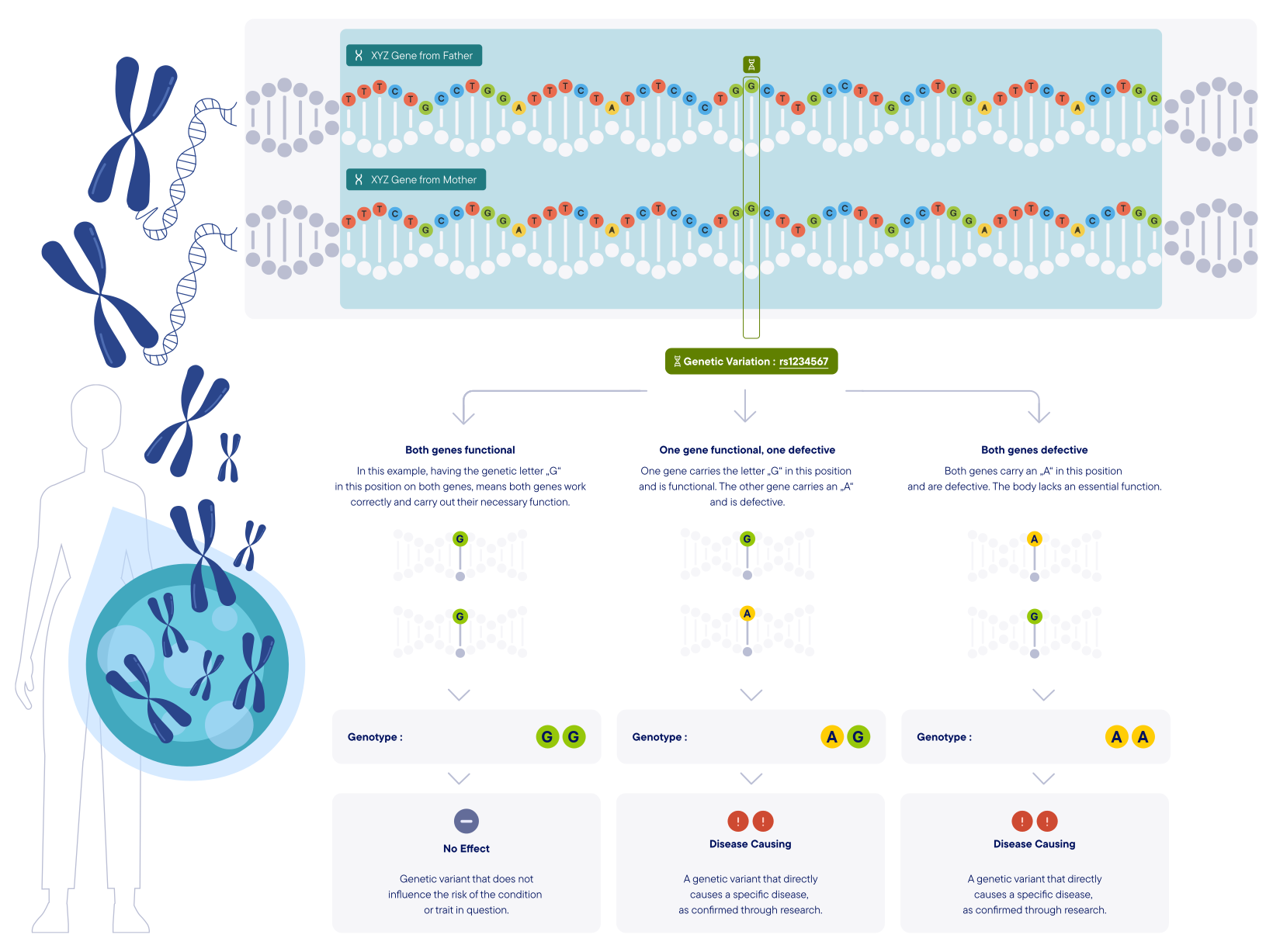
Humans have more than 20,000 genes, each carrying out one or a few specific functions in the body. One gene instructs the body to digest lactose from milk, another tells the body how to build strong bones and another prevents the body's cells from beginning to multiply uncontrollably and developing into cancer. As all of these genes combined are the building instructions for our body, a defect in one of these genes can have severe health consequences.
Through decades of genetic research, we know the genetic code of any healthy/functional human gene. We have also identified that in certain positions on a gene, some individuals may have a different genetic letter from the one you have. We call these hotspots "Genetic Variations" or "Variants" in short. In many cases, studies have been able to show that having the genetic letter "G" in the position makes you healthy, but having the letter "A" in the same position disrupts the gene function and causes a disease. Genopedia allows you to view these variants in genes and summarizes all that we know from scientific research, which genetic letters (Genotype) have good or bad consequences on your health or on your traits.
History
Families and communities once noticed patterns that seemed to run through certain branches: a child who spoke later than classmates, a sibling with learning differences, a cousin with subtle facial features doctors couldn’t quite group into a known condition. Medical notes from those years often focused on the day-to-day challenges—delayed first words, extra school support—without a unifying explanation.
From early theories to modern research, the story of 7q31 microdeletion syndrome reflects how technology reshaped diagnosis. Before the 1990s, a standard chromosome test could spot only large missing pieces. Smaller gaps on chromosome 7, including the 7q31 region, usually went unnoticed. As more sensitive methods arrived—first high‑resolution chromosome analysis, then FISH, and later chromosomal microarray—clinicians began identifying tiny deletions that matched the histories families had been sharing for decades.
First described in the medical literature as small deletions on the long arm of chromosome 7, these findings were initially linked to speech and language delays, because the 7q31 region includes genes important for communication development. As reports accumulated, the picture broadened. Doctors recognized that 7q31 microdeletion syndrome could also involve mild differences in growth, learning, or behavior, while some people had few noticeable features. This range reminded clinicians that the same small change in DNA can act like a dimmer switch—turning certain traits down more in some people than others.
In recent decades, knowledge has built on a long tradition of observation. Detailed case series helped map which parts of 7q31 relate most strongly to early speech delay, and which might influence motor skills or social development. At the same time, family studies showed that 7q31 microdeletions can be new in a child or inherited from a parent with subtle signs, explaining why the condition can appear unexpectedly or seem to “softly” run in a family.
Despite evolving definitions, the core message has stayed steady: identifying the microdeletion does not predict destiny, but it does guide care. As genetic testing became more accessible in Europe and the United States, more children and adults received a clear name for a pattern that had long been observed without answers. Today, the history of 7q31 microdeletion syndrome continues to grow with registries and natural‑history studies, giving families and clinicians better insight into early symptoms of 7q31 microdeletion syndrome and the supports that help over time.