
6q16 microdeletion syndrome is a rare genetic condition caused by a small missing piece of chromosome 6. People with 6q16 microdeletion syndrome often have developmental delays, learning differences, and differences in growth or body shape. Some may have low muscle tone, feeding difficulties in infancy, sleep or behavior challenges, and features that a doctor can see on exam. It is lifelong, and care focuses on therapies, educational support, and managing specific health needs. The outlook varies, but many people with 6q16 microdeletion syndrome can make steady gains with early support and regular follow-up.
Overview
6q16 microdeletion syndromeSymptoms
6q16 microdeletion syndrome often shows developmental delay, low muscle tone, feeding challenges in infancy, and later learning or behavioral differences. Many have short stature or early obesity, sleep issues, and subtle facial features; doctors may note small hands or feet.
Outlook and prognosis
Many living with 6q16 microdeletion syndrome grow and learn at their own pace, often needing long‑term developmental, educational, and behavioral supports. With early therapies and regular follow‑up, communication, daily skills, and quality of life can improve. Health concerns vary by deletion size and genes involved.
Causes and risk factors
6q16 microdeletion syndrome results from a missing segment on chromosome 6 (q16), most often arising as a new genetic change. Rarely, it’s inherited from a parent with a balanced chromosome rearrangement or mosaicism. No proven environmental or lifestyle risk factors.
Genetic influences
Genetics are central in 6q16 microdeletion syndrome because the condition results from a small missing segment on chromosome 6. The exact size and genes lost vary, shaping severity and features. Most cases are new (de novo), but parental testing helps clarify recurrence risk.
Diagnosis
Doctors suspect 6q16 microdeletion syndrome from clinical features and development history. Genetic diagnosis of 6q16 microdeletion syndrome is confirmed with chromosomal microarray or targeted genetic tests, with imaging or other studies to assess related findings.
Treatment and drugs
Treatment for 6q16 microdeletion syndrome focuses on each person’s needs. Care often includes early therapies for motor and speech delays, educational supports, behavioral strategies, and monitoring of growth, sleep, vision, and hearing, with targeted medicines or devices as needed. A coordinated team—pediatrics, genetics, neurology, developmental and behavioral specialists—helps adjust the plan over time.
Symptoms
6q16 microdeletion syndrome affects growth, development, and behavior in ways that show up from infancy into childhood. Early features of 6q16 microdeletion syndrome often include low muscle tone and feeding challenges, with learning and speech delays becoming clearer later on. Features vary from person to person and can change over time. Some children also develop a strong appetite and weight gain if the deleted segment includes a gene that helps regulate hunger.
In 6q16 microdeletion syndrome, babies may feel floppy and tire quickly during tummy time or when held. This can delay rolling, sitting, or walking. Physical therapy can help build strength.
During infancy, some babies have trouble latching, coordinating suck-swallow-breathe, or staying awake to finish feeds. In 6q16 microdeletion syndrome, early poor weight gain can give way to better growth as feeding improves. Extra support from feeding specialists may be useful.
Milestones such as sitting, walking, and self-care tend to arrive later than average. Learning skills can be uneven, with strengths in some areas and challenges in others. School supports and therapies can help.
First words may come late, and understanding multi-step directions can be harder. Some children use gestures or pictures while speech develops. Ongoing speech therapy often improves communication.
How people usually first notice 6q16 microdeletion syndrome?
Many families first notice something is different when a baby with 6q16 microdeletion syndrome has low muscle tone, feels “ floppy,” or feeds slowly, and later shows delays in sitting, crawling, or talking. Doctors may pick up the first signs of 6q16 microdeletion syndrome on a prenatal ultrasound if growth looks smaller than expected, or after birth during checkups when growth, head size, or developmental milestones lag behind typical ranges. In some children, behavioral features such as limited social eye contact, autistic traits, or attention difficulties become the clues that prompt genetic testing and reveal how 6q16 microdeletion syndrome is first noticed.
Types of 6q16 microdeletion syndrome
6q16 microdeletion syndrome is a genetic condition caused by a small missing piece on the long arm of chromosome 6. Variants of 6q16 microdeletion syndrome are typically defined by the exact genes included in the deletion and the size of the missing segment, which can change how symptoms show up and how severe they are. Not everyone will experience every feature, and the balance of symptoms can shift over time. When people look up types of 6q16 microdeletion syndrome, they’re usually referring to these gene-based variants rather than separate diseases.
SIM1-only deletions
These involve a small region that includes the SIM1 gene. People often have early feeding difficulties that can shift to increased appetite and weight gain later, along with learning and behavioral differences.
PRDM13 region deletions
These remove PRDM13 with or without nearby genes. Vision and eye-movement issues may be more prominent, sometimes alongside developmental delay and muscle tone differences.
POU3F2 region deletions
These affect POU3F2 and nearby regulatory areas. Speech and language delays can be more marked, and some may have attention or anxiety features.
Large 6q16–q21 deletions
These span SIM1 plus additional genes across 6q16 into 6q21. Features can be broader, with more noticeable growth, muscle tone, and learning impacts, and medical needs may be more complex.
6q16.1 microdeletions
These are proximal, smaller losses within 6q16. Developmental delay and subtle facial features may occur, with variable effects on growth and behavior.
6q16.3 microdeletions
These are more distal losses within 6q16. People may show learning differences and behavioral traits, with appetite or sleep changes depending on which genes are included.
What genetics can tell you about symptoms
Some people with 6q16 microdeletion syndrome have low muscle tone, feeding difficulties, and developmental delay because missing genes in the 6q16 region can disrupt brain and muscle development. Deletions including the SIM1 gene are often linked to rapid weight gain, increased appetite, and short stature.
Causes and risk factors
6q16 microdeletion syndrome happens when a small section of chromosome 6 at q16 is missing.
It most often occurs as a new change in the child, but it can be inherited from a parent who also carries the deletion.
A family history of the same deletion or a parent with a balanced chromosome change can raise the chance in future pregnancies.
Genes set the stage, but environment and lifestyle often decide how the story unfolds.
Everyday exposures do not cause 6q16 microdeletion syndrome, but health factors like nutrition, sleep, and early therapies can shape how severe features are.
Environmental and biological risk factors
Here’s what’s known about environmental and biological factors that can raise the chance of 6q16 microdeletion syndrome. Some risks are carried inside the body, others come from the world around us. Most cases happen because of one-time changes in genetic material as eggs or sperm form or in the earliest days after conception, not because of anything parents did or didn’t do. These factors relate to how it starts, not to the early symptoms of 6q16 microdeletion syndrome.
Tiny losses of DNA can occur by chance when eggs or sperm are made. These sporadic changes are a leading biological reason 6q16 microdeletion syndrome occurs. They can happen in any pregnancy and are not linked to parent actions.
Soon after conception, early cell divisions can sometimes miscopy DNA, creating a small missing segment at 6q16. When this happens very early, most cells carry the change, leading to 6q16 microdeletion syndrome. This is a biological event families cannot prevent.
New DNA changes tend to accumulate in sperm with age, and some studies suggest a small rise in fresh changes with older paternal age. A clear link to 6q16 microdeletion syndrome has not been proven, but any increase—if present—appears to be small. Most cases occur at any parental age.
High doses of ionizing radiation to the ovaries or testes before conception can damage DNA in eggs or sperm. No specific exposure is known to trigger 6q16 microdeletion syndrome, but significant DNA damage could raise the chance of a chromosomal deletion. Everyday background radiation is far below these levels.
Genetic risk factors
At its root, 6q16 microdeletion syndrome stems from a small missing segment on the long arm of chromosome 6, in the q16 region. Some risk factors are inherited through our genes. In many families, the deletion arises as a new event in the egg or sperm; in others, it can be passed down or result from a balanced chromosome change in a parent. The genetic causes of 6q16 microdeletion syndrome depend on which genes are lost—especially SIM1—and how large the missing segment is.

De novo deletion: Most cases occur as a new deletion in the egg or sperm. Neither parent carries the missing segment on routine blood testing.
SIM1 gene loss: Loss of one copy of the SIM1 gene within 6q16 appears central to appetite and neurodevelopment features. This loss can disrupt brain circuits that regulate hunger and behavior. It helps explain several hallmark features of 6q16 microdeletion syndrome.
Variable deletion size: The missing segment can vary in size and which genes are removed. Larger or differently placed deletions may shift which features are most noticeable. This helps explain why early symptoms of 6q16 microdeletion syndrome can differ between children.
Inherited from parent: Less often, a parent with the same deletion passes it on to a child. When this happens, the pattern is autosomal dominant. Each pregnancy then carries a chance of inheritance.
Balanced rearrangement parent: A parent may carry a balanced translocation or inversion involving 6q16 with no health issues. This can lead to a child receiving an unbalanced set that includes the 6q16 deletion. Parental chromosome testing clarifies this risk.
Parental mosaicism: Rarely, a parent has the deletion only in some egg or sperm cells (germline mosaicism), so blood tests appear normal. This can raise the chance of another child having the same deletion. Genetic counseling can help families plan testing options.
Other regional genes: Genes near SIM1 within 6q16 also influence brain and body development. When they are included in the deletion, they may shape learning, growth, or behavior. This is one reason 6q16 microdeletion syndrome can look different from one person to another.
Lifestyle risk factors
6q16 microdeletion syndrome is present from birth; lifestyle habits do not cause it, but they can shape symptoms, functioning, and risks over time. Targeted daily choices can support motor skills, communication, sleep, behavior, and weight management. Families can focus on routines that reduce complications while enhancing development. This is how lifestyle affects 6q16 microdeletion syndrome in practical ways.
Consistent meal timing and portion control can counter hyperphagia tendencies sometimes seen in 6q16 microdeletion syndrome. This helps prevent rapid weight gain and downstream metabolic issues.
Daily movement strengthens low muscle tone and improves coordination common in 6q16 microdeletion syndrome. It also supports weight control, bone health, and bowel regularity.
A steady sleep schedule and bedtime routine can reduce daytime irritability and learning difficulties. Given hypotonia and possible sleep-disordered breathing, prioritizing sleep quality can improve behavior and attention.
In infancy, paced feeds and positioning techniques can address hypotonia-related feeding difficulties. Early feeding therapy helps prevent poor growth and reduces aspiration risk.
Risk prevention
Because 6q16 microdeletion syndrome is genetic, there isn’t a way to prevent the condition itself, but you can lower the chance of complications and support healthier development. Prevention can mean both medical steps, like vaccines, and lifestyle steps, like exercise. Regular check-ins help catch issues early, when they’re easier to manage. If future pregnancy planning is on your mind, genetics specialists can outline options to reduce recurrence risk.
A genetics professional can explain how 6q16 microdeletion syndrome happens and clarify recurrence risks for your family. They can review options like preimplantation genetic testing and donor gametes if you wish to lower future pregnancy risk.
If a pregnancy is at increased risk, tests like chorionic villus sampling or amniocentesis can check for the deletion. Early results allow time to plan care and delivery at a center prepared for newborn needs.
Tracking early symptoms of 6q16 microdeletion syndrome can flag delays sooner. Prompt referrals to physical, occupational, and speech therapy can improve skills and reduce downstream complications.
Early support for weak muscle tone and feeding issues can prevent poor weight gain. As children grow, monitoring for rapid weight gain helps lower risks linked to obesity.

Transmission
6q16 microdeletion syndrome is not infectious; it cannot be caught or spread through contact, coughing, or everyday activities. It happens when a small piece of chromosome 6 is missing, and in most families this is a new change that occurs in the egg or sperm or very early after conception. Some families have genetic transmission of 6q16 microdeletion syndrome when a parent carries the same missing segment or has a balanced chromosome change that can lead to the deletion in a child. In those cases, the condition is passed in an autosomal dominant pattern, meaning one changed copy is enough to cause it, though the signs can vary from person to person. Parental genetic testing can clarify how 6q16 microdeletion syndrome is inherited and help estimate the chance of it happening again; if neither parent carries the change, the recurrence risk is generally low.
When to test your genes
6q16 microdeletion syndrome is genetic/congenital, so gene testing is considered when there’s suggestive features—such as developmental delays, growth or feeding difficulties, distinctive facial features, hypotonia, or learning differences—or a known family history. Testing also helps guide care if unexplained autism spectrum features or behavioral challenges are present. Parents planning future pregnancies may test to clarify recurrence risk.
Diagnosis
For many, the path to answers starts when developmental delays, low muscle tone, or rapid weight gain prompt a closer look. The genetic diagnosis of 6q16 microdeletion syndrome is usually made with a chromosomal microarray, which can find very small missing pieces of chromosome 6. Genetic testing may be offered to clarify risk or guide treatment. From there, additional tests help confirm the finding, rule out look-alike conditions, and understand what it means for the family.
Doctors look for patterns such as low muscle tone, developmental delays, distinctive facial traits, and growth or weight changes. These clues help decide which genetic tests are most informative.
Details about milestones, speech, learning, and behavior help build the clinical picture. Notes from therapists or teachers can add objective examples of strengths and challenges.
This is the first-line test to detect a small deletion at 6q16. It can define the size and genes involved, supporting a clear diagnosis of 6q16 microdeletion syndrome.
FISH or qPCR can confirm the specific missing segment identified by microarray. These methods can also test relatives for the same change when needed.
Stages of 6q16 microdeletion syndrome
6q16 microdeletion syndrome does not have defined progression stages. It’s a genetic difference present from birth, and features often change with age and support needs rather than moving through fixed steps. When doctors suspect it, they look at early symptoms of 6q16 microdeletion syndrome—such as feeding difficulties, low muscle tone, or developmental delays—and confirm with chromosome-based tests and a review of growth, behavior, and learning. Genetic testing may be offered to clarify certain risks.
Outlook and prognosis
Looking at the long-term picture can be helpful. For many people with 6q16 microdeletion syndrome, the outlook centers on developmental progress, learning support, and managing behavior or sleep differences rather than life-threatening complications. Many children make steady gains with therapies; speech and motor skills can improve over time, and many attend mainstream or specialized classrooms with accommodations. Some may have feeding issues, low muscle tone, or growth differences early on, but these often become more manageable with targeted care.
Prognosis refers to how a condition tends to change or stabilize over time. In 6q16 microdeletion syndrome, the long-term outlook varies widely based on the exact size of the deletion and which genes are involved. Some people experience mild learning challenges and need limited support, while others notice more substantial intellectual disability and ongoing support needs in school and adulthood. Seizures are not universal but can occur; if present, they’re often treatable. Heart, kidney, or major structural issues are less common than in some chromosomal conditions, so mortality directly related to 6q16 microdeletion syndrome appears low in current reports, though long-term data are limited because it’s rare.
Daily routines often adapt as children grow into teens and adults, with supports shifting from early therapies to vocational planning and community resources. Early care can make a real difference, especially for early symptoms of 6q16 microdeletion syndrome such as feeding difficulties, developmental delays, or sleep problems. With ongoing care, many people maintain good overall health, and life expectancy is thought to be near typical when no major medical complications are present. Talk with your doctor about what your personal outlook might look like, including which specialists to see and how often to follow up as needs change.
Long-term effects
6q16 microdeletion syndrome can shape health and development from infancy into adulthood. Early features of 6q16 microdeletion syndrome often include low muscle tone and feeding difficulties in infancy, while later years may bring challenges with weight and learning. Long-term effects vary widely, and not everyone will have the same combination or severity. Over time, daily routines may shift—first around feeding and therapy in childhood, and later around schooling, behavior, and weight management in adolescence and adulthood.
Many have mild to moderate challenges with understanding, problem‑solving, or school learning. Speech and language can be delayed and may remain an area of relative difficulty over time. In some, daily living skills improve steadily but still need supports.
A strong drive to eat and early‑onset weight gain can persist into adulthood. This can raise risks linked to excess weight, such as sleep apnea and metabolic concerns. In some people with 6q16 microdeletion syndrome, weight trends are closely tied to the deletion’s effect on appetite control.
Low muscle tone in infancy can improve yet often remains slightly reduced. This may affect endurance, posture, and coordination across the lifespan. Fine motor skills can also be slower to develop.
Features of autism, anxiety, or attention‑regulation differences can continue beyond childhood. Planning, flexibility, and impulse control may be ongoing challenges. For some with 6q16 microdeletion syndrome, social communication needs remain steady over time.
How is it to live with 6q16 microdeletion syndrome?
Living with 6q16 microdeletion syndrome often means navigating developmental differences, learning challenges, and sometimes low muscle tone or feeding issues early on, with supports that evolve as needs change. Daily life may include therapies (speech, occupational, physical), structured routines, and school accommodations that help build communication, motor skills, and independence. Families and caregivers play a central role, balancing appointments and advocacy with making room for play, friendships, and rest; siblings and classmates may benefit from simple explanations that normalize differences and highlight strengths. With consistent support and realistic goals, many grow into their own pace of progress, and the household learns practical ways to reduce stress and celebrate steady gains.
Treatment and drugs
Treatment for 6q16 microdeletion syndrome focuses on managing symptoms and supporting development rather than curing the genetic change itself. Care usually includes early intervention with physical, occupational, and speech therapy to build motor skills, communication, and daily living abilities; many also benefit from behavioral therapies for attention, learning, or social challenges. Doctors sometimes recommend a combination of lifestyle changes and drugs, such as stimulant or non-stimulant medicines for attention difficulties, melatonin for sleep problems, or targeted treatments for seizures, low muscle tone, feeding issues, or growth concerns. Regular hearing, vision, heart, and endocrine check-ins help catch and treat features early, and individualized education plans at school can support learning. Finding the right therapy can take some time, so keep track of how you feel, and share this with your care team.
Non-drug treatment
Day-to-day, families often focus on feeding, movement, communication, and learning skills. Non-drug treatments often lay the foundation for progress, with medicines added only if needed. Early symptoms of 6q16 microdeletion syndrome can include weak muscle tone, feeding difficulties, and developmental delays, so starting supportive therapies early can help. Care plans are tailored and usually involve a coordinated team for home, school, and clinic.
Team-based services in infancy and toddler years build core skills in movement, feeding, and communication. Starting early is especially helpful for children with 6q16 microdeletion syndrome. Programs often include parent coaching to carry skills into daily routines.
Exercises and play-based activities build strength, balance, and coordination. Therapists teach positioning and core work to counter low muscle tone. Home programs help maintain gains between visits.
Fine motor and self-care skills—like dressing, feeding, and handwriting—are practiced in steps. Sensory strategies can improve attention and comfort. Caregivers learn practical ways to adapt tasks at home.
Support targets early communication, speech sounds, language, and social interaction. When speech is delayed, therapists also guide nonverbal communication strategies. Swallowing assessments help when feeding or choking concerns arise.
Your genes may have an impact on how drugs work for you
Medicines used in 6q16 microdeletion syndrome can work differently because variants in liver enzyme genes and drug-target genes change how a person absorbs, breaks down, and responds to treatments. Pharmacogenetic testing, when available, helps clinicians choose safer doses and avoid side effects.
Pharmacological treatments
Living with 6q16 microdeletion syndrome often means managing appetite, weight, behavior, sleep, and sometimes seizures; medicines can help specific symptoms. Not everyone responds to the same medication in the same way. Below are commonly used medications for 6q16 microdeletion syndrome, chosen to target hunger, mood or attention, sleep, and seizure control when needed. Doses and choices vary by age, other conditions, and side effects.
Liraglutide and semaglutide can reduce hunger and support weight loss. They may be options for adolescents and adults with obesity linked to 6q16 microdeletion syndrome. Nausea and stomach upset are the most common early effects.
Metformin can improve insulin resistance and help limit weight gain. It may be useful when increased appetite in 6q16 microdeletion syndrome leads to rapid weight changes. Stomach upset is possible, and doses are increased slowly.
Topiramate can curb appetite and may help with migraines. Some people notice tingling or word-finding trouble. Doctors start low and increase gradually to reduce side effects.
This combination can support weight loss in adults. It is not approved for children, and it can raise blood pressure or worsen anxiety. It should not be used with seizure disorders.
Genetic influences
Most cases arise as a new genetic change in the egg or sperm, rather than being passed down. In 6q16 microdeletion syndrome, a small stretch of DNA is missing from chromosome 6 (region q16), which can disrupt genes important for brain development and appetite control. Family history is one of the strongest clues to a genetic influence. Still, some families may have an inherited deletion or a parent who carries a balanced chromosome change, which can raise the chance of it happening again. Even with the same 6q16 deletion, features and severity can vary widely from person to person. Genetic testing for 6q16 microdeletion syndrome—often through a chromosomal microarray—can confirm the diagnosis and guide testing of parents to clarify recurrence risk for future pregnancies. Genetic counseling can help you understand these results and plan next steps.
Is 6q16 microdeletion syndrome genetic?
Genetics are central in 6q16 microdeletion syndrome because the condition results from a small missing segment on chromosome 6. The exact size and genes lost vary, shaping severity and features. Most cases are new (de novo), but parental testing helps clarify recurrence risk.
Pharmacogenetics—how genetics influence drug effects
Treatment in 6q16 microdeletion syndrome is tailored to symptoms—often behavior, attention, mood, sleep, feeding, or seizures—so medicines are sometimes part of the plan. The deletion affects brain development and appetite control but usually doesn’t change the liver enzymes that break down most drugs, so medication response in 6q16 microdeletion syndrome is influenced more by your separate drug‑metabolism genes and by clinical factors like age, weight, and sleep apnea. Genetic testing can sometimes identify how your body processes certain medicines, helping doctors fine‑tune doses for antidepressants, seizure medicines, or pain relievers. Doctors combine this with your health history, growth and nutrition needs, and careful monitoring to choose the safest options. Sedatives and strong painkillers may require extra caution because low muscle tone, obesity, or sleep‑disordered breathing can increase sensitivity, so teams often start low and go slow. Pharmacogenetics doesn’t replace clinical judgment, but it can reduce trial and error and support individualized care in 6q16 microdeletion syndrome.
Interactions with other conditions
Weight gain and low muscle tone can make other health issues more likely or more noticeable, such as sleep apnea, reflux, and constipation. In 6q16 microdeletion syndrome, changes affecting appetite control and body weight may raise the long-term risk of type 2 diabetes, high blood pressure, and abnormal cholesterol, so heart and metabolic screening is often important. Doctors call it a “comorbidity” when two conditions occur together, and many living with 6q16 microdeletion syndrome also have autism spectrum traits, ADHD, anxiety, or depression, which can influence learning plans, therapies, and medication choices. Early symptoms of 6q16 microdeletion syndrome like poor muscle tone and feeding difficulties can interact with reflux or aspiration risk in infancy, while later hyperphagia and obesity can worsen joint pain, mobility limits, and sleep-disordered breathing. Some people have seizures, and certain antiseizure medicines may affect weight or mood, so teams often tailor treatments to avoid making another problem worse. Interactions can look very different from person to person, but coordinated care across neurology, endocrinology, cardiology, sleep medicine, and behavioral health can reduce complications and support day-to-day functioning.
How genes can cause diseases
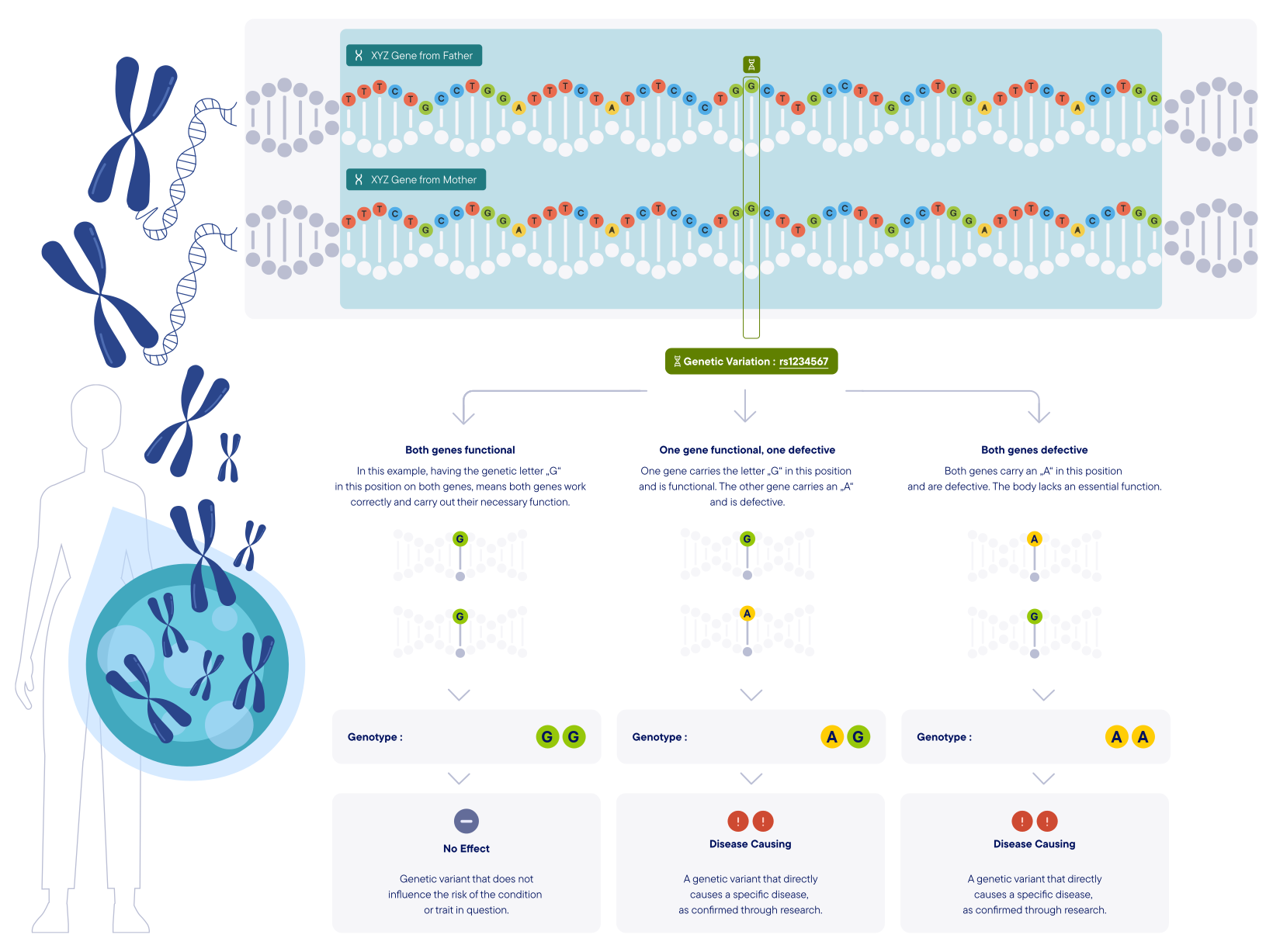
Humans have more than 20,000 genes, each carrying out one or a few specific functions in the body. One gene instructs the body to digest lactose from milk, another tells the body how to build strong bones and another prevents the body's cells from beginning to multiply uncontrollably and developing into cancer. As all of these genes combined are the building instructions for our body, a defect in one of these genes can have severe health consequences.
Through decades of genetic research, we know the genetic code of any healthy/functional human gene. We have also identified that in certain positions on a gene, some individuals may have a different genetic letter from the one you have. We call these hotspots "Genetic Variations" or "Variants" in short. In many cases, studies have been able to show that having the genetic letter "G" in the position makes you healthy, but having the letter "A" in the same position disrupts the gene function and causes a disease. Genopedia allows you to view these variants in genes and summarizes all that we know from scientific research, which genetic letters (Genotype) have good or bad consequences on your health or on your traits.
History
Families and communities once noticed patterns that a few children in each generation had similar learning challenges and distinctive facial features, even when no clear diagnosis was available. Before modern testing, doctors grouped these features under broad labels, and many living with what we now call 6q16 microdeletion syndrome were simply said to have “developmental delay” or “failure to thrive.” A child might be smaller than classmates, take longer to speak, or need extra support in school; a relative might recall a grandparent with similar traits. These lived observations came long before the underlying cause could be seen.
First described in the medical literature as clusters of symptoms, the condition was initially understood only through outward features and developmental patterns. In the late 20th century, chromosomal analysis began to reveal missing pieces of chromosome 6 in some people with these features. Early tools, like karyotyping, could only detect larger gaps, so many small deletions went unnoticed. As technology improved, tests such as chromosomal microarray allowed clinicians to spot smaller missing segments at 6q16 with much greater precision.
From early theories to modern research, the story of 6q16 microdeletion syndrome has evolved alongside genetics. Researchers began mapping which genes sit in the 6q16 region and how losing them can influence growth, learning, behavior, and body structure. Reports from different countries showed that people with 6q16 microdeletions share a core set of findings, but with wide variation in severity. This helped explain why some family members had subtle features while others needed more comprehensive support.
In recent decades, awareness has grown as more children and adults received genome-based testing. What was once considered rare is identified more often, not because the condition is suddenly more common, but because testing has become more sensitive and widely available. Historical differences highlight why some adults today are only now getting an explanation for challenges they’ve had since childhood.
Today, the history of 6q16 microdeletion syndrome reflects a broader shift in medicine: moving from labels based on appearance to diagnoses rooted in DNA changes. Knowing the condition’s history helps families understand why earlier evaluations might have missed it, and why two people with the same microdeletion can have different needs. This path—from careful observation to precise genetic diagnosis—continues to shape research, guide care, and connect families who share this rare chromosomal change.