
46,XY difference of sex development is a genetic/congenital condition that affects how testes and male-typical traits develop before and after birth. People with 46,XY difference of sex development may have varied genital appearance, differences in puberty, or fertility challenges. Features are lifelong, but needs can change from infancy through adulthood. Treatment focuses on individualized care such as hormone therapy, supportive surgeries when appropriate, and ongoing psychosocial support. Not everyone will have the same experience, and most people with 46,XY difference of sex development can live long lives with routine medical care.
Overview
46,xy difference of sex developmentSymptoms
46,XY difference of sex development may be noticed at birth with atypical genital appearance, such as undescended testes or a small penis. Others appear at puberty: delayed changes, sparse hair, infertility. Early signs of 46,XY difference of sex development vary.
Outlook and prognosis
Many living with 46,XY difference of sex development (DSD) lead healthy, full lives with the right care plan. Outlook varies by the specific DSD, timing of diagnosis, and hormone or surgical needs. Ongoing, team-based follow-up supports growth, fertility discussions, sexual health, and mental well‑being.
Causes and risk factors
Causes of 46,XY difference of sex development include gene changes affecting testicular development or how body responds to sex hormones before birth. Changes may be inherited or new. Risk increases with family history or related parents; lifestyle causes aren’t established.
Genetic influences
Genetics play a central role in 46,XY difference of sex development. Variations in genes guiding testis development or hormone signaling often explain early symptoms of 46,XY difference of sex development. Testing can clarify the cause, guide care, and inform family planning.
Diagnosis
Doctors assess clinical features at birth or later, then confirm with tests. Evaluation usually includes hormone panels, karyotype showing 46,XY, targeted genetic tests, and pelvic/abdominal ultrasound or MRI. This approach supports genetic diagnosis of 46,XY difference of sex development.
Treatment and drugs
Treatment for 46,XY difference of sex development is tailored to the person’s needs and goals over time. Care often includes hormone support, guidance on puberty, fertility counseling, psychological support, and, when chosen, specialty surgeries after shared decision‑making. Regular follow‑up helps adjust plans as bodies and priorities change.
Symptoms
Many families first notice differences in the appearance of the genitals at birth or during early checkups. Others discover concerns later, when puberty doesn’t follow expected patterns. Features vary from person to person and can change over time. Early features of 46,xy difference of sex development can include genital differences, hormone-related changes, or fertility concerns, and they depend on the specific cause.
The outer genitals may look different from typical male or female patterns. This can include a smaller penis, a larger clitoris, or skin folds that appear more fused. These early differences are a common way 46,xy difference of sex development is first noticed.
Clinicians call this hypospadias, which means the urine opening sits on the underside of the penis. The stream may spray, and standing to pee can be difficult. This may be seen at birth or during early childhood.
One or both testes may not be in the scrotum. A firm lump can be felt higher in the groin or seen with a small hernia. This feature is common in people with 46,xy difference of sex development.
Expected male changes such as a deeper voice, facial hair, or genital growth may be limited or delayed. Some develop breast tissue during puberty. These patterns can emerge even when growth and overall health otherwise seem typical.
How people usually first notice 46,xy difference of sex development?
Many families first notice a 46,XY difference of sex development (DSD) at birth when the baby’s external genitals don’t look typically male or female, prompting the care team to check hormones and chromosomes. Sometimes the first signs of 46,XY DSD are found before birth on an ultrasound that raises questions about fetal sex, or later in childhood when a child has undescended testes, a small penis, or slower-than-expected changes at puberty. In some teens, how 46,XY DSD is first noticed is delayed puberty or absent periods in someone raised female, which leads doctors to investigate hormone levels and genetic results together.
Types of 46,xy difference of sex development
People with a 46,XY difference of sex development (DSD) share the same chromosome pattern typically linked with males, but their body’s sex development takes a different path. Variants exist because different genes, hormone pathways, or androgen (testosterone) signaling steps can be affected, leading to a range of genital appearance, puberty patterns, and fertility outcomes. Symptoms don’t always look the same for everyone. Knowing the main variants can help you understand the types of 46,XY DSD and how symptoms may differ across childhood and adolescence.
Complete AIS
The body makes testosterone but cannot respond to it well, so external genitalia typically look typically female at birth. Breast development usually occurs at puberty with little to no underarm or pubic hair. Testes are present but may be undescended, and fertility is not expected.
Partial AIS
The body’s response to testosterone is reduced rather than absent, leading to a wide range of genital appearance at birth. Puberty changes can include some breast development alongside some virilization (voice or muscle changes). Testes may be undescended, and fertility is usually reduced.
5-alpha-reductase deficiency
The body cannot convert testosterone to its stronger form (DHT), which is key for genital development before birth. External genitalia may look under-virilized at birth, with possible masculinization at puberty. Fertility can be variable.
Gonadal dysgenesis
The testes do not develop typically, leading to low testosterone production and under-virilized or ambiguous genitalia at birth. At puberty, spontaneous virilization is limited without hormone treatment. Streak or underdeveloped gonads can raise tumor risk and often affect fertility.
LH receptor defects
The testes cannot receive the LH signal that triggers testosterone production, causing undervirilization at birth. Puberty changes are limited without hormone therapy. Fertility is typically impaired.
Testosterone biosynthesis defects
Enzyme changes along the pathway to make testosterone lead to low levels before birth and during puberty. Genital appearance can vary from female-typical to ambiguous to mildly male-typical at birth. Puberty virilization is often limited without treatment.
SRY-related variants
Changes in the SRY gene or its partners can impair testis development early in pregnancy. Newborns may have under-virilized genitalia, and puberty often requires hormone support. Fertility is usually not expected.
NR5A1 (SF1) variants
This gene affects testis development and hormone production; changes can lead to a wide range of 46,XY DSD presentations. Newborn genital appearance varies, and some may have adrenal hormone issues. Puberty and fertility outcomes are variable.
WT1-related variants
These can affect testis formation and, in some types, kidney development. Genital differences are often present at birth, and kidney monitoring is important. Puberty changes and fertility are commonly affected.
DHH-related variants
Peripheral nerve and testis development can be involved, leading to gonadal dysgenesis features. Genital appearance may be under-virilized at birth. Puberty changes are often limited, and fertility is typically reduced.
MAP3K1 variants
These changes shift early signals that guide testis development toward ovarian pathways. Babies often have under-virilized genitalia, and puberty may require hormone support. Fertility is generally not expected.
Non-hormonal genital development variants
Some 46,XY DSD present with typical testosterone levels but differences in genital formation, such as severe hypospadias. Day-to-day effects relate to urination direction, sexual function, and future fertility planning. Researchers describe these categories to better understand patterns of the condition.
What genetics can tell you about symptoms
Some people with 46,XY difference of sex development have changes in genes like SRY, NR5A1, or AR that alter hormone signals, affecting how testes form and how the body responds to androgens. This can lead to undervirilized genitalia, undescended testes, sparse body hair, or delayed puberty.
Causes and risk factors
46,XY difference of sex development often comes from differences in testis formation or in how the body makes or responds to male-type hormones before birth. Many cases are due to a change in one gene that guides testis or hormone development. This change can run in families, and risk can be higher when parents are related by blood. Rarely, exposure in pregnancy to certain hormones or anti-androgen medicines can affect development and the early symptoms of 46,XY difference of sex development. Lifestyle choices after birth do not cause this condition, and genetic testing can sometimes clarify your personal risk.
Environmental and biological risk factors
Understanding what raises the chance of a 46,XY difference of sex development can help families and care teams plan well before birth. That said, biology and environment work hand in hand. Below are environmental and biological risk factors for 46,XY difference of sex development, focused on fetal hormone pathways and pregnancy exposures.
Differences in how the fetal gonads form in the first trimester can reduce hormone output. Lower hormone signals can alter genital and internal reproductive development. These early changes can increase the chance of 46,XY difference of sex development.
Disruptions in steps that make testosterone or convert it to its active form can occur before birth. When these steps slow or stall, masculinizing signals are weaker. This can lead to features seen in 46,XY difference of sex development.
Body tissues may be less able to respond to androgen signals. Even with typical hormone levels, cells respond weakly, so development shifts. This reduced response can shift genital and reproductive tract development.
Differences in anti-Müllerian hormone or how tissues sense it can affect internal ducts. If the signal is low or blocked, structures may not regress as expected. This biological pathway is linked to 46,XY difference of sex development.
Genetic risk factors
Many cases of 46,xy difference of sex development (46,XY DSD) stem from inherited or new changes in genes that guide testis development and hormone signaling. These genetic causes of 46,xy difference of sex development can affect how much testosterone is produced, how it’s converted to stronger forms, or how the body responds to it. Carrying a genetic change doesn’t guarantee the condition will appear. Inheritance can be X-linked, autosomal dominant, or autosomal recessive, and sometimes the change is found for the first time in a family.

SRY gene changes: The SRY gene on the Y chromosome switches on testis development. Changes in SRY or nearby control regions can lead to incomplete testis formation in 46,XY DSD. These changes often happen for the first time in a family but can occasionally be inherited.
Androgen receptor variants: The AR gene helps cells respond to testosterone and DHT. Variants reduce or block this signal, causing a range from complete to partial androgen insensitivity in 46,XY DSD. This is usually inherited in an X-linked pattern, so female relatives may be carriers.
5-alpha-reductase deficiency: The SRD5A2 gene is needed to convert testosterone into the stronger hormone DHT. Variants cause low DHT, which affects genital development in 46,XY DSD and may lead to changes at puberty. It is inherited in an autosomal recessive pattern and can be more common in certain communities.
HSD17B3 variants: This gene helps the testes make testosterone. Harmful variants lower testosterone and can cause differences noticed at birth or during puberty. Inheritance is autosomal recessive.
CYP17A1 variants: This gene supports steps that make sex hormones. Variants can reduce testosterone and sometimes affect adrenal hormones. Inheritance is autosomal recessive.
STAR gene variants: The STAR gene moves cholesterol into the mitochondria to start hormone production. Severe variants can greatly limit all steroid hormones, sometimes causing serious adrenal symptoms in infancy. It is autosomal recessive.
LHCGR variants: This gene encodes the receptor that signals Leydig cells to make testosterone. Variants lead to low testosterone output and less typical male genital development. Inheritance is autosomal recessive.
NR5A1 (SF1) changes: NR5A1 guides development of the testes and adrenal glands. Variants can cause a spectrum from mild differences to complete gonadal dysgenesis in 46,XY DSD. These changes are often autosomal dominant with variable effects within a family.
MAP3K1 variants: This signaling gene influences early testis determination. Variants are a recognized cause of partial gonadal dysgenesis in 46,XY DSD. They are typically autosomal dominant with reduced penetrance.
WT1 gene changes: WT1 is important for kidney and gonadal development. Variants or specific splice changes can lead to 46,XY DSD and raise risks for certain kidney problems in syndromic forms. Changes may be inherited or arise de novo.
DHH gene variants: DHH supports testis development and nerve health. Recessive variants can cause differences in genital development, and in some people, peripheral neuropathy. Specific changes are seen more often in certain populations.
SOX9 pathway changes: SOX9 and its control regions act downstream of SRY to drive testis formation. Variants or deletions in enhancers can disrupt this process and may occur alongside skeletal differences such as campomelic dysplasia. These changes are usually new in a family but can be inherited.
DAX1 (NR0B1) duplication: Extra copies of this X-linked gene can counteract testis-determining signals. Duplications are a known cause of 46,XY DSD and may be passed through the maternal line. Larger duplications on the X chromosome can involve nearby genes.
DMRT1 deletions: DMRT1 is required for testis development and maintenance. Loss of one copy through a small deletion can lead to differences ranging from mild undervirilization to sex reversal. These changes can be inherited or occur de novo.
WNT4 duplication: Increased WNT4 signaling can tilt development toward ovarian pathways. Duplications or overexpression have been linked to less typical male genital development. These are often part of larger chromosomal changes.
Lifestyle risk factors
Lifestyle habits do not cause 46,xy difference of sex development, but they can shape bone health, metabolic risks, mood, and day‑to‑day symptom control. Small, consistent choices often make medical treatments work better and reduce complications. This overview highlights how lifestyle affects 46,xy difference of sex development so you can partner with your care team effectively.
Taking hormones exactly as prescribed helps keep levels steady, easing hot flashes, mood shifts, and bone loss. Skipping doses or stopping abruptly can destabilize labs and symptoms.
Strength training, walking, or jumping build bone that may be vulnerable when estrogen or testosterone is low or after gonadectomy. Regular activity also improves insulin sensitivity and lipids that can shift with hormone therapy.
Adequate calcium plus vitamin D supports bone strength when sex hormone levels are low or variable. Meeting targets through diet and supplements as advised reduces fracture risk.
Safe sun exposure and periodic vitamin D testing help maintain bone health if indoor time is high or skin tone limits synthesis. Supplement only under guidance to avoid excess and interactions.
Risk prevention
46,xy difference of sex development is usually present from birth, so the goal is not to prevent the condition itself but to lower risks and protect long‑term health. Recognizing early symptoms of 46,xy difference of sex development—such as undescended testes, atypical genital appearance, or delayed puberty—allows prompt, tailored care. Different people need different prevention strategies—there’s no single formula. Early, coordinated support helps reduce tumor risk, hormone‑related issues, fertility challenges, and emotional stress over time.
Ask for prompt evaluation by a multidisciplinary team (endocrinology, urology, genetics, psychology). Early assessment guides safe monitoring and avoids unnecessary procedures.
Regular exams can catch issues like undescended testes, hernias, or urinary concerns early. Timely treatment lowers infection risk and protects future function.
Some people with 46,xy difference of sex development have a higher risk of certain gonadal tumors. Scheduled imaging or lab checks, and surgery if advised, can reduce that risk.
Periodic hormone testing helps spot imbalances that affect growth, bone health, and energy. Individualized hormone therapy can support puberty, vitality, and bones.

Transmission
46,XY difference of sex development (DSD) is not contagious; it cannot be caught or spread between people. It results from changes in genes that guide sex development before birth, affecting how the testes form, the hormones produced, or how the body responds to those hormones. If you’re wondering how 46,XY difference of sex development is inherited, patterns vary—some causes are passed down from one parent, some require a change from both parents, some are linked to the X chromosome, and others happen as a new change in the child. Because the genetic transmission of 46,XY difference of sex development depends on the specific diagnosis, a genetics professional can explain your family’s personal and future pregnancy risks.
When to test your genes
Consider genetic testing if you or your child have atypical genital development, unclear puberty changes, or hormone levels that don’t match physical findings. Test before major decisions—like surgery, hormone therapy, or fertility planning—to tailor care. Family testing may help when a known variant is present or inheritance is suspected.
Diagnosis
46,xy difference of sex development is often first noticed at birth or early childhood, and sometimes not until puberty changes don’t follow the expected pattern. Doctors usually begin with a careful exam and stepwise tests, aiming to answer two questions: how the gonads are functioning and how the body is responding to hormones. The genetic diagnosis of 46,xy difference of sex development usually combines physical findings with lab tests, imaging, and DNA analysis. Early and accurate diagnosis can help you plan ahead with confidence.
The clinician checks genital appearance, urine opening, and whether the testes are present in the scrotum. Certain patterns can suggest 46,xy difference of sex development and guide which tests to do first.
Your team will ask about relatives with similar findings, fertility issues, or puberty differences. This context can point toward inherited forms and shape the testing plan.
Blood tests measure key hormones such as testosterone, anti-Müllerian hormone, and pituitary signals. Results help show whether the testes make hormones and whether the hormone signals are balanced.
Sodium and potassium levels are checked to rule out salt loss that can occur with adrenal disorders. Abnormal results prompt urgent care while the evaluation for 46,xy difference of sex development continues.
Stages of 46,xy difference of sex development
46,xy difference of sex development does not have defined progression stages. It’s a group of congenital differences that may be noticed at birth or later around puberty, and it doesn’t follow a step-by-step worsening over time. Different tests may be suggested to help confirm the diagnosis and understand the specific type, such as a physical exam, hormone blood tests, imaging of the reproductive organs, and genetic testing. Health teams also look at early symptoms of 46,XY difference of sex development—such as an atypical genital appearance at birth or delayed puberty—and plan follow-up through childhood and the teen years to monitor growth, hormones, and overall wellbeing.
Outlook and prognosis
Looking at the long-term picture can be helpful. Many people with 46,XY difference of sex development (46,XY DSD) do well across childhood and adulthood, but the outlook depends on the specific diagnosis under the 46,XY DSD umbrella, the timing of care, and access to experienced teams. Early care can make a real difference, especially when it comes to hormone support during puberty, planning for fertility options, and monitoring for potential concerns like undescended gonads. Some people experience typical energy and growth with the right hormone levels, while others notice fatigue, short stature, or delayed puberty until treatment is tuned. Day to day, early symptoms of 46,XY DSD might include atypical genital appearance at birth or puberty changes that don’t match expectations; with evaluation and a plan, most families find a steady routine.
Doctors call this the prognosis—a medical word for likely outcomes. For many 46,XY DSD conditions, life expectancy is the same as the general population when hormone needs are met and routine follow-up is in place. A few diagnoses carry added risks, such as reduced fertility, bone thinning without adequate hormones, or a higher chance of gonadal tumors if certain gonads remain in the abdomen; your team may suggest imaging, blood tests, or preventive surgery depending on your exact subtype. Mental health and quality of life are important parts of prognosis too, and support around identity, sexuality, and fertility planning can improve long-term well-being. Talk with your doctor about what your personal outlook might look like, including any tumor risks, sports participation, and future family-building options.
Long-term effects
People with 46,XY difference of sex development (DSD) can have a wide range of long-term experiences that depend on the specific diagnosis and how the body responds over time. Long-term effects vary widely, and no single pattern fits everyone. Many families look for early symptoms of 46,XY difference of sex development online, but long-term features often only become clear across childhood, puberty, and adulthood. Overall health outlook is generally good with informed, individualized medical care, though the details can differ by subtype.
Timing and development at puberty may follow a different course. Breast or genital changes can be limited, subtle, or arrive later than peers. For some, puberty occurs without expected changes.
Lifelong hormone levels may sit outside typical ranges. This can influence energy, mood, muscle and fat distribution, and body hair. Needs often differ across childhood, adolescence, and adulthood.
Fertility can range from typical to reduced, depending on the underlying cause. Some people face subfertility or infertility, while others can conceive. Options vary by diagnosis and reproductive anatomy.
Certain 46,XY DSD diagnoses carry a higher chance of tumors in the gonads. Risk depends on where the gonads are located and how developed they are. Doctors may track these changes over years to see how risk evolves.
How is it to live with 46,xy difference of sex development?
Living with a 46,XY difference of sex development can mean navigating medical questions alongside personal identity and privacy in everyday settings like school, sports, dating, and healthcare visits. Many find that supportive clinicians, clear information, and the freedom to make decisions about testing or treatments at their own pace reduce stress and help daily life feel more typical. Family members, partners, and friends often play a key role by listening, using respectful language, and focusing on the person’s goals rather than assumptions about bodies or gender. With informed care and a trusted support network, most people build routines, relationships, and futures that reflect who they are, not just a diagnosis.
Treatment and drugs
Treatment for 46,XY difference of sex development (46,XY DSD) focuses on your health, comfort, and goals over time, rather than a single one‑time fix. Care is usually coordinated by a team—endocrinology, urology or gynecology, genetics, psychology—because hormone balance, genital anatomy, fertility, bone health, and emotional wellbeing may all need attention. Doctors sometimes recommend a combination of lifestyle changes and drugs, such as hormone therapy to support puberty, energy, sexual health, and long‑term bone strength, and surgery may be considered for clear medical reasons like helping urine flow or addressing pain; timing is individualized and, when possible, decisions are delayed until the person can participate. Psychological support and peer groups can help with day‑to‑day questions, body image, and family decisions, and fertility counseling can clarify current options and future planning. Not every treatment works the same way for every person, so regular follow‑up lets the team adjust medicines, monitor safety, and revisit choices as your needs change.
Non-drug treatment
Care for 46,XY difference of sex development centers on support, informed choices, and long-term follow-up that adapts as needs change from infancy through adulthood. Families may first notice early symptoms of 46,XY difference of sex development during a newborn exam or when puberty changes don’t follow expected patterns. Non-drug treatments often lay the foundation for medical decisions, helping people and families weigh benefits, risks, and timing. Plans are individualized because features and goals vary widely across different 46,XY DSD diagnoses.
Coordinated care brings together endocrinology, urology/gynecology, genetics, psychology, and nursing. This team approach keeps information consistent and helps align short- and long‑term goals.
A genetics specialist explains test results in plain language and what they mean for you and your family. They discuss inheritance, future pregnancy chances, and which relatives might benefit from testing.
Counseling offers space to process feelings, identity questions, stress, or past medical experiences. Therapists can teach coping skills and support parents and caregivers as well.
Connecting with others living with 46,XY DSD can reduce isolation and build confidence. Reputable patient organizations often provide education, community forums, and mentorship.
Your genes may have an impact on how drugs work for you
Genes can change how bodies process hormones or medications, so dose and drug choice for 46,XY difference of sex development may need tailoring. Pharmacogenetic testing and careful monitoring help clinicians choose safer, more effective therapies for each person.
Pharmacological treatments
Medicines for 46,XY difference of sex development are chosen based on age, goals (masculinizing or feminizing), hormone production, and any adrenal issues. Treatment may start in infancy for short courses, or begin around puberty and continue long term. Options include hormone replacement, medicines that stimulate the body’s own hormone production, and drugs for fertility or adrenal support. Not everyone responds to the same medication in the same way.
Testosterone (injections, gels, or patches) can induce or support masculinizing puberty. Doses are increased gradually to match age and goals.
Topical dihydrotestosterone (DHT) gel may help penile growth in childhood or adolescence when androgen conversion is low. This is often considered in 46,XY difference of sex development with 5-alpha–reductase deficiency.
Human chorionic gonadotropin (hCG) injections can temporarily stimulate the testes to make testosterone. When early symptoms of 46,XY difference of sex development include under-virilization, short courses may aid genital growth or help assess testicular function.
Estradiol (patches, gels, or pills) can induce or support feminizing puberty. Doses start low and are increased over time for natural pacing.
Genetic influences
In many families, 46,XY difference of sex development relates to how certain genes guide sex development before birth. Some gene changes affect how the testes form, while others change how hormones such as testosterone are made or how the body’s tissues respond to them. These changes may be inherited from one or both parents, linked to the X chromosome, or they can arise for the first time in a child, so a clear family history may or may not be present. To put these pieces together, doctors may suggest genetic counseling. Even with the same gene change, the effects can differ, from subtle findings discovered on lab tests to differences noticed at birth or during puberty. Genetic testing for 46,XY difference of sex development often looks for changes in hormone-related genes and for missing or extra pieces of DNA, helping guide care and planning. Because 46,XY difference of sex development has many possible genetic causes, a normal result does not rule out a genetic contribution, and testing decisions are best tailored to the individual and family.
Is 46,xy difference of sex development genetic?
Genetics play a central role in 46,XY difference of sex development. Variations in genes guiding testis development or hormone signaling often explain early symptoms of 46,XY difference of sex development. Testing can clarify the cause, guide care, and inform family planning.
Pharmacogenetics—how genetics influence drug effects
For people with 46,XY difference of sex development, drug choice and dose often depend on the specific gene change affecting hormone signaling or production. Alongside medical history and personal goals, genetic testing helps doctors choose and adjust hormone treatment. For example, if cells can’t “hear” androgens because of changes in the androgen receptor, raising the testosterone dose usually won’t help, and estrogen may be used for puberty and long‑term care if that fits the person’s plan. If the body makes testosterone but can’t convert it to its stronger form, dihydrotestosterone (DHT), treatments that provide DHT directly may work better than simply increasing testosterone. In forms linked to reduced adrenal or gonadal hormone production, replacement steroids or sex hormones are tailored to measured levels, with genetics helping predict how much natural hormone output to expect over time. Common differences in drug‑metabolizing genes can also influence how quickly the body clears steroids or sex hormones, but dosing is usually guided by symptoms, lab results, and side effects rather than DNA alone. Because 46,XY difference of sex development includes several distinct conditions, care is individualized and reviewed regularly as needs change.
Interactions with other conditions
Day-to-day, another health issue can shift priorities for someone with 46,xy difference of sex development—for example, if a subtype affects adrenal hormones, managing high blood pressure or low potassium may take center stage. For some families, early symptoms of 46,xy difference of sex development show up alongside signs of kidney problems, and certain genetic forms carry a higher risk of kidney disease and specific childhood kidney tumors, so kidney and endocrine teams often coordinate care. Low sex-hormone levels can weaken bones over time, meaning osteoporosis or vitamin D deficiency can add to fracture risk if not addressed. Weight gain, insulin resistance, or high cholesterol may also be more likely when testosterone or estrogen remain low, and treatments for these conditions can interact with hormone therapy, so plans are tailored carefully. You’re not alone—many experience combined effects from two or more conditions. Mental health concerns such as anxiety or depression can overlap too, and support from counseling or peer groups can make everyday coping easier. When hormone therapy is used, other illnesses matter: a history of blood clots, liver disease, migraines, or uncontrolled hypertension can influence the type and dose, which is why regular check-ins help keep treatment safe and effective for people living with 46,xy difference of sex development.
How genes can cause diseases
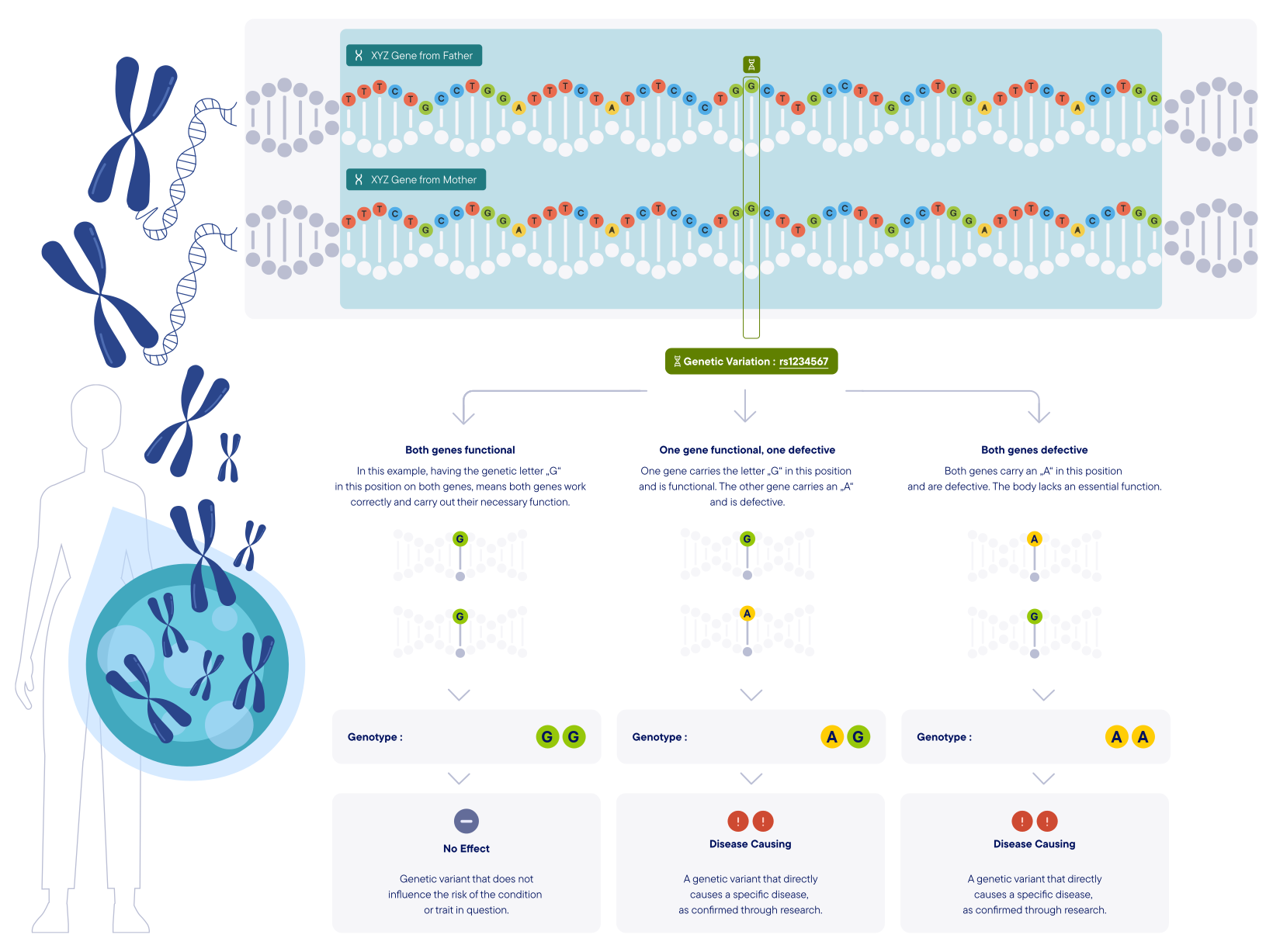
Humans have more than 20,000 genes, each carrying out one or a few specific functions in the body. One gene instructs the body to digest lactose from milk, another tells the body how to build strong bones and another prevents the body's cells from beginning to multiply uncontrollably and developing into cancer. As all of these genes combined are the building instructions for our body, a defect in one of these genes can have severe health consequences.
Through decades of genetic research, we know the genetic code of any healthy/functional human gene. We have also identified that in certain positions on a gene, some individuals may have a different genetic letter from the one you have. We call these hotspots "Genetic Variations" or "Variants" in short. In many cases, studies have been able to show that having the genetic letter "G" in the position makes you healthy, but having the letter "A" in the same position disrupts the gene function and causes a disease. Genopedia allows you to view these variants in genes and summarizes all that we know from scientific research, which genetic letters (Genotype) have good or bad consequences on your health or on your traits.
History
Throughout history, people have described newborns whose bodies didn’t fit typical male or female patterns, and families quietly adapted long before modern medicine had words for it. Midwives and physicians left notes about “ambiguous” anatomy; communities used their own terms, sometimes respectful, sometimes not. Oral histories preserved how relatives were raised one way, then later lived another, reflecting how identity, body changes at puberty, and social roles can shift over time.
From early written records to modern studies, the medical view changed alongside cultural ideas. Nineteenth‑ and early twentieth‑century doctors focused on visible features and assigned sex at birth based on external anatomy or surgical exploration. Lab tests were limited, so many lived without clear explanations. In the mid‑1900s, chromosome testing became possible, and clinicians began to recognize that someone could have XY chromosomes and still develop along a range of paths. This widened the lens from a single “true sex” idea to an understanding that hormones, receptors, and timing all play a role.
With each decade, more careful descriptions connected early symptoms of 46,XY difference of sex development with later experiences, such as unexpected puberty changes, infertility, or hernias that revealed internal gonads. As hormone assays, imaging, and then molecular genetics improved in the late twentieth century, patterns emerged: sometimes the body makes little testosterone; sometimes cells cannot respond to it; sometimes the steps that shape the genitals follow a different course. This helped explain why people with similar chromosomes can look and feel quite different.
In recent decades, awareness has grown that medical decisions made in infancy have lifelong effects. Historical practices often favored early surgeries without the person’s input. Many adults living with 46,XY difference of sex development shared outcomes—good and bad—that reshaped care. Multidisciplinary teams, psychological support, and a more cautious approach to irreversible procedures have increasingly replaced a one‑size‑fits‑all model.
Advances in genetics also changed the conversation. Sequencing identified specific gene changes in some families, confirming that inheritance patterns were noticed long before laboratories could test for them. At the same time, clinicians learned to expect variation: not every gene change predicts the same path, and not every person wants the same care. Historical differences highlight why today’s guidance emphasizes individualized plans, privacy, and informed choice.
Looking back helps explain today’s language as well. Older terms framed 46,XY difference of sex development narrowly or negatively. Over time, the way the condition has been understood has changed, and modern wording aims to describe biology without judgment while centering the person’s health and goals.