
3q29 microdeletion syndrome is a rare genetic condition caused by a small missing piece of chromosome 3. People with 3q29 microdeletion syndrome often have developmental delays, learning differences, and speech delay, and some have anxiety or features of autism. Growth may be smaller than average, and doctors may see subtle facial differences or feeding problems in infancy. It is lifelong, but early therapies and school supports can help, and many living with 3q29 microdeletion syndrome make steady progress over time. Treatment focuses on support such as speech, physical, and occupational therapy, management of behavioral or psychiatric concerns, and regular follow-up with specialists; life expectancy is usually near typical when medical needs are addressed.
Overview
3q29 microdeletion syndromeSymptoms
3q29 microdeletion syndrome mainly shows up as developmental and speech delays, learning difficulties, and social-communication differences. Early signs include feeding problems, poor weight gain, or small head size; some have distinctive facial features. In teens/adults, anxiety or psychosis risk increases.
Outlook and prognosis
Most children with 3q29 microdeletion syndrome grow and learn, though many need extra support for speech, learning, and social skills. Early therapies can improve communication, school progress, and independence. Ongoing check-ins for vision, growth, behavior, and mental health guide care over time.
Causes and risk factors
3q29 microdeletion syndrome results from a missing segment on chromosome 3, often a new change; it may be inherited. Risk factors for 3q29 microdeletion syndrome include an affected parent, a parental rearrangement, and advanced paternal age; lifestyle doesn’t cause it.
Genetic influences
Genetics is central to 3q29 microdeletion syndrome: a small missing segment on chromosome 3 typically drives the condition. Most cases are new (de novo), but it can be inherited. Recurrence risk depends on parental testing; genetic counseling is recommended.
Diagnosis
Doctors consider 3q29 microdeletion syndrome when clinical features and developmental history point toward a chromosomal change. Genetic tests—usually chromosomal microarray or targeted testing—confirm the diagnosis; this is the genetic diagnosis of 3q29 microdeletion syndrome.
Treatment and drugs
Treatment for 3q29 microdeletion syndrome focuses on each person’s needs. Care often includes early therapies (speech, occupational, physical), educational supports, behavioral and mental health care, and monitoring growth, vision, hearing, bones, and heart. Seizures, feeding issues, sleep problems, and reflux are treated with standard medications and supportive care.
Symptoms
Many living with 3q29 microdeletion syndrome have developmental and health differences that show up in infancy or early childhood. Early features of 3q29 microdeletion syndrome can include feeding challenges, slow weight gain, delayed speech, or low muscle tone that makes motor milestones later than expected. Features vary from person to person and can change over time. Some people also have learning differences, social communication traits, or medical issues like vision problems or heart differences.
Babies may have trouble feeding or frequent reflux, making meals slow or stressful. This can lead to slow weight gain and extra monitoring in early months. Some families work with feeding specialists to build skills.
Rolling, sitting, or walking can happen later than peers. In 3q29 microdeletion syndrome, low muscle tone can make posture and balance harder. Targeted physical therapy often builds strength and skills over time.
Muscles may feel more relaxed or floppy, especially in infancy. Clinicians call this hypotonia, which means the muscles provide less resistance and tire more easily. It can affect feeding, speech clarity, and stamina.
Many children with 3q29 microdeletion syndrome say first words and phrases later than expected. Clarity can be a challenge as sentences get longer. Early speech therapy can make communication easier day to day.
How people usually first notice 3q29 microdeletion syndrome?
Many families first notice 3q29 microdeletion syndrome when a baby has feeding difficulties, poor weight gain, or low muscle tone that makes the body feel floppy. As toddlers, the first signs of 3q29 microdeletion syndrome often include speech and developmental delays, challenges with coordination, and sometimes distinctive facial features that prompt a genetics referral. In some children, learning differences, social or behavioral concerns, or an unexpected result on chromosomal microarray testing during an evaluation for delays is how 3q29 microdeletion syndrome is first noticed.
Types of 3q29 microdeletion syndrome
3q29 microdeletion syndrome is a genetic condition caused by a small missing piece of DNA on chromosome 3. There are no universally accepted clinical subtypes defined by different genes or enzyme defects within this deletion. Instead, people with 3q29 microdeletion syndrome share a core diagnosis with a range of features that can vary in severity. Not everyone will experience every type of feature, and the balance of symptoms can shift over time.
No distinct variants
No distinct types of 3q29 microdeletion syndrome are widely recognized. Clinicians describe one core diagnosis with variable features and severity.
What genetics can tell you about symptoms
Some people with 3q29 microdeletion syndrome have learning differences, speech delay, feeding problems, and slender build because missing DNA in the 3q29 region disrupts genes important for brain development and growth. Certain deletions also raise risks for autism traits and later psychiatric conditions.
Causes and risk factors
3q29 microdeletion syndrome happens when a tiny piece of chromosome 3 is missing. This change usually occurs by chance in the egg or sperm, but it can also be inherited from a parent with the same deletion. Lifestyle or pregnancy exposures do not cause the deletion. If a parent carries the 3q29 microdeletion, the chance of passing it to a child is higher, and a genetic counselor can review risk factors for 3q29 microdeletion syndrome in your family. Genes set the stage, but environment and lifestyle often decide how the story unfolds.
Environmental and biological risk factors
Risk factors for 3q29 microdeletion syndrome come from both biology and the environment. Doctors often group risks into internal (biological) and external (environmental). In practical terms, that means some environmental risk factors for 3q29 microdeletion syndrome relate to exposures around conception or in early pregnancy, while biological factors include features of parental age and cell division. The points below outline what is known today.
With older maternal or paternal age, the chance of new chromosome changes can rise slightly. This may modestly increase the likelihood of 3q29 microdeletion syndrome in a pregnancy. The absolute risk for any single pregnancy remains low.
Sperm are made throughout adult life, and small copying errors become more common with increasing age. This age effect can raise the chance of new chromosome changes. Any added risk is expected to be small.
High-dose radiation to a parent’s reproductive organs before conception, or to the uterus early in pregnancy, can increase chromosome breakage. Such exposures are uncommon and usually relate to medical treatment or serious accidents. When present, they could raise the chance of 3q29 microdeletion syndrome.
Significant exposure to lead, mercury, or cadmium can damage chromosomes in reproductive cells. Most everyday exposures are low, but high occupational or environmental levels are a concern. This may slightly increase the chance of chromosome changes.
Genetic risk factors
Genetic risk for 3q29 microdeletion syndrome centers on whether the deletion happens for the first time in a child or is inherited from a parent. This section outlines the genetic causes of 3q29 microdeletion syndrome and who may be at higher inherited risk. The deletion removes one copy of several genes in the 3q29 region, and the effects can vary widely from person to person. People with the same risk factor can have very different experiences.

De novo deletion: In most families, the 3q29 microdeletion occurs as a new change during formation of egg or sperm or early embryo development. Parents usually do not carry the deletion, so the chance of it happening again is generally low when both test negative.
Inherited from parent: About one quarter of people with 3q29 microdeletion syndrome inherit the deletion from a parent who also carries it. The condition follows an autosomal dominant pattern, meaning each child of a carrier has a 50% chance to inherit the deletion. The parent's own features may be subtle or not obvious.
Variable expressivity: The same 3q29 deletion can lead to different learning, behavior, or health impacts among relatives. Some carriers have few day-to-day challenges, while others need more support. Carrying a genetic change doesn’t guarantee the condition will appear.
Genomic architecture: Repeated DNA segments around 3q29 can misalign during the making of eggs or sperm, predisposing to the recurrent deletion. This built-in susceptibility explains why many unrelated children have a similar deletion size. It is a chance event rather than something inherited in most cases.
Parental mosaicism: Rarely, a parent has the deletion only in some egg or sperm cells, so blood testing looks normal. This germline mosaicism slightly raises the chance of another affected child after one child with the deletion. If you’re unsure about your risks, a doctor can provide clarity.
Balanced rearrangement: In rare cases, a parent carries a balanced chromosomal change involving 3q29 that can produce the deletion in a child. The parent may be healthy but can have a higher chance of future pregnancies with an unbalanced result. Chromosome studies in the parents can check for this.
Gene dosage loss: The deletion removes one copy of multiple genes at 3q29, lowering their combined activity. This reduced dosage is thought to drive the features seen in 3q29 microdeletion syndrome. No single gene fully accounts for the condition yet.
Lifestyle risk factors
Lifestyle habits do not cause 3q29 microdeletion syndrome, but day-to-day choices can shape growth, behavior, learning, and the risk of complications. Understanding how lifestyle affects 3q29 microdeletion syndrome helps families target what’s modifiable at home. Below are practical areas where routines and choices can make a meaningful difference, reflecting the lifestyle risk factors for 3q29 microdeletion syndrome.
Calorie- and protein-dense foods can support catch-up growth and prevent failure to thrive. Adequate calcium and vitamin D help protect bone density in the setting of low muscle tone and delayed motor skills. Reflux-friendly choices may reduce vomiting and poor weight gain.
Small, frequent, texture-appropriate meals can improve intake when oral-motor discoordination is present. Upright positioning and unhurried meals lower choking and aspiration risk. Predictable schedules can improve GI comfort and appetite.
Daily, low-impact play strengthens hypotonic muscles and improves coordination specific to 3q29 microdeletion syndrome. Weight-bearing movement supports bone density and joint stability. Activity also eases anxiety and attention difficulties common in this condition.
Consistent bedtimes and wake times improve daytime learning, mood, and behavior regulation. Better sleep may lower seizure susceptibility where relevant. Limiting late screens and caffeine can help sleep onset.
Risk prevention
3q29 microdeletion syndrome is a genetic condition, so you can’t fully prevent it, but you can lower risks of complications and support healthier development. Planning ahead with genetic counseling can also reduce the chance of passing the deletion on. Different people need different prevention strategies—there’s no single formula. The steps below focus on family planning choices and day‑to‑day care that helps people with 3q29 microdeletion syndrome thrive.
Meet with a genetics professional to learn how 3q29 microdeletion syndrome happens and your family’s chances. Parental testing can show whether the deletion is new or inherited and guide next steps.
During pregnancy, options like chorionic villus sampling or amniocentesis can check for the 3q29 deletion. This can help plan for delivery, early care, and the right specialists.
If a parent carries the deletion, in‑vitro fertilization with embryo testing may reduce the chance of passing it on. Donor sperm or eggs and adoption are other choices to consider with counseling.
Watch for early symptoms of 3q29 microdeletion syndrome, like feeding trouble or delayed milestones, and ask for evaluation promptly. Early intervention therapies can improve speech, motor skills, and learning.

Transmission
3q29 microdeletion syndrome is a genetic condition and is not contagious—you can’t catch it from someone else. In most families, 3q29 microdeletion syndrome happens because of a new change in the egg or sperm, so there’s no earlier family history. If a parent has the same deletion, each pregnancy has a 1 in 2 (50%) chance of inheriting it, and the features can range from mild to more noticeable; this is how 3q29 microdeletion syndrome is inherited. When the change started for the first time in a child, the chance it will happen again in a future pregnancy is low (generally well under 1%), but not zero because, rarely, a few egg or sperm cells may carry the same change. Genetic counseling and parental testing can clarify the genetic transmission of 3q29 microdeletion syndrome and provide personalized recurrence risks.
When to test your genes
Consider genetic testing if you or your child have developmental delays, learning differences, autism features, psychiatric concerns, seizures, or congenital anomalies that suggest a chromosome change. Test earlier if there’s a known 3q29 microdeletion in the family, unexplained prenatal ultrasound findings, or atypical growth. Results can guide tailored care, surveillance, and family planning.
Diagnosis
You might notice small changes in daily routines—like speech delays, trouble with learning, or social communication—that prompt an evaluation. Many people feel relief just knowing what’s really going on. The genetic diagnosis of 3q29 microdeletion syndrome is usually made with a chromosomal microarray after a developmental or behavioral assessment raises suspicion. Sometimes it’s found during prenatal testing or while investigating learning, feeding, or psychiatric concerns, and then confirmed with specific genetic tests.
A clinician looks at development, behavior, growth, and physical features that could suggest a chromosome change. Family history is often a key part of the diagnostic conversation. These clues help decide which genetic tests to order.
This is the first-line genetic test to detect the small missing segment on chromosome 3 at 3q29. It can identify the size and location of the deletion. A positive result confirms the diagnosis of 3q29 microdeletion syndrome.
These tests can confirm the specific deletion and may be used to test parents or other relatives. They are helpful when a lab needs to verify the microarray result or clarify boundaries. Targeted testing is also useful for family cascade testing.
Some centers use exome or genome sequencing that includes copy-number analysis to find deletions. This can detect a 3q29 deletion if microarray was not done or results were unclear. It may also reveal other relevant genetic findings.
Stages of 3q29 microdeletion syndrome
3q29 microdeletion syndrome does not have defined progression stages. It’s a lifelong genetic change with features that vary widely; some needs improve with therapies while other differences, like learning or mental health concerns, may become clearer with age, but there isn’t a predictable step-by-step decline. Diagnosis is usually made with a chromosome test that looks for small missing DNA pieces (often a chromosomal microarray), and early symptoms of 3q29 microdeletion syndrome can guide testing. Early and accurate diagnosis helps you plan ahead with confidence, and doctors then monitor growth, development, vision and hearing, heart findings, and mental health over time.
Outlook and prognosis
Looking at day-to-day life, many people with 3q29 microdeletion syndrome grow and learn at their own pace, often needing extra support at school and with social skills. Early care can make a real difference, especially when speech therapy, developmental therapies, and tailored education plans start in the toddler and preschool years. Some children have feeding issues, low muscle tone, or coordination challenges; with time and therapy, many gain independence in walking, communication, and self-care. When thinking about the future, it helps to remember that emotional health matters too, since anxiety or attention difficulties can affect school and friendships.
The outlook is not the same for everyone, but most people with 3q29 microdeletion syndrome have a normal life span. Serious medical complications are uncommon, though heart or gastrointestinal issues can occur and should be monitored. During adolescence and adulthood, a higher risk of mental health conditions—including anxiety disorders, depression, and, for a minority, psychosis—may emerge; knowing early symptoms of 3q29 microdeletion syndrome–related mental health changes can prompt timely support. Understanding the prognosis can guide planning and help families line up educational services, job coaching, and community resources as teens move into adult care.
Prognosis refers to how a condition tends to change or stabilize over time. In medical terms, the long-term outlook is often shaped by both genetics and lifestyle, so regular checkups, consistent therapies, and supportive environments can maximize strengths. With ongoing care, many people maintain good overall health, continue learning new skills into adulthood, and build fulfilling routines. Talk with your doctor about what your personal outlook might look like, including which screenings to keep on the calendar and what supports to consider as needs change.
Long-term effects
3q29 microdeletion syndrome can have lasting effects that shape learning, behavior, and overall health from childhood into adulthood. Long-term effects vary widely, and no two people have the exact same pattern over time. Families sometimes ask about early symptoms of 3q29 microdeletion syndrome, but the long-term picture often includes learning differences and higher chances of certain mental health conditions. For many, life expectancy appears near typical when major organ problems are absent.
Many have mild to moderate challenges with reasoning, problem‑solving, or academic skills. Support needs can persist into adulthood and may change over time. Day‑to‑day independence varies widely.
Speech can be delayed and language may remain less complex than peers. Some continue to have trouble with expressive language and social conversation. This can affect school and work communication.
Difficulties with attention, impulse control, and organizing tasks are common. These executive function challenges can persist into teen and adult years. They often affect schoolwork and job performance.
Some people show social communication differences and restricted or repetitive behaviors. Traits can range from subtle to meeting criteria for autism. Needs may shift from childhood to adulthood.
How is it to live with 3q29 microdeletion syndrome?
Living with 3q29 microdeletion syndrome often means navigating developmental delays, learning differences, and, for some, anxiety or attention challenges that can ripple into school, work, and social life. Daily routines may involve therapies, structured supports, and regular medical and behavioral check-ins, which can be time‑consuming but also help build skills and independence over time. Families, classmates, and coworkers may need to adjust expectations, use clear communication, and offer extra patience, and many find that predictable routines and visual supports make a real difference. With early intervention, individualized education plans, and community resources, many people with 3q29 microdeletion syndrome make steady progress and participate meaningfully in family, school, and community life.
Treatment and drugs
Treatment for 3q29 microdeletion syndrome focuses on managing symptoms and supporting development, since there’s no single medicine that “reverses” the genetic change. Care usually includes early intervention therapies—speech and language therapy for communication delays, occupational and physical therapy for motor skills and coordination, and tailored educational support for learning differences. Doctors may treat specific features of 3q29 microdeletion syndrome, such as seizures, sleep problems, anxiety, ADHD symptoms, or mood disorders, using standard medications and behavioral therapies as appropriate, while monitoring for side effects. Treatment plans often combine several approaches, and may shift over time as needs change from childhood into adulthood. Ask your doctor about the best starting point for you, and consider regular check-ins so the plan stays aligned with your goals.
Non-drug treatment
Many living with 3q29 microdeletion syndrome benefit from early, team-based support focused on everyday skills, communication, and learning. Supportive therapies can help children build strengths and reduce day-to-day challenges at home and school. Plans are individualized and may change over time as needs evolve. Services are available in most communities through early intervention programs, schools, and specialty clinics.
Therapy services in infancy and toddler years can boost communication, movement, and self-help skills. Starting early often leads to steadier progress.
Targeted work on sounds, words, and social communication helps children be understood and connect with others. Feeding-related speech therapy can address oral-motor skills for safer eating.
Practice with hand skills, dressing, and sensory regulation builds independence in daily routines. Therapists may suggest simple home strategies and adaptive tools.
Stretching, balance, and strength exercises improve coordination and stamina. This can make playground play, walking, and stairs safer and less tiring.
Your genes may have an impact on how drugs work for you
Medicines used for 3q29 microdeletion syndrome can work differently from person to person because genes help control how drugs are absorbed, broken down, and cleared. Genetic testing and careful dosing can guide safer choices for seizures, mood symptoms, and attention or behavior.
Pharmacological treatments
There’s no medicine that fixes the chromosome change in 3q29 microdeletion syndrome, but targeted drugs can ease day-to-day challenges like attention, anxiety, sleep, seizures, and stomach issues. Early symptoms of 3q29 microdeletion syndrome—such as distractibility, irritability, or frequent night waking—may be addressed with medicines alongside therapies and school supports. Drugs that target symptoms directly are called symptomatic treatments. Treatment is tailored, with doses adjusted slowly and safety checks to balance benefits and side effects.
Methylphenidate and mixed amphetamine salts can improve attention, reduce impulsivity, and help school-day focus. Common side effects include smaller appetite, trouble falling asleep, and faster heart rate; growth and blood pressure are usually monitored.
Atomoxetine, guanfacine, or clonidine may help when stimulants aren’t tolerated or don’t fully work. These can reduce hyperactivity and impulsivity, though sleepiness or blood pressure changes may occur.
Fluoxetine, sertraline, or escitalopram can ease anxiety, OCD-like behaviors, and low mood in people with 3q29 microdeletion syndrome. Doctors often start with low doses and increase gradually to limit nausea, restlessness, or sleep changes.
Risperidone or aripiprazole can reduce severe irritability, aggression, or psychosis when present. Weight, glucose, cholesterol, and movement symptoms are checked regularly to keep treatment safe.
Genetic influences
In 3q29 microdeletion syndrome, genetics play a direct role: a small stretch of DNA on chromosome 3 (the 3q29 region) is missing. This missing piece can arise as a new change at conception, with no parent carrying it, but in some families it’s passed down in a dominant pattern. When a parent has the same microdeletion, each pregnancy has a 50% chance of inheriting it. People with 3q29 microdeletion syndrome can be affected very differently—even within the same family—so a parent may have mild learning or health issues while a child has more noticeable challenges. If you’re wondering whether 3q29 microdeletion syndrome is inherited, most cases happen for the first time in a child, and future pregnancies usually carry a low chance of recurrence when neither parent has the deletion. Genetic testing that looks for missing or extra DNA can confirm the diagnosis and clarify who in the family carries the change; To put these pieces together, doctors may suggest genetic counseling.
Is 3q29 microdeletion syndrome genetic?
Genetics is central to 3q29 microdeletion syndrome: a small missing segment on chromosome 3 typically drives the condition. Most cases are new (de novo), but it can be inherited. Recurrence risk depends on parental testing; genetic counseling is recommended.
Pharmacogenetics—how genetics influence drug effects
There isn’t a medicine that targets the 3q29 microdeletion itself; care focuses on treating specific needs such as attention, anxiety, mood, sleep, seizures, or feeding issues. The deletion itself doesn’t directly affect the common drug‑processing genes doctors often test, so response to many medicines still depends on your personal metabolism and overall health. Alongside medical history and current medications, genetic testing may help tailor starting doses for some antidepressants (like SSRIs and tricyclics), atomoxetine, and certain antipsychotics. This can be especially helpful if someone with 3q29 microdeletion syndrome has had strong side effects or little benefit at usual doses. For ADHD treatment, dose changes are guided mainly by day‑to‑day response and tolerability; when atomoxetine is used, pharmacogenetic results can inform dose and monitoring. Because many people may need more than one medicine over time, the care team will also watch for drug interactions and adjust gradually, especially if heart, feeding, or sleep concerns are present from early symptoms of 3q29 microdeletion syndrome.
Interactions with other conditions
People living with 3q29 microdeletion syndrome often have other health issues at the same time, and the mix can affect learning, behavior, and day-to-day energy. Doctors call it a “comorbidity” when two conditions occur together. Neurodevelopmental and mental health conditions—such as autism, ADHD, anxiety, mood changes, and, for some, psychosis in the teen or young adult years—are more common and can intensify challenges with school, social skills, and independence. Medical concerns like congenital heart defects, seizures, vision or hearing problems, and gastroesophageal reflux may also occur, and when present they can influence therapy plans and which medicines are safest for 3q29 microdeletion syndrome. For example, poor weight gain or reflux can change how drugs are absorbed, sleep problems can worsen attention or behavior symptoms, and heart conditions may guide choices about stimulants or antipsychotics. Because early symptoms of 3q29 microdeletion syndrome can look a lot like autism or ADHD alone, working with a team (pediatrics, cardiology, neurology, psychiatry, and genetics) helps tailor care as needs change over time.
How genes can cause diseases
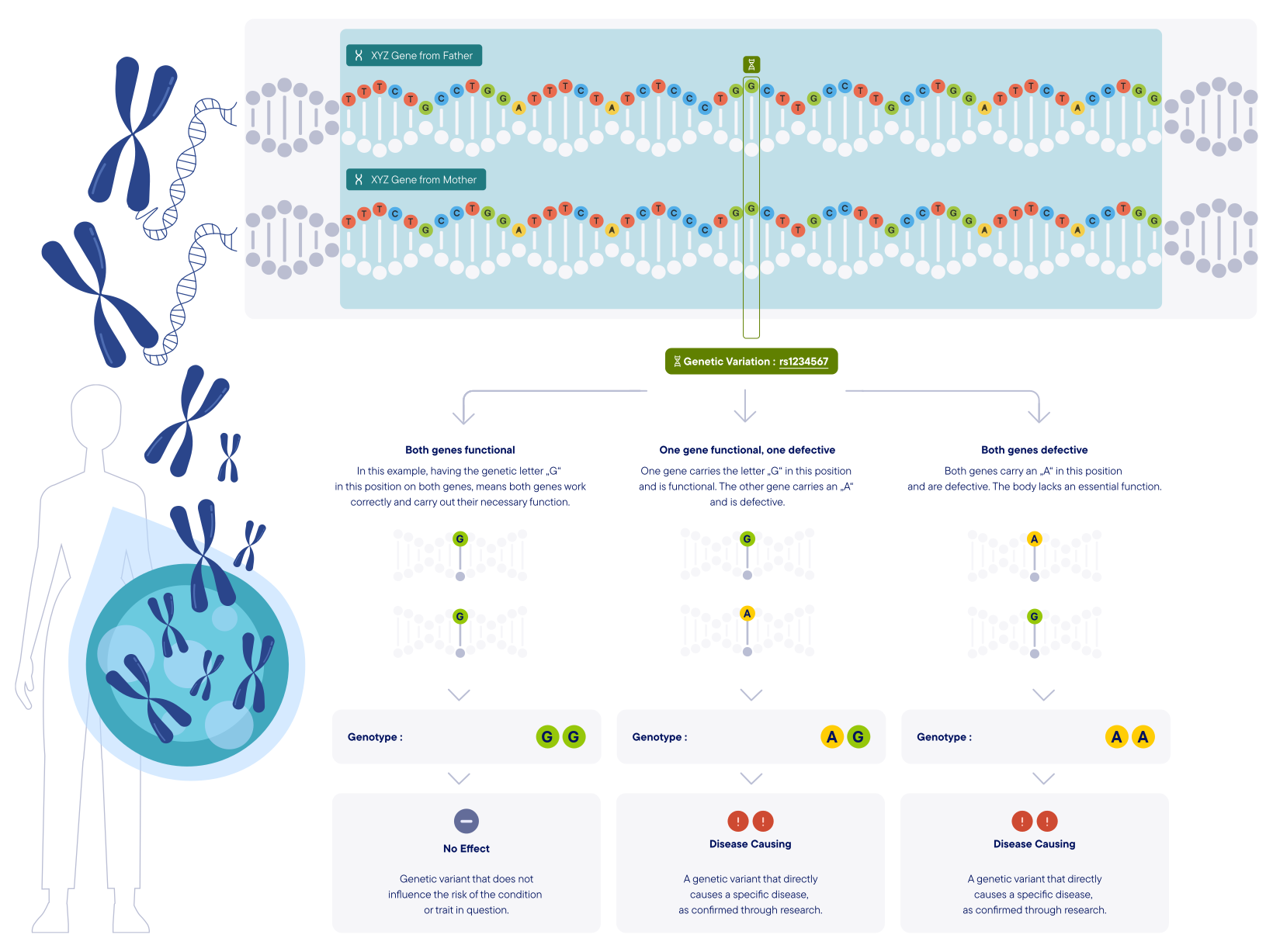
Humans have more than 20,000 genes, each carrying out one or a few specific functions in the body. One gene instructs the body to digest lactose from milk, another tells the body how to build strong bones and another prevents the body's cells from beginning to multiply uncontrollably and developing into cancer. As all of these genes combined are the building instructions for our body, a defect in one of these genes can have severe health consequences.
Through decades of genetic research, we know the genetic code of any healthy/functional human gene. We have also identified that in certain positions on a gene, some individuals may have a different genetic letter from the one you have. We call these hotspots "Genetic Variations" or "Variants" in short. In many cases, studies have been able to show that having the genetic letter "G" in the position makes you healthy, but having the letter "A" in the same position disrupts the gene function and causes a disease. Genopedia allows you to view these variants in genes and summarizes all that we know from scientific research, which genetic letters (Genotype) have good or bad consequences on your health or on your traits.
History
Families and communities once noticed patterns that puzzled them: a child who walked later than cousins, needed extra help in school, and seemed smaller for age, while a relative shared similar traits. Long before genetics testing, these clusters were noted but hard to name. Doctors documented developmental differences, feeding difficulties in infancy, and later learning and social challenges, yet the picture stayed fragmented because many features were subtle and varied from person to person.
First described in the medical literature as a small missing segment on the long arm of chromosome 3, 3q29 microdeletion syndrome came into view as chromosome microarray testing became widely available in the early 2000s. Before that, standard chromosome studies often looked normal, so many living with 3q29 microdeletion syndrome never received a unifying explanation. With newer tools able to detect tiny changes, clinicians began connecting shared patterns across families seen in different clinics and countries.
From early theories to modern research, the story of 3q29 microdeletion syndrome has been shaped by careful observation. Early reports focused on growth differences, delays in speech and motor skills, and distinctive facial features that doctors could see during exams. As more people were diagnosed, the range of features grew to include learning differences, attention and anxiety concerns, and in some, a higher chance of serious mental health conditions in adolescence or adulthood. This wider lens helped explain why earlier descriptions felt incomplete and why family experiences varied so much.
In recent decades, knowledge has built on a long tradition of observation. Researchers formed registries, families connected online, and long-term studies followed children into adulthood. These efforts clarified that 3q29 microdeletion syndrome can be inherited from a parent with mild or unrecognized features, or arise as a new change in a child with no family history. They also highlighted that early symptoms of 3q29 microdeletion syndrome in babies—like poor weight gain, feeding troubles, or delayed milestones—may soften over time with support, while learning and behavioral needs often become the focus in school years.
Understanding has continued to evolve as genetic testing spread across pediatrics, neurology, psychiatry, and adult medicine. More adults have received a diagnosis after their child was tested, reshaping family histories and opening access to tailored supports. Today, 3q29 microdeletion syndrome is recognized not as a single fixed presentation, but as a spectrum with shared genetic roots. Looking back helps explain why many went undiagnosed for years—and why modern tools and community networks now make earlier recognition and coordinated care far more likely.