
3c syndrome is a rare genetic condition that affects growth, facial development, and the heart. Many people with 3c syndrome have heart defects present at birth and distinctive facial features. Doctors usually recognize it in infancy, and features are lifelong though medical needs can change with age. Care is supportive and may include heart surgery, feeding support, therapy services, and regular checkups. The outlook varies by heart defect and other health issues, but many living with 3c syndrome benefit from early coordinated care.
Overview
3c syndromeSymptoms
3c syndrome is often noticed at birth, with facial differences, low muscle tone, and feeding trouble. Balance problems, developmental delays, and sometimes seizures can occur from a small cerebellum. Congenital heart defects are common and may affect breathing or feeding.
Outlook and prognosis
Many living with 3c syndrome have serious medical needs early on, including heart, kidney, and skull differences, and growth challenges. Survival varies by severity and access to specialized care. With coordinated heart, kidney, neurosurgical, and developmental support, some children reach school age.
Causes and risk factors
3c syndrome results from changes in the WASHC5 (KIAA0196) gene, inherited in an autosomal recessive way. Risk rises when both parents are carriers or are related. Environment and lifestyle don’t cause 3c syndrome but can shape complications.
Genetic influences
Genetics is central in 3c syndrome, which is caused by inherited gene changes, most often in the WNT1 gene. It typically follows an autosomal recessive pattern. Genetic testing confirms the diagnosis and helps with carrier testing, family planning, and recurrence risk.
Diagnosis
Doctors suspect 3c syndrome from clinical features at birth, combining heart findings, brain imaging, and distinctive facial traits. Genetic diagnosis of 3c syndrome uses testing to detect WASHC5 (KIAA0196) variants. Prenatal ultrasound or fetal echocardiogram can raise early suspicion.
Treatment and drugs
Care focuses on each person’s needs: coordinated heart, kidney, and airway care; feeding and growth support; early therapies for movement, speech, and learning. Surgeons address specific structural issues when helpful. Genetic counseling and regular check-ins guide long‑term 3c syndrome care.
Symptoms
3c syndrome affects several areas of the body, most often the face, heart, and the part of the brain that coordinates movement. Parents may first notice early features of 3c syndrome in the newborn period, like feeding trouble or differences in facial shape. Features vary from person to person and can change over time. Care often focuses on easing day-to-day challenges and supporting development.
Differences in facial structure are common in 3c syndrome, such as a cleft lip and/or palate, a broad nasal bridge, or widely spaced eyes. These can affect feeding, dental health, and speech development.
Congenital heart differences can include holes between heart chambers or more complex patterns. These may cause fast breathing, poor feeding, or tiring easily, and some children need procedures or surgery.
The cerebellum may be smaller or formed differently, which affects balance and coordination. This can delay sitting, crawling, and walking in children with 3c syndrome.
Trouble latching or sucking and reflux are common in babies with 3c syndrome. This can lead to slow weight gain and may require special bottles, thickened feeds, or temporary feeding tubes.
How people usually first notice 3c syndrome?
People often first notice 3C syndrome during pregnancy when an ultrasound suggests concerns like a heart defect or an unusually small head, prompting more detailed scans and genetic testing. At birth, doctors may recognize the first signs of 3C syndrome through visible features such as a smaller head size (microcephaly) and differences in the midline of the face and skull, along with a heart murmur or trouble with breathing and feeding that points to a congenital heart problem. For many families, how 3C syndrome is first noticed is a combination of these early findings, followed by confirmatory testing to guide care.
Types of 3c syndrome
3c syndrome is a rare genetic condition, and doctors recognize a few clinical variants based on how the main features show up and how severe they are across organs like the heart, face, and brain. People may notice different sets of symptoms depending on their situation. When discussing types of 3c syndrome, most differences reflect patterns seen in recognized case series rather than completely separate diseases. Here are the main types to know about:
Cardiac‑predominant type
Heart structure differences are the most prominent feature, sometimes requiring surgery in infancy. Other features like facial differences or brain development concerns can be milder. This pattern is one of the better described types of 3c syndrome.
Neurodevelopment‑predominant type
Developmental delay and learning differences stand out more than heart findings. Seizures or differences in brain structure may be present, while heart issues are mild or manageable. This is often discussed when talking about types of 3c syndrome.
Craniofacial‑predominant type
Facial differences are more noticeable, such as a broad nasal bridge or other midface features. Heart and brain findings are present but comparatively less severe. Early dental and feeding evaluations can be especially helpful in this group.
Multisystem severe type
Several organ systems are affected to a high degree at the same time. Newborns may need coordinated care for heart, feeding, breathing, and developmental needs. Even within this type, intensity can range from mild to severe.
What genetics can tell you about symptoms
Some people with 3C syndrome have heart defects, unusual facial features, and developmental delays because changes in the KIAA0196 (STRIP1) gene disrupt how cells build and organize their internal “scaffolding.” Different variants can change severity, so symptoms range from mild to life‑threatening.
Causes and risk factors
The genetic causes of 3c syndrome are changes in KIAA0196, and rarely changes in CCDC22. It is most often autosomal recessive, so when both parents are carriers each pregnancy has a 25% (1 in 4) chance. Some families have an X-linked pattern with CCDC22 changes, and males may be affected more often in those families. Family history, parental carrier status, and parents being closely related increase risk, but lifestyle and environment do not cause 3c syndrome. Talk with your doctor if you’re concerned about your risks.
Environmental and biological risk factors
3c syndrome is present from birth and, based on current research, doesn’t have clear environmental triggers. Doctors often group risks into internal (biological) and external (environmental). For 3c syndrome, the evidence to date points to internal factors set very early in development, while outside exposures have not been confirmed to raise risk. Some families first learn about it when early symptoms of 3c syndrome prompt evaluation during infancy.
No specific environmental exposure has been confirmed to increase the risk of 3c syndrome. Studies have not shown links with radiation, heavy metals, or common pollutants.
Infections during pregnancy such as rubella, cytomegalovirus, or toxoplasmosis have not been shown to cause 3c syndrome. Usual infection prevention in pregnancy remains important for overall fetal health.
No prescription or over-the-counter medicines have been tied specifically to 3c syndrome. Reviewing all medications with your prenatal team helps reduce other risks.
Older maternal or paternal age does not appear to raise the chance of 3c syndrome. Unlike some chromosomal conditions, age effects have not been observed.
Genetic risk factors
Genes are the main driver behind 3c syndrome, with many cases traced to inherited changes. When families ask about genetic causes of 3c syndrome, two inheritance patterns come up most often: autosomal recessive and X-linked. Risk is not destiny—it varies widely between individuals. Understanding these patterns can guide testing for parents, siblings, and future pregnancies.

Autosomal recessive WASHC5: Many diagnosed cases involve two changes in the WASHC5 gene (also called KIAA0196) inherited from each parent. Both copies must be altered for 3c syndrome to appear. Parents are typically healthy carriers with a 25% (1 in 4) chance of an affected child in each pregnancy.
X-linked CCDC22: Some families have changes in the CCDC22 gene on the X chromosome that lead to 3c syndrome. Males are usually more affected, while females may be unaffected carriers or have milder features. If the mother is a carrier, each son has a 50% chance of being affected and each daughter has a 50% chance of being a carrier.
Parental carrier status: When both parents carry the same recessive variant, the risk of 3c syndrome in each pregnancy is 25% (1 in 4). Carriers usually have no symptoms and are often unaware without genetic testing.
Affected sibling risk: Having one child with the condition means future children have a higher chance if the same inherited change is present. Once the family’s variant is identified, a genetics team can provide precise recurrence risks.
Female carrier effects: Women who carry a CCDC22 change may be healthy or have subtle features because one X chromosome is naturally switched off in many cells. Clarifying carrier status helps with planning and early checks in pregnancy.
New genetic changes: In some cases, a change linked to 3c syndrome can arise for the first time in a child. When this happens, the chance it will recur in future pregnancies is usually low but not zero due to possible germline mosaicism.
Other rare genes: A few families have the features doctors recognize as this condition without a change found in WASHC5 or CCDC22. This points to additional, very rare genes that research is still uncovering.
Shared ancestry risk: Parents who are related by blood are more likely to carry the same rare recessive variant. This increases the likelihood of an affected child compared with unrelated couples.
Lifestyle risk factors
3c syndrome is a congenital condition; lifestyle habits do not cause it, but they can meaningfully shape symptoms, daily functioning, and complications. In practical terms, how lifestyle affects 3c syndrome centers on feeding, movement, sleep, dental care, and heart-friendly routines adapted to craniofacial, cerebellar, and cardiac features. The goal is to support growth, breathing, mobility, and heart workload while reducing risks like aspiration and falls. Plans should be individualized with your care team.
Calorie-dense, easy-to-swallow meals can support growth when chewing or coordination is difficult. Smaller, slower feeds and upright posture may lower aspiration and reflux that aggravate breathing or heart strain.
Thickened liquids or pureed textures can reduce choking risk from oropharyngeal discoordination. This may cut chest infections that follow aspiration and ease mealtime fatigue.
Daily, therapist-guided activity can improve balance and core strength despite cerebellar involvement. Better stability may reduce falls and help prevent contractures that limit mobility.
If heart defects cause fluid retention, moderating sodium can ease swelling and breathing effort. Adequate hydration supports circulation without overloading the heart.
Risk prevention
Because 3c syndrome is genetic and present from birth, there isn’t a way to prevent the condition itself right now. Prevention focuses on lowering the chances of complications—especially from heart differences, brain and coordination challenges, feeding or breathing issues, and infections. Some prevention is universal, others are tailored to people with specific risks. In families with a history of 3c syndrome, planning and testing before or during pregnancy can reduce the chance of having another child with the condition.
A genetics team can explain how 3c syndrome is inherited and what the chances are in future pregnancies. They can walk through testing choices and help you plan next steps.
Parents and close relatives can have a simple blood or saliva test to see if they carry the gene change linked to 3c syndrome. If one partner is a carrier, testing the other partner clarifies the baby’s risk.
Some families consider IVF with embryo testing to avoid passing on 3c syndrome. Others may choose donor eggs or sperm, or prenatal testing to inform preparations and delivery planning.
Detailed ultrasound and a fetal heart scan can spot features tied to 3c syndrome before birth. This helps plan delivery at a hospital ready for newborn heart and breathing support.

Transmission
3c syndrome is not contagious; it can’t be caught or spread through everyday contact, coughing, sex, or blood exposure. The condition is inherited in an autosomal recessive pattern, meaning a child needs two non-working copies of the same gene—one from each parent—to have the syndrome.
Parents are usually healthy carriers. With each pregnancy, there is a 25% (1 in 4) chance of having a child with 3c syndrome, a 50% (1 in 2) chance the child will be a carrier, and a 25% chance the child will inherit neither changed copy. Genetic transmission of 3c syndrome can also occur if a new gene change appears in one parent’s egg or sperm and combines with a carrier copy from the other parent, though this is uncommon. If you’re wondering how 3c syndrome is inherited in your family, a genetic counselor can help review options.
When to test your genes
3C syndrome is a rare genetic condition, so genetic testing is most useful when a prenatal ultrasound or newborn exam shows features suggestive of the syndrome, or when there’s a known family history. Testing helps confirm the diagnosis, guide care plans, and inform future pregnancy risks. A genetics professional can tailor the best test.
Diagnosis
For many families, the first clues appear at birth or soon after—unusual head shape, feeding challenges, or a heart murmur that leads to more testing. 3c syndrome is typically identified by a pattern of features in the face, back of the brain (the cerebellum), and the heart, then confirmed with specific laboratory tests. Genetic testing may be offered to clarify risk or guide treatment. When possible, a genetic diagnosis of 3c syndrome helps coordinate care and gives clearer information for future pregnancies.
Doctors look for a consistent pattern involving facial shape, cerebellar differences, and a congenital heart defect. These findings together raise suspicion for 3c syndrome.
MRI can show underdevelopment of the cerebellum or related structures that fit the 3c syndrome pattern. These imaging findings help distinguish it from other conditions with similar symptoms.
An echocardiogram checks for structural heart differences often seen in 3c syndrome. Identifying the exact heart defect guides treatment and supports the overall diagnosis.
A multigene panel or exome sequencing looks for changes known to cause 3c syndrome. Finding a disease-causing variant confirms the diagnosis and can inform family planning.
Stages of 3c syndrome
3c syndrome does not have defined progression stages. It is present from birth, and changes over time vary by which body systems are involved rather than following a set path. Different tests may be suggested to help confirm the diagnosis and monitor health, including heart ultrasound, brain scans, eye and hearing checks, and developmental assessments. Early symptoms of 3c syndrome are often noticed in infancy—such as feeding difficulties, low muscle tone, or a heart murmur—and doctors may use a combination of exam findings and genetic testing to provide clarity.
Outlook and prognosis
Looking ahead can feel daunting, but most children with 3c syndrome can grow and learn with the right care plan. The condition often includes heart, kidney, or limb differences present at birth, and these drive the long-term outlook more than anything else. In medical terms, the long-term outlook is often shaped by both genetics and lifestyle. Early symptoms of 3c syndrome can range from feeding challenges and slower growth to breathing or heart concerns; when these are recognized and managed early, children tend to do better over time.
The outlook is not the same for everyone, but survival into childhood and adulthood is possible, especially when heart defects are mild or corrected and kidney health is protected. Severe heart or kidney problems can raise the risk of serious illness in infancy, and in rare cases can be life‑limiting. Some children have developmental delays or learning differences; many make steady gains with physical, occupational, and speech therapy. With ongoing care, many people maintain good quality of life, attend school, and participate in family and community activities.
Understanding the prognosis can guide planning and help you line up the right supports at the right time. Regular follow‑up with cardiology, nephrology, and developmental teams helps catch issues early, adjust treatments, and support growth. People living with 3c syndrome often benefit from coordinated care at a center experienced with rare congenital conditions. Talk with your doctor about what your personal outlook might look like, including how specific heart or kidney findings and your child’s progress influence the years ahead.
Long-term effects
3C syndrome can shape health and development from infancy through adulthood. Long-term effects vary widely, and no two people share the exact same course. Many features relate to how the cerebellum, heart, and facial structures formed before birth, with needs changing as children grow. In general, the long-term effects of 3C syndrome depend on the type and severity of brain and heart differences present early on.
Developmental delay and learning differences are common and can range from mild to more pronounced. Language and problem‑solving skills often progress over time but may remain below age expectations.
Cerebellar differences can lead to coordination challenges, unsteady gait, and slower fine‑motor skills. Low muscle tone in infancy may improve, but balance and coordination issues often persist.
Congenital heart defects can have lifelong effects, even after repair. Some people may face reduced exercise tolerance or rhythm concerns and need ongoing cardiac follow‑up.
Early feeding and swallowing difficulties can affect growth in infancy. Speech sound production and clarity may be affected by palate structure and motor coordination and can remain a long‑term feature.
How is it to live with 3c syndrome?
Living with 3C syndrome often means coordinating many specialties—cardiology for heart differences, neurology and developmental services for brain and skull features, and sometimes feeding or breathing support—so daily life can revolve around appointments, therapies, and careful monitoring. Many families describe a new rhythm: celebrating small milestones, adapting the home and routines for safety and comfort, and using assistive devices or educational supports to help a child learn and communicate. Caregivers and siblings may feel both stretched and deeply bonded, and having a clear care plan, respite options, and a trusted medical team can make the load lighter and the path more predictable.
Treatment and drugs
Treatment for 3c syndrome focuses on managing symptoms and supporting growth and development, since there’s no single cure. Care is usually coordinated by a team and may include surgery to repair a cleft lip and/or palate, feeding support and nutrition plans to help with weight gain, and monitoring of the kidneys, heart, and other organs. Some children may need therapies such as speech and language support, hearing care, and early developmental services; doctors sometimes recommend a combination of lifestyle changes and drugs when specific issues like reflux or infections arise. Genetic counseling can help families understand recurrence risks and plan future pregnancies, and regular check-ins help adjust care as needs change over time. Not every treatment works the same way for every person, so plans are tailored to the child’s features and response over time.
Non-drug treatment
Daily life with 3c syndrome can involve movement delays, feeding challenges, and learning needs that affect home and school routines. Non-drug treatments often lay the foundation for progress, helping children build skills and stay safe while medical care addresses heart or other issues. A team approach—therapy, education supports, and family training—usually works best. Plans change over time as needs evolve, from infancy through adolescence.
Targeted exercises build strength, balance, and coordination in 3c syndrome. Sessions focus on safer sitting, standing, and walking. Caregivers learn home routines to keep gains going.
Therapy builds hand skills and everyday independence, like dressing and feeding. Simple adaptations—special grips, seating, or switches—make tasks easier. Practice is woven into play and routine.
Therapists support speech clarity, language, and safe swallowing in 3c syndrome. Techniques include pacing, positioning, and thickened liquids, often alongside dietitian input. Early symptoms of 3c syndrome like poor suck or coughing with feeds can prompt early referral.
Vision specialists address tracking, depth perception, or strabismus sometimes seen in 3c syndrome. Glasses, eye patching, and low-vision strategies can improve daily function. Regular checks help update supports as vision changes.
Your genes may have an impact on how drugs work for you
Even within 3c syndrome, people can process medications differently because gene changes affect how the body absorbs, activates, or clears drugs. Pharmacogenetic testing and cautious dose adjustments can help clinicians choose safer, more effective treatments for each individual.
Pharmacological treatments
Medicines for 3c syndrome focus on easing day-to-day problems—most often heart strain, seizures, feeding discomfort from reflux, and constipation. There’s no single drug that treats the underlying genetic cause, so medications for 3c syndrome are chosen based on each person’s features and age. Not everyone responds to the same medication in the same way. Doses usually change over time as children grow, and doctors watch closely for benefits and side effects.
Furosemide and spironolactone can reduce fluid buildup and ease breathing when the heart works harder. ACE inhibitors such as captopril or enalapril may help the heart pump more efficiently. Regular blood tests help track potassium and kidney function.
Levetiracetam is often used first because it’s effective and generally well-tolerated. Valproate or lamotrigine may be options depending on seizure type and age. EEG results and side effects guide the choice and dosing.
Proton pump inhibitors like omeprazole or lansoprazole can reduce acid and feeding discomfort. Famotidine is another option if a proton pump inhibitor isn’t suitable. Improving reflux can support weight gain and sleep.
Polyethylene glycol (PEG 3350) softens stools and helps create a regular routine. Lactulose is another gentle option for ongoing constipation. Fluids, fiber, and activity remain important alongside medicines.
Genetic influences
In most families, 3c syndrome is genetic and follows a recessive pattern: a child develops the condition after inheriting two altered copies of the same gene, one from each parent. A “carrier” means you hold the gene change but may not show symptoms. When both parents are carriers, each pregnancy has about a 1 in 4 (25%) chance of a child with 3c syndrome, a 1 in 2 (50%) chance of a child who is a carrier, and a 1 in 4 (25%) chance of a child without the change. Rarely, a change in a gene on the X chromosome can cause a similar pattern, which tends to affect boys more often. Features can vary widely, even among relatives with the same gene change. Genetic testing can often find the underlying change and help guide care and family planning.
Is 3c syndrome genetic?
Genetics is central in 3c syndrome, which is caused by inherited gene changes, most often in the WNT1 gene. It typically follows an autosomal recessive pattern. Genetic testing confirms the diagnosis and helps with carrier testing, family planning, and recurrence risk.
Pharmacogenetics—how genetics influence drug effects
Care for 3c syndrome often involves heart procedures, anesthesia, pain control, and sometimes anti-seizure or heart medicines; the gene change that causes 3c syndrome itself usually doesn’t determine which drug or dose will work best. Separate, common drug–response genes can still shape everyday treatment choices. For example, differences in how the liver breaks down codeine or tramadol can make these pain relievers too strong for some and not helpful for others. If epilepsy care is needed, certain immune-system markers are linked to a higher risk of severe skin reactions with carbamazepine and similar drugs, especially in some Asian populations. Around surgery, inherited risks like malignant hyperthermia or a tendency to have prolonged paralysis after succinylcholine can change the anesthetic plan; sharing any family history of anesthesia problems is important. Alongside medical history and current medicines, genetic testing can sometimes identify how your body handles drugs used in 3c syndrome care, helping tailor pain control, seizure medicines, and cardiac treatments when it matters most.
Interactions with other conditions
Heart and brain differences in 3c syndrome can interact with other health issues in day-to-day ways, especially during common childhood illnesses. Doctors call it a “comorbidity” when two conditions occur together. Congenital heart defects may make respiratory infections hit harder, and low muscle tone or swallowing difficulties can raise the risk of aspiration, which can worsen pneumonia or wheezing. Some children also develop seizures; if epilepsy is present, fevers, sleep loss, or certain medicines used for colds or allergies may lower the seizure threshold, so plans for sick days matter. Orthopedic issues like scoliosis can add strain on breathing, and anesthesia for surgeries requires teams who understand both the heart and cerebellar features seen in 3c syndrome. Ask if any medications for one condition might interfere with treatment for another. This is also why early symptoms of 3c syndrome—such as feeding trouble or poor weight gain—are often managed alongside reflux care, nutrition support, and routine vaccines, with coordinated follow-up to reduce complications when illnesses overlap.
How genes can cause diseases
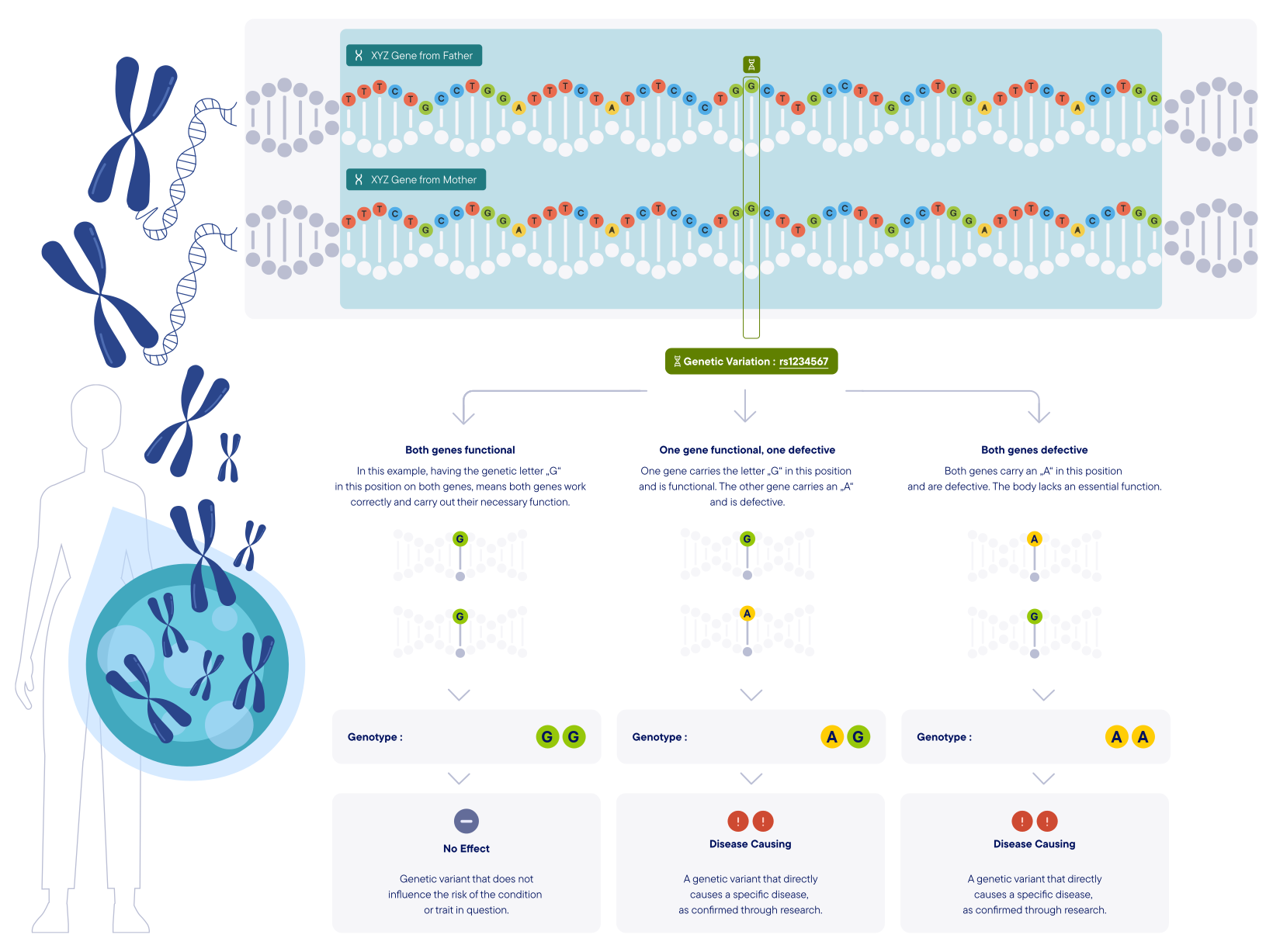
Humans have more than 20,000 genes, each carrying out one or a few specific functions in the body. One gene instructs the body to digest lactose from milk, another tells the body how to build strong bones and another prevents the body's cells from beginning to multiply uncontrollably and developing into cancer. As all of these genes combined are the building instructions for our body, a defect in one of these genes can have severe health consequences.
Through decades of genetic research, we know the genetic code of any healthy/functional human gene. We have also identified that in certain positions on a gene, some individuals may have a different genetic letter from the one you have. We call these hotspots "Genetic Variations" or "Variants" in short. In many cases, studies have been able to show that having the genetic letter "G" in the position makes you healthy, but having the letter "A" in the same position disrupts the gene function and causes a disease. Genopedia allows you to view these variants in genes and summarizes all that we know from scientific research, which genetic letters (Genotype) have good or bad consequences on your health or on your traits.
History
Throughout history, people have described babies born with a combination of facial differences, extra fingers or toes, and organ concerns, yet the pattern we now call 3c syndrome was not clearly recognized until modern times. Families and communities once noticed patterns that seemed to run in relatives, especially when more than one child had similar features at birth, but there wasn’t a single name for it. Early case notes focused on what could be seen or felt—low blood sugar after birth, feeding problems, a small head size, or breathing issues—without tying these signs together.
First described in the medical literature as a cluster of features involving the face, brain, and digits, the condition gradually gained a clearer outline as more detailed newborn exams and imaging became routine. Over time, descriptions became more consistent: certain facial traits, a specific set of brain findings on ultrasound or MRI, and extra fingers were repeatedly reported together. As medical science evolved, clinicians realized this was not just a random mix of findings but a recognizable syndrome with its own course and needs.
With each decade, improved prenatal ultrasound, postnatal imaging, and better newborn care helped doctors connect earlier scattered reports. What had seemed rare began to be recognized more often, partly because clinicians knew what to look for and partly because babies were surviving long enough for fuller evaluation. Not every early description was complete, yet together they built the foundation of today’s knowledge.
Advances in genetics then added another layer. Once doctors suspected a single underlying cause, research teams began testing affected children and their parents. DNA studies identified changes in genes that guide early development, confirming that 3c syndrome follows an inherited pattern in many families. This explained why siblings could share the condition and why its features tended to cluster in familiar ways.
From early theories to modern research, the story of 3c syndrome shows how careful observation, better imaging, and genetic testing can transform scattered clues into a coherent picture. Today, knowing the condition’s history helps clinicians recognize early symptoms of 3c syndrome, offer timely support for breathing or feeding, and guide families toward genetic counseling. The historical path also reminds us that variability is part of the condition: while many features repeat across reports, each child’s needs are individual, and care has steadily improved as understanding has grown.