
2q31.1 microdeletion syndrome is a genetic condition caused by a small missing piece of chromosome 2. It often leads to differences in limb development, growth, and learning, and some people have distinct facial features. Many living with 2q31.1 microdeletion syndrome are identified in infancy or childhood, and features can range from mild to more complex. Life span is usually near typical with appropriate medical care, though outcomes depend on the specific features present. Care focuses on supportive therapies, such as physical, occupational, and speech therapy, with regular check-ins for vision, hearing, heart, and developmental needs.
Overview
2q31.1 microdeletion syndromeSymptoms
People with 2q31.1 microdeletion syndrome often have limb differences (such as missing or fused fingers/toes), developmental delay, and learning difficulties. Some have distinctive facial features, short stature, feeding issues, or seizures. Signs are noticed at birth or in early childhood.
Outlook and prognosis
Many living with 2q31.1 microdeletion syndrome grow and learn at their own pace, with wide differences in abilities. Early therapies—speech, physical, occupational, and educational supports—can improve skills and independence. Regular follow-up for vision, muscle tone, bone, and behavior helps guide care.
Causes and risk factors
2q31.1 microdeletion syndrome results from a missing piece of chromosome 2, usually occurring spontaneously before birth. Rarely, it’s inherited from a parent with the same deletion or a balanced chromosomal change. No lifestyle or environmental exposures are known risk factors.
Genetic influences
Genetics are central to 2q31.1 microdeletion syndrome: the condition results from a small missing segment on chromosome 2. The exact size and genes lost vary, shaping severity and features. Most cases are de novo, but parental testing helps clarify recurrence risk.
Diagnosis
Doctors suspect 2q31.1 microdeletion syndrome based on clinical features such as growth or limb differences and developmental delays. Genetic tests confirm it, usually with chromosomal microarray or targeted testing. The genetic diagnosis of 2q31.1 microdeletion syndrome may include parental studies.
Treatment and drugs
Treatment for 2q31.1 microdeletion syndrome is tailored to each person’s mix of needs. Care often includes developmental and educational supports, physical and occupational therapy, speech therapy, and monitoring of growth, vision, hearing, bones, and heart. Specialists may address seizures, behavioral challenges, feeding issues, or orthopedic differences, and surgeries or medicines are used when specific features require them.
Symptoms
2q31.1 microdeletion syndrome can affect growth, limb development, and learning in ways that range from mild to more noticeable. For many families, early features of 2q31.1 microdeletion syndrome include differences in the hands or feet and delays in sitting, crawling, or talking. These differences can shape daily routines, from handling buttons to keeping up in school, but many children make steady gains with support. Features vary from person to person and can change over time.
In 2q31.1 microdeletion syndrome, differences in hands or feet such as missing, fused, or shorter fingers or toes can be present at birth. This can include a split or cleft appearance or webbing between digits. These differences may affect grasp, balance, and shoe fit.
Sitting, crawling, or walking may happen later than typical. Fine motor skills like using utensils or fasteners can take extra practice. Therapies can help build skills over time.
First words may come later, and speech can be harder to understand. People with 2q31.1 microdeletion syndrome may need extra support to communicate or follow complex instructions. Speech therapy often helps communication.
Many children have mild to moderate learning challenges. Attention, memory, or problem solving may need tailored teaching strategies. Extra time and support in school can make a difference.
How people usually first notice 2q31.1 microdeletion syndrome?
Many families first notice something around infancy or early childhood, such as feeding difficulties, weak muscle tone, or delays in sitting, crawling, or walking; doctors may also pick up unusual facial features or hand/foot differences during routine checkups. Sometimes the first signs of 2q31.1 microdeletion syndrome appear before birth on an ultrasound, which can show limb differences or growth concerns, prompting genetic testing. Later, concerns about speech, learning, or behavior often lead to evaluations that confirm the diagnosis.
Types of 2q31.1 microdeletion syndrome
2q31.1 microdeletion syndrome can look different from one person to another because the missing DNA segment can vary in size and in which genes are affected. Broadly, symptoms are grouped into a few patterns based on which body systems are most influenced—movement and limb development, learning and behavior, and growth and facial features. Symptoms don’t always look the same for everyone. When people talk about types of 2q31.1 microdeletion syndrome, they often mean these recognizable clinical patterns rather than separate genetic subtypes, so “types of 2q31.1 microdeletion syndrome” usually refers to these symptom clusters.
Limb-difference predominant
Differences in hands, feet, or fingers and toes stand out most. People may have missing, fused, short, or extra digits, sometimes on both sides. Walking or fine-motor tasks can be affected depending on which limbs are involved.
Neurodevelopment-focused
Learning difficulties, speech and language delays, and challenges with attention or behavior are the main features. Some may have autism spectrum traits or motor coordination issues. School supports and therapies often make a meaningful difference.
Growth and facial features
Short stature, low weight gain, or feeding challenges are more noticeable, along with subtle facial features like widely spaced eyes or a small jaw. These features do not affect everyone and can be mild. Doctors use growth tracking and nutrition support to guide care.
Mixed presentation
Several areas are affected at once, for example limb differences plus learning and speech delays. The balance of symptoms can shift over time. Care plans usually combine therapies and specialty follow-up to match the person’s needs.
Seizure-involved form
Some people develop seizures ranging from brief staring spells to convulsive events. Seizures may start in childhood and can often be managed with medication. Safety planning and regular neurological follow-up help optimize control.
What genetics can tell you about symptoms
Some people with a 2q31.1 microdeletion have missing bits near genes that guide limb and muscle development, leading to hand or foot differences, joint laxity, and low muscle tone. When the deletion includes brain-related genes, learning differences, speech delay, seizures, or behavioral challenges can appear.
Causes and risk factors
The root cause is a small missing piece on chromosome 2 at 2q31.1. In 2q31.1 microdeletion syndrome, this change usually happens for the first time in the child and is not inherited. It can also be passed down if a parent has the same deletion or a balanced chromosomal rearrangement, and early symptoms of 2q31.1 microdeletion syndrome can vary.
Genes set the stage, but environment and lifestyle often decide how the story unfolds. Prenatal care, nutrition, early therapies, and steady routines can support development, but they do not cause or remove the deletion.
Environmental and biological risk factors
Many families first learn about 2q31.1 microdeletion syndrome after early symptoms of 2q31.1 microdeletion syndrome or prenatal tests raise questions, but the underlying risk usually forms before conception. Doctors often group risks into internal (biological) and external (environmental). For this condition, most risk reflects natural changes that can happen during cell division, while a few exposures may add a small extra chance. Below are environmental and biological factors linked to how this deletion can arise.
Sometimes, a tiny piece of chromosome 2 can be lost when egg or sperm cells form. This is a natural cell-division mistake that can happen even when parents are healthy. When it involves the 2q31.1 region, it can result in 2q31.1 microdeletion syndrome.
As parents get older, new changes in egg or sperm cells happen a bit more often. Evidence suggests paternal age may play a larger role than maternal age for small DNA losses, and any added risk is usually small.
Some DNA regions contain repeated patterns that can misalign during cell division. When this occurs around 2q31.1, the misalignment can remove a small segment and cause 2q31.1 microdeletion syndrome.
High doses of ionizing radiation to the ovaries or testes can damage DNA and increase the chance of chromosome breaks. This mainly applies to radiation therapy, severe industrial accidents, or very high cumulative medical imaging doses, not routine X-rays. Plenty of people with similar exposures live without developing the condition.
Genetic risk factors
Most families learn that 2q31.1 microdeletion syndrome arises from a new change that starts in an egg or sperm. The genetic causes of 2q31.1 microdeletion syndrome involve a small missing segment in the 2q31.1 region of chromosome 2. When a parent carries a balanced chromosome rearrangement or the same microdeletion, the chance of having another child with the condition is higher. Risk is not destiny—it varies widely between individuals.

De novo deletion: Most cases occur as a new deletion in the child that neither parent has. This happens by chance during the formation of egg or sperm.
Parental rearrangement: A parent with a balanced translocation or inversion involving 2q31.1 can pass on an unbalanced form. This raises the risk of 2q31.1 microdeletion syndrome in a pregnancy.
Inherited microdeletion: If a parent has the same 2q31.1 microdeletion, it can be passed in an autosomal dominant pattern. The severity can vary widely among family members.
Germline mosaicism: Rarely, a parent’s egg or sperm cells carry the deletion even though standard testing on the parent’s blood is normal. This can slightly increase recurrence risk after one affected child.
Gene content loss: Deletions that remove key genes in the 2q31.1 region, often including the HOXD gene cluster, drive the features of the condition. Larger deletions tend to involve more genes and can cause broader findings.
Chromosome architecture: Repetitive DNA near 2q31.1 can make this region prone to mispairing and deletion. This mechanism explains many de novo cases of 2q31.1 microdeletion syndrome.
Recurrence estimates: When a deletion is de novo and parents have normal chromosome studies, the chance of it happening again is low but not zero. If a parent carries a rearrangement or the microdeletion, the chance of 2q31.1 microdeletion syndrome in future pregnancies can be substantially higher.
Lifestyle risk factors
2q31.1 microdeletion syndrome is a genetic condition; lifestyle habits do not cause it. However, daily routines, movement, nutrition, and sleep can shape symptoms, function, and complications over time. Understanding how lifestyle affects 2q31.1 microdeletion syndrome helps families target what is modifiable at home and school. The elements below focus on practical choices that influence mobility, learning, behavior, and safety.
Gentle, regular physiotherapy can improve hypotonia, balance, and gait in people with 2q31.1 microdeletion syndrome. Overexertion or high-impact activities may worsen joint stress and hand or foot discomfort due to limb differences. Aquatic exercise often allows safer conditioning.
Daily fine-motor practice and occupational therapy routines can enhance grip, self-care, and school skills despite syndactyly or limited range. Skipping practice may increase dependence and reduce dexterity over time.
Consistent use of splints, supportive footwear, and proper seating helps align limbs and prevents contractures. Poor positioning can increase pain and fatigue during mobility and learning.
Adequate calories, protein, and fiber support growth and bowel regularity when feeding difficulties or low tone are present. Calcium and vitamin D intake plus weight-bearing activity help bone strength in those with reduced mobility.
Risk prevention
Most people cannot prevent 2q31.1 microdeletion syndrome because it usually happens by chance during early embryo development. If a parent carries the same deletion (or a related chromosome change), planning options can lower the chance in a future pregnancy. Prenatal screening and diagnostic testing can find the condition before birth so families can prepare care and support early. Some prevention is universal, others are tailored to people with specific risks.
A genetics professional can explain how 2q31.1 microdeletion syndrome happens and your family’s specific chances. They can outline testing choices and help you weigh timing, accuracy, and limits.
Chromosomal microarray or related tests can check if a parent carries the 2q31.1 deletion or a balanced rearrangement. Knowing this guides whether future pregnancies have a higher or low recurrence chance.
If a parent is a carrier, options like IVF with preimplantation genetic testing may reduce the chance of passing on the known deletion. Your care team can also discuss using donor eggs or sperm and the pros and cons of each path.
Noninvasive screening may suggest some microdeletions, but it can miss 2q31.1 changes and is not diagnostic. Chorionic villus sampling or amniocentesis with chromosomal microarray can confirm the diagnosis before birth.

Transmission
2q31.1 microdeletion syndrome isn’t contagious and can’t be “caught” from someone else. It starts before birth when a small segment of chromosome 2 is missing.
Most cases happen as a new change in the egg, sperm, or early embryo, so parents typically don’t carry it. If a parent does have the same microdeletion, each pregnancy has a 50% chance of inheriting it—this is how 2q31.1 microdeletion syndrome is inherited. Rarely, a parent may have a balanced chromosome change or a small proportion of their egg or sperm carrying the change, which can raise the chance even if routine tests on the parents look normal.
When to test your genes
Consider genetic testing if a child shows multiple congenital differences, developmental delays, or learning challenges without a clear cause, or if prenatal imaging suggests limb or organ anomalies. Testing also makes sense when a close relative has a 2q31.1 microdeletion. Results can guide early therapies, medical surveillance, and family planning.
Diagnosis
You might notice small changes in daily routines, like a baby who isn’t using their hands equally or feet that look different at birth. The genetic diagnosis of 2q31.1 microdeletion syndrome often starts with these visible patterns in limb development, followed by lab tests that look at chromosomes in detail. Genetic testing may be offered to clarify risk or guide treatment. During pregnancy, ultrasound may raise suspicion, but only lab testing can confirm it.
Doctors look for patterns such as differences in the hands or feet, muscle tone, and overall growth. Notes from physical and developmental exams help decide which tests to order.
A detailed family and health history can help spot whether similar features have appeared in relatives. Most cases are new changes, but this step guides risk discussions for future pregnancies.
This is the first-line test to detect small missing pieces of DNA. It can identify the specific 2q31.1 deletion that confirms 2q31.1 microdeletion syndrome.
A lab probe can be used to check the 2q31.1 region directly on chromosomes. This can confirm the deletion and, in some cases, clarify whether it is present in a parent.
Stages of 2q31.1 microdeletion syndrome
2q31.1 microdeletion syndrome does not have defined progression stages. This is a genetic difference present from birth, and its effects vary widely, so it doesn’t follow a uniform path or a predictable step-by-step decline. Doctors usually diagnose it by combining a physical exam and developmental history with lab testing that looks for small missing pieces of chromosome 2; Genetic testing may be offered to clarify certain risks. When early symptoms of 2q31.1 microdeletion syndrome—such as differences in limb formation, delayed milestones, or feeding challenges—raise concern, referral to clinical genetics and other specialists can guide care and regular monitoring.
Outlook and prognosis
Looking ahead can feel daunting, but most children with 2q31.1 microdeletion syndrome make meaningful gains with steady, coordinated care. Many living with 2q31.1 microdeletion syndrome learn to communicate in their own way, build routines, and participate in school or supported work, though the pace of progress varies. The outlook is not the same for everyone, but development tends to improve when therapies start early and are kept consistent. Doctors call this the prognosis—a medical word for likely outcomes.
Some children have mild learning differences and subtle hand or limb differences, while others face more complex needs such as significant developmental delay, feeding issues, or seizures. In medical terms, the long-term outlook is often shaped by both genetics and lifestyle. Early symptoms of 2q31.1 microdeletion syndrome, like delayed sitting or walking, may ease with physical, occupational, and speech therapy, and many children gain new skills into adolescence. Serious, life‑threatening complications are uncommon when heart, vision, and growth issues are monitored and treated, so overall life expectancy is often near typical unless major organ problems are present.
Adulthood is reachable for most, with levels of independence ranging from supported living to full family assistance; planning for education, vocational training, and social support helps. Knowing what to expect can ease some of the worry. With ongoing care, many people maintain good health, and seizures—if they occur—can often be managed with medication and regular follow-up. Talk with your doctor about what your personal outlook might look like, including what to watch for at home and which checkups matter most over time.
Long-term effects
For many, the long-term picture centers on how limb differences and neurodevelopmental traits shape daily life at school, work, and home. Early symptoms of 2q31.1 microdeletion syndrome often appear in infancy, such as limb differences or delayed milestones, and their impact can continue into adulthood. Long-term effects vary widely, depending on which genes are missing and any associated organ differences. Over time, needs may shift—from support in early schooling to planning for adult independence.
Limb formation differences can lead to challenges with grip, dexterity, or walking. In 2q31.1 microdeletion syndrome, these effects are typically lifelong and range from mild to significant.
Many have developmental delay or intellectual disability that continues into adulthood. In 2q31.1 microdeletion syndrome, learning pace is often slower but still progresses.
Speech may be delayed, with ongoing articulation or clarity differences. Some communicate mostly with short phrases or gestures.
A subset develop seizures in childhood. Seizure tendency may lessen, recur, or continue into adult years.
How is it to live with 2q31.1 microdeletion syndrome?
Living with 2q31.1 microdeletion syndrome often means navigating developmental and learning differences, variable muscle tone or coordination challenges, and, for some, differences in growth or limb development that can affect everyday tasks like handwriting, dressing, or moving around safely. Many benefit from structured routines, therapies (physical, occupational, speech), and adaptive tools that make school, work, and home life more manageable and less tiring. Family members, classmates, and caregivers may need to adjust expectations, communicate clearly, and share tasks, but with coordinated support and realistic goals, most families find a rhythm that builds skills and confidence over time.
Treatment and drugs
Treatment for 2q31.1 microdeletion syndrome focuses on each person’s specific needs and usually involves a team that may include pediatrics, neurology, orthopedics, genetics, physical and occupational therapy, and speech therapy. Supportive care can make a real difference in how you feel day to day, with early intervention services to build motor skills, improve speech and feeding, and support learning at school through individualized education plans. Orthopedic care may address limb or hand differences and spinal alignment; physical aids like splints or custom shoes, and sometimes surgery, can improve function and comfort. Seizures, if present, are treated with anti-seizure medicines, and sleep or behavioral concerns may be managed with structured routines, therapy (such as behavioral therapy), and targeted medications when needed. Genetic counseling helps families understand recurrence risk, and regular follow-up allows the care team to adjust therapies as goals and needs change.
Non-drug treatment
Living with 2q31.1 microdeletion syndrome often means focusing on skills that support everyday movement, communication, learning, and independence. Non-drug treatments often lay the foundation for progress at home, in school, and in the community. These supports are tailored to each person’s abilities and challenges, and they can change over time as needs evolve.
Services in infancy and toddler years build core skills during a key window for brain development. Structured programs, like early intervention, can help address early symptoms of 2q31.1 microdeletion syndrome.
Exercises and play-based movement improve strength, balance, and coordination. Therapists also work on posture, walking, and endurance for daily activities.
Hand and self-care skills are practiced step by step, from grasping toys to using utensils. Therapists can recommend adaptive tools to make dressing, writing, and play easier.
Support targets speech sounds, understanding, and social communication. Therapists may also introduce picture-based or device-supported communication if spoken words are limited.
Your genes may have an impact on how drugs work for you
Medications for 2q31.1 microdeletion syndrome can work differently because deleted genes may alter how the body processes drugs or how brain and muscle cells respond. Clinicians often start low and adjust slowly, sometimes using pharmacogenetic testing to guide safer, more effective dosing.
Pharmacological treatments
Medicines for 2q31.1 microdeletion syndrome focus on easing day‑to‑day symptoms rather than changing the chromosome itself. Treatment is tailored to the person’s needs and may shift as they grow. Not everyone responds to the same medication in the same way. For some, early symptoms of 2q31.1 microdeletion syndrome—like seizures, sleep problems, or reflux—guide which drugs are tried first.
Levetiracetam, valproic acid, or lamotrigine can reduce seizure frequency. Dosing is adjusted slowly and monitoring helps track mood or sleep changes.
Methylphenidate or mixed amphetamine salts may improve focus and activity control. Atomoxetine or guanfacine are alternatives if stimulants aren’t a good fit.
Risperidone or aripiprazole can help with severe irritability or self‑injury. Doctors watch for weight, movement changes, and metabolic effects.
Fluoxetine or sertraline can ease anxiety or depression. Benefits build over weeks, so regular check‑ins are important.
Genetic influences
This condition stems from a tiny missing piece of DNA on the long arm of chromosome 2 (called 2q31.1). That missing stretch can remove several neighboring genes that are important during early development, especially for forming the limbs and the nervous system. Even with the same gene change, people can have very different features and levels of day-to-day impact. Most 2q31.1 microdeletion syndrome cases arise as a new change at conception, but if a parent has the same deletion, each pregnancy has a 50% chance of inheriting it. Chromosomal microarray or similar genetic tests can detect the deletion and confirm the diagnosis. When the change is new in a child, the chance of it happening again in a future pregnancy is usually low, though a genetics team may discuss small residual risks and options for prenatal testing.
Is 2q31.1 microdeletion syndrome genetic?
Genetics are central to 2q31.1 microdeletion syndrome: the condition results from a small missing segment on chromosome 2. The exact size and genes lost vary, shaping severity and features. Most cases are de novo, but parental testing helps clarify recurrence risk.
Pharmacogenetics—how genetics influence drug effects
Medicines used in 2q31.1 microdeletion syndrome are chosen for the symptoms—such as seizures, attention differences, or mood—and your response can depend on drug–gene interactions unrelated to the chromosome 2 deletion itself. If seizures are being treated, doctors sometimes consider genetic screening before carbamazepine or oxcarbazepine in people of certain Asian backgrounds because a specific HLA type can raise the risk of serious skin reactions. For drugs like atomoxetine or some antipsychotics, differences in a gene called CYP2D6 can change how quickly your body clears the medicine, which can guide dosing or choice of drug. With phenytoin, variants in metabolism genes (for example, CYP2C9) may increase side effects at usual doses, so lower doses or other options might be safer. Even though early symptoms of 2q31.1 microdeletion syndrome vary, using pharmacogenetic information can sometimes reduce trial-and-error and side effects. Genetics is only one factor, and doctors will also weigh age, other medicines, liver and kidney health, and your day-to-day goals when tailoring treatment.
Interactions with other conditions
Children with 2q31.1 microdeletion syndrome often need care from several specialists, and other health conditions can shape how they grow, learn, and move. Doctors call it a “comorbidity” when two conditions occur together. Congenital heart differences, epilepsy, autism or attention differences, vision or hearing loss, and sleep-related breathing problems often occur alongside 2q31.1 microdeletion syndrome, and each can influence therapy progress and school participation. For example, seizures or untreated sleep apnea can worsen attention and learning, while heart or lung issues may limit stamina for rehabilitation; infections and fever can also raise seizure risk. Early symptoms of 2q31.1 microdeletion syndrome—such as feeding difficulties, low muscle tone, or limb differences—may be compounded by reflux, orthopedic problems, or recurrent ear infections. Because these patterns vary widely, coordinated care among neurology, cardiology, genetics, therapy, and primary care helps tailor treatments and avoid medication conflicts, including medicines that might affect behavior, sleep, or bone health.
How genes can cause diseases
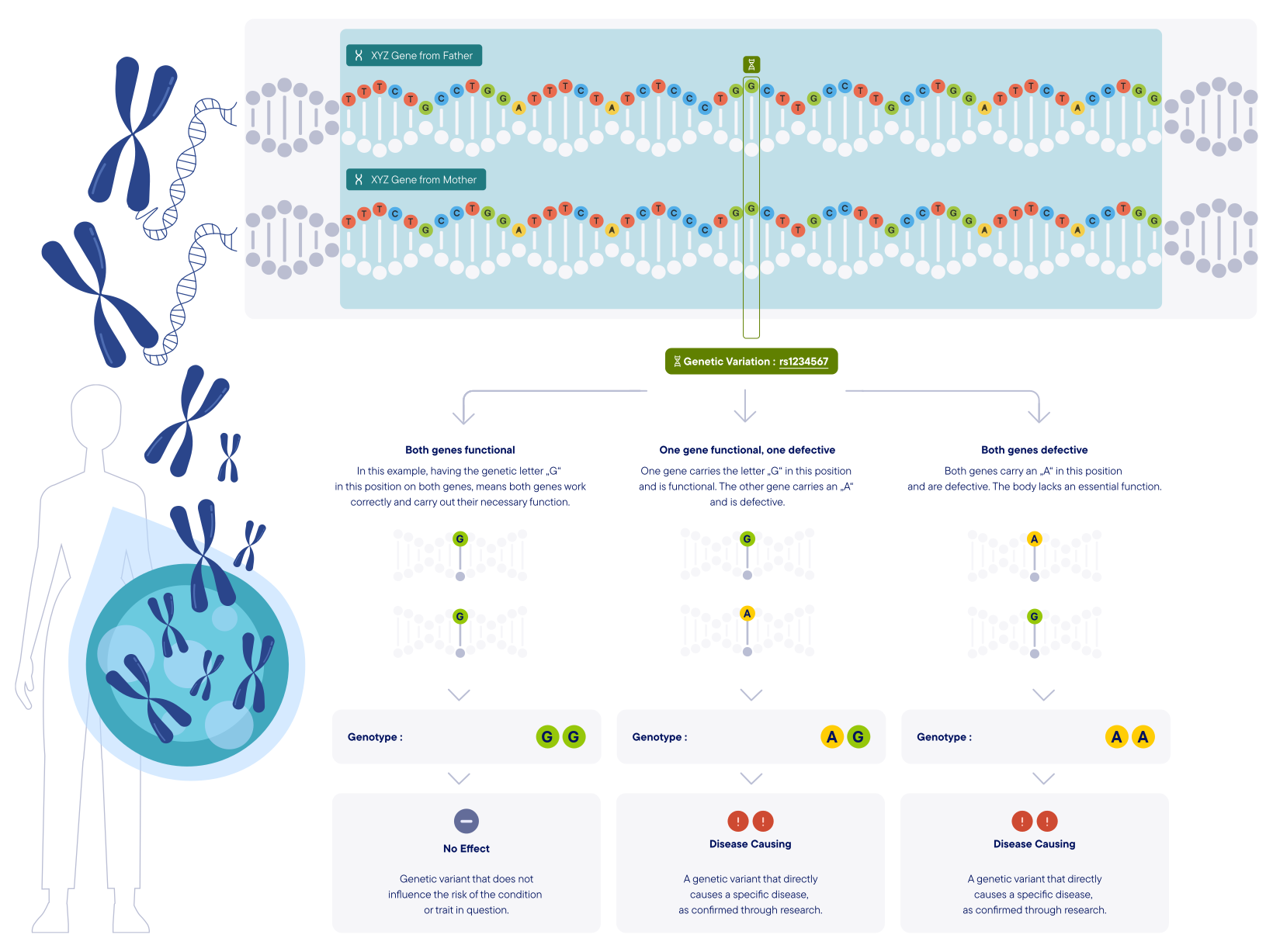
Humans have more than 20,000 genes, each carrying out one or a few specific functions in the body. One gene instructs the body to digest lactose from milk, another tells the body how to build strong bones and another prevents the body's cells from beginning to multiply uncontrollably and developing into cancer. As all of these genes combined are the building instructions for our body, a defect in one of these genes can have severe health consequences.
Through decades of genetic research, we know the genetic code of any healthy/functional human gene. We have also identified that in certain positions on a gene, some individuals may have a different genetic letter from the one you have. We call these hotspots "Genetic Variations" or "Variants" in short. In many cases, studies have been able to show that having the genetic letter "G" in the position makes you healthy, but having the letter "A" in the same position disrupts the gene function and causes a disease. Genopedia allows you to view these variants in genes and summarizes all that we know from scientific research, which genetic letters (Genotype) have good or bad consequences on your health or on your traits.
History
Families and communities once noticed patterns that a few children in each generation had smaller hands or feet, learning differences, or limb differences that didn’t match the rest of the family. Notes in old clinic files described babies with finger or toe changes alongside developmental delays, but the cause remained unclear for decades. Doctors could name what they saw, yet the link tying these features together was missing.
First described in the medical literature as scattered case reports of limb anomalies and growth or learning concerns, these early accounts depended on physical examination alone. Over time, descriptions became more consistent as clinicians compared photos, X‑rays, and developmental histories. Still, many people with milder features were never grouped under one label, so the pattern stayed hidden.
Advances in genetics changed the picture. In the 1990s and early 2000s, newer chromosome tests—first high‑resolution karyotyping, then techniques like chromosomal microarray—revealed that a tiny missing segment on chromosome 2 at region q31.1 could explain the combination of limb differences and developmental challenges in some families. What once seemed like unrelated findings began to form a recognizable condition: 2q31.1 microdeletion syndrome. From early theories to modern research, the story of 2q31.1 microdeletion syndrome reflects how better tools sharpen our understanding.
As testing spread, clinicians recognized a wide range of outcomes. Some children had noticeable limb differences at birth, while others had subtle changes in finger bones that only showed up on imaging. Learning and behavior varied too, from mild school support needs to more significant delays. Despite evolving definitions, the shared genetic change helped connect people with similar experiences and provided clearer language for care.
Today, the history of 2q31.1 microdeletion syndrome is still being written. Early symptoms of 2q31.1 microdeletion syndrome are now more likely to be linked to the correct diagnosis, especially when limb findings prompt genetic testing. Looking back helps explain why the condition was underrecognized: without precise tools, many features seemed isolated rather than part of a single syndrome. As more families are identified, long‑term studies continue to refine what doctors can predict and how best to support children and adults living with this rare chromosome change.