
2q23.1 microduplication syndrome is a rare genetic condition caused by a small extra piece of DNA on chromosome 2. People with 2q23.1 microduplication syndrome often have developmental delays, learning differences, and speech delay, and some have autism features or seizures. Signs usually begin in infancy or early childhood and tend to be lifelong, but needs and abilities can change with growth. Treatment focuses on support such as early intervention, speech and occupational therapy, behavioral support, seizure management if needed, and educational planning. The outlook varies, but many living with 2q23.1 microduplication syndrome can make progress with consistent care and do not have shortened life expectancy solely because of the duplication.
Overview
2q23.1 microduplication syndromeSymptoms
In 2q23.1 microduplication syndrome, features include developmental delay, speech and learning difficulties, and autism-like behaviors. Many have low muscle tone, feeding issues, or sleep problems; some develop seizures. Signs are often noticed in infancy or early childhood.
Outlook and prognosis
Many living with 2q23.1 microduplication syndrome grow and learn at their own pace, with support tailored to speech, learning, behavior, and movement. Outlook varies widely; some attend mainstream school with accommodations, while others need ongoing therapies. Regular follow-up helps address seizures, sleep issues, and feeding or growth concerns early.
Causes and risk factors
2q23.1 microduplication syndrome stems from an extra copy of DNA at chromosome 2q23.1, most often de novo. It may be inherited from a parent with the same change or a balanced rearrangement; risk is genetic, with a modest paternal-age effect.
Genetic influences
Genetics is central to 2q23.1 microduplication syndrome; the condition results from extra copied DNA in the 2q23.1 region. Most cases are de novo, though it can be inherited and show variable effects. Genetic testing confirms the diagnosis and guides family planning.
Diagnosis
Doctors suspect 2q23.1 microduplication syndrome from clinical features and developmental history. The genetic diagnosis of 2q23.1 microduplication syndrome is confirmed with chromosomal microarray or similar genetic tests that detect a duplication at 2q23.1; parental testing may clarify inheritance.
Treatment and drugs
Treatment for 2q23.1 microduplication syndrome focuses on the specific needs of each person. Care often includes early developmental therapies, support for learning and behavior, seizure management if needed, and regular checks for growth, sleep, and gastrointestinal issues. A coordinated team—neurology, genetics, therapy, and education—helps adjust care over time.
Symptoms
From early childhood, everyday development—sitting, walking, first words—may move at a slower pace. The changes are often subtle at first, blending into daily life until they become more noticeable. Parents often first notice early features of 2q23.1 microduplication syndrome in the infant or toddler years, especially delays in movement and speech. Severity and combination of features differ widely, and supports like therapy can make a meaningful difference.
Milestones such as sitting, crawling, walking, and first words may appear later than expected. People with 2q23.1 microduplication syndrome often make progress with time and consistent therapy. The pace can vary from mild to more significant delay.
First words and phrases may come late, and speech may stay limited. Many understand more than they can say. Alternative communication, like picture boards or sign language, can help.
Thinking and problem-solving may be slower than peers, ranging from mild to more significant intellectual disability. New skills often need extra repetition and structure. School supports can be tailored for 2q23.1 microduplication syndrome.
Muscles can feel loose or floppy in infancy, which may affect posture and stamina. Low tone can make it harder to chew, feed, or speak clearly. Physical and occupational therapy often help build strength and control.
How people usually first notice 2q23.1 microduplication syndrome?
Parents and doctors often first notice 2q23.1 microduplication syndrome in infancy because growth and developmental milestones come later than expected, such as delays in sitting, babbling, or walking. Some babies have low muscle tone, feeding difficulties, or unusual sleep patterns, and as toddlers, many show limited speech, behavioral differences, or features of autism, which prompt evaluation; these are common first signs of 2q23.1 microduplication syndrome. In some cases, distinctive facial features or seizures lead to genetic testing that confirms how 2q23.1 microduplication is first noticed.
Types of 2q23.1 microduplication syndrome
2q23.1 microduplication syndrome is a genetic condition, and experts describe a few clinical variants based on the exact size and genes included in the duplicated segment. These variants can affect how early symptoms show up and how strong they are, especially for development, behavior, growth, and seizures. Symptoms don’t always look the same for everyone.
Minimal duplication
This involves a small duplicated segment centered on MBD5. It often links to milder developmental delays and learning differences with fewer medical complications.
Typical recurrent region
This includes the standard 2q23.1 segment with MBD5 and nearby genes. Many living with 2q23.1 microduplication syndrome in this group have moderate developmental delays, speech challenges, and behavioral differences.
Extended duplication
This covers a larger segment that stretches beyond the usual region. People may have more pronounced delays, feeding or growth issues, or seizures, depending on which additional genes are duplicated.
Complex or atypical
This includes unusual breakpoints or multiple duplicated blocks. Symptoms can be mixed and vary widely, and the exact gene content often explains differences between types of 2q23.1 microduplication syndrome.
What genetics can tell you about symptoms
Extra copies of genes in the 2q23.1 region can shift brain signaling, leading to developmental delay, speech challenges, autism‑like behaviors, low muscle tone, seizures, and sleep problems. Some also have feeding issues, short stature, or subtle facial differences, depending on which genes are duplicated.
Causes and risk factors
The genetic causes of 2q23.1 microduplication syndrome involve an extra copy of a small segment at 2q23.1 on chromosome 2.
This extra DNA usually happens as a new change in the egg or sperm, but it can be inherited from a parent who also carries the duplication.
If a parent carries the duplication, the chance of passing it to a child is higher, and the risk in future pregnancies depends on this.
Other genes, overall health, and environment may shape how strongly features appear, but they do not cause the syndrome.
Knowing your family history is a good first step.
Environmental and biological risk factors
Understanding what can raise the chance of 2q23.1 microduplication syndrome can help you see what’s within your control and what isn’t. Doctors often group risks into internal (biological) and external (environmental). Below are environmental and biological risk factors for 2q23.1 microduplication syndrome supported by current evidence. These describe factors that may nudge likelihood, not guarantees.
The chance of new chromosome changes in eggs rises with age, which may slightly increase the odds of 2q23.1 microduplication syndrome. This increase becomes more noticeable after about age 35.
DNA changes in sperm occur more often as men age, modestly raising the chance of structural chromosome variants. For any single pregnancy, the absolute risk for this microduplication remains low.
Repeated DNA near the 2q23.1 area can misalign during egg or sperm formation, making a duplication more likely. This reflects a built-in biological susceptibility rather than something parents did or didn’t do.
Significant ionizing radiation to a parent’s reproductive organs or to an early embryo can damage chromosomes and increase the chance of copy-number changes. Routine background radiation and standard medical imaging are not known to raise risk for 2q23.1 microduplication syndrome.
Genetic risk factors
In many families, the extra DNA segment arises as a new event, while in others it’s passed down from a parent who may have mild or no features. 2q23.1 microduplication syndrome most often involves a duplicated stretch that includes the MBD5 gene, and this gene’s dose seems key to the condition. The genetic causes of 2q23.1 microduplication syndrome center on how the size and exact genes within the duplicated region affect development, which helps explain the wide range of findings. Carrying a genetic change doesn’t guarantee the condition will appear.

MBD5 dosage effect: Extra copies of MBD5 are strongly linked to the core features of 2q23.1 microduplication syndrome. This gene appears dosage-sensitive, so increased activity can shift brain and developmental pathways.
De novo duplication: Many cases occur as a new change in the child with no family history. The chance of it happening again in future pregnancies is usually low but not zero.
Inherited from parent: Some children inherit the 2q23.1 duplication from a parent who may have mild features or be unaware. This raises the recurrence risk for siblings.
Parental rearrangement carrier: A parent can carry a balanced translocation or inversion that keeps all the DNA but rearranged. This can increase the chance of a child having an unbalanced 2q23.1 microduplication.
Germline mosaicism: Rarely, a parent’s egg or sperm cells carry the duplication even if blood testing is normal. This can explain recurrence after a de novo result.
Child mosaicism: The duplication may be present in only some of a child’s cells. Mosaicism can lead to milder or unusual features of 2q23.1 microduplication syndrome.
Duplication size matters: Larger segments often include more genes beyond MBD5 and may increase the likelihood or severity of symptoms. Smaller, MBD5-focused duplications can still cause noticeable effects.
Gene content differences: Which nearby genes are duplicated varies between families. Different gene combinations can change how learning, growth, or behavior are affected.
Penetrance and variability: Not everyone with the same duplication shows the same features. Risk is not destiny—it varies widely between individuals.
Lifestyle risk factors
This is a genetic condition; lifestyle habits do not cause it, but they can shape symptoms, day-to-day function, and complications. Understanding how lifestyle affects 2q23.1 microduplication syndrome helps families prioritize routines that support learning, behavior, sleep, and overall health. The elements below highlight lifestyle risk factors for 2q23.1 microduplication syndrome and practical ways to reduce their impact. Choices around sleep, activity, diet, and daily structure can make a meaningful difference in comfort and participation.
Irregular or insufficient sleep can worsen irritability, attention, and seizure tendency in people with 2q23.1 microduplication syndrome. A consistent bedtime, morning wake time, and calming pre-sleep routine often improves behavior and daytime learning.
Highly processed, low-fiber diets can aggravate constipation and reflux that are common and can disrupt sleep and behavior. Fiber-rich meals, adequate fluids, and feeding supports tailored by a clinician help growth, comfort, and medication tolerance.
Low daily activity can exacerbate hypotonia, constipation, poor sleep, and bone health concerns. Regular, play-based movement and therapist-guided exercises can strengthen core stability, improve coordination, and support better sleep.
For those with seizures, sleep loss, dehydration, and missed meals can lower seizure threshold. Keeping steady sleep, hydration, and meal timing helps reduce breakthrough events alongside prescribed treatments.
Risk prevention
2q23.1 microduplication syndrome is a genetic condition present from birth, so the duplication itself can’t be prevented. Prevention focuses on spotting early symptoms of 2q23.1 microduplication syndrome and reducing complications over time. Some prevention is universal, others are tailored to people with specific risks. The steps below aim to support development, lower medical risks, and keep day‑to‑day life steadier.
A genetics professional can explain inheritance patterns, chances of recurrence, and testing options. This helps families plan future pregnancies and understand risks for relatives.
If the duplication runs in the family, options like prenatal testing or IVF with embryo testing may be available. These steps can lower the chance of passing on 2q23.1 microduplication syndrome in future pregnancies.
Regular screening in infancy and toddler years can flag delays early. Early therapy services can improve communication, motor skills, and learning.
Physical, occupational, and speech therapy can support daily function and independence. Starting early may prevent secondary issues like joint stiffness, poor balance, or feeding setbacks.

Transmission
2q23.1 microduplication syndrome is not contagious—you can’t catch it from someone else. It occurs when there’s a small extra segment on chromosome 2 at the q23.1 region; most cases happen as a new change (de novo) in the egg, sperm, or very early embryo. When a parent carries the same duplication—even if they have mild or no symptoms—it can be passed on in an autosomal dominant way, meaning each child has a 50% chance to inherit it. If neither parent has the duplication, the chance of it happening again in another pregnancy is usually very low, though a rare situation called germline mosaicism can keep the risk slightly above zero. A genetics professional can explain how 2q23.1 microduplication syndrome is inherited in your family and discuss the genetic transmission of 2q23.1 microduplication syndrome, including testing options.
When to test your genes
Consider genetic testing if a child shows global developmental delay, speech delay, intellectual disability, autism traits, seizures, or atypical growth, especially with congenital differences. Testing is also reasonable when a close relative has a 2q23.1 copy-number variant. For adults, test if unexplained neurodevelopmental features persist or for family planning.
Diagnosis
People are often first referred for evaluation after noticing ongoing developmental delays, learning differences, or seizures that don’t have a clear cause. In 2q23.1 microduplication syndrome, diagnosis is based on a combination of what clinicians observe and confirmation with genetic tests. Early and accurate diagnosis can help you plan ahead with confidence. When a genetic diagnosis of 2q23.1 microduplication syndrome is made, it can also guide care, therapies, and family planning.
Doctors look for patterns such as global developmental delay, limited speech, autistic-like behaviors, or seizures. Subtle facial traits and growth patterns may add clues. These findings raise suspicion and prompt genetic testing.
Standardized developmental and speech evaluations document strengths and challenges. Results help distinguish syndromic patterns from isolated delays. They also guide support services while testing is underway.
A detailed family and health history can help connect symptoms across relatives. This can suggest whether the change was inherited or happened for the first time in the child. It also helps estimate recurrence risk.
This test scans the genome for extra or missing chromosome pieces. It can detect an extra segment at 2q23.1 that confirms the syndrome. Microarray is often the first-line genetic test for unexplained developmental delays.
Stages of 2q23.1 microduplication syndrome
2q23.1 microduplication syndrome does not have defined progression stages. It is a genetic difference present from birth, and while abilities can change with growth and support, the condition doesn’t follow a predictable step-by-step decline. Doctors usually start with a conversation about development, behavior, and family history, then confirm the diagnosis with genetic testing such as a chromosomal microarray or targeted testing. Early symptoms of 2q23.1 microduplication syndrome may include delayed speech, learning differences, or coordination challenges, and doctors often track progress over time through developmental checkups and tailored therapies.
Outlook and prognosis
Looking ahead can feel daunting, but most children with 2q23.1 microduplication syndrome make steady gains with therapies and school supports. Early care can make a real difference—speech, occupational, and physical therapy often help communication, motor skills, and daily routines. Some children have seizures or feeding difficulties early on; these can often be managed with standard treatments and careful follow-up. Many people ask, “What does this mean for my future?”, and for many families it means planning for ongoing supports in learning and behavior while celebrating gradual milestones.
The outlook is not the same for everyone, but most reports suggest survival into adulthood is typical, and life span may be near normal when major heart, breathing, or feeding complications are not present. Growth differences, sleep problems, anxiety, or autism features may persist, yet with consistent care many people maintain good overall health and participate in school, community activities, and supported employment. When thinking about the future, it helps to track early symptoms of 2q23.1 microduplication syndrome—like developmental delays, recurrent seizures, or sleep disruption—so your team can adjust therapies and medicines promptly. In medical terms, the long-term outlook is often shaped by both genetics and lifestyle, including access to early intervention, seizure control, nutrition, and structured education plans.
Serious medical complications are uncommon but can occur; uncontrolled epilepsy, severe feeding issues with poor growth, or accidental injuries related to wandering or impulsivity are the main risks clinicians try to reduce. Published data on mortality are limited due to the rarity of 2q23.1 microduplication syndrome, so doctors rely on careful monitoring and individualized care plans. Talk with your doctor about what your personal outlook might look like, including plans for school transitions, adult services, and guardianship if needed. Genetic testing can sometimes provide more insight into prognosis, especially when clarifying the exact size of the duplication and whether other genetic factors are present.
Long-term effects
2q23.1 microduplication syndrome is linked with ongoing developmental and neurologic differences that tend to appear in early childhood and continue into adulthood. Early symptoms of 2q23.1 microduplication syndrome often show up as delays in talking, motor skills, and learning, and many of these remain to some degree over time. Long-term effects vary widely, and abilities can change slowly as children grow into teens and adults. Most people live into adulthood, with day-to-day support needs shaped by the mix of learning, behavior, and health features present.
Intellectual abilities often range from mild to moderate disability and tend to be lifelong. Skills can grow steadily but usually remain below age expectations.
Expressive language is typically more affected than understanding, with limited spoken words for many. Some continue to rely on gestures or other communication tools to be understood.
Low muscle tone and coordination differences can persist, affecting balance, running, and fine hand skills. Walking usually develops, but gait may remain somewhat unsteady.
A proportion of people develop seizures in childhood, which can continue intermittently over the years. In some, seizures lessen with age, while in others they recur.
How is it to live with 2q23.1 microduplication syndrome?
Living with 2q23.1 microduplication syndrome often means navigating developmental differences, learning challenges, and sometimes behavior or sleep issues that can affect daily routines at home, school, and work. Many families build structured schedules, use therapies (like speech, occupational, and behavioral support), and adapt communication and learning tools to help with progress and independence. Friends, teachers, and caregivers may notice that patience, consistent cues, and clear expectations reduce stress for everyone and make participation in activities easier. Over time, with coordinated care and community support, many find a steady rhythm that balances needs, strengths, and growing skills.
Treatment and drugs
Treatment for 2q23.1 microduplication syndrome focuses on easing symptoms and supporting development, since there’s no single “cure.” Care often includes early intervention therapies such as speech and language therapy, occupational therapy for fine-motor and sensory issues, and physical therapy to build strength, balance, and coordination; behavioral therapy can help with attention, learning, sleep, or autistic features. Doctors sometimes recommend a combination of lifestyle changes and drugs, for example using seizure medicines if seizures occur, melatonin or sleep routines for insomnia, and targeted medications for significant hyperactivity, anxiety, or mood symptoms. Regular check-ins with pediatrics, neurology, genetics, and developmental specialists help track growth, learning, and any new concerns, and a tailored education plan at school can support communication and learning needs. Although living with 2q23.1 microduplication syndrome can feel overwhelming, supportive care can make a real difference in how you feel day to day.
Non-drug treatment
Support focuses on development, communication, behavior, feeding, and family needs. Non-drug treatments often lay the foundation for progress in 2q23.1 microduplication syndrome, with therapies tailored to age and strengths. Starting early can help address motor, speech, and sensory differences. Many families first notice early symptoms of 2q23.1 microduplication syndrome in infancy or preschool years, so early intervention matters.
Coordinated services in infancy and toddler years target motor, language, and social skills. Therapists coach families on everyday strategies at home.
Sessions build understanding, sound production, and early words. Therapy also targets oral-motor skills and social communication.
Picture boards, sign language, or speech-generating devices give a voice while speech develops. Early access to AAC can reduce frustration and improve learning.
Activities improve hand use, daily living skills, and attention. Sensory-based strategies can help with sensitivities to sound, touch, or movement.
Your genes may have an impact on how drugs work for you
Medicines can work differently in people with 2q23.1 microduplication syndrome because extra copies of genes may change how the body processes or responds to drugs. Pharmacogenetic testing and cautious dose adjustments help clinicians choose safer, more effective treatments.
Pharmacological treatments
For many, day-to-day care for 2q23.1 microduplication syndrome focuses on easing seizures, behavior challenges, attention issues, and sleep problems so school, therapies, and family life run more smoothly. There isn’t a medicine that changes the chromosome duplication itself, so treatments are chosen based on symptoms and goals. Drugs that target symptoms directly are called symptomatic treatments. Plans often evolve over time as needs change and as people respond differently to specific medicines.
Levetiracetam, valproate, lamotrigine, or clobazam are common anti-seizure options, chosen by seizure type and side effect profile. Doses are adjusted gradually and an EEG may guide changes. Anti-seizure medications for 2q23.1 microduplication syndrome may differ person to person.
Methylphenidate or lisdexamfetamine can improve focus and reduce hyperactivity. Guanfacine or atomoxetine may be used if stimulants aren’t a good fit. Appetite, sleep, heart rate, and blood pressure are monitored.
Risperidone or aripiprazole may help with severe irritability, self-injury, or aggression linked to neurodevelopmental symptoms. Weight gain, sleepiness, and movement effects are possible and need regular checks. This can be especially relevant for some living with 2q23.1 microduplication syndrome.
Melatonin is often tried first to help sleep onset and regular timing. Clonidine or trazodone may be considered if melatonin isn’t enough. Alongside drug therapy, consistent routines and sleep hygiene remain important.
Genetic influences
In 2q23.1 microduplication syndrome, the underlying change is usually a tiny extra piece of chromosome 2 in an area called q23.1. This extra copy increases the activity of nearby genes—most often including a gene called MBD5—which can influence brain development, speech, and behavior. Early symptoms of 2q23.1 microduplication syndrome often reflect this extra gene activity, such as delays in speech and motor skills or differences in social communication. The duplication often happens for the first time in a child (de novo), but it can also be inherited from a parent who may have mild or no symptoms. When a parent carries the duplication, each child has about a 50% chance of inheriting it, and the features can vary widely from one person to another. If it arises as a new change, the chance of it happening again in future pregnancies is generally low, though a small risk remains because a parent could carry the change in some egg or sperm cells. Most people are diagnosed by chromosomal microarray or similar lab methods; DNA testing can sometimes identify these changes.
Is 2q23.1 microduplication syndrome genetic?
Genetics is central to 2q23.1 microduplication syndrome; the condition results from extra copied DNA in the 2q23.1 region. Most cases are de novo, though it can be inherited and show variable effects. Genetic testing confirms the diagnosis and guides family planning.
Pharmacogenetics—how genetics influence drug effects
For people with 2q23.1 microduplication syndrome, medicines are chosen to manage seizures, sleep problems, mood, or behavior, rather than to treat the duplication itself, so understanding medication response in 2q23.1 microduplication syndrome can help set expectations. Genetic testing can sometimes identify how your body handles certain drugs, which can guide dosing and reduce side effects. Genes are only part of the picture; age, other health issues, and taking multiple medicines also shape how a drug works.
For seizure medicines, differences in drug‑processing genes can change levels of clobazam, diazepam, or phenytoin. Some immune‑system markers are linked to rare but serious skin reactions with carbamazepine and related drugs, so doctors may screen before starting these in higher‑risk groups. For behavior or mood symptoms, variations in the same liver enzymes can alter how you respond to SSRIs or medications like risperidone or aripiprazole, so clinicians often start low and increase gradually while watching for benefit and side effects.
Interactions with other conditions
People with 2q23.1 microduplication syndrome often also live with neurodevelopmental conditions such as autism traits, attention differences, or learning challenges, and some have epilepsy or sleep problems. Doctors call it a “comorbidity” when two conditions occur together. When seizures or significant sleep disturbance are present, they can make communication, behavior, and attention issues feel more intense; in turn, stress, pain, or infections can make seizures more likely. Gastrointestinal concerns like reflux or constipation commonly travel with neurodevelopmental disorders and, when they occur alongside 2q23.1 microduplication syndrome, discomfort can worsen irritability, feeding, and growth. These patterns vary widely, and several may ebb and flow over time—so in some, early symptoms of 2q23.1 microduplication syndrome appear alongside anxiety or sensory sensitivities, while others mainly face motor or speech delays. Because treatment for one issue can affect another—for example, some anti-seizure or behavioral medicines may influence alertness, appetite, or sleep—coordinated care across neurology, developmental pediatrics, gastroenterology, and therapy services can help align goals and reduce side effects.
How genes can cause diseases
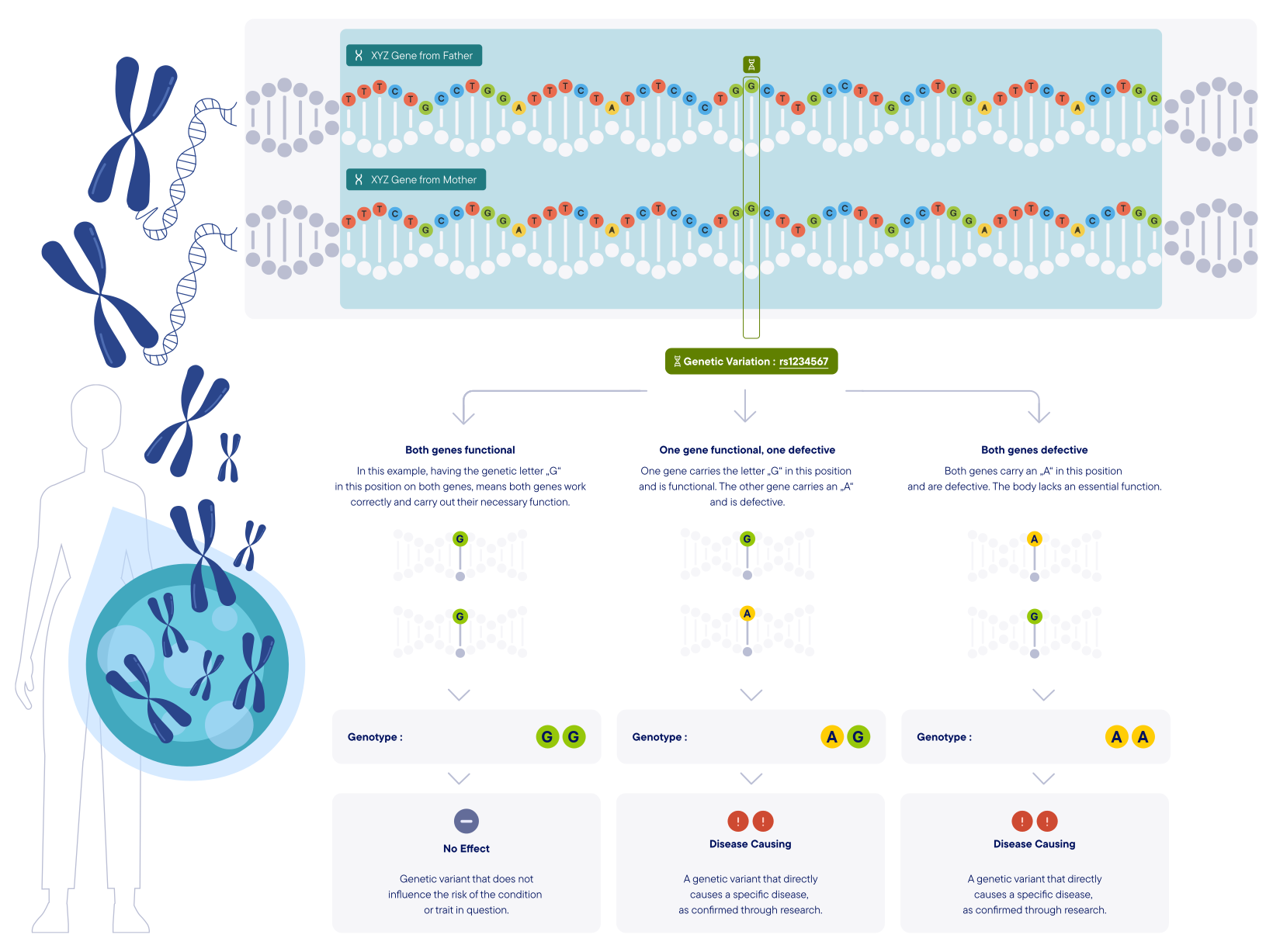
Humans have more than 20,000 genes, each carrying out one or a few specific functions in the body. One gene instructs the body to digest lactose from milk, another tells the body how to build strong bones and another prevents the body's cells from beginning to multiply uncontrollably and developing into cancer. As all of these genes combined are the building instructions for our body, a defect in one of these genes can have severe health consequences.
Through decades of genetic research, we know the genetic code of any healthy/functional human gene. We have also identified that in certain positions on a gene, some individuals may have a different genetic letter from the one you have. We call these hotspots "Genetic Variations" or "Variants" in short. In many cases, studies have been able to show that having the genetic letter "G" in the position makes you healthy, but having the letter "A" in the same position disrupts the gene function and causes a disease. Genopedia allows you to view these variants in genes and summarizes all that we know from scientific research, which genetic letters (Genotype) have good or bad consequences on your health or on your traits.
History
Throughout history, people have described children who grew and learned at a different pace, spoke later than peers, or needed extra help with coordination and behavior. Families sometimes recalled a parent or cousin with similar traits, wondering if there was a shared thread. Today, we know that for some, that thread is a small extra segment of DNA on chromosome 2 known as 2q23.1 microduplication syndrome.
First described in the medical literature as a handful of case reports in the early 2000s, the condition was initially recognized when clinicians noticed a recurring mix of developmental delay, limited speech, behavioral differences, and certain facial features. Early descriptions focused on what could be seen in the clinic because the genetic tools of the time were limited. Conventional chromosome studies often looked “normal,” which meant many families had no clear answer for years.
As medical science evolved, high‑resolution chromosome microarray testing made it possible to spot very small extra pieces of DNA that older tests missed. With this technology, researchers could consistently pinpoint a tiny duplicated region at 2q23.1 in people with similar clinical patterns. Naming the syndrome around the chromosomal address helped link scattered cases across centers and countries.
Over time, descriptions became more precise. Scientists mapped which genes sit inside the duplicated stretch, and how the size of the duplication can vary from one person to another. This helped explain why 2q23.1 microduplication syndrome does not look the same in everyone. Some children have mild learning differences and grow into fairly independent adults; others need more intensive support. Not every early description was complete, yet together they built the foundation of today’s knowledge.
In recent decades, awareness has grown as clinical genetics became part of routine evaluation for developmental concerns. More children and adults received a specific name for what they were experiencing, often after years of uncertainty. Registries and international collaborations gathered histories, early symptoms of 2q23.1 microduplication syndrome, and long‑term outcomes, allowing doctors to offer clearer guidance on education, therapies, and health monitoring.
This history also shows how quickly understanding can shift with better tools. What once seemed rare now appears more common than expected, especially among people referred for genetic testing due to developmental delay or autism features. The story of 2q23.1 microduplication syndrome is still being written, but the path from scattered clinical notes to a well‑recognized diagnosis has already improved everyday care—shortening the diagnostic journey, connecting families to resources, and guiding research toward what matters most in daily life.