
21q22.11q22.12 microdeletion syndrome is a rare genetic condition caused by a small missing segment on chromosome 21. People with 21q22.11q22.12 microdeletion syndrome often have developmental delays, learning differences, and speech delay. Features can include low muscle tone, feeding difficulties in infancy, distinctive facial features, and sometimes heart or kidney differences. It is lifelong, and needs vary widely by age and from person to person. Care focuses on early therapies, educational support, and treatment of specific medical issues, and many live well with the right supports.
Overview
21q22.11q22.12 microdeletion syndromeSymptoms
21q22.11q22.12 microdeletion syndrome is usually noticed in infancy or early childhood. Common features include developmental delay, speech and learning difficulties, low muscle tone, feeding problems, and distinctive facial traits. Some have heart defects, seizures, or easy bruising from low platelets.
Outlook and prognosis
Many people with 21q22.11q22.12 microdeletion syndrome grow and learn at their own pace, often needing tailored therapies and educational support. Health issues can include learning differences, speech delay, and sometimes heart or feeding challenges. With coordinated care and early supports, most make steady gains and quality of life can improve.
Causes and risk factors
21q22.11q22.12 microdeletion syndrome results from a missing segment on chromosome 21, usually arising spontaneously before birth. Rarely, it’s inherited from a parent with a balanced chromosomal rearrangement. No proven environmental or lifestyle risk factors; recurrence risk depends on parental testing.
Genetic influences
Genetics is central to 21q22.11q22.12 microdeletion syndrome, which results from a small missing segment on chromosome 21. The exact genes deleted shape severity and specific features. Most cases are de novo, though rare familial transmission can occur.
Diagnosis
Doctors suspect 21q22.11q22.12 microdeletion syndrome based on clinical features and developmental history. The genetic diagnosis of 21q22.11q22.12 microdeletion syndrome is confirmed with chromosomal microarray or similar genetic tests; additional studies (e.g., targeted FISH) and organ-specific imaging may assess associated findings.
Treatment and drugs
Treatment for 21q22.11q22.12 microdeletion syndrome is tailored to each person’s mix of needs, often combining early developmental therapies, educational supports, and regular hearing, vision, and heart checks. Seizures, feeding issues, sleep problems, or reflux are treated with targeted medications and care plans. Genetic counseling and coordinated follow-up with neurology, cardiology, ENT, and rehabilitation teams help guide long‑term support.
Symptoms
People born with 21q22.11q22.12 microdeletion syndrome tend to have a mix of developmental and health differences that can affect feeding, growth, learning, and movement. Early features of 21q22.11q22.12 microdeletion syndrome can include feeding challenges, slow growth, and low muscle tone. Features vary from person to person and can change over time. Doctors often check hearing, vision, heart structure, and blood clotting to guide care and supports.
Babies may have trouble latching, sucking, or coordinating swallowing, which can make feeds slow. This can lead to reflux and slower weight gain.
The body may feel floppy, making it harder to hold the head up or sit. Physical therapy can support strength, posture, and coordination.
In 21q22.11q22.12 microdeletion syndrome, rolling, sitting, standing, and walking can take longer than expected. Therapy and tailored play help build skills over time.
First words may come later, and speech may be harder to understand. Many with 21q22.11q22.12 microdeletion syndrome benefit from early speech and language therapy.
How people usually first notice 21q22.11q22.12 microdeletion syndrome?
Many families first notice something is different when a baby has low muscle tone that makes them feel “floppy,” feeding or sucking difficulties, or slower-than-expected early milestones like rolling or sitting. Doctors may first suspect 21q22.11q22.12 microdeletion syndrome after a prenatal ultrasound shows growth differences or heart findings, or later when a newborn exam notes distinctive facial features, congenital heart defects, or poor weight gain. If development doesn’t follow the usual pace or medical issues cluster, genetic testing is often done to confirm the first signs of 21q22.11q22.12 microdeletion syndrome.
Types of 21q22.11q22.12 microdeletion syndrome
21q22.11q22.12 microdeletion syndrome is a genetic condition caused by a small missing segment on chromosome 21. Different people can have slightly different breakpoints and sizes of the missing piece, which can change how symptoms show up and how severe they are. People may notice different sets of symptoms depending on their situation. When reading about types of 21q22.11q22.12 microdeletion syndrome, think in terms of recognized genomic segments and whether other nearby regions are also involved.
Proximal deletion
The missing segment sits mainly in the 21q22.11 band. This pattern often links with developmental delay, low muscle tone, and feeding challenges in infancy. Speech and learning differences are common, with variable impact on growth.
Proximal–mid deletion
The deletion spans 21q22.11 into 21q22.12. Families may see broader developmental and speech delays, sometimes with heart or skeletal differences identified on exams. Behavior differences and attention challenges can be more noticeable in school years.
Extended 21q22 band
The deletion reaches beyond 21q22.12 into adjacent 21q22 regions. Symptoms can be more wide‑ranging, and medical teams may monitor for heart, kidney, or eye findings. Even within the same type, intensity can range from mild to severe.
Mosaic deletion
Only a proportion of cells carry the deletion. This can lead to milder or more uneven features across development. Early symptoms of 21q22.11q22.12 microdeletion syndrome may be subtle and noticed later in childhood.
Inherited variant
The deletion is passed from a parent who may have mild or unrecognized features. Children can show a broader range of learning and growth differences than the transmitting parent. Genetic counseling helps clarify recurrence risk and testing options for relatives.
What genetics can tell you about symptoms
Some people with 21q22.11q22.12 microdeletion syndrome have low muscle tone, feeding difficulties, delayed speech, and learning differences because missing genes in that region can disrupt brain and muscle development. If genes affecting heart or facial formation are lost, doctors may see congenital heart defects and distinctive facial features.
Causes and risk factors
It stems from a tiny missing piece on chromosome 21 in the q22.11 to q22.12 region. Most cases of 21q22.11q22.12 microdeletion syndrome arise as a new change in an egg or sperm, with no family history. Some risks are written in our DNA, passed down through families. Known risk factors for 21q22.11q22.12 microdeletion syndrome include a parent with the same deletion or a balanced chromosome rearrangement. There are no known environmental or lifestyle causes, but early care and healthy routines can influence outcomes.
Environmental and biological risk factors
21q22.11q22.12 microdeletion syndrome usually begins with a tiny missing segment on chromosome 21 that arises around the time an egg or sperm forms. Most cases happen by chance, but certain body-based factors and some environmental exposures can make these errors more likely. Doctors often group risks into internal (biological) and external (environmental).
As people get older, egg cells are more prone to errors when they divide. This slightly increases the chance that a small section of chromosome 21 is lost, leading to 21q22.11q22.12 microdeletion syndrome. The overall chance for any one pregnancy remains low.
Sperm are made throughout life, and with older age they go through many more rounds of copying. That can allow rare structural mistakes to appear, including small deletions. Any added risk for this specific microdeletion is thought to be modest.
The 21q22 area contains repeated stretches of DNA that can misalign when an egg or sperm is formed. Misalignment can cause an unequal swap of material and a missing piece, which can result in 21q22.11q22.12 microdeletion syndrome. This mechanism is a known driver of microdeletions.
During the natural exchange of DNA between paired chromosomes in egg or sperm formation, rare errors can create a small deletion. These events usually occur at random without any family history. They are a common path for new microdeletions to arise.
Genetic risk factors
Families often want to know why 21q22.11q22.12 microdeletion syndrome happened and what the chances are in future pregnancies. In many cases, the change appears for the first time in the child; in others, 21q22.11q22.12 microdeletion syndrome is passed down. People with the same risk factor can have very different experiences. Genetic testing can clarify the genetic causes of 21q22.11q22.12 microdeletion syndrome in a family.

De novo change: Most cases of 21q22.11q22.12 microdeletion syndrome occur as a new change in the child, with parents’ chromosomes testing normal. In this situation, the chance in a future pregnancy is generally low but not zero.
Autosomal dominant: When a parent carries the same microdeletion, each child has about a 50% chance to inherit it. Features can range from mild to more noticeable, even within the same family.
Balanced rearrangement: A parent may have a balanced swap or flip of chromosome pieces involving 21q22 that does not cause symptoms. During egg or sperm formation, this can lead to a child with the microdeletion; recurrence risk depends on the exact rearrangement.
Parental mosaicism: Sometimes a parent carries the change in only some cells, including egg or sperm cells. This can raise the chance of another child with the microdeletion even if a standard blood test looks normal.
Deletion size and genes: The exact size of the missing segment and which genes are involved can shape health features. Larger deletions may remove more genes, but predicting outcomes for one person remains imperfect.
Repeated DNA hotspots: Repeated stretches of DNA near 21q22 can make this region prone to misalignment when eggs or sperm are made. That instability can result in the microdeletion by chance.
Family history: Having a relative with the same microdeletion raises the likelihood for siblings or future children. Testing close relatives can map who carries the change and refine risk.
Genetic testing: A chromosome microarray can detect and size the missing segment, and parental studies show whether it is inherited or new. Targeted testing of relatives helps clarify who else may be at risk.
Lifestyle risk factors
This condition is present from birth; lifestyle habits do not cause it, but they can shape symptoms, day-to-day function, and complications. Small, consistent changes at home—around activity, nutrition, sleep, and safety—often have outsized benefits for growth, learning, and bleeding risk. Understanding how lifestyle affects 21q22.11q22.12 microdeletion syndrome can help families focus on practical steps that support development and reduce preventable problems.
Low-impact exercise can build muscle tone and coordination in hypotonia. Avoid contact or high-impact sports when low platelets or heart defects are present. Adaptive, supervised activities keep fitness gains while minimizing injury risk.
Avoiding aspirin/NSAIDs and high-risk activities lowers bleeding risk when thrombocytopenia is part of the syndrome. Using protective gear and treating mouth or nose bleeds promptly can prevent complications. Align activity intensity with current platelet status advised by clinicians.
Calorie-dense, protein-rich meals support catch-up growth and muscle strength in children with feeding challenges. Iron-rich foods can help offset losses from easy bruising or nosebleeds. Adequate calcium and vitamin D back bone health when mobility is limited.
Small, frequent meals and upright positioning reduce reflux and aspiration risk in oral-motor weakness. Texture-modified foods and pacing bites can make swallowing safer. Home routines guided by a feeding therapist can improve intake and weight gain.
Risk prevention
Because 21q22.11q22.12 microdeletion syndrome is genetic, you can’t prevent the condition itself, but you can lower the chance of complications with early care and regular monitoring. Some prevention is universal, others are tailored to people with specific risks. Plans often include screening for heart, hearing, vision, feeding, and developmental needs, plus vaccines and infection control. Genetic counseling can help families understand reproductive choices for future pregnancies.
A genetics professional can explain how 21q22.11q22.12 microdeletion syndrome happens and recurrence risks. They can review testing options for you and family members. This helps with planning and support.
Options like prenatal diagnosis or IVF with embryo testing can lower the chance of having another child with the same microdeletion. A counselor can discuss benefits, limits, and timing. Decisions remain personal and guided by your values.
Early visits with cardiology, neurology, audiology, ophthalmology, and feeding teams can catch issues before they escalate. Recognizing early symptoms of 21q22.11q22.12 microdeletion syndrome can speed access to therapy. Starting care sooner often prevents complications.
Many children with this microdeletion are checked with an echocardiogram. Detecting heart differences early allows timely treatment and avoids strain on growth and breathing.

Transmission
21q22.11q22.12 microdeletion syndrome is a genetic condition, not an infection—you can’t catch it or pass it through casual contact. In most families, it happens as a new, spontaneous change in an egg or sperm, so neither parent has the deletion. When this is the case, the chance of it happening again in a future pregnancy is usually low.
If a parent does have the same microdeletion, genetic transmission of 21q22.11q22.12 microdeletion syndrome follows an autosomal dominant pattern, meaning each child has a 50% chance of inheriting it. Rarely, a parent may carry a chromosome rearrangement that raises the chance of having a child with the deletion; testing both parents helps clarify how 21q22.11q22.12 microdeletion syndrome is inherited in that family.
When to test your genes
Consider genetic testing if you or your child show features linked to 21q22.11q22.12 microdeletion syndrome, or if a close relative is diagnosed. Testing is also reasonable before pregnancy or during prenatal care when ultrasound findings or screening raise concern. A genetics professional can guide which test to use and how results change care.
Diagnosis
People with 21q22.11q22.12 microdeletion syndrome are often first noticed because of feeding challenges, slower development, or congenital differences that affect day-to-day routines. Early and accurate diagnosis can help you plan ahead with confidence. Doctors typically confirm the condition by combining a careful exam with genetic tests that look for small missing pieces of chromosome 21. Genetic diagnosis of 21q22.11q22.12 microdeletion syndrome guides follow-up care and helps families understand recurrence risk.
A provider reviews pregnancy, birth, feeding, growth, and developmental milestones. They look for patterns like low muscle tone, distinctive facial features, or congenital differences. These findings help decide which tests to order.
Standardized tools check speech, motor, and learning skills. Results give a baseline and may point toward a genetic cause. They also guide referrals for therapies.
This test scans the genome for small missing or extra pieces of DNA. It can detect the 21q22.11q22.12 microdeletion even when other tests look normal. This is the most common test used in the genetic diagnosis of 21q22.11q22.12 microdeletion syndrome.
These assays zoom in on chromosome 21 to confirm a suspected deletion and measure its size. They are useful when a specific region needs closer inspection. Results can support or refine microarray findings.
Stages of 21q22.11q22.12 microdeletion syndrome
21q22.11q22.12 microdeletion syndrome does not have defined progression stages. It’s a chromosome change present from birth, and while features can range from mild to more complex, they don’t typically unfold in a predictable, step-by-step way. Early symptoms of 21q22.11q22.12 microdeletion syndrome may be subtle—such as feeding difficulties, low muscle tone, or delayed milestones—so doctors combine your history, a physical exam, and developmental checks to guide next steps. Genetic testing may be offered to clarify certain risks, often using a chromosomal microarray or a similar DNA test, and follow-up visits track growth, learning, hearing, and heart health over time.
Outlook and prognosis
Looking at the long-term picture can be helpful. For many people with 21q22.11q22.12 microdeletion syndrome, the outlook depends on which genes are missing and how those changes affect growth, learning, and health over time. Some children have mostly developmental and learning differences and go on to live into adulthood with the right supports in school, speech therapy, and occupational therapy. Others may have additional medical needs—such as heart differences, feeding or growth challenges, low muscle tone, or seizures—that call for closer follow-up in childhood.
Prognosis refers to how a condition tends to change or stabilize over time. Early symptoms of 21q22.11q22.12 microdeletion syndrome can include delayed milestones, trouble with feeding, or slower speech development; with early intervention, many of these skills improve. Seizures, if present, are often manageable with medicine, and heart issues—when they occur—range from mild to conditions that may need surgery. Life span is usually shaped by the severity of any major organ involvement, especially the heart, but many living with 21q22.11q22.12 microdeletion syndrome do not have life‑limiting complications when medical needs are identified and treated.
Everyone’s journey looks a little different. Regular developmental therapies, hearing and vision checks, and monitoring for growth, behavior, and seizures can support steady progress into adolescence and adulthood. Not everyone with the same gene change will have the same outlook, and newer genetic reports can sometimes clarify which features are more likely. Talk with your doctor about what your personal outlook might look like.
Long-term effects
21q22.11q22.12 microdeletion syndrome tends to have a wide range of long-term features, and no two people share the exact same pattern. Families may first notice early symptoms of 21q22.11q22.12 microdeletion syndrome in infancy, but the longer-term picture usually becomes clearer over childhood and adolescence. Long-term effects vary widely, and many living with this condition grow into adulthood with stable needs and strengths. Understanding long-term patterns can guide treatment choices.
Cognitive differences can range from mild learning challenges to more noticeable intellectual disability. School support needs often continue into adulthood.
Speech may develop late and stay somewhat limited or hard to understand. Language understanding is often stronger than spoken expression in 21q22.11q22.12 microdeletion syndrome.
Low muscle tone and coordination differences can persist. For many, this can mean clumsiness, joint laxity, or fatigue with prolonged activity.
Some remain smaller than peers. Short stature or a smaller head size can be part of the long-term profile in 21q22.11q22.12 microdeletion syndrome.
How is it to live with 21q22.11q22.12 microdeletion syndrome?
Daily life with 21q22.11q22.12 microdeletion syndrome often centers on supporting developmental progress, communication, learning, and medical needs such as low muscle tone, feeding challenges in infancy, and possible heart, immune, or growth concerns. Many families build steady routines with therapies—speech, physical, occupational—and educational supports, celebrating small gains while planning for extra time at appointments and school meetings. For siblings and caregivers, it can be both demanding and deeply connecting, with fatigue and worry balanced by practical teamwork and the relief that comes from clear care plans and community support. Over time, many find a rhythm that fits their child’s strengths, with adaptive tools and services helping promote independence and participation at home, school, and in the community.
Treatment and drugs
Treatment for 21q22.11q22.12 microdeletion syndrome focuses on the specific needs of each person rather than a single medication or cure. Supportive care can make a real difference in how you feel day to day. Care plans often include early intervention therapies such as speech and language support, physical and occupational therapy, feeding support if needed, and educational services tailored to learning style and developmental level. Doctors sometimes recommend a combination of lifestyle changes and drugs, such as medicines for seizures, reflux, behavior or attention symptoms, sleep difficulties, or mood concerns, along with regular hearing, vision, heart, and growth checks. Genetic counseling, care coordination with a pediatrician and relevant specialists, and periodic reassessment help adjust therapies over time as needs change.
Non-drug treatment
People with 21q22.11q22.12 microdeletion syndrome often benefit from a team-based plan that builds skills, supports learning, and addresses day-to-day needs. Therapies focus on movement, communication, feeding, behavior, and school supports, tailored to age and abilities. Non-drug treatments often lay the foundation for progress alongside any medical care.
Starting services soon after early symptoms of 21q22.11q22.12 microdeletion syndrome appear can build momentum. Therapists coach families on play-based strategies to support milestones. Programs are adapted to age and learning style.
Exercises build strength, balance, and coordination to support sitting, standing, and walking. Home routines and playful movement help carry gains into daily life.
Activities target hand skills, self-care, and sensory processing so daily tasks feel easier. Therapists tailor tools like adapted utensils or writing aids.
Sessions support understanding, expression, and social communication. Work may include oral–motor skills for clearer sounds and safer swallowing.
Your genes may have an impact on how drugs work for you
Medicines for 21q22.11q22.12 microdeletion syndrome can work differently because changes in this region may alter liver enzymes that process drugs and brain receptors that drugs target. Genetic testing can guide dose choices, reduce side effects, and improve response.
Pharmacological treatments
Living with 21q22.11q22.12 microdeletion syndrome often means managing a mix of symptoms that can change with age. Early symptoms of 21q22.11q22.12 microdeletion syndrome can include seizures or feeding difficulties, while later on attention, mood, or bleeding concerns may come up. Medicines are used to target specific problems rather than the condition as a whole, and choices are tailored to what’s most pressing for you. Medication is often just one chapter, alongside therapies, nutrition, and regular follow-up with specialists.
Levetiracetam, sodium valproate, or oxcarbazepine are commonly used to reduce seizure frequency. Choice depends on seizure type, age, other health needs, and side‑effect profile. Dosing may be increased or lowered gradually to find the best balance.
Tranexamic acid can reduce nosebleeds or heavy menstrual bleeding, and desmopressin (DDAVP) may be used before procedures. These help when platelets don’t work as well, which can occur with deletions involving RUNX1. Your care team will also review medicines to avoid that can worsen bleeding.
Furosemide can ease fluid buildup if heart failure is present, and enalapril may help the heart pump more efficiently. These are used when congenital heart changes lead to strain or swelling. Regular cardiology follow‑up guides when to start or adjust doses.
Omeprazole (a proton pump inhibitor) or famotidine (an H2 blocker) can ease heartburn, irritability, or poor weight gain linked to reflux. They reduce stomach acid and protect the esophagus. Thickening feeds and feeding therapy often work alongside medicines.
Genetic influences
Parents often ask whether 21q22.11q22.12 microdeletion syndrome is inherited, because the diagnosis hinges on a tiny missing piece of chromosome 21. In most people, this microdeletion happens for the first time as a random event in an egg, sperm, or early embryo, so there’s no family history and the chance of it happening again is usually low. Occasionally, the deletion is passed from a parent who carries the same change; when that happens, each pregnancy has a 50% chance of inheriting it, though features can vary widely—even within the same family. The health effects depend on which genes are missing and how large the deleted segment is; think of it like a cluster of dimmer switches, where different settings can shape learning, growth, and other features. DNA testing can sometimes identify these changes. For 21q22.11q22.12 microdeletion syndrome, chromosome microarray is the most common test, and parents are often tested too to clarify recurrence risk and to plan for future pregnancies or early supports; some families also ask about early symptoms of 21q22.11q22.12 microdeletion syndrome to guide monitoring.
Is 21q22.11q22.12 microdeletion syndrome genetic?
Genetics is central to 21q22.11q22.12 microdeletion syndrome, which results from a small missing segment on chromosome 21. The exact genes deleted shape severity and specific features. Most cases are de novo, though rare familial transmission can occur.
Pharmacogenetics—how genetics influence drug effects
For people with 21q22.11q22.12 microdeletion syndrome, treatment plans often need to account for the genes missing in that stretch of chromosome 21 and how that affects blood, brain, and other organs. If the deletion includes a gene called RUNX1, which helps platelets form and work, some have lower platelet counts or platelets that don’t work as well, so doctors may avoid or closely monitor medicines that raise bleeding risk, such as aspirin, ibuprofen, certain antidepressants, and blood thinners. In practice, pharmacogenetic testing in 21q22.11q22.12 microdeletion syndrome usually focuses on common drug–gene pairs (especially for seizure or mental health medicines), because the deletion itself doesn’t typically change the main liver enzyme genes that clear drugs. Genetic testing can sometimes identify how your body processes certain seizure, antidepressant, or pain medicines, which can guide safer dosing. Other health factors that may come with 21q22.11q22.12 microdeletion syndrome—such as heart differences, feeding challenges, or smaller body size—also influence how medicines are absorbed and tolerated, so teams often start low, go slow, and watch closely. Before surgeries or new prescriptions, sharing any history of easy bruising, nosebleeds, or unusual drug reactions helps your care team tailor medications for 21q22.11q22.12 microdeletion syndrome.
Interactions with other conditions
Day to day, having a tendency to bruise or bleed easily can make other illnesses or even a simple dental procedure feel more complicated. In 21q22.11q22.12 microdeletion syndrome, the missing segment may include a gene important for platelet function, so bleeding risk can be higher during surgery, with dental work, and when using medicines that thin the blood or even common pain relievers like ibuprofen. Doctors call it a “comorbidity” when two conditions occur together, and some people also live with congenital heart differences, autism traits, ADHD, or seizures, which can affect how infections, fevers, or medications are handled. Early symptoms of 21q22.11q22.12 microdeletion syndrome can overlap with signs of autism or attention difficulties, so it’s sometimes hard to tell which condition is driving which behavior or delay. When the deleted area involves blood-forming genes, there may also be a higher lifetime risk of certain blood disorders, which means infections or inflammatory diseases might need closer monitoring and careful choice of treatments. Coordinated care helps—let your care team know about all diagnoses so they can tailor plans that account for bleeding risk, heart health, and seizure safety.
How genes can cause diseases
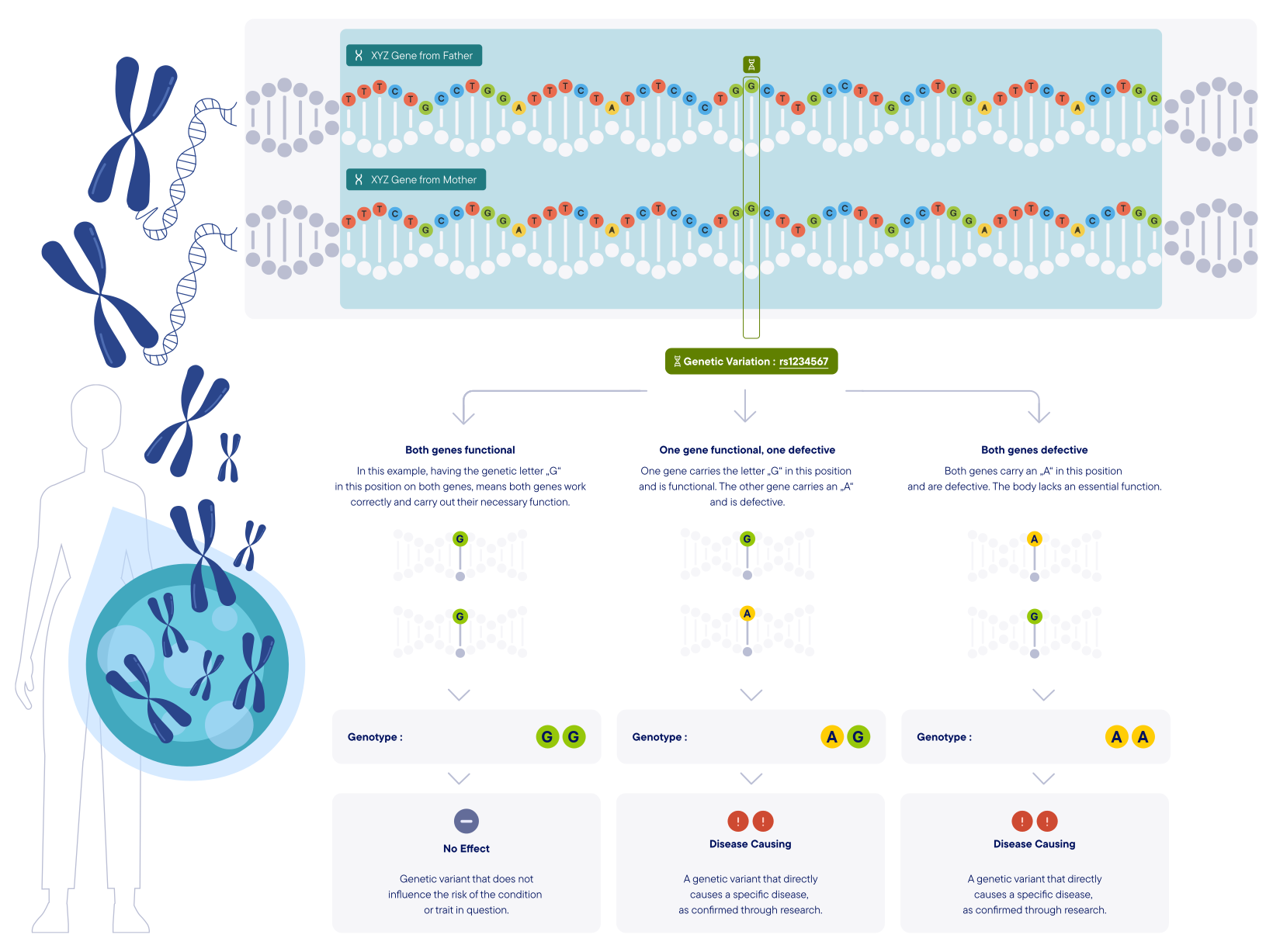
Humans have more than 20,000 genes, each carrying out one or a few specific functions in the body. One gene instructs the body to digest lactose from milk, another tells the body how to build strong bones and another prevents the body's cells from beginning to multiply uncontrollably and developing into cancer. As all of these genes combined are the building instructions for our body, a defect in one of these genes can have severe health consequences.
Through decades of genetic research, we know the genetic code of any healthy/functional human gene. We have also identified that in certain positions on a gene, some individuals may have a different genetic letter from the one you have. We call these hotspots "Genetic Variations" or "Variants" in short. In many cases, studies have been able to show that having the genetic letter "G" in the position makes you healthy, but having the letter "A" in the same position disrupts the gene function and causes a disease. Genopedia allows you to view these variants in genes and summarizes all that we know from scientific research, which genetic letters (Genotype) have good or bad consequences on your health or on your traits.
History
Throughout history, people have described children who were smaller than expected, learned to sit or walk later, or needed extra help with speech. Families and communities once noticed patterns, recalling cousins or siblings with similar features, even when there was no name for the cause. Doctors wrote careful case notes, comparing growth, facial features, and developmental milestones, trying to understand why these traits clustered together.
First described in the medical literature as a collection of shared features rather than a single diagnosis, the condition we now recognize as 21q22.11q22.12 microdeletion syndrome slowly came into focus as testing improved. In the 1970s and 1980s, chromosome studies could show large gains or losses, but small missing pieces on chromosome 21 went unseen. As medical science evolved, higher‑resolution tools like FISH, array CGH, and later SNP arrays began to reveal tiny “microdeletions” that earlier tests missed. Clinicians could finally match long‑noted symptoms with a specific missing stretch of chromosome 21.
From these first observations, researchers noticed that people with the same microdeletion did not all look or develop the same way. Some had mild learning differences and subtle features; others had more obvious developmental delays or medical issues. This variability helped explain why the syndrome was overlooked or grouped with other diagnoses in the past. Over time, descriptions became more precise, linking early symptoms of 21q22.11q22.12 microdeletion syndrome—such as slower early motor milestones or speech delay—with its genetic basis.
Advances in genetics also clarified inheritance. Many cases were found to be new, starting in the child without being present in either parent. In a smaller number of families, the microdeletion was inherited, often with a history of mild learning differences across generations. This understanding shifted counseling and planning, giving families clearer information about recurrence risks and options in future pregnancies.
With each decade, collaboration between genetics labs and pediatric clinics expanded the picture. Registries and shared case reports showed which health checks mattered most, such as watching growth, development, and, when relevant, heart or other organ health. Not every early description was complete, yet together they built the foundation of today’s knowledge. Today, when a child shows a pattern that once puzzled doctors, modern chromosome microarray can pinpoint the missing segment at 21q22.11q22.12, turning years of descriptive history into a clear genetic diagnosis and guiding tailored care.