
1p21.3 microdeletion syndrome is a rare genetic condition caused by a small missing piece of chromosome 1. People with 1p21.3 microdeletion syndrome often have developmental delays, speech and language challenges, and learning differences, and some have autism features. Feeding difficulties in infancy, low muscle tone, and distinctive facial features can occur, and doctors describe these as features rather than symptoms because they are present from early life. This condition is lifelong, but not everyone will have the same experience, and early therapies can support communication, learning, and daily skills. Treatment focuses on supportive care such as speech, occupational, and physical therapy, with regular follow-up, and life expectancy is usually near typical when medical needs are well managed.
Overview
1p21.3 microdeletion syndromeSymptoms
People with 1p21.3 microdeletion syndrome often show early developmental and speech delays, learning difficulties, and autism-like social/behavior features. Low muscle tone, feeding challenges, and occasional seizures can appear. Doctors may also note subtle facial differences.
Outlook and prognosis
Most children with 1p21.3 microdeletion syndrome make gradual gains with early therapies, though speech and learning support are often lifelong. Medical issues like feeding difficulties, autism features, or seizures vary; many stabilize with coordinated care. Adult outcomes range widely.
Causes and risk factors
1p21.3 microdeletion syndrome stems from a missing segment on chromosome 1, usually a new (de novo) change. Less often, it’s inherited or linked to a parent’s rearrangement. Advanced parental age may raise de novo risk; lifestyle factors don’t cause it.
Genetic influences
Genetics is central in 1p21.3 microdeletion syndrome; the condition results from a small missing segment on chromosome 1. Most cases are de novo, though parental testing can reveal inherited changes and recurrence risk. Genetic counseling and testing guide diagnosis, family planning, and supports.
Diagnosis
Doctors suspect 1p21.3 microdeletion syndrome from clinical features and developmental history. Genetic diagnosis of 1p21.3 microdeletion syndrome is confirmed with chromosomal microarray or targeted tests; additional assessments (hearing, vision, brain imaging) help document associated findings and guide care.
Treatment and drugs
Treatment for 1p21.3 microdeletion syndrome focuses on each person’s needs. Care often includes early speech and language therapy, behavioral supports (including autism-informed strategies), occupational and physical therapy, and learning accommodations. Genetic counseling and coordinated follow-up with neurology, developmental pediatrics, and psychiatry can help guide care over time.
Symptoms
Early challenges often center on speech, learning, and how a child interacts with others. These patterns are seen in 1p21.3 microdeletion syndrome, a rare genetic condition that can affect development from infancy onward. Early features of 1p21.3 microdeletion syndrome may include motor and language delays, low muscle tone, and feeding difficulties. Features vary from person to person and can change over time.
Many children with 1p21.3 microdeletion syndrome reach motor and language milestones later than peers. This can include sitting, crawling, walking, or first words happening months after expected. Early intervention can help build skills.
Spoken words may be few, late to appear, or absent. Understanding is often stronger than speaking, so some children rely on gestures, signs, or devices to communicate. Many living with 1p21.3 microdeletion syndrome benefit from speech therapy.
Differences in eye contact, back-and-forth conversation, or play can resemble autism traits. Loved ones often notice the changes first. Some children prefer routines and repeat behaviors.
Babies may feel “floppy,” tire easily, or have poor head and trunk control. In medical terms, this is low muscle tone (hypotonia); in everyday life, it shows up as delayed sitting, core weakness, and slouching. Physical and occupational therapy can support strength and posture.
How people usually first notice 1p21.3 microdeletion syndrome?
Parents and clinicians often first notice 1p21.3 microdeletion syndrome when a baby isn’t meeting early milestones as expected, such as delayed babbling or first words, limited eye contact, or low muscle tone that makes feeding or head control harder. As toddlers, many children show clearer first signs of 1p21.3 microdeletion syndrome like speech and language delay, autistic features (reduced social interaction, repetitive behaviors), and sometimes feeding difficulties or poor growth. Doctors may suspect the diagnosis based on this developmental pattern and arrange genetic testing, since physical features are subtle and the condition is usually recognized through concerns about communication and behavior rather than a distinct appearance.
Types of 1p21.3 microdeletion syndrome
People with 1p21.3 microdeletion syndrome can share core features like developmental delays and differences in speech or social communication, but the picture varies from person to person. Symptoms don’t always look the same for everyone. Clinicians often describe them in these categories: patterns dominated by language delay, broader neurodevelopmental features, growth or feeding differences, and additional organ or medical findings. This helps explain why discussions about types of 1p21.3 microdeletion syndrome often focus on how features cluster rather than on strictly separate subtypes, so when people search for “types of 1p21.3 microdeletion syndrome,” they’re usually comparing these common patterns.
Language-dominant pattern
Speech and language are the main challenges, often with late first words and trouble forming sentences. Understanding language may be stronger than speaking for some, while others have both expressive and receptive delays. Support like speech therapy can make meaningful gains over time.
Autistic-like features
Social communication differences and repetitive behaviors are more prominent in daily life. Some may have limited eye contact, sensory sensitivities, or a strong need for routine. Many benefit from structured supports and behavioral therapies.
Global developmental delay
Delays span several areas, including motor skills, problem-solving, and self-care. Sitting, walking, or fine motor tasks may come later than expected. Early intervention and tailored education plans can help build skills step by step.
Feeding and growth issues
Difficulty with feeding, slow weight gain, or picky eating can stand out in infancy or early childhood. Reflux or low muscle tone around the mouth may play a role. Dietitian input and feeding therapy often help improve nutrition and comfort.
Behavior and attention
Attention challenges, impulsivity, or anxiety may be the most noticeable day to day. Sleep difficulties can add to daytime symptoms. Care plans may include routines, school supports, and sometimes medication.
Neurologic features
Low muscle tone, coordination issues, or occasional seizures occur in a subset. A neurologist may recommend EEG testing if spells or staring episodes raise concern. Physical and occupational therapy can support strength and balance.
Additional medical findings
Some have constipation, recurrent ear infections, or mild differences on heart or kidney checks. Doctors may screen based on history and exam. Most issues are manageable with routine pediatric or specialty care.
What genetics can tell you about symptoms
Some people with 1p21.3 microdeletion syndrome have speech delay, autism‑spectrum features, feeding difficulty, low muscle tone, and subtle facial differences because missing DNA in this region disrupts genes guiding brain and developmental signaling. Larger deletions or loss of certain genes can make delays and behavioral symptoms more pronounced.
Causes and risk factors
The core cause is a small missing piece of DNA on chromosome 1, called a 1p21.3 microdeletion.
Most cases happen as a new change at conception and are not inherited, but if a parent carries the same deletion, each child has a 50% chance to inherit it.
Rarely, a parent may have a balanced chromosome change or the deletion in only some cells, which can raise the chance of another child with 1p21.3 microdeletion syndrome.
Genes set the stage, but environment and lifestyle often decide how the story unfolds.
Things like prenatal health, birth factors, and early supports can influence how early symptoms of 1p21.3 microdeletion syndrome appear and how severe they are, but they do not cause the deletion.
Environmental and biological risk factors
Understanding what increases the chance of 1p21.3 microdeletion syndrome can ease uncertainty for many parents planning or expecting. Doctors often group risks into internal (biological) and external (environmental). For this condition, most known risks reflect chance events during egg or sperm formation or very early embryo growth rather than anything parents did or didn’t do. These risk factors are about how the deletion can occur; they’re different from early symptoms of 1p21.3 microdeletion syndrome, which relate to development after birth.
The deletion often forms randomly when eggs or sperm are made. These biological errors can happen in any pregnancy without a clear trigger. This is a common pathway for many rare microdeletions.
In some cases, the change arises shortly after fertilization as cells begin dividing. This very early timing means the deletion is present from the start of development. It is not linked to day-to-day activities in early pregnancy.
Certain chromosome regions are more prone to copy-number changes during cell division. If 1p21.3 lies in a stretch that misaligns more easily, a deletion can result. Scientists describe this as a structural vulnerability, not a behavior-related cause.
Unlike whole-chromosome conditions, higher maternal age has not been clearly tied to this microdeletion. Studies on parental age and small deletions are mixed, so any effect appears limited.
Genetic risk factors
In most families, the underlying change is a small, newly occurring deletion in the 1p21.3 region of chromosome 1. 1p21.3 microdeletion syndrome can also be inherited when a parent carries the same missing segment. Which genes are lost, such as MIR137 or DPYD, can shape features and severity, which is one reason early symptoms of 1p21.3 microdeletion syndrome can look different from child to child. Risk is not destiny—it varies widely between individuals.

De novo deletion: Most people with 1p21.3 microdeletion syndrome have the missing piece arise spontaneously at conception. Parents typically do not carry the deletion. Recurrence risk is usually low but not zero.
Inherited deletion: When a parent has the same 1p21.3 microdeletion, each child has a 50% chance to inherit it. Features can range from mild to more pronounced, even within the same family. This follows an autosomal dominant pattern.
Parental rearrangement: A balanced translocation or inversion involving the 1p21.3 region in a parent can produce an unbalanced deletion in a child. This makes the deletion more likely to recur in the family. Parental chromosome studies can check for this.
Germline mosaicism: Rarely, a parent has the deletion only in some egg or sperm cells (germline mosaicism). In that case, a child may inherit the deletion even if the parent’s blood test is normal. The recurrence chance is higher than random but typically still low.
Deletion size, genes: How much DNA is missing—and which genes are included—can influence the picture. Loss of MIR137 has been linked to developmental and behavioral differences, while DPYD loss can increase sensitivity to certain chemotherapy medicines. Larger deletions that remove additional genes may bring broader effects.
Variable expressivity: People with the same 1p21.3 microdeletion can show different strengths and challenges. Severity does not always match the deletion size or a parent’s experience. Predicting exact outcomes for an individual is not possible based on genetics alone.
Parental testing: Chromosomal microarray or targeted studies in the parents clarify whether a child’s deletion is inherited or de novo. This defines recurrence risk for future pregnancies. Genetic counseling can help families apply this information.
Lifestyle risk factors
Lifestyle does not cause 1p21.3 microdeletion syndrome, but daily habits can strongly influence weight, sleep, behavior, feeding, and comfort. Focusing on how lifestyle affects 1p21.3 microdeletion syndrome can help manage symptoms and reduce complications over time. Below are lifestyle risk factors for 1p21.3 microdeletion syndrome that families can modify with support from their care team.
High-calorie grazing and sugar-sweetened drinks can accelerate unhealthy weight gain in children prone to hyperphagia and low muscle tone. Planned, portioned meals with fiber and protein can support satiety and steadier growth.
Low daily movement can worsen hypotonia, constipation, and excess weight, which may intensify motor delays. Regular enjoyable activity like walking, swimming, or adaptive play supports coordination and weight control.
Late or inconsistent bedtimes and evening screens can aggravate sleep problems, leading to daytime irritability and learning challenges. A predictable, screen-free winddown can improve behavior and participation in therapies.
Lack of predictable schedules can heighten anxiety and autistic features, making feeding, toileting, and learning harder. Visual schedules and consistent mealtimes can ease transitions and support skill practice.
Risk prevention
1p21.3 microdeletion syndrome is a genetic condition present from conception, so you can’t fully prevent it. Prevention focuses on family planning options and lowering the risk of complications across childhood and adulthood. Some prevention is universal, others are tailored to people with specific risks. The steps below aim to support growth, development, and overall health over time.
A genetics professional can explain how 1p21.3 microdeletion syndrome happens and your family’s chance of recurrence. They can review testing options before or during a future pregnancy.
If there’s a known deletion in the family, testing during pregnancy (CVS or amniocentesis with microarray) can check the fetus. This helps parents plan care and delivery needs.
For families using IVF, preimplantation genetic testing may help select embryos without the known deletion. This reduces the chance of having another child with the same genetic change.
If early symptoms of 1p21.3 microdeletion syndrome appear, prompt referral to developmental and medical specialists can speed support. Early intervention often improves feeding, communication, and motor skills.

Transmission
1p21.3 microdeletion syndrome is a genetic condition and isn’t contagious—you can’t catch it from someone or pass it through casual contact. It most often arises as a new, unexpected change in a sperm, egg, or very early embryo, unrelated to anything a parent did.
Less often, the microdeletion is inherited from a parent who also carries it, sometimes with mild or no features, and this explains how 1p21.3 microdeletion syndrome is inherited in some families. When a parent has the deletion, each pregnancy has about a 50% chance of inheriting it. If neither parent has the deletion on testing, the chance of it happening again in a future pregnancy is usually low, though not zero.
When to test your genes
Genetic/congenital condition. Consider testing when a child shows unexplained developmental delay, speech or growth concerns, or distinctive features, especially with a family history of similar findings. Testing also helps tailor therapies, school supports, and medical screening. Parents planning another pregnancy may test to clarify recurrence risk and reproductive options.
Diagnosis
For many families, the path to answers starts when a child’s delays in speech, learning, or social communication prompt a closer look. Doctors often recognize a pattern of developmental and behavioral features and then confirm it with genetic tests. The genetic diagnosis of 1p21.3 microdeletion syndrome usually relies on a chromosome test that can detect very small missing pieces of DNA. Early and accurate diagnosis can help you plan ahead with confidence.
Doctors review growth, motor skills, speech and language, and social communication. They also look for low muscle tone, feeding issues in infancy, and subtle facial features that can travel together in this syndrome.
A detailed family and health history can help connect symptoms across relatives. If a microdeletion is found, testing parents can show whether it’s new in the child or inherited.
This is the first-line genetic test to find small missing segments on chromosome 1p21.3. It can confirm the microdeletion and estimate its size.
Tests like FISH or MLPA can confirm the exact region after a microarray suggests a deletion. These tests can also check parents and other relatives for the same change.
Stages of 1p21.3 microdeletion syndrome
1p21.3 microdeletion syndrome does not have defined progression stages. It tends to affect growth and development in individual ways, and changes over time reflect a child’s milestones rather than a predictable, stepwise decline; the condition is identified by genetic testing rather than staging. Different tests may be suggested to help confirm the diagnosis and check speech, learning, and behavior. Clinicians also look at early symptoms of 1p21.3 microdeletion syndrome—such as delayed speech, social communication differences, or feeding challenges—and follow progress with regular check-ups and tailored support plans.
Outlook and prognosis
Looking at the long-term picture can be helpful. Many people with 1p21.3 microdeletion syndrome grow and learn over time, but progress is often slower and uneven across skills. Early symptoms of 1p21.3 microdeletion syndrome can include speech delay, learning differences, and sometimes behaviors on the autism spectrum; these may affect school, friendships, and daily routines like eating or sleep. Seizures can occur in some, and growth or feeding challenges may show up in infancy. With ongoing care, many people maintain day-to-day skills and build new ones, especially when speech therapy, occupational therapy, and tailored education start early.
Doctors call this the prognosis—a medical word for likely outcomes. The outlook varies widely, depending on the size of the deletion, which genes are involved, and the presence of seizures or other health conditions. Most children and adults with 1p21.3 microdeletion syndrome have a normal life span, and deaths directly related to the deletion are uncommon; when serious problems occur, they’re usually linked to uncontrolled seizures, breathing issues, or complications of feeding difficulties. Many people ask, “What does this mean for my future?”, and for many families it means planning for long-term educational support and some level of assistance with communication or independent living, while celebrating steady gains in self-care and social engagement.
Genetic testing can sometimes provide more insight into prognosis. Regular follow-up with neurology, developmental pediatrics, and nutrition can help prevent setbacks, adjust therapies, and address new concerns early. Talk with your doctor about what your personal outlook might look like, including seizure risk, learning goals, and supports at school or work.
Long-term effects
1p21.3 microdeletion syndrome is linked to lifelong developmental and behavioral features that can change in expression from childhood to adulthood. Long-term effects vary widely, and strengths often sit alongside challenges in speech, learning, and social communication. Some health concerns, such as weight gain or sleep issues, may emerge later and affect day-to-day stamina and focus. Thinking about the long-term effects helps families and care teams anticipate needs across school, work, and independent living.
Many families describe early symptoms of 1p21.3 microdeletion syndrome like poor feeding, low muscle tone, and delayed babbling. Clinicians view these as developmental features that can evolve rather than disappear. These early patterns may foreshadow later communication and motor differences.
Speech often develops late and may remain limited or atypical into adulthood. Many rely more on gestures, devices, or simple phrases. Understanding usually outpaces spoken expression.
Intellectual disability or borderline intellectual functioning can be lifelong. New skills are gained over time but may need more repetition and support. Academic progress often plateaus earlier than peers.
Social communication differences and repetitive behaviors often persist. Flexibility with change may remain hard, with sensory sensitivities continuing into adult life. Social motivation can be present but expressed in unique ways.
How is it to live with 1p21.3 microdeletion syndrome?
Living with 1p21.3 microdeletion syndrome often means navigating developmental differences from early childhood, especially in speech, language, and learning, and sometimes behaviors consistent with autism spectrum features. Daily life may involve structured routines, speech and occupational therapy, special education supports, and extra time for communication, which can make school, social situations, and new environments more demanding but also more predictable with planning. Families, caregivers, and classmates are part of the journey; they may need guidance on communication strategies, patience during transitions, and celebrating progress in smaller steps. With coordinated care and a strengths‑focused approach, many find ways to build skills, reduce frustration, and create supportive spaces where connection and progress come more easily.
Treatment and drugs
Treatment for 1p21.3 microdeletion syndrome focuses on managing symptoms and supporting development, since there’s no single curative therapy. Care usually includes early developmental therapies such as speech and language therapy (often using augmentative communication when speech is limited), occupational therapy for daily skills and sensory needs, and physical therapy for coordination or low muscle tone. Doctors sometimes recommend behavioral therapies for autism-related features, sleep support, and treatment of feeding difficulties or constipation; medicines may be used for specific issues like attention challenges, anxiety, irritability, or seizures if they occur. Regular hearing, vision, dental, and growth checks help catch problems early, and nutrition support can be important when picky eating or oral-motor delays affect growth. Finding the right therapy can take some time, and your doctor can help coordinate a plan that adapts as needs change from childhood into adulthood.
Non-drug treatment
Daily life with 1p21.3 microdeletion syndrome often centers on building communication, self-care, learning, and motor skills over time. Non-drug treatments often lay the foundation for progress by matching supports to a child’s unique strengths and challenges. With steady practice and the right team, many families see meaningful gains in function and independence.
Services in the first years aim to boost communication, movement, and play skills. Early symptoms of 1p21.3 microdeletion syndrome can be subtle, so starting support as soon as concerns arise may improve long-term outcomes.
A speech-language therapist works on sounds, understanding words, and using language in daily life. Augmentative and alternative communication, like picture boards or speech devices, can help a child communicate while speech is still developing.
Therapy targets hand skills, self-care tasks like dressing, and sensory processing. Everyday routines are broken into small steps to build confidence and independence.
Exercises and play-based activities build core strength, balance, and coordination. This can make walking, running, and playground activities safer and more enjoyable.
Your genes may have an impact on how drugs work for you
Medicines used for 1p21.3 microdeletion syndrome can work differently depending on a person’s genetic makeup, affecting how fast drugs are processed or how strong side effects feel. Pharmacogenetic testing may guide safer dosing for ADHD treatments, mood stabilizers, or anti‑seizure medicines.
Pharmacological treatments
Medications for 1p21.3 microdeletion syndrome focus on easing day-to-day challenges like attention, behavior, sleep, seizures, and gut issues when present. Drugs that target symptoms directly are called symptomatic treatments. Choices depend on the individual’s age, symptoms, and other health needs, and plans may change over time. There’s also an important safety note: some people with this deletion may be at higher risk of severe side effects from certain chemotherapy drugs, so cancer teams should be alerted.
Stimulants such as methylphenidate or amphetamine salts can improve focus and reduce impulsivity. Not everyone responds to the same medication in the same way.
Guanfacine or clonidine can ease hyperactivity and tics and may help with sleep. Atomoxetine is another option if stimulants are not well tolerated.
Risperidone or aripiprazole can reduce severe irritability linked with autism features. These can increase appetite and weight, so growth and metabolic health are monitored.
SSRIs such as sertraline or fluoxetine may help with anxiety or obsessive traits. Dosing may be increased or lowered gradually to balance benefits and side effects.
Genetic influences
A tiny missing piece of chromosome 1 can change how certain brain-related genes work, which can shape learning, speech, and behavior from early childhood. This small loss is the hallmark of 1p21.3 microdeletion syndrome, where one of the two copies of genes in that region is missing. In many families, the deletion arises as a new change at conception, though it can sometimes be inherited from a parent who has the same missing segment. DNA testing can sometimes identify these changes. Features can vary widely—two people with the same deletion may have different strengths and challenges, even within the same family. If the deleted segment includes genes that help the body process certain medicines, doctors may adjust drug choices; testing parents and meeting with a genetic counselor can also clarify future pregnancy risks.
Is 1p21.3 microdeletion syndrome genetic?
Genetics is central in 1p21.3 microdeletion syndrome; the condition results from a small missing segment on chromosome 1. Most cases are de novo, though parental testing can reveal inherited changes and recurrence risk. Genetic counseling and testing guide diagnosis, family planning, and supports.
Pharmacogenetics—how genetics influence drug effects
Treatment for 1p21.3 microdeletion syndrome is tailored to symptoms—like therapies for development and speech, seizure control if needed, and support for behavior—so medicines are chosen for the specific need rather than to “treat the deletion” itself. One important exception is when the deleted segment includes a gene called DPYD, which makes the DPD enzyme that breaks down certain chemotherapy drugs such as 5‑fluorouracil (5‑FU) and capecitabine. If DPYD is missing or reduced, these drugs can build up and cause severe, sometimes life‑threatening side effects, so doctors may avoid them or use very different dosing with close monitoring; in many European countries, testing for DPD deficiency is recommended before these medicines are given. Alongside medical history and current medicines, genetic testing can sometimes identify how your body handles these drugs and guide safer choices. Outside of cancer care, pharmacogenetic testing in 1p21.3 microdeletion syndrome is similar to the general population: some seizure, pain, or mood medicines have known gene-drug issues (for example, rare severe skin reactions to carbamazepine linked to specific HLA types in some Asian populations). Discuss with your care team which medicines you or your child might need over time, and whether targeted pharmacogenetic testing in 1p21.3 microdeletion syndrome would be helpful now or later.
Interactions with other conditions
Many families managing 1p21.3 microdeletion syndrome also navigate autism, ADHD, or epilepsy, and day-to-day it can feel like one health issue amplifies the other. Certain diseases may “overlap,” meaning features such as language delay, social communication differences, and sensory challenges might stem from both conditions and can be hard to separate. An important medical interaction involves a gene in this region that helps break down some chemotherapy medicines; people with 1p21.3 microdeletion syndrome may be at higher risk of severe side effects from drugs like 5‑fluorouracil (5‑FU) or capecitabine, so oncologists can screen and adjust treatment if cancer therapy is ever needed. Feeding difficulties, constipation, or reflux—common in this syndrome—can worsen nutrition and sleep when they occur alongside other gastrointestinal or sleep disorders, which in turn may aggravate behavior or seizure control. If treatments are used for coexisting conditions, ask whether they might affect growth, mood, or seizure threshold, and whether dose changes are needed. Because early symptoms of 1p21.3 microdeletion syndrome can look similar to autism alone, coordinated care across neurology, gastroenterology, behavioral health, and genetics helps tailor support and avoid medication conflicts.
How genes can cause diseases
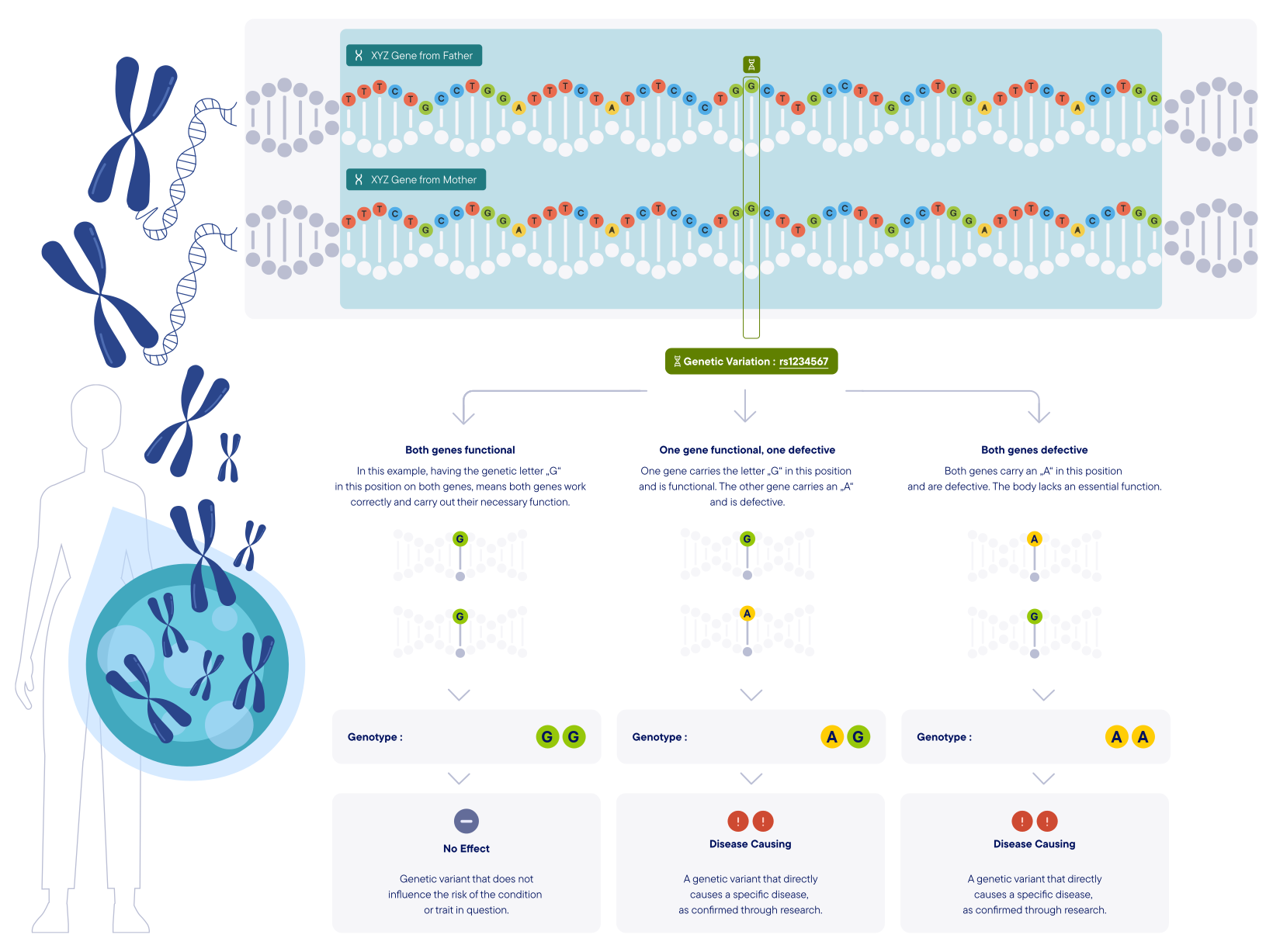
Humans have more than 20,000 genes, each carrying out one or a few specific functions in the body. One gene instructs the body to digest lactose from milk, another tells the body how to build strong bones and another prevents the body's cells from beginning to multiply uncontrollably and developing into cancer. As all of these genes combined are the building instructions for our body, a defect in one of these genes can have severe health consequences.
Through decades of genetic research, we know the genetic code of any healthy/functional human gene. We have also identified that in certain positions on a gene, some individuals may have a different genetic letter from the one you have. We call these hotspots "Genetic Variations" or "Variants" in short. In many cases, studies have been able to show that having the genetic letter "G" in the position makes you healthy, but having the letter "A" in the same position disrupts the gene function and causes a disease. Genopedia allows you to view these variants in genes and summarizes all that we know from scientific research, which genetic letters (Genotype) have good or bad consequences on your health or on your traits.
History
Families and communities once noticed patterns that seemed to run through certain relatives—children who spoke later than expected, had very limited or no speech, and often preferred routine and familiar surroundings. In classrooms and clinics, teachers and pediatricians described a mix of developmental delays and learning differences without a single, clear cause. Imaging sometimes showed a smaller-than-expected head size. For many, this meant long searches for answers, with tests that ruled out known conditions but didn’t name what was happening.
From early theories to modern research, the story of 1p21.3 microdeletion syndrome traces the path of genetic testing itself. Before high‑resolution tools, these small missing pieces of chromosome 1 were simply too tiny to see. As chromosomal microarray testing became common in the 2000s, researchers began to notice a shared pattern: a small deletion at 1p21.3 in people with significant speech delay, traits consistent with autism spectrum disorder, and sometimes feeding difficulties or slow growth. Initially understood only through symptoms, later studies connected these clinical features with the same small stretch of missing DNA.
In recent decades, awareness has grown as clinicians pooled cases from different hospitals and countries. This helped show that 1p21.3 microdeletion syndrome can look different from person to person. Some children have profound speech impairment, while others develop a few words or short phrases. Many have challenges with social communication and flexibility. Growth patterns vary too; a subset have microcephaly, while others do not. These shared reports moved the condition from isolated case descriptions to a recognized microdeletion syndrome.
Advances in genetics also clarified which genes inside 1p21.3 may matter most for brain development and behavior. While the exact gene combination differs depending on the size of the deletion, loss of certain genes in this region appears to act like turning down a dimmer switch, reducing their activity enough to affect speech and social development. This insight came not from a single breakthrough, but from many careful comparisons of clinical features with the exact boundaries of each person’s deletion.
As testing expanded to include toddlers with early developmental concerns and older teens or adults who never had a unifying diagnosis, clinicians recognized that 1p21.3 microdeletion syndrome was likely underdiagnosed in the past. Earlier generations lived with the symptoms, but the technology to detect the microdeletion simply did not exist. Today, genetic testing can provide a clear answer for families, guide supportive therapies, and connect people with others who share the diagnosis.
Knowing the condition’s history shows why some medical records use broader labels, like “global developmental delay” or “autism spectrum disorder,” without naming the underlying genetic cause. It also explains why two people with the same 1p21.3 microdeletion can have different needs. Each step—from early clinical descriptions to modern genetic mapping—has added to a more complete picture, helping families and clinicians plan care with greater confidence.