
16p12.1p12.3 triplication syndrome is a genetic condition caused by an extra copy of a small segment on chromosome 16. People with 16p12.1p12.3 triplication syndrome may have developmental delay, learning differences, and speech delay, and some have low muscle tone or feeding difficulties in infancy. Physical features can include short stature, differences in facial shape, or structural differences seen on exam, and seizures or heart or kidney differences occur in a subset. The condition is lifelong, but not everyone will have the same experience, and life expectancy is often close to typical when medical needs are managed. Care focuses on therapies, educational supports, and treatment of specific features such as seizures or heart issues, and genetic testing can confirm the diagnosis.
Overview
16p12.1p12.3 triplication syndromeSymptoms
16p12.1p12.3 triplication syndrome features vary. Many people have developmental and speech delays, learning difficulties, and low muscle tone; some have seizures or congenital differences and facial traits. Signs are usually recognized in infancy or early childhood.
Outlook and prognosis
Many people with 16p12.1p12.3 triplication syndrome grow and learn at their own pace, often needing extra supports in school, speech, or movement. Health issues vary widely, so prognosis depends on the specific features present. With early therapies and regular checkups, most families see steady gains over time.
Causes and risk factors
16p12.1p12.3 triplication syndrome results from an extra copy of a segment on chromosome 16. It may occur de novo or be inherited, with variable effects. Risk rises when a parent carries the variant; age and environment do not cause it.
Genetic influences
Genetics is central in 16p12.1p12.3 triplication syndrome; the extra copy on chromosome 16 drives the condition. Variation in duplicated genes and background DNA changes influence severity. Inherited and de novo forms occur, so genetic counseling is recommended.
Diagnosis
Clinicians suspect 16p12.1p12.3 triplication syndrome from developmental and physical clinical features and family history. Genetic tests, typically chromosomal microarray or targeted copy-number testing, confirm the triplication. Genetic diagnosis of 16p12.1p12.3 triplication syndrome may include parental testing and imaging as needed.
Treatment and drugs
Treatment for 16p12.1p12.3 triplication syndrome focuses on the specific needs of each person. Care often includes early developmental therapies, learning support, and management of seizures, heart or kidney differences, feeding issues, or hearing concerns. A coordinated team—pediatrics, neurology, cardiology, genetics, and therapy services—helps guide care over time.
Symptoms
People may notice differences in development, movement, and learning that range from subtle to more obvious in daily life. These can occur in 16p12.1p12.3 triplication syndrome, a rare chromosome change present from birth. Early features of 16p12.1p12.3 triplication syndrome may include motor and speech delays, low muscle tone, and learning differences. Features vary from person to person and can change over time.
Babies may sit, crawl, or walk later than peers. In 16p12.1p12.3 triplication syndrome, low muscle tone and coordination challenges often play a role. Physical therapy can support steady progress.
First words may come later and vocabulary can build more slowly. Some have trouble pronouncing words or understanding complex instructions. Many with 16p12.1p12.3 triplication syndrome benefit from early speech therapy.
Thinking and learning skills vary from mild challenges to intellectual disability. Schoolwork like reading, math, or multi-step tasks may require extra time and support.
Also called hypotonia, this can make babies feel floppy and joints more flexible. It can affect posture, stamina, and fine motor skills like buttoning or using utensils. Targeted exercises and supportive seating often help.
How people usually first notice 16p12.1p12.3 triplication syndrome?
Families often first notice 16p12.1p12.3 triplication syndrome when a baby has low muscle tone that makes feeding or holding up the head harder than expected, or when early motor milestones like rolling and sitting come later than peers. As toddlers grow, speech delay, learning differences, and developmental delays become clearer, and some children have small head size, distinctive facial features, or shorter height that prompts a genetics referral. Doctors may first confirm the diagnosis after noticing a pattern of delays and features, or during prenatal/early childhood chromosomal microarray testing done because of ultrasound findings, growth concerns, or developmental evaluations—these are the most common first signs of 16p12.1p12.3 triplication syndrome.
Types of 16p12.1p12.3 triplication syndrome
16p12.1p12.3 triplication syndrome is a genetic/congenital condition. Variants are defined by the exact chromosomal segment involved and whether the change occurs alone or alongside other copy number changes. These clinical variants can lead to differences in learning, growth, and health features, ranging from mild to more noticeable effects. Not everyone will experience every type.
Isolated triplication
The 16p12.1p12.3 region is triplicated without other known chromosomal changes. People may have learning differences, speech delay, or mild motor coordination issues. Growth and physical features are often subtle or within typical ranges.
Triplication with additional CNVs
The 16p12.1p12.3 triplication occurs along with other copy number variants elsewhere in the genome. Symptoms don’t always look the same for everyone. This combination can be linked with more pronounced developmental delays or medical needs.
Mosaic triplication
Only a portion of cells carry the 16p12.1p12.3 triplication, while others are typical. The mix can act like a dimmer switch on severity, with milder learning or motor effects for some. Clinical findings may vary depending on how many cells are affected in different tissues.
Inherited versus de novo
The triplication is either inherited from a parent or arises new in the child. Inherited changes may run in families with a range from very mild to more noticeable features. De novo changes can be associated with a broader spectrum of outcomes in types of 16p12.1p12.3 triplication syndrome.
What genetics can tell you about symptoms
Extra copies of genes on chromosome 16p12.1–p12.3 can disrupt brain and body development, leading to learning differences, speech delay, low muscle tone, seizures, or autism traits. The specific symptoms and severity vary widely because different genes in the triplicated segment affect different pathways.
Causes and risk factors
16p12.1p12.3 triplication syndrome is caused by an extra copy of a small section of chromosome 16. The change can happen for the first time at conception or be inherited from a parent, and a parent with the triplication can pass it to a child about half the time. Risk factors for 16p12.1p12.3 triplication syndrome mainly include having a parent who carries the same chromosomal change, even if that parent has few or no symptoms. Genes set the stage, but environment and lifestyle often decide how the story unfolds. The triplication itself is not caused by habits or exposures, but factors like other health conditions, prematurity, and access to therapies can influence how symptoms appear and how much support is needed.
Environmental and biological risk factors
Understanding what can raise the chance of 16p12.1p12.3 triplication syndrome can help with pregnancy planning and testing. Doctors often group risks into internal (biological) and external (environmental). In practice, risk factors for 16p12.1p12.3 triplication syndrome mostly reflect how this chromosome region behaves during cell formation, with no clear links to specific outside exposures.
This stretch of chromosome 16 contains repeated DNA segments that can misalign during egg or sperm formation. That natural architecture can make extra copies more likely in this spot.
The triplication often arises as a one-time event while eggs, sperm, or very early embryos are dividing. These chance errors are biological and not linked to behavior or routine exposures.
A clear link between parent age and 16p12.1p12.3 triplication syndrome has not been established. Any influence, if present, appears small compared with the region’s built-in susceptibility.
No specific chemicals, radiation levels, or infections have been confirmed to raise the risk of 16p12.1p12.3 triplication syndrome. Everyday environmental exposures have not been shown to trigger this precise chromosomal change.
Genetic risk factors
Genetic risk in 16p12.1p12.3 triplication syndrome centers on how the change is inherited, how often it arises for the first time, and which DNA features make this region prone to copy-number gains. Repeated DNA segments in 16p12 can misalign during cell division, so triplications may be passed down or occur as new events in a child. Carrying a genetic change doesn’t guarantee the condition will appear. Doctors may discuss the genetic causes of 16p12.1p12.3 triplication syndrome in terms of inheritance, de novo changes, parental mosaicism, and other chromosome factors that influence risk in families.

Extra 16p copies: The syndrome involves a triplication of the 16p12.1p12.3 region, creating four copies instead of the usual two. This extra dosage can upset the balance of nearby genes and contribute to features of 16p12.1p12.3 triplication syndrome.
Passed in families: When a parent carries the triplication, each child has a 50% chance of inheriting it. Effects can be mild in the parent yet more noticeable in the child with 16p12.1p12.3 triplication syndrome.
New in child: Sometimes the triplication occurs for the first time in the child, with neither parent carrying it. When truly new, the chance of it happening again in another pregnancy is usually low, though not zero.
Parental mosaicism: Rarely, a parent has the change in only some egg or sperm cells, even if blood testing looks normal. This hidden mosaicism can raise the recurrence risk above the general population.
Repetitive DNA hotspots: The 16p12 region contains repeated DNA stretches that make rearrangements more likely during cell division. This built-in fragility increases the chance of duplications and triplications forming.
Balanced carrier parent: A parent with a balanced chromosome rearrangement involving 16p may be healthy but can pass an unbalanced form that includes the triplication. Parental chromosome studies can clarify risk for 16p12.1p12.3 triplication syndrome in future pregnancies.
Variable effects: The same triplication can lead to very different findings from one person to another. Some carriers have learning or developmental differences, while others have few or no symptoms.
Additional DNA changes: A second copy-number change or gene variant elsewhere can modify how severe 16p12.1p12.3 triplication syndrome appears. This helps explain differences even among relatives who share the same triplication.
Family history clues: A pattern of learning or developmental differences in relatives can point to an inherited 16p12.1p12.3 triplication. Genetic testing can confirm whether the change is shared across the family.
Lifestyle risk factors
16p12.1p12.3 triplication syndrome is genetic and not caused by lifestyle choices, but daily habits can shape symptoms, function, and complication risks over time. Focusing on individualized routines around movement, sleep, nutrition, and therapies can support development and behavior. When families ask about lifestyle risk factors for 16p12.1p12.3 triplication syndrome, the goal is to reduce stressors that aggravate seizures, feeding issues, or learning challenges, while building habits that strengthen skills.
Regular, tailored movement can improve hypotonia, balance, and endurance common in this syndrome. Short, frequent sessions reduce fatigue and support motor learning.
Managing textures, pacing, and reflux can reduce choking, aspiration, and poor weight gain linked to oral–motor challenges. Balanced calories help prevent undernutrition or excess weight that can limit mobility.
Irregular or insufficient sleep can worsen seizures, attention, and daytime behavior in neurodevelopmental conditions. Consistent schedules and calming wind-downs may improve learning and mood stability.
Steady participation in PT/OT/speech and daily home practice reinforces motor, communication, and self-care skills. Gaps in practice can lead to plateaus or regression in abilities.
Risk prevention
Because 16p12.1p12.3 triplication syndrome is caused by a genetic change present from birth, you can’t prevent the condition itself, but you can lower risks of complications and support healthy development. Prevention is about lowering risk, not eliminating it completely. Paying attention to early symptoms of 16p12.1p12.3 triplication syndrome and setting up routine monitoring can catch issues early and guide care.
A genetics visit can explain inheritance, recurrence risk, and testing options for relatives. It can also review family planning choices, including prenatal or preimplantation testing.
If you are planning a pregnancy, discuss screening, diagnostic testing, and timing. This can help identify the genetic change before or during pregnancy and plan care.
Soon after diagnosis, doctors may check the heart, kidneys, hearing, and vision. Establishing baselines helps spot changes early and prevent avoidable complications.
Early access to speech, physical, and occupational therapy can build skills and reduce secondary problems. Starting in infancy or toddler years often leads to better long-term function.

Transmission
16p12.1p12.3 triplication syndrome is not contagious—you can’t catch it or pass it through everyday contact, air, or body fluids. It occurs when someone is born with extra copies of a small stretch of chromosome 16.
In many families, it can be inherited: if a parent carries the triplication, each child has about a 50% chance of inheriting it. Sometimes it appears for the first time in a child because the change arose in the egg or sperm, so the parents do not carry it; in that situation, the chance of it happening again in another pregnancy is low but not zero due to rare mosaic changes in a parent’s egg or sperm cells. A genetics professional can explain the genetic transmission of 16p12.1p12.3 triplication syndrome and how 16p12.1p12.3 triplication syndrome is inherited in your family.
When to test your genes
Test your genes if you or your child has developmental delays, learning differences, congenital anomalies, seizures, or multiple unexplained medical features, especially with a family history of similar findings. Genetic results can confirm 16p12.1p12.3 triplication syndrome, guide therapies and services, and inform recurrence risk. A genetics referral is appropriate at any age.
Diagnosis
When a child has delayed milestones or learning challenges, families often look for answers. For rare chromosome changes like 16p12.1p12.3 triplication syndrome, the diagnosis relies on recognizing patterns and confirming them with genetic tests. Doctors usually begin with a careful exam and developmental history before ordering testing. Getting a genetic diagnosis of 16p12.1p12.3 triplication syndrome can guide care, support, and family planning.
A clinician reviews growth, development, learning, and any birth differences. Subtle facial or body features and muscle tone can provide clues. Family history is gathered to see if similar findings occur in relatives.
This test looks across all chromosomes for extra or missing DNA. It can detect a triplication in the 16p12.1p12.3 region with high sensitivity. Results help confirm 16p12.1p12.3 triplication syndrome and guide next steps.
Techniques like MLPA or qPCR can confirm the exact copy number and refine breakpoints. These methods are often used to verify microarray results. They can also test relatives for the known change.
Fluorescence in situ hybridization can visualize extra copies at 16p. It may help when the change is complex or mosaic. FISH can support the diagnosis of 16p12.1p12.3 triplication syndrome in select cases.
Stages of 16p12.1p12.3 triplication syndrome
16p12.1p12.3 triplication syndrome does not have defined progression stages. This genetic change is present from birth and its effects vary widely from person to person, so it doesn’t typically follow a step-by-step pattern over time. Genetic testing may be offered to clarify certain risks. Diagnosis usually relies on DNA testing such as chromosomal microarray or genome sequencing to confirm the extra copy, and clinicians then monitor development, learning, and behavior to understand early symptoms of 16p12.1p12.3 triplication syndrome and tailor support.
Outlook and prognosis
Many people ask, “What does this mean for my future?”, especially right after a new diagnosis of 16p12.1p12.3 triplication syndrome. The outlook is not the same for everyone, but most children with this chromosomal change grow and gain skills over time with tailored therapies. Early symptoms of 16p12.1p12.3 triplication syndrome can include developmental delays, learning differences, and sometimes feeding or growth challenges; these often improve with speech, occupational, and physical therapy. Serious, life‑limiting complications appear to be uncommon based on what’s currently known, and life expectancy is usually near typical unless there is a separate medical issue such as a major heart, kidney, or seizure disorder.
Understanding the prognosis can guide planning and help set realistic goals for school, independence, and supports. Some people experience mild learning needs and do well in mainstream classrooms, while others notice broader developmental or behavioral challenges and benefit from specialized education plans. If seizures, heart differences, or breathing problems are present, the long‑term outlook depends partly on how well those are treated. With ongoing care, many people maintain steady progress, and small adjustments—like sleep routines, nutrition support, or hearing and vision care—can make day‑to‑day life smoother.
In medical terms, the long-term outlook is often shaped by both genetics and lifestyle. Genetic testing can sometimes provide more insight into prognosis, especially if other copy‑number changes or gene variants are found that may explain differences in learning, behavior, or health. Mortality linked directly to 16p12.1p12.3 triplication syndrome is not clearly established; when early deaths are reported in similar conditions, they are typically tied to severe organ problems rather than the chromosomal change itself. Talk with your doctor about what your personal outlook might look like, and revisit the plan over time as needs and strengths evolve.
Long-term effects
For many, day-to-day life with 16p12.1p12.3 triplication syndrome centers on learning, communication, and health check-ins across childhood and adulthood. Long-term effects vary widely, and no two people share the exact same path. Early symptoms of 16p12.1p12.3 triplication syndrome often involve developmental differences; over time, the picture can include movement, behavior, or organ-related issues in some. Most long-term outcomes depend on which features are present and how strongly they show up over the years.
Many children need extra support with learning and problem-solving over the long term. Abilities can range from mild learning differences to more marked intellectual disability.
Speech is often delayed, and language may develop more slowly than peers. Some continue to have expressive or articulation challenges into adolescence and adulthood.
Low muscle tone and coordination differences can make gross and fine motor skills develop later. Some may remain a bit clumsy or tire easily with physical tasks.
A subset develop seizures that may start in childhood. Seizure patterns vary—some outgrow them, while others have lifelong epilepsy.
How is it to live with 16p12.1p12.3 triplication syndrome?
Living with 16p12.1p12.3 triplication syndrome can mean a mix of developmental differences—such as speech and motor delays, learning challenges, and sometimes behavioral differences—alongside medical follow-ups to check hearing, growth, and other health features. Daily life often involves therapy appointments, structured routines, and tailored learning supports, which can help build skills and confidence over time. Families and caregivers may feel the pull of extra planning and advocacy at school and in healthcare, but many also find a strong rhythm with early intervention, clear communication among providers, and community support. Friends, teachers, and relatives can make a big difference by offering patience, consistent expectations, and practical help during transitions or new tasks.
Treatment and drugs
Treatment for 16p12.1p12.3 triplication syndrome focuses on supporting development, learning, and day-to-day function rather than “curing” the genetic change. Care typically includes early intervention therapies—speech and language, physical, and occupational therapy—plus tailored educational supports and behavioral strategies for attention, learning, or social challenges; doctors sometimes recommend a combination of lifestyle changes and drugs if concerns like ADHD, anxiety, seizures, or sleep problems are present. Regular check-ins with pediatrics, neurology, cardiology, audiology, ophthalmology, and genetics help track growth, hearing, vision, heart structure, and neurologic features, with treatment adjusted as needs evolve. For feeding difficulties, reflux, constipation, or poor weight gain, nutrition plans, reflux management, and, rarely, feeding therapy or gastroenterology care can help. Supportive care can make a real difference in how you feel day to day, and your doctor can help weigh the pros and cons of each option.
Non-drug treatment
People with 16p12.1p12.3 triplication syndrome often benefit from hands-on therapies that build everyday skills at home, school, and in the community. If early symptoms of 16p12.1p12.3 triplication syndrome include motor or speech delays, starting therapy early can build skills over time. Non-drug treatments often lay the foundation for communication, learning, movement, and independence. Care plans are tailored to each person’s strengths, needs, and age.
Coordinated services in infancy and preschool target motor, speech, and social development. Therapists coach families on daily routines that support steady progress. These programs can bridge care between home, clinic, and nursery.
Guided exercises strengthen low muscle tone and improve balance and coordination. Therapists can help with posture, safe walking, and endurance for play and school.
Skill-building focuses on hand use, self-care, and sensory processing. Strategies can make dressing, brushing teeth, and classroom tasks more manageable.
Sessions support understanding words, speaking clearly, and social communication. Therapists tailor activities to encourage back-and-forth conversation and pragmatic language.
Your genes may have an impact on how drugs work for you
Genes can change how your body processes certain medications, affecting dose needs and side‑effect risks. For people with 16p12.1p12.3 triplication syndrome, clinicians may consider pharmacogenetic testing to guide safer choices, especially for seizure medicines, behavioral treatments, and anesthesia.
Pharmacological treatments
There’s no single drug for 16p12.1p12.3 triplication syndrome, so treatment focuses on specific symptoms that affect day-to-day life, like seizures, attention problems, sleep difficulty, reflux, or drooling. Medication choices depend on which features are present, which can range from early symptoms of 16p12.1p12.3 triplication syndrome like feeding issues and sleep problems to later concerns such as seizures or attention difficulties. Drugs that target symptoms directly are called symptomatic treatments. Plans are adjusted over time, with close follow‑up to balance benefit and side effects.
Levetiracetam, valproate, or lamotrigine are common options to reduce seizures. Doctors tailor the choice based on seizure type and side effects.
Diazepam nasal spray or rectal gel, or intranasal midazolam, can stop prolonged seizures. Families receive instructions on when and how to use them.
Methylphenidate or amphetamine medicines may improve focus and reduce impulsivity. Atomoxetine, guanfacine, or clonidine are alternatives if stimulants are not a good fit.
Risperidone or aripiprazole may help when behaviors risk safety or block learning. Weight, blood sugar, and cholesterol are checked during treatment.
Genetic influences
This condition stems from an extra copy of a small stretch of chromosome 16 in the p12.1 to p12.3 region, so several genes are present in higher amounts—often four copies instead of the usual two. Even with the same gene change, people can have very different needs, ranging from minimal effects to more noticeable developmental or health differences. The extra segment can arise as a new change in a child or be inherited from a parent; when a parent carries it, each pregnancy has about a 1 in 2 (50%) chance of inheriting it, and some parents have few or no clear features. How the triplication plays out is likely influenced by other genes and life factors, which helps explain why 16p12.1p12.3 triplication syndrome varies so much from person to person. A chromosomal microarray or similar genetic test can detect the extra segment and clarify the cause. Confirming whether the change is inherited can guide next steps for your family, including considering testing for relatives if early symptoms of 16p12.1p12.3 triplication syndrome are noticed.
Is 16p12.1p12.3 triplication syndrome genetic?
Genetics is central in 16p12.1p12.3 triplication syndrome; the extra copy on chromosome 16 drives the condition. Variation in duplicated genes and background DNA changes influence severity. Inherited and de novo forms occur, so genetic counseling is recommended.
Pharmacogenetics—how genetics influence drug effects
Treatment for 16p12.1p12.3 triplication syndrome is usually symptom‑focused, using medicines for seizures, attention and behavior challenges, mood, or sleep as needed. The chromosome change itself typically doesn’t determine how you process most drugs; that’s more influenced by other genes involved in drug breakdown, your age, liver and kidney health, and any other medicines you take. In practice, pharmacogenetic testing for 16p12.1p12.3 triplication syndrome focuses on the medications used to manage its features, not the chromosome change itself. Alongside your medical history and current medicines, genetic testing may help predict dose or side‑effect risk for some drugs. For example, testing can guide dosing for certain antidepressants and atomoxetine, and sometimes helps with dosing choices for specific seizure medicines. If carbamazepine is being considered, doctors often recommend gene screening in people with East or Southeast Asian ancestry because it can flag a higher risk of a rare, severe skin reaction. Genetics is only one factor, so medication plans for 16p12.1p12.3 triplication syndrome still rely on careful monitoring, starting with low doses, and checking for drug–drug interactions.
Interactions with other conditions
People living with 16p12.1p12.3 triplication syndrome may also have other health issues that interact with day-to-day needs, such as learning and behavioral differences, seizures, or heart and kidney differences. Doctors call it a “comorbidity” when two conditions occur together. Neurodevelopmental conditions like autism, attention differences, and epilepsy can occur alongside the triplication; seizures may make learning, sleep, and behavior harder to manage, and some anti-seizure medicines can affect attention or mood. Heart or kidney differences, as well as hearing or vision issues, may influence growth, feeding, fatigue, and how well someone tolerates activity or certain medications. In some families, additional genetic changes can modify how severe features are, so interactions can look very different from person to person. Because early symptoms of 16p12.1p12.3 triplication syndrome can overlap with those of autism, ADHD, or epilepsy, coordinated care and regular medication reviews help tailor treatments and reduce side effects when more than one diagnosis is present.
How genes can cause diseases
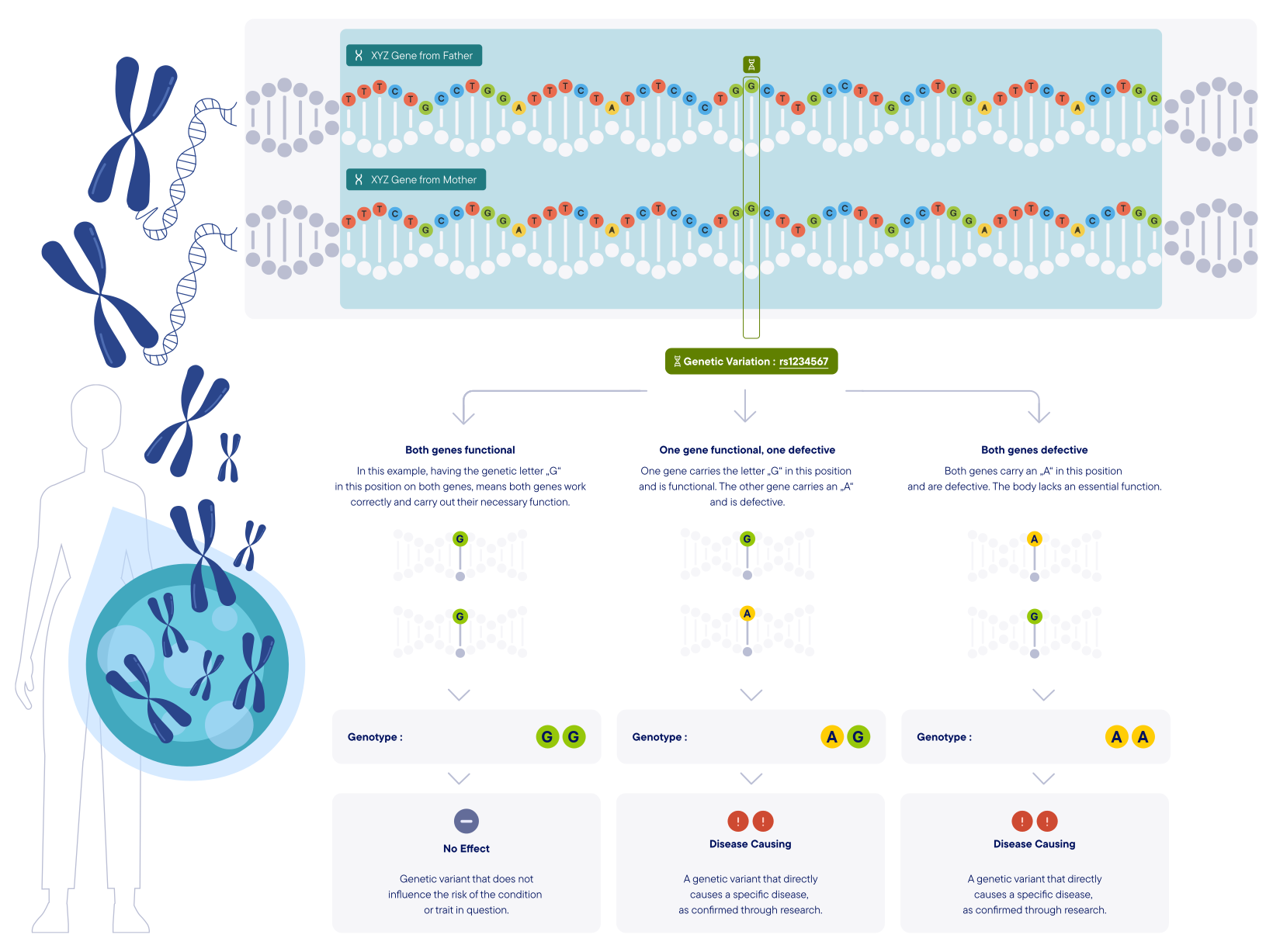
Humans have more than 20,000 genes, each carrying out one or a few specific functions in the body. One gene instructs the body to digest lactose from milk, another tells the body how to build strong bones and another prevents the body's cells from beginning to multiply uncontrollably and developing into cancer. As all of these genes combined are the building instructions for our body, a defect in one of these genes can have severe health consequences.
Through decades of genetic research, we know the genetic code of any healthy/functional human gene. We have also identified that in certain positions on a gene, some individuals may have a different genetic letter from the one you have. We call these hotspots "Genetic Variations" or "Variants" in short. In many cases, studies have been able to show that having the genetic letter "G" in the position makes you healthy, but having the letter "A" in the same position disrupts the gene function and causes a disease. Genopedia allows you to view these variants in genes and summarizes all that we know from scientific research, which genetic letters (Genotype) have good or bad consequences on your health or on your traits.
History
Families and communities once noticed patterns that were hard to explain: a child with learning differences, a sibling with smaller size than expected, a cousin with distinctive facial features, all in the same family line. Medical records hinted at shared traits, but for decades there wasn’t a single name or clear cause that tied these threads together.
First described in the medical literature as clusters of developmental delays and birth differences without a known reason, the picture slowly changed as chromosome testing improved. Early tools could only see large gains or losses of DNA. Smaller changes—like an extra copy across the 16p12.1 to 16p12.3 region—were invisible. As microarray testing and later high-resolution sequencing became routine in genetics clinics, clinicians began spotting a recurring pattern: people with similar features carried an extra stretch of DNA on chromosome 16. What had looked like separate conditions started to connect.
From these first observations, researchers matched clinical notes with lab findings and recognized that 16p12.1p12.3 triplication syndrome could look very different from one person to the next. Some had learning and speech differences without major medical issues. Others had smaller head size, feeding challenges in infancy, or structural differences found on exam. This variability was not unique, but it explained why the syndrome had been overlooked when doctors relied only on symptoms.
In recent decades, awareness has grown as more families received precise genetic results. Reports from Europe, North America, and beyond showed that the triplication can be inherited or occur for the first time in a child, and that parents with mild or subtle features can pass it on. Genetic testing also clarified boundaries with nearby chromosome 16 changes, helping clinicians avoid mixing different syndromes under one label.
Over time, descriptions became more consistent: the core finding is an extra copy of DNA in the 16p12.1–p12.3 region, with a spectrum of developmental and physical features that may range from mild to more noticeable. Historical differences highlight why a lab-confirmed diagnosis matters. It helps explain early symptoms of 16p12.1p12.3 triplication syndrome and guides supportive care rather than relying on guesswork.
Today, the history of this condition reflects the broader story of modern genetics. What began as scattered notes in charts is now a recognized genomic change with established testing methods, clearer counseling about inheritance, and growing data to inform care. As laboratories and clinics share information, the description continues to sharpen, giving people with 16p12.1p12.3 triplication syndrome—and their families—more answers than were possible a generation ago.