
14q11.2 microdeletion syndrome is a genetic condition caused by a tiny missing piece of chromosome 14. People with 14q11.2 microdeletion syndrome often have developmental delay, learning differences, and speech or language delay. Some have features a doctor can see, such as distinctive facial traits, short stature, or low muscle tone, and seizures can occur. Signs usually begin in infancy or early childhood and the condition is lifelong, but not everyone will have the same experience. Care focuses on therapies, special education, and treating specific issues, and the outlook varies but many people live long and full lives.
Overview
14q11.2 microdeletion syndromeSymptoms
14q11.2 microdeletion syndrome often shows developmental and speech delay, low muscle tone, learning differences, and autistic features. Some have seizures, feeding difficulties, or subtle facial traits; signs are usually noticed in infancy or early childhood and vary widely.
Outlook and prognosis
Many living with 14q11.2 microdeletion syndrome grow and learn at their own pace, with wide variation in speech, motor skills, and learning needs. Early therapies, inclusive schooling, and treatment of seizures or heart or immune issues support progress. With coordinated care, children often gain meaningful communication, mobility, and independence into adulthood.
Causes and risk factors
14q11.2 microdeletion syndrome results from a small missing piece of chromosome 14, usually arising spontaneously in egg or sperm. Rarely, it’s inherited in an autosomal-dominant pattern or linked to a parent’s chromosomal rearrangement. Environmental or lifestyle factors aren’t established risks.
Genetic influences
Genetics are central in 14q11.2 microdeletion syndrome because the condition stems from a missing segment on chromosome 14. The specific genes lost can influence severity and features. Most cases occur de novo, though parental testing helps assess recurrence risk.
Diagnosis
Doctors suspect 14q11.2 microdeletion syndrome from developmental delays, learning concerns, and characteristic facial or medical features. The genetic diagnosis of 14q11.2 microdeletion syndrome is confirmed by chromosomal microarray or targeted genetic tests. Additional evaluations guide care.
Treatment and drugs
Treatment for 14q11.2 microdeletion syndrome focuses on each person’s needs. Care often includes early developmental therapies, speech and occupational therapy, educational supports, and management of seizures or heart, immune, or feeding issues. A coordinated team—pediatrics, neurology, genetics—helps adapt care over time.
Symptoms
Families often first notice delays in motor skills or speech that make daily routines take more planning. Early features of 14q11.2 microdeletion syndrome can include feeding challenges in infancy and low muscle tone, which may make sitting or walking take longer. School-age children may need extra support for learning and behavior. Features vary from person to person and can change over time.
Reaching milestones like sitting, crawling, or walking may happen later than average in 14q11.2 microdeletion syndrome. This can make daycare or playgroup activities take extra support.
First words and clear speech often come later than expected. Some understand more than they can express, and conversations may feel effortful.
Babies and toddlers may feel floppy and tire easily during tummy time or play. This can make posture and endurance a challenge.
Fine motor tasks like using utensils, buttons, or handwriting can be harder. Sports and playground skills may require more practice and guidance.
How people usually first notice 14q11.2 microdeletion syndrome?
Many families first notice 14q11.2 microdeletion syndrome in infancy or early childhood when growth seems slower than expected, feeding is difficult, or developmental milestones like sitting, first words, or walking arrive later than peers. Doctors may pick up the first signs of 14q11.2 microdeletion syndrome at a routine check-up because of low muscle tone, subtle facial features, or emerging learning and speech differences, which then prompts genetic testing. Some children are identified through prenatal testing or after birth due to congenital differences, but for many, the condition is first noticed when delays or behavioral features—sometimes including traits seen in autism spectrum conditions—become clear in the toddler years.
Types of 14q11.2 microdeletion syndrome
14q11.2 microdeletion syndrome is a genetic condition caused by a small missing piece on chromosome 14. There aren’t well-established clinical subtypes the way some genetic disorders have, but researchers do recognize patterns that relate to the exact size and position of the missing segment. In practice, this means symptoms can vary from mild learning differences to broader developmental and medical needs. When people ask about types of 14q11.2 microdeletion syndrome, they’re usually referring to these deletion-size patterns rather than truly distinct variants.
Proximal deletion
The missing segment sits closer to the chromosome’s center. People often have developmental delay, speech delay, and mild to moderate learning differences. Some may have low muscle tone, feeding issues in infancy, or subtle facial features.
Distal deletion
The missing segment is positioned farther from the center of the chromosome arm. Language and social communication can be more affected, and attention or behavioral differences may stand out. Growth issues or congenital anomalies are less consistent but can occur.
Extended deletion
A larger stretch is missing and may include nearby genes. Features can be broader, with more noticeable developmental delays and a higher chance of medical findings such as structural differences in the heart or kidneys. Even within this group, intensity can range from mild to severe.
Atypical/segmental
The deletion removes a nonstandard segment that doesn’t line up with the common breakpoints. Symptoms don’t always look the same for everyone. For many, certain types stand out more than others.
What genetics can tell you about symptoms
Some people with a 14q11.2 microdeletion have developmental delay, speech delay, and learning differences because missing genes in this region act like dimmer switches for brain growth and communication pathways. Others may show low muscle tone, seizures, autism traits, or short stature, depending on which genes are lost and how many cells are affected.
Causes and risk factors
14q11.2 microdeletion syndrome happens when a tiny piece of chromosome 14 is missing at 14q11.2.
This usually occurs as a new change in the child, but it can be inherited from a parent who carries the same deletion.
Genes set the stage, but environment and lifestyle often decide how the story unfolds.
These do not cause the deletion, but they can influence development, learning, and behavior over time.
A family history raises the chance of having a child with 14q11.2 microdeletion syndrome, and doctors may suggest testing if early symptoms of 14q11.2 microdeletion syndrome appear.
Environmental and biological risk factors
Most cases of 14q11.2 microdeletion syndrome begin as a brand‑new chromosomal change in an egg or sperm cell before pregnancy. Being exposed to risks in your body or environment doesn’t mean illness is inevitable. Researchers look at broad biological and environmental factors that may make these rare events slightly more likely. Below are factors linked to a higher chance of a new microdeletion forming.
As sperm cells divide over many years, new DNA changes become a little more likely. This can slightly increase the chance of de novo chromosomal changes, including microdeletions at 14q11.2. The absolute risk for 14q11.2 microdeletion syndrome remains low at any age.
Exposure of the ovaries or testes to high medical or occupational ionizing radiation can cause DNA breaks. This may raise the chance of a new chromosomal microdeletion in a future pregnancy. Routine diagnostic imaging uses much lower doses and is not linked to 14q11.2 microdeletion syndrome.
Long-term, high-level exposure to genotoxic agents such as certain solvents, pesticides, or benzene can damage DNA in egg or sperm cells. This could increase the risk of new chromosomal changes, including at 14q11.2.
Lead, mercury, and related metals can cause DNA damage at high exposure levels. Such damage in reproductive cells may slightly increase the chance of a chromosomal microdeletion. 14q11.2 microdeletion syndrome still remains rare even when exposures occur.
Genetic risk factors
Most cases start as a brand-new missing segment on chromosome 14 that forms in the egg or sperm, with no family history. A smaller number are inherited from a parent who carries the same change, sometimes with mild or unnoticed effects. Risk is not destiny—it varies widely between individuals. When discussing genetic risk factors for 14q11.2 microdeletion syndrome, key details include whether a parent carries the change, whether mosaicism is present, and how large the missing segment is.

De novo deletion: The microdeletion often happens for the first time in a child when the egg or sperm forms. It is not typically inherited from either parent. The chance of it happening again in a future pregnancy is usually low but not zero.
Inherited deletion: In some families, a parent carries the same 14q11.2 microdeletion. Each child then has a 50% chance to inherit it. The parent may have subtle or unrecognized features.
Parental mosaicism: A parent can carry the deletion in only some of their cells, including egg or sperm, while standard blood tests look normal. This hidden mosaicism raises the chance of another child with the deletion. More targeted testing may be needed to look for it.
Regional susceptibility: Certain DNA patterns near 14q11.2 make this chromosomal region more prone to small losses during egg or sperm formation. This can lead to the same segment going missing in unrelated families. It helps explain why many cases of 14q11.2 microdeletion syndrome appear without family history.
Deletion size matters: The exact size and boundaries of the missing segment can change which genes are lost. This may shape the features seen in 14q11.2 microdeletion syndrome. Larger deletions may touch more body systems.
Balanced translocation parent: A parent with a balanced chromosome exchange involving chromosome 14 can have a higher chance of a child with an unbalanced deletion. The parent may be healthy because no DNA is missing or extra in their own cells. Parental chromosome studies can clarify this risk.
Child mosaicism: In some children, the deletion is present in only a portion of cells. Mosaic changes can result in milder or more varied features. They can also make early genetic signs of 14q11.2 microdeletion syndrome harder to detect on standard tests.
Variable expressivity: Even with the same microdeletion, the impact on learning, growth, or behavior can differ widely among relatives. Predicting severity from the lab report alone is difficult. People with the same risk factor can have very different experiences.
Lifestyle risk factors
14q11.2 microdeletion syndrome is a genetic condition; lifestyle habits do not cause it. However, day-to-day choices can influence how symptoms show up, how skills develop, and whether complications arise. When people discuss lifestyle risk factors for 14q11.2 microdeletion syndrome, they usually mean habits that may worsen or ease symptoms over time. The elements below connect common lifestyle factors to their real effects on this condition.
Play-based movement and regular exercise can improve hypotonia, balance, and endurance to support motor milestones. Inactivity may worsen low tone, coordination, and constipation.
Adequate calories and protein support growth delays and energy for therapies. Highly selective eating can raise risks of micronutrient gaps and constipation that hinder progress.
Safe textures, paced bites, and upright positioning lower choking and reflux risk in oral-motor discoordination. Small, frequent meals can improve intake and comfort.
Sufficient fluids and fiber help prevent constipation, which is common and can aggravate pain, sleep, and behavior. Hard stools can reduce appetite and feeding cooperation.
Risk prevention
Because 14q11.2 microdeletion syndrome is genetic, you can’t prevent the condition itself, but you can lower the chance of complications and support healthy development. Spotting early symptoms of 14q11.2 microdeletion syndrome can speed access to therapies and school supports. Different people need different prevention strategies—there’s no single formula. Regular follow-up helps you adjust care as needs change from infancy to adulthood.
Noticing developmental delays or feeding and muscle tone issues early allows quicker referral to specialists. Earlier therapy often leads to better skills over time.
Speech, occupational, and physical therapy can build communication, coordination, and independence. Starting in infancy or early childhood helps make daily tasks easier.
Routine visits let the care team track growth, learning, and behavior and act on concerns quickly. Care plans can be updated as needs change.
Periodic hearing and eye exams catch problems that can affect language and learning. Treating issues early can prevent avoidable setbacks.

Transmission
14q11.2 microdeletion syndrome is a genetic condition, not an infection, so it can’t be caught or spread through everyday contact. It happens when a small segment of chromosome 14 is missing; in most cases this is a new change that starts in the egg or sperm and isn’t inherited from either parent. When a parent does carry the same deletion, one copy is enough to cause the condition, and each child has a 1 in 2 (50%) chance of inheriting it—this is how 14q11.2 microdeletion syndrome is inherited. If both parents test negative for the deletion, the chance of another child having 14q11.2 microdeletion syndrome is low, though not zero.
When to test your genes
Consider genetic testing if a child shows developmental delays, speech challenges, autism traits, seizures, or multiple congenital features that lack a clear explanation. Testing is also reasonable when there’s a known 14q11.2 microdeletion in the family, or for parents planning another pregnancy. Results can guide early therapies, targeted medical screening, and reproductive options.
Diagnosis
Doctors make the diagnosis based on a combination of clinical signs and genetic testing. Getting a diagnosis is often a turning point toward answers and support. In many cases, the genetic diagnosis of 14q11.2 microdeletion syndrome starts when developmental or learning differences are noticed in early childhood and is confirmed with a genetic test.
Doctors review growth, development, facial features, and behavior patterns. These findings can suggest 14q11.2 microdeletion syndrome and guide which tests to order.
Providers ask about milestones, learning, speech, and motor skills. This helps gauge impact and decide on targeted testing.
This first-line genetic test can detect small missing DNA segments. It often identifies the 14q11.2 deletion and estimates its size.
Targeted methods such as FISH or qPCR can verify the specific deletion. These tests help confirm uncertain or borderline microarray results.
Stages of 14q11.2 microdeletion syndrome
14q11.2 microdeletion syndrome does not have defined progression stages. It’s a lifelong genetic difference present from birth; features such as developmental delay, speech and learning differences, or medical findings tend to vary from person to person and may change gradually, not in a set sequence. Doctors typically confirm the diagnosis with chromosomal microarray or other genetic testing when early symptoms of 14q11.2 microdeletion syndrome—like delayed speech, low muscle tone, or feeding difficulties—lead to an evaluation, and ongoing care usually involves monitoring growth, development, and any organ-specific concerns through regular checkups. Early and accurate diagnosis helps you plan ahead with confidence.
Outlook and prognosis
Families often want to know how life will change after a diagnosis like 14q11.2 microdeletion syndrome, especially around learning, speech, and day-to-day independence. Many children have developmental delays, low muscle tone, and sometimes seizures, but the range is wide—some walk and talk later yet make steady gains, while others need ongoing support for communication and learning. Early care can make a real difference, including speech and physical therapy, hearing and vision checks, and addressing feeding or sleep issues that can slow progress if left untreated.
Looking at the long-term picture can be helpful. Doctors call this the prognosis—a medical word for likely outcomes. Most people with 14q11.2 microdeletion syndrome live into adulthood, and life expectancy is usually near typical unless there are significant complications such as uncontrolled seizures, severe breathing problems, or major heart defects. The early symptoms of 14q11.2 microdeletion syndrome often include delayed speech and motor milestones; with consistent therapies, many people build practical skills over time, though they may continue to need educational supports and, in some cases, assisted decision-making as adults.
Everyone’s journey looks a little different. Some people experience epilepsy or autism features, while others notice mainly learning differences and mild coordination challenges. Regular health checks matter because growth, sleep, behavior, and hearing can change with age, and small adjustments—like treating reflux or adjusting seizure medicines—can unlock progress. Talk with your doctor about what your personal outlook might look like, including any genetic test details that may help tailor care and planning.
Long-term effects
For many, day-to-day life centers on learning, communication, and behavior differences that persist from childhood into adulthood. Long-term effects vary widely, and no two people follow the same course. Families may first notice early symptoms of 14q11.2 microdeletion syndrome as later-than-expected speech or motor milestones, and these can shape school needs and social development. Some features change with age, with certain challenges easing and others becoming more noticeable in busy school or work settings.
Thinking and problem-solving skills can range from near-typical to clearly affected, often with uneven strengths and weaknesses. Many continue to need tailored educational support into the teen years and adulthood.
Speech usually develops later and may remain limited or hard to understand compared with peers. Language processing and expressive skills can lag, which can affect school performance and social ease over time.
Low muscle tone and delayed motor milestones in childhood can translate to ongoing clumsiness or fine-motor challenges. Endurance and coordination may improve with maturity but often remain below peers.
Some people with 14q11.2 microdeletion syndrome show autism spectrum traits, sensory sensitivities, or attention differences. Social communication may be effortful, and routines or transitions can be challenging across school and work settings.
How is it to live with 14q11.2 microdeletion syndrome?
Living with 14q11.2 microdeletion syndrome often means navigating developmental delays, learning differences, and sometimes speech or motor challenges, with supports like early therapy, special education, and consistent routines making a real difference. Medical follow-up may include monitoring growth, behavior, and any associated health issues, which can add appointments but also provides a roadmap and reassurance. For families, it’s a team effort—caregivers, teachers, and therapists coordinating care—while friends and relatives learn to communicate clearly, be patient with pace, and celebrate progress, big and small. Many find that with tailored supports and a strengths-first approach, daily life becomes more predictable and children gain skills that expand independence over time.
Treatment and drugs
Treatment for 14q11.2 microdeletion syndrome focuses on managing symptoms and supporting development, since there’s no single medication that reverses the genetic change. Care often includes early childhood therapies such as speech and language therapy, physical and occupational therapy, and educational supports tailored to learning and attention needs; for some, behavioral therapy helps with social skills, anxiety, or autism-related features. Doctors may prescribe medicines to address specific issues—like stimulants for attention difficulties, anti-seizure drugs if seizures occur, or treatments for sleep or gastrointestinal problems—while monitoring benefits and side effects over time. Treatment plans often combine several approaches, and needs can change with age, so regular check-ins with a pediatrician, neurologist, geneticist, and therapists help keep care on track. Supportive care can make a real difference in how you feel day to day.
Non-drug treatment
People with 14q11.2 microdeletion syndrome often benefit from therapies that build skills for daily life, learning, and communication. Non-drug treatments often lay the foundation for progress at home and school by targeting speech, movement, feeding, and behavior. Plans are tailored to each person’s strengths and challenges and change over time as needs evolve. Care teams usually combine several approaches so support is steady across home, school, and community.
Coordinated services in infancy and preschool years can boost language, motor skills, and learning. Starting supports early may help reduce the impact of delays on everyday routines.
Speech-language sessions target sound production, understanding words, and social communication. Not every approach works the same way, so therapists adjust methods to match your child’s needs.
Picture boards, sign language, or speech-generating devices help express needs while speech develops. Early access to augmentative and alternative communication can reduce frustration and support learning.
Exercises and play-based activities build core strength, balance, and coordination. This can help with sitting, walking, playground skills, and reducing falls linked to low muscle tone.
Your genes may have an impact on how drugs work for you
Medicines can work differently in people with 14q11.2 microdeletion syndrome because the missing genes may alter how the body processes drugs or how brain and immune pathways respond. Clinicians often start low, go slow, and adjust choices using pharmacogenetic testing when available.
Pharmacological treatments
There’s no single medicine for 14q11.2 microdeletion syndrome; treatment focuses on easing specific symptoms like attention challenges, anxiety, sleep issues, or seizures. Medicines are chosen based on age, goals, and side effects, and often adjusted over time. Not everyone responds to the same medication in the same way. Plans may also shift as early symptoms of 14q11.2 microdeletion syndrome change with school, growth, and new demands.
Stimulants such as methylphenidate or mixed amphetamine salts can improve focus and reduce impulsivity. Doctors may start low and adjust based on benefits and side effects.
Guanfacine or atomoxetine may help with attention, hyperactivity, and impulsivity when stimulants aren’t a good fit. These can also ease irritability or tics in some children.
SSRIs such as fluoxetine or sertraline can reduce excessive worry, rigid routines, or repetitive thoughts. Doses are raised slowly to balance benefits and side effects.
Risperidone or aripiprazole may reduce severe outbursts and self-injury in children with autism features. Weight, sleep, and movement side effects are monitored closely.
Genetic influences
In 14q11.2 microdeletion syndrome, a very small piece of chromosome 14 is missing, which removes one copy of several genes important for development. It’s natural to ask whether family history plays a role. People often ask whether 14q11.2 microdeletion syndrome is inherited; most cases happen as a new change in the egg, sperm, or very early in pregnancy, so there’s no prior family history. If a parent does carry the same deletion, it can be passed on, with a 1 in 2 (50%) chance in each pregnancy, and features can vary widely from mild to more noticeable. When neither parent has the deletion, the chance of it happening again in a future pregnancy is low, though not zero. Genetic testing can find the missing piece and confirm 14q11.2 microdeletion syndrome for the family.
Is 14q11.2 microdeletion syndrome genetic?
Genetics are central in 14q11.2 microdeletion syndrome because the condition stems from a missing segment on chromosome 14. The specific genes lost can influence severity and features. Most cases occur de novo, though parental testing helps assess recurrence risk.
Pharmacogenetics—how genetics influence drug effects
Treatment for 14q11.2 microdeletion syndrome is tailored to symptoms, and many plans include medicines for seizures, attention, mood, or sleep. The deletion itself doesn’t usually control how the liver clears drugs, but your other genes can, which may change the best drug or dose for you. Genetic testing can sometimes identify how your body processes certain medicines your care team might use, such as anti-seizure drugs, antidepressants, or antipsychotics. Differences in genes that guide drug breakdown can mean some people clear atomoxetine or risperidone slowly and need a lower dose, while others clear them quickly and may need more careful titration. Similar gene effects can shape response to SSRIs or to clobazam, including side effects like extra sleepiness if the drug is broken down slowly. If a seizure medicine like carbamazepine is being considered, screening for specific HLA types is recommended in many people of Asian ancestry to lower the risk of rare but severe skin reactions. Pharmacogenetic results are one piece of the picture—age, other conditions, and all the medicines you take also matter—so doctors use them alongside your history to fine-tune therapy.
Interactions with other conditions
People with 14q11.2 microdeletion syndrome often live with other conditions that affect learning, behavior, or movement, such as autism, ADHD, anxiety, or speech and language disorders. Doctors call it a “comorbidity” when two conditions occur together. Seizures can also occur, and when epilepsy is present, stimulant medicines for attention or some antidepressants may need extra review so they don’t raise seizure risk; likewise, certain anti‑seizure medicines can worsen attention or mood. Early symptoms of 14q11.2 microdeletion syndrome can overlap with autism or ADHD, which can delay referrals unless clinicians look at the whole picture, including development, sleep, and feeding. Sleep problems, constipation, or reflux may amplify daytime behavior and learning challenges, so treating those can make therapies more effective. Because needs vary widely, coordinated care across neurology, developmental pediatrics, psychology, and therapies helps tailor supports when 14q11.2 microdeletion syndrome occurs with other health issues.
How genes can cause diseases
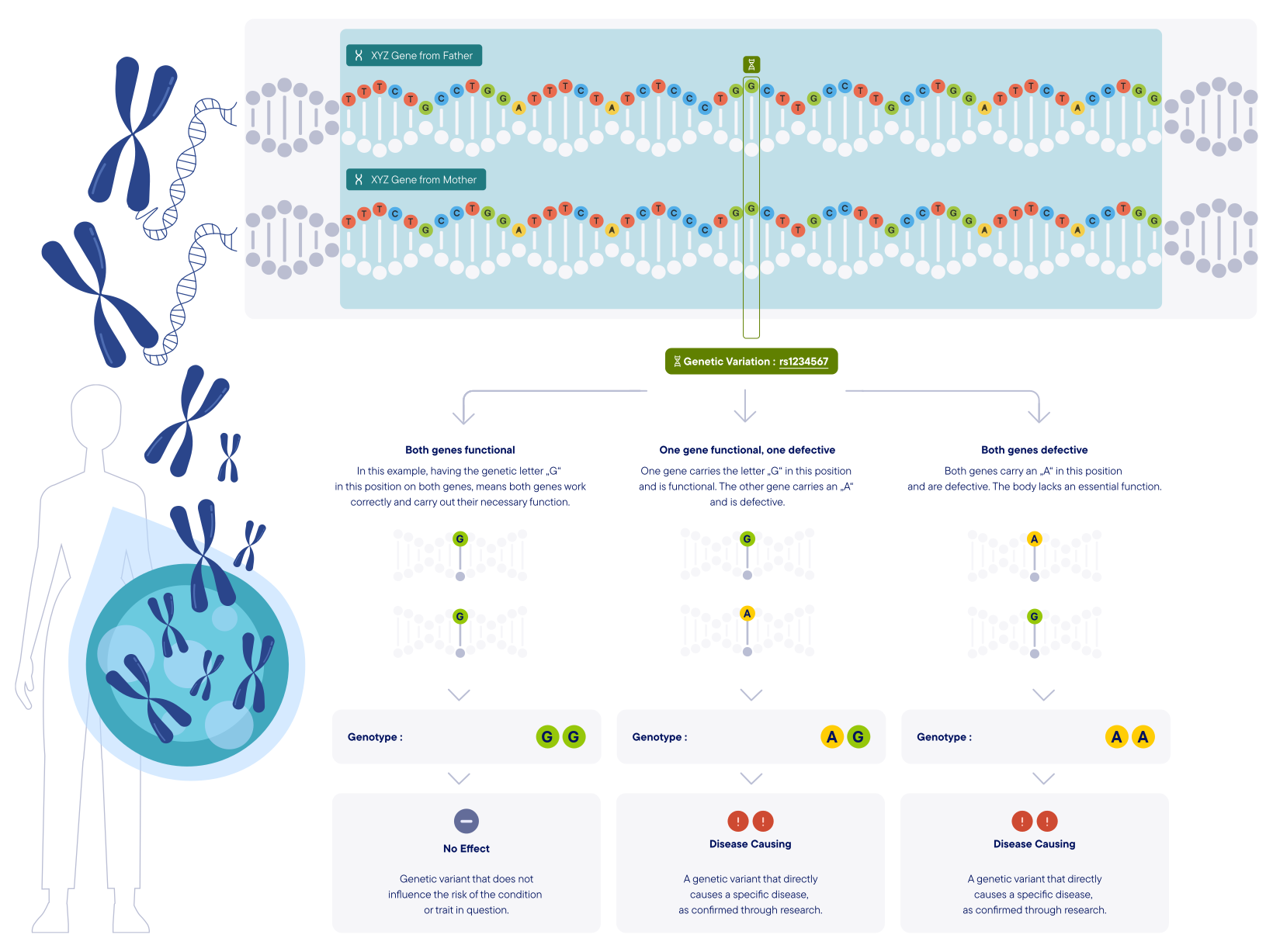
Humans have more than 20,000 genes, each carrying out one or a few specific functions in the body. One gene instructs the body to digest lactose from milk, another tells the body how to build strong bones and another prevents the body's cells from beginning to multiply uncontrollably and developing into cancer. As all of these genes combined are the building instructions for our body, a defect in one of these genes can have severe health consequences.
Through decades of genetic research, we know the genetic code of any healthy/functional human gene. We have also identified that in certain positions on a gene, some individuals may have a different genetic letter from the one you have. We call these hotspots "Genetic Variations" or "Variants" in short. In many cases, studies have been able to show that having the genetic letter "G" in the position makes you healthy, but having the letter "A" in the same position disrupts the gene function and causes a disease. Genopedia allows you to view these variants in genes and summarizes all that we know from scientific research, which genetic letters (Genotype) have good or bad consequences on your health or on your traits.
History
Throughout history, people have described children who developed more slowly, spoke later than expected, or needed extra support in school. Families and communities once noticed patterns, recalling cousins or siblings with similar learning and speech differences. Before modern testing, these stories were often the only clues that a shared underlying cause might exist.
In recent decades, knowledge has built on a long tradition of observation. Doctors first grouped these patterns by what they could see and measure: speech delay, learning differences, sometimes seizures, sometimes attention or behavioral challenges. The specific genetic change behind 14q11.2 microdeletion syndrome became clear only after chromosome studies grew more detailed. As lab tools improved—from early karyotypes to microarrays and then high‑resolution sequencing—researchers could spot very small missing pieces of chromosome 14 that earlier methods would have missed.
Initially understood only through symptoms, later studies connected those symptoms to a consistent missing segment at 14q11.2. As more people were tested, it became clear that the syndrome can look quite different from one person to another. Some children had mild language delay and did well with therapy. Others had broader developmental differences, low muscle tone, or occasional seizures. This range helped explain why 14q11.2 microdeletion syndrome was probably underdiagnosed in the past.
With each decade, clinicians refined what to look for. Speech and language delay emerged as a common early sign. Growth and facial features, once used heavily to classify conditions, were recognized as variable and not always helpful on their own. Genetic testing moved from confirmatory to central, allowing doctors to name the condition earlier and connect families with targeted supports.
Advances in genetics also reshaped counseling. Early on, many thought these deletions were usually inherited. More recent studies show that many 14q11.2 microdeletions happen for the first time in a child, while a smaller number are passed down. This distinction matters for family planning and for understanding recurrence risk. It also highlighted that parents may not share the same features as their child, even if they carry the same change.
From early theories to modern research, the story of 14q11.2 microdeletion syndrome reflects a broader shift in medicine: moving from pattern‑spotting at the bedside to pinpointing precise genetic causes in the lab. Knowing the condition’s history helps explain why someone today might receive a clear diagnosis for challenges that, a generation ago, were described only in general terms. As testing becomes more accessible, more people with 14q11.2 microdeletion syndrome are identified, and their lived experiences continue to shape care, research priorities, and practical guidance for families.