
13q12.3 microdeletion syndrome is a rare genetic condition caused by a small missing piece of chromosome 13. People with 13q12.3 microdeletion syndrome often have developmental delay, speech and learning differences, and sometimes feeding or growth concerns. Some may have low muscle tone, distinctive facial features seen by clinicians, or seizures, but not everyone does. Signs usually appear in infancy or early childhood and the condition is lifelong, though progress with therapies is common. Treatment focuses on supportive care such as early intervention, speech and physical therapy, seizure management if needed, and routine follow-up, and the outlook varies by severity.
Overview
13q12.3 microdeletion syndromeSymptoms
13q12.3 microdeletion syndrome is usually noticed in infancy or early childhood with developmental delay (often speech), low muscle tone, and feeding difficulties. Other features may include learning differences, mild facial traits, and occasional hearing or vision issues; severity varies.
Outlook and prognosis
Most people with 13q12.3 microdeletion syndrome grow and learn at their own pace, with progress that can continue through childhood and into adulthood. Developmental and speech supports, hearing care, and therapies often make a clear difference. Long-term health varies, so regular follow-up helps anticipate needs.
Causes and risk factors
13q12.3 microdeletion syndrome stems from a missing segment on chromosome 13. Most cases are de novo; some are inherited from a parent carrying the deletion. Risk factors for 13q12.3 microdeletion syndrome center on parental carriage; environmental triggers aren’t proven.
Genetic influences
Genetics are central to 13q12.3 microdeletion syndrome; the condition results from a missing segment on chromosome 13. The specific genes lost and deletion size shape severity and features. Most cases are de novo, though parental testing helps clarify recurrence risk.
Diagnosis
13q12.3 microdeletion syndrome is usually suspected from clinical features—such as developmental delays and distinctive facial traits—and history. Genetic diagnosis of 13q12.3 microdeletion syndrome is confirmed by chromosomal microarray or targeted genetic testing. Prenatal ultrasound or fetal testing may identify it.
Treatment and drugs
Treatment for 13q12.3 microdeletion syndrome focuses on each person’s needs. Care often includes early therapies for speech, movement, and learning, plus hearing and eye care, seizure management if needed, and regular growth and development checks. A coordinated team helps adjust support over time.
Symptoms
Families often first notice slower-than-expected milestones or feeding challenges in infancy. These early features of 13q12.3 microdeletion syndrome can include low muscle tone, delays in speech and learning, and sometimes differences in growth or facial appearance. Features vary from person to person and can change over time. Some people also have medical issues, such as hearing, vision, or heart differences, which a clinician may find on exam or testing.
Milestones like rolling, sitting, or walking may come later than expected. This is common in 13q12.3 microdeletion syndrome. Early support can help build skills over time.
First words may be late and speech can be hard to understand. This is a frequent feature in 13q12.3 microdeletion syndrome. Many benefit from speech therapy and visual supports.
Babies may feel floppy and tire during feeding. Low tone can affect balance and stamina as children grow. It is a typical feature in 13q12.3 microdeletion syndrome.
Fine motor tasks like using utensils or buttons can be tricky. Gross motor skills such as running or jumping may take more practice.
How people usually first notice 13q12.3 microdeletion syndrome?
Many families first notice 13q12.3 microdeletion syndrome in infancy or early childhood when a baby feeds poorly, grows more slowly than expected, or reaches milestones like sitting and walking later than peers. Doctors are often alerted by low muscle tone, distinctive facial features, or hearing concerns at early check-ups, and may find congenital differences such as heart or kidney anomalies. Genetic testing—prompted by these early clues—confirms the diagnosis, explaining the first signs of 13q12.3 microdeletion syndrome.
Types of 13q12.3 microdeletion syndrome
13q12.3 microdeletion syndrome is a genetic condition caused by a small missing segment on the long arm of chromosome 13. Different people can have slightly different breakpoints and sizes of the missing piece, which leads to variability in symptoms and developmental needs. Clinicians often describe them in these categories: recurrent core region losses versus larger or more complex losses that extend beyond the core. When people search for types of 13q12.3 microdeletion syndrome, they’re usually asking about these variants and what they mean for everyday function.
Recurrent core deletion
The missing segment is limited to a commonly affected stretch within 13q12.3. People with this variant often share features like developmental delay, speech or language challenges, and mild differences in growth. Other health issues may be fewer because nearby genes are preserved.
Extended 13q12.3 deletion
The deletion reaches beyond the core region into neighboring genes. Symptoms may be broader, with more noticeable learning differences and occasionally additional medical needs. Severity can vary depending on exactly which genes are also missing.
Complex adjacent deletions
The 13q12.3 loss occurs with additional small deletions or duplications nearby. People may notice different sets of symptoms depending on their situation. Care teams often tailor monitoring because the combined changes can influence growth, development, and organ-related features.
Mosaic 13q12.3 deletion
Only some cells carry the deletion while others are typical. Features may be milder or more uneven across developmental areas, sometimes delaying diagnosis. How many cells are affected and in which tissues can shape day-to-day impact.
What genetics can tell you about symptoms
Small deletions on chromosome 13q12.3 can disrupt nearby genes that guide brain development and hearing, leading to developmental delays, speech challenges, and hearing loss. Some also show distinctive facial features, feeding difficulties, or low muscle tone because deleted genes act like dimmer switches for growth.
Causes and risk factors
13q12.3 microdeletion syndrome happens when a small piece of chromosome 13 at q12.3 is missing from birth. The deletion often arises as a new change, but it can also be inherited from a parent who carries it. Risk factors for 13q12.3 microdeletion syndrome include having a parent with the deletion, and in rare cases a parent with a related chromosome change. If a parent has the deletion, each pregnancy has about a 50% chance of passing it on. Genes set the stage, but environment and lifestyle often decide how the story unfolds.
Environmental and biological risk factors
When people first hear about 13q12.3 microdeletion syndrome, a common question is why it happens and whether anything in daily life raises the chance. Most cases start before birth due to changes that arise in the egg, sperm, or very early embryo. Doctors often group risks into internal (biological) and external (environmental). At this time, environmental risk factors for 13q12.3 microdeletion syndrome are not well defined.
Most cases of 13q12.3 microdeletion syndrome happen as a one-time change when the egg or sperm forms, or shortly after fertilization. This reflects a rare copying slip in chromosomes rather than anything parents did.
As eggs and sperm get older, the chance of new chromosome changes can rise slightly. For this microdeletion, any age-related effect appears small and not consistently shown.
In the first days after conception, chromosomes are copied many times and rare slips can remove a small segment. If the missing piece is at 13q12.3, the microdeletion can result.
Some DNA regions are structurally more prone to break or misalign when reproductive cells are made. This built-in vulnerability can increase the chance of a microdeletion forming in those spots.
Genetic risk factors
The genetic picture helps explain why 13q12.3 microdeletion syndrome may appear with no family history in one child, yet recur when a parent carries the change. Most cases arise de novo (a new change in the egg, sperm, or early embryo), while some are inherited from a parent with the same missing segment or a balanced rearrangement. People with the same risk factor can have very different experiences, so results don’t forecast the early symptoms of 13q12.3 microdeletion syndrome with precision. Finding whether the change is new or inherited is key to understanding recurrence risk in future pregnancies.

Chromosome 13 deletion: 13q12.3 microdeletion syndrome results from a small missing segment on the long arm of chromosome 13. Losing one copy of several genes in this region can disrupt typical development.
De novo change: In many families, the deletion happens for the first time in the child during the formation of egg or sperm, or soon after conception. Parents usually have normal chromosome tests when this is the cause.
Inherited deletion: Sometimes a parent carries the same 13q12.3 microdeletion, with features that may be mild or different. Each pregnancy then has a 50% chance of inheriting the deletion.
Balanced rearrangement: A parent can have a balanced swap or flip of chromosome pieces that includes 13q, with all the right genetic material but in a different order. This raises the chance of an unbalanced outcome, such as 13q12.3 microdeletion syndrome, in a child.
Germline mosaicism: Rarely, a parent who tests negative in blood can still have a small number of egg or sperm cells carrying the deletion. This low-level mosaicism creates a small, but not zero, recurrence risk.
Variable expression: People with the same 13q12.3 change can show a wide range of learning, growth, or health differences. The lab report cannot predict how the condition will look for an individual.
Deletion size: The exact size and boundaries of the 13q12.3 deletion vary between families. Which genes are missing can influence the features and medical needs seen in 13q12.3 microdeletion syndrome.
Lifestyle risk factors
13q12.3 microdeletion syndrome is a genetic condition; lifestyle habits do not cause it, but they can influence symptoms, development, and complications over time. Understanding how lifestyle affects 13q12.3 microdeletion syndrome can guide daily choices that support growth, learning, mobility, and overall health. The elements below focus on practical habits that may modify outcomes in day-to-day life.
Calorie-appropriate, nutrient-dense meals can support growth when feeding is slow or effortful. Adequate protein, calcium, and vitamin D help maintain muscle and bone strength that may be reduced by hypotonia.
Upright positioning, paced bites, and texture adjustments can lower choking and aspiration risk in children with oral-motor incoordination. Post-meal upright time may reduce reflux that can worsen discomfort, sleep, or respiratory symptoms.
Daily, therapist-guided movement builds strength and coordination, improving motor milestones and endurance. Weight-bearing play supports bone density and reduces joint stiffness or contractures.
Consistent home exercises from physical, occupational, and speech therapy reinforce gains made in clinic. Short, frequent practice sessions can sustain progress in motor skills, self-care, and communication.
Risk prevention
13q12.3 microdeletion syndrome is a genetic condition, so you cannot prevent the deletion itself, but you can lower the chance of complications and support healthy development. Even if you can’t remove all risks, prevention can reduce their impact. Planning before pregnancy and checking early symptoms of 13q12.3 microdeletion syndrome can help families make informed choices. Ongoing monitoring, vaccines, and early therapies often make day-to-day life smoother.
Meet with a genetics professional before pregnancy or early in pregnancy to review inheritance and personal family history. They can explain recurrence risk, testing choices, and what results might mean.
Options like chorionic villus sampling or amniocentesis can diagnose the deletion during pregnancy. Noninvasive blood screening can flag higher risk but cannot confirm the diagnosis.
After birth, a thorough exam and genetics review help map out care for 13q12.3 microdeletion syndrome. Early referrals set up the right specialists and therapies from the start.
Speech, physical, and occupational therapy can support feeding, movement, and communication. Starting these services early may improve developmental skills over time.

Transmission
13q12.3 microdeletion syndrome is a genetic condition and isn’t contagious—you can’t catch it or pass it by everyday contact. It happens when a small segment of chromosome 13 is missing; in many families this occurs as a new change in the egg or sperm, with no prior family history. If a parent carries the same microdeletion, each pregnancy has a 50% (1 in 2) chance of inheriting it. When neither parent has the deletion on a blood test, the chance of it happening again is usually low, though a small risk remains because a parent’s egg or sperm cells can rarely carry the change. A genetic counselor can explain how 13q12.3 microdeletion syndrome is inherited and discuss testing options for parents, future pregnancies, and relatives.
When to test your genes
Consider genetic testing if you or your child has developmental delay, speech issues, congenital anomalies, or dysmorphic features that suggest a chromosome change like 13q12.3 microdeletion syndrome. Testing is also reasonable with a known family history or when prenatal screening flags concerns. Results can guide early therapies, monitor associated health risks, and inform family planning.
Diagnosis
Diagnosis usually starts when developmental differences or health concerns prompt a closer look, then moves toward genetic testing to confirm the cause. Many people feel relief just knowing what’s really going on. For 13q12.3 microdeletion syndrome, clinicians piece together the pattern of features and use lab-based genetic tests to find the missing DNA segment. Early findings can guide care plans, therapy referrals, and family planning discussions.
A genetics-informed exam looks at growth, development, learning, and any physical findings that may suggest a chromosome microdeletion. Family history and a review of pregnancy and birth details help point testing in the right direction.
This is the first-line test to detect small missing pieces of DNA across the genome. It can identify a deletion at 13q12.3 and is the primary test for the genetic diagnosis of 13q12.3 microdeletion syndrome.
Labs may use methods such as FISH or MLPA to confirm the deletion and better define its boundaries. This helps verify results from microarray and can be useful for testing relatives.
A standard chromosome picture (karyotype) may appear normal because the missing segment is too small to see at that resolution. It can still be useful if a larger rearrangement is suspected.
Stages of 13q12.3 microdeletion syndrome
13q12.3 microdeletion syndrome does not have defined progression stages. It tends to be present from birth or early childhood and varies widely, so changes over time reflect growth and the support a child receives rather than a step-by-step worsening. Diagnosis usually starts when early symptoms of 13q12.3 microdeletion syndrome—such as speech or developmental delays—are noticed, and is confirmed with genetic testing like a chromosome microarray. Different tests may be suggested to help monitor hearing, vision, the heart, and learning skills so care can be tailored as needs change.
Outlook and prognosis
Many people ask, “What does this mean for my future?”, and the answer varies with the size of the 13q12.3 microdeletion and which genes are affected. In childhood, growth and developmental delays are common, and early symptoms of 13q12.3 microdeletion syndrome can include feeding difficulties, low muscle tone, and delayed speech. With therapy, many children gain new skills over time, though learning needs often continue into school years. Seizures, if present, can sometimes be managed with medication, and heart or kidney differences—when they occur—usually need specialist follow-up.
In medical terms, the long-term outlook is often shaped by both genetics and lifestyle. Most people with 13q12.3 microdeletion syndrome have a stable, non‑progressive developmental condition rather than a degenerative one. Life expectancy is usually near typical unless there are major medical complications such as uncontrolled epilepsy, serious heart defects, or frequent lung infections; when these are present, risk can be higher and depends on how well they’re treated. Adults may continue to need support for learning, communication, or daily living, but many develop predictable routines and participate in community activities.
Early care can make a real difference, including physical, occupational, and speech therapy, treatment of seizures if they occur, and regular checks of hearing, vision, heart, and growth. Genetic testing can sometimes provide more insight into prognosis, especially if the report pinpoints key genes involved. Talk with your doctor about what your personal outlook might look like, including what to monitor over time and which supports can help you or your child thrive.
Long-term effects
For 13q12.3 microdeletion syndrome, the long-term picture usually involves lifelong developmental and health features that can range from mild to more pronounced. Long-term effects vary widely and can differ even among people with the same microdeletion. Features often change with age—early delays in infancy may shift into school learning needs and, later, adult independence considerations. Many families look for early symptoms of 13q12.3 microdeletion syndrome, and these often show up as feeding and developmental delays in the first year.
Many have ongoing learning differences that range from mild to moderate. Support needs may change from early childhood through adulthood.
Speech and language delays are common, sometimes with trouble planning mouth movements for words. Communication often improves over time, but some differences can persist.
Low muscle tone and clumsiness can affect sitting, walking, or fine hand skills. Coordination usually improves with practice and growth, though some challenges may remain.
Early feeding difficulty and slow weight gain can occur in infancy. Over time, growth may track on the lower side of the curve but is often steady.
How is it to live with 13q12.3 microdeletion syndrome?
Living with 13q12.3 microdeletion syndrome often means navigating developmental differences from early childhood, such as delayed speech, learning challenges, and sometimes low muscle tone that can affect coordination and daily tasks. Many families build structured routines and use therapies—speech, occupational, and physical—to support communication, independence, and school participation, adjusting goals as strengths emerge. Healthcare visits may be more frequent to monitor growth, behavior, and any associated medical features, which can add logistics and stress but also provide a roadmap for support. For those around the person, patience, clear communication, and celebrating small gains make a real difference, and connecting with therapists, educators, and peer families can lighten the load and expand opportunities.
Treatment and drugs
Treatment for 13q12.3 microdeletion syndrome focuses on managing symptoms and supporting development, since there’s no single medicine that “fixes” the chromosome change. Care is usually coordinated by a pediatrician or neurologist and may include early intervention therapies such as speech and language therapy, physical and occupational therapy, educational supports, and behavioral strategies for learning or attention differences. Specific issues are treated as they arise: seizures may be managed with anti‑seizure medicines, feeding or growth concerns with nutrition support, sleep problems with routines and, if needed, medication, and any heart, vision, or hearing findings with the appropriate specialists. Genetic counseling can help families understand the condition, discuss recurrence risk, and plan testing for relatives when appropriate. Treatment plans often combine several approaches, and follow-up over time helps adjust care as needs change.
Non-drug treatment
Living with 13q12.3 microdeletion syndrome often means juggling therapies that support movement, communication, feeding, and learning in day-to-day life. Non-drug treatments often lay the foundation for progress, helping children build skills while easing stress for families. Starting services early—especially when early symptoms of 13q12.3 microdeletion syndrome appear—can make it easier to catch delays and tailor support. Plans usually blend several therapies and adjust over time as needs change.
Coordinated services in the first years target movement, speech, and learning. Starting early can boost skill-building when the brain is most adaptable. Many children with 13q12.3 microdeletion syndrome benefit from a team approach.
Strength, balance, and coordination work can improve sitting, standing, and walking. Therapists also teach safe ways to move and play. Home exercises help progress carry over between visits.
Fine-motor and self-care skills are practiced step by step. Adaptive tools can make dressing, feeding, and writing easier. Sensory strategies can help with focus and comfort.
Therapy builds understanding, sounds, and words over time. Augmentative and alternative communication—like picture boards or speech-generating devices—can give a voice while speech develops. This is often key for children with 13q12.3 microdeletion syndrome.
Your genes may have an impact on how drugs work for you
Medications for 13q12.3 microdeletion syndrome can work differently from one person to another because gene changes may alter how the body processes drugs or how brain and heart pathways respond. Pharmacogenetic testing and careful dose adjustments help clinicians choose safer, more effective options.
Pharmacological treatments
Medicine for 13q12.3 microdeletion syndrome focuses on specific symptoms, since there’s no single drug that treats the chromosome change itself. Care plans often include seizure control, help with attention or behavior, sleep support, and managing stomach or feeding problems. Not everyone responds to the same medication in the same way. Early symptoms of 13q12.3 microdeletion syndrome can include seizures, sleep troubles, or feeding issues, and treatment usually adjusts as needs change over time.
Levetiracetam, valproate, or oxcarbazepine are commonly used to reduce seizure frequency. Dosing may be increased or lowered gradually to balance seizure control with side effects. Your neurologist will tailor choices to seizure type and age.
Methylphenidate or lisdexamfetamine may improve focus and reduce hyperactivity. Nonstimulants like atomoxetine or guanfacine are options if stimulants aren’t a good fit. First-line medications are those doctors usually try first, based on safety and effectiveness.
Risperidone or aripiprazole can help when irritability severely affects daily life, including in children with autism features. Doctors monitor weight, appetite, and movement side effects closely. Ask your doctor why a specific drug was recommended for you.
SSRIs such as fluoxetine or sertraline may ease anxiety, repetitive worries, or low mood. Side effects, if they occur, can often be reduced by starting low and adjusting slowly. Regular check-ins help track benefits and sleep or appetite changes.
Genetic influences
In 13q12.3 microdeletion syndrome, a small segment of chromosome 13 is missing, leaving only one working copy of several genes. Losing that stretch can affect how the brain and other organs develop, which helps explain the mix of developmental and medical features seen in this condition. The exact size of the missing piece and which genes it includes can vary, so symptoms and severity differ widely, even within the same family. DNA testing can sometimes identify these changes, usually with a chromosomal microarray or similar genome-wide test. Most cases arise as a new change at conception (de novo), but some are inherited from a parent with the same deletion; if a parent carries it, each child has a 50% chance of inheriting it. When the deletion is de novo, the chance of it happening again is low, though a small chance remains because some parents may carry the change in a portion of their egg or sperm cells; testing can confirm the deletion but cannot predict the exact severity or early symptoms of 13q12.3 microdeletion syndrome.
Is 13q12.3 microdeletion syndrome genetic?
Genetics are central to 13q12.3 microdeletion syndrome; the condition results from a missing segment on chromosome 13. The specific genes lost and deletion size shape severity and features. Most cases are de novo, though parental testing helps clarify recurrence risk.
Pharmacogenetics—how genetics influence drug effects
In 13q12.3 microdeletion syndrome, medicine plans are highly individualized because features like growth, muscle tone, and feeding or developmental needs can change how a drug feels in the body and how well it works. Genetic testing can sometimes identify how your body processes certain medicines, which may guide dosing or drug choice for antidepressants, some seizure treatments, and pain relievers. The microdeletion itself usually doesn’t control the liver enzymes that break down most drugs, so standard pharmacogenetic results (such as CYP2D6 or CYP2C19) generally apply in the usual way. Doctors often start at low doses and increase slowly, with close checks for side effects such as extra sleepiness, behavior changes, stomach upset, or poor feeding. If 13q12.3 microdeletion syndrome involves heart, kidney, or hearing differences, your team may avoid specific medicines or choose safer alternatives and formulations, with extra monitoring as needed. Sharing past reactions and keeping all prescribers informed helps tailor care over time, and a pharmacist familiar with pharmacogenetics can help weave genetic results into day‑to‑day treatment choices.
Interactions with other conditions
People with 13q12.3 microdeletion syndrome often have other diagnoses alongside it, including epilepsy, autistic features, attention challenges, or feeding and growth issues, and these can affect daily function more than any single condition alone. Doctors call it a “comorbidity” when two conditions occur together. Hearing loss or frequent ear infections can make speech delays more pronounced, while vision problems may further slow motor skills and learning; this overlap is one reason early symptoms of 13q12.3 microdeletion syndrome can look like other developmental conditions at first. Low muscle tone and coordination difficulties can compound reflux, constipation, or swallowing problems, which may reduce energy and engagement in therapies. Seizures, sleep problems, and the medicines used to treat them can influence attention, mood, and behavior, sometimes amplifying school and therapy hurdles. Interactions vary widely, so coordinated care across genetics, neurology, developmental pediatrics, gastroenterology, ENT/audiology, and therapy services helps tailor support as needs change over time.
How genes can cause diseases
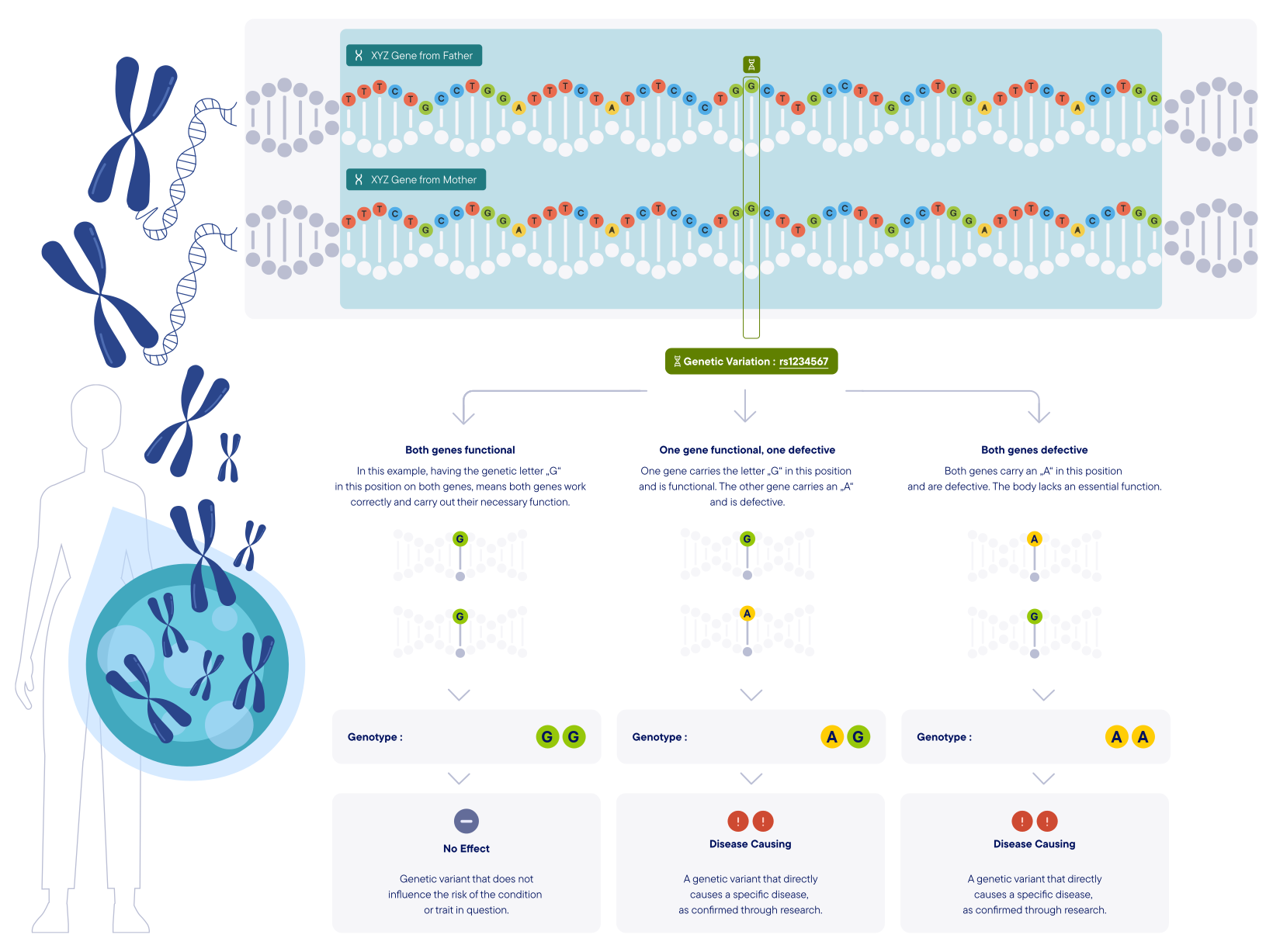
Humans have more than 20,000 genes, each carrying out one or a few specific functions in the body. One gene instructs the body to digest lactose from milk, another tells the body how to build strong bones and another prevents the body's cells from beginning to multiply uncontrollably and developing into cancer. As all of these genes combined are the building instructions for our body, a defect in one of these genes can have severe health consequences.
Through decades of genetic research, we know the genetic code of any healthy/functional human gene. We have also identified that in certain positions on a gene, some individuals may have a different genetic letter from the one you have. We call these hotspots "Genetic Variations" or "Variants" in short. In many cases, studies have been able to show that having the genetic letter "G" in the position makes you healthy, but having the letter "A" in the same position disrupts the gene function and causes a disease. Genopedia allows you to view these variants in genes and summarizes all that we know from scientific research, which genetic letters (Genotype) have good or bad consequences on your health or on your traits.
History
Families and communities once noticed patterns that seemed to run through certain branches: a baby who fed slowly like an older cousin had, a child who learned to speak later than classmates, a teenager a bit shorter than peers. Before genetic testing, these shared traits were often explained by temperament or chance. Doctors could describe what they saw, but they couldn’t point to a single cause when the changes were subtle and varied from person to person.
From early written records to modern studies, clinicians grouped children with delays, distinctive facial features, or growth differences into broad categories. Some fit neatly into known syndromes; many did not. That uncertainty reflected the limits of the time. Without a way to “zoom in” on the chromosomes, tiny missing pieces went unnoticed. A child with mild features might be labeled nonspecific developmental delay, while a sibling with more medical needs might receive a different label, even though the underlying reason was shared.
Advances in genetics changed that picture. With chromosome microarray testing in the late 1990s and 2000s, scientists began detecting very small missing segments—microdeletions—that earlier tools could not see. As more people were tested, clusters of findings emerged along specific chromosome regions. 13q12.3 microdeletion syndrome was first recognized in this wave of discovery, when researchers linked a missing stretch on the long arm of chromosome 13 to a recurring set of features across unrelated families.
Initially understood only through symptoms, later the condition became defined by the exact spot on the chromosome that was missing. Reports from different countries collected detailed photos, growth charts, and developmental histories. Some people with a 13q12.3 microdeletion had feeding trouble in infancy, some had speech delay, others had mild learning differences without medical complications. This variability helped explain why the syndrome had been overlooked in the past.
With each decade, the description became sharper. Gene-level analysis allowed teams to map which genes within 13q12.3 were lost in each person and to compare their health histories. That work clarified a theme seen in many microdeletions: when a chromosomal change acts more like a dimmer switch than an on‑off switch, the outward features can range from subtle to more noticeable. Not every early description was complete, yet together they built the foundation of today’s knowledge.
Today, the history of 13q12.3 microdeletion syndrome reflects a broader shift in medicine—from naming conditions by how they look to defining them by their genetic cause. Knowing the condition’s history can help families understand why two relatives with the same microdeletion may have different needs, and why genetic testing has become such a useful tool for connecting the dots across generations.