
12q15q21.1 microdeletion syndrome is a rare genetic condition caused by a small missing piece of chromosome 12. People with 12q15q21.1 microdeletion syndrome often have developmental delays, learning differences, and differences in speech, growth, or muscle tone. Some may have distinctive facial features or congenital differences that doctors see on exam or imaging. Signs usually begin in infancy or early childhood and tend to be lifelong, but not everyone will have the same experience. Care focuses on supportive therapies, such as speech, physical, and occupational therapy, and management of specific features, and most children can make progress with early intervention.
Overview
12q15q21.1 microdeletion syndromeSymptoms
12q15q21.1 microdeletion syndrome features vary, but often include developmental and speech delay, learning difficulties, low muscle tone, and feeding problems in infancy. Some have short stature, distinctive facial features, congenital heart or kidney differences.
Outlook and prognosis
Many people with 12q15q21.1 microdeletion syndrome grow and learn at their own pace, often needing ongoing therapies and educational supports. Health concerns can include developmental delay, speech and learning differences, and sometimes congenital anomalies. With early intervention and coordinated care, skills and independence usually improve over time.
Causes and risk factors
12q15q21.1 microdeletion syndrome results from a missing segment on chromosome 12, usually a de novo change. Risk factors for 12q15q21.1 microdeletion syndrome are genetic: a parent with the same deletion or a balanced rearrangement. No proven environmental or lifestyle risks.
Genetic influences
Genetics is central in 12q15q21.1 microdeletion syndrome because the condition results from a missing segment on chromosome 12. Which genes are lost—and how large the deletion is—often shapes symptoms and severity. Most cases are de novo, though parental testing can clarify recurrence risk.
Diagnosis
Doctors suspect 12q15q21.1 microdeletion syndrome based on developmental, growth, and congenital features. The genetic diagnosis of 12q15q21.1 microdeletion syndrome is confirmed with chromosomal microarray; FISH or genome/exome testing may help. Imaging and specialist exams document associated findings.
Treatment and drugs
Care for 12q15q21.1 microdeletion syndrome focuses on your child’s specific needs, often through a team approach. Plans may include early therapies (speech, physical, occupational), learning support, hearing or vision care, and monitoring growth and development. Specialists may address heart, kidney, or skeletal differences, and medications can help with seizures, attention, sleep, or mood when needed.
Symptoms
12q15q21.1 microdeletion syndrome is a rare genetic difference present from birth, with a range of features that can touch development, growth, learning, and body systems. Early features of 12q15q21.1 microdeletion syndrome may include feeding challenges, low muscle tone, and slower motor or speech milestones. Features vary from person to person and can change over time. Care and therapies are tailored to individual needs and strengths.
Many reach sitting, crawling, or walking later than peers. Loved ones often notice the changes first. Early therapy can help build skills over time.
Babbling, first words, and sentence-building may come later than expected. Some children find it hard to pronounce words clearly or understand complex directions. Speech therapy can support communication.
Babies can feel floppy and may tire quickly when holding up the head or feeding. This can affect balance and coordination as they grow. Physical and occupational therapy often help.
Latching, sucking, or coordinating swallowing can be hard in infancy. Some have reflux or gain weight more slowly. A feeding specialist can tailor strategies for 12q15q21.1 microdeletion syndrome.
How people usually first notice 12q15q21.1 microdeletion syndrome?
Families often first notice 12q15q21.1 microdeletion syndrome when a baby has feeding difficulties, poor weight gain, or low muscle tone that makes the body feel floppy, sometimes alongside a smaller head size than expected. As months go by, many see delays in sitting, crawling, or talking, and doctors may note subtle facial differences or congenital features such as heart, kidney, or skeletal findings during early check-ups. In practice, the first signs of 12q15q21.1 microdeletion syndrome are often pieced together through developmental concerns plus clinical features, then confirmed by chromosomal microarray testing.
Types of 12q15q21.1 microdeletion syndrome
People with 12q15q21.1 microdeletion syndrome can have a range of features that affect growth, learning, and development day to day, and the mix can look different from one person to the next. This is a genetic/congenital condition, and differences often reflect the exact size of the deleted segment and which genes are missing. Clinicians often describe them in these categories: by deletion size and key genes involved, which helps explain why symptoms vary in severity. If you’re looking up types of 12q15q21.1 microdeletion syndrome, you’ll mostly find them grouped by which critical genes are included in the deletion rather than by separate named syndromes.
Small, gene-sparse
These are smaller deletions that remove fewer genes in the 12q15–q21.1 region. People often have milder developmental differences and subtler growth or facial features. Learning support may still be needed, but medical complications are less common.
Medium, key-gene
These deletions include one or more dosage-sensitive genes thought to drive most features. People may have clearer delays in speech and motor skills, short stature, and distinctive but mild facial features. Health checks may focus on heart, vision, or skeletal differences depending on the genes involved.
Large, extended
These broader deletions span beyond 12q15 into 12q21.1 and sometimes neighboring bands. Many living with this variant may have more noticeable developmental delays and a higher chance of organ or skeletal involvement. Care usually involves a coordinated team to monitor growth, learning, and any medical issues.
Mosaic deletion
Only a portion of the body’s cells carry the deletion, while others are typical. Features can be milder or more uneven, sometimes leading to later recognition. The balance of symptoms can shift over time.
Familial pattern
The same deletion can be inherited from a parent who may have very mild or no obvious features. Children can still show more pronounced learning or growth differences due to variable expression. Genetic counseling helps clarify recurrence risk and testing options for relatives.
What genetics can tell you about symptoms
Some people with 12q15q21.1 microdeletion syndrome have developmental delay, learning differences, and speech delay, often because missing genes in this region can lower the “volume” of brain-development signals. Others may have short stature, distinctive facial features, or congenital anomalies tied to which genes are deleted.
Causes and risk factors
The root cause is a small missing piece on chromosome 12 between q15 and q21.1. Some risks are modifiable (things you can change), others are non-modifiable (things you can’t). 12q15q21.1 microdeletion syndrome usually arises as a new change in the egg or sperm, but it can be inherited from a parent with the same deletion or a balanced translocation. A parent with the deletion or a balanced translocation raises recurrence risk, and most other families face a low chance. Environment and lifestyle do not cause the deletion or the early symptoms of 12q15q21.1 microdeletion syndrome, but access to care, nutrition, sleep, and therapy can shape long-term outcomes.
Environmental and biological risk factors
Environmental and biological risk factors for 12q15q21.1 microdeletion syndrome are limited and mostly relate to how cells form eggs, sperm, and early embryos. Most cases begin before birth when a small section of chromosome 12 is lost during these early steps. Being exposed to risks in your body or environment doesn’t mean illness is inevitable.
A spontaneous mistake while making an egg, sperm, or early embryo can remove the 12q15q21.1 region. This can result in 12q15q21.1 microdeletion syndrome. It usually happens by chance.
Certain look-alike DNA stretches can misalign during cell division, making a small deletion more likely. This built-in structure can raise the chance of 12q15q21.1 microdeletion syndrome without any external trigger.
Older paternal age has been linked in some research to a small rise in new chromosomal changes. Any increase in risk appears modest and not specific to 12q15q21.1 microdeletion syndrome. Babies with this condition are born to parents of many ages.
No specific environmental exposures have been proven to cause 12q15q21.1 microdeletion syndrome. Everyday background exposures do not appear to change the risk.
Genetic risk factors
12q15q21.1 microdeletion syndrome stems from a small missing segment on the long arm of chromosome 12; who carries it, and how big the missing piece is, shapes how it shows up. This change often happens for the first time in a child, but it can also be inherited or arise from a parent with a balanced chromosome change. Risk is not destiny—it varies widely between individuals. Understanding the genetic cause can also clarify why early symptoms of 12q15q21.1 microdeletion syndrome differ from child to child and help guide family planning.

New deletion: In many families, the missing DNA segment arises as a new (de novo) change in the egg or sperm or just after conception. When truly new, the chance of it happening again in a future pregnancy is usually low. Rarely, a hidden change in some of a parent’s reproductive cells can raise the recurrence risk.
Inherited deletion: Sometimes a parent also has 12q15q21.1 microdeletion syndrome and can pass the same deletion to a child. In that case, each pregnancy has a 50% chance of inheriting the deletion. Features can be milder or different in the parent than in the child.
Balanced rearrangement: A parent may carry a balanced translocation or inversion that includes the 12q15-q21.1 region, leaving them healthy but increasing the chance of a child with a deletion. Chromosome studies in parents can identify this and refine recurrence risk. This genetic pathway can explain why more than one sibling is affected.
Parental mosaicism: Very rarely, a parent has the deletion in a mosaic pattern, present in some cells but not others. Blood testing can look normal, yet eggs or sperm carry the change, slightly increasing the risk in future pregnancies. Testing more than one tissue may be considered when family history suggests this.
Variable deletion size: The exact start and end points of the deletion differ between people, changing which genes are missing. Larger deletions may involve more genes and wider effects, while smaller deletions can still have impact if key genes are lost. This helps explain why 12q15q21.1 microdeletion syndrome can look different across families.
Additional genetic changes: Some individuals also carry other small DNA changes elsewhere in the genome. These “second hits” can add to or modify the features already present. Genome-wide testing can help detect them and clarify the overall picture.
Child mosaicism: In a few cases, only a portion of the child’s cells carry the 12q15q21.1 deletion. Mosaicism can soften or alter the pattern of symptoms compared with a deletion present in all cells. This can make diagnosis and prognosis more variable.
Lifestyle risk factors
12q15q21.1 microdeletion syndrome is a genetic condition; lifestyle habits do not cause it, but they can influence symptom control, day-to-day function, and long-term health. Understanding how lifestyle affects 12q15q21.1 microdeletion syndrome can help tailor care to support growth, development, and comfort. Below are practical areas where habits may change outcomes, even though the underlying deletion remains the same.
A calorie- and protein-adequate diet can help address poor growth or low muscle mass sometimes seen with this syndrome. Regular meals and snacks can stabilize energy for therapy participation and learning.
Slow, upright, and texture-appropriate feeding can ease oral-motor discoordination and reduce choking or reflux. Involving a feeding therapist can improve safety and expand food variety.
Daily, play-based movement can strengthen low muscle tone and improve coordination. Activity also supports bone health and helps prevent excess weight gain in children with reduced mobility.
Home exercise programs that mirror PT goals help maintain joint range and postural control. Consistent practice can reduce contractures and support gross motor milestones.
Risk prevention
12q15q21.1 microdeletion syndrome is a genetic condition present from conception, so the condition itself usually can’t be prevented. Prevention focuses on reproductive planning for future pregnancies and on lowering the chances of complications for those living with the condition. Early, coordinated care helps catch treatable issues and support growth, learning, and quality of life. Knowing your risks can guide which preventive steps matter most.
A genetics professional can explain how 12q15q21.1 microdeletion syndrome happens and what the chance is in future pregnancies. They can outline testing choices for you and close relatives.
Chromosomal testing of parents (microarray and/or karyotype) can show if the deletion is new or part of a balanced rearrangement. Results refine recurrence risk and guide planning.
If there is a known familial deletion or increased risk, options include chorionic villus sampling or amniocentesis with chromosomal microarray. Targeted testing can check for the 12q15q21.1 deletion during pregnancy.
If a familial deletion is identified, in‑vitro fertilization with preimplantation genetic testing can select embryos without the deletion. This can reduce the chance of 12q15q21.1 microdeletion syndrome in a future child.

Transmission
12q15q21.1 microdeletion syndrome is a genetic condition, not an infection, so it cannot be caught or spread through casual contact. In most families, the missing piece of chromosome 12 happens for the first time in the child (a new, or de novo, change).
If a parent has the same microdeletion, it can be passed to children in a dominant way—each pregnancy has about a 50% chance of inheriting it. Because some parents have very mild features or none at all, testing the parents helps clarify how 12q15q21.1 microdeletion syndrome is inherited and the chance in future pregnancies. When neither parent has the deletion, the chance of it happening again is low, though a small risk remains due to possible egg or sperm mosaicism; a genetic counselor can discuss options such as prenatal or preimplantation testing.
When to test your genes
Consider genetic testing if a child shows developmental delays, learning challenges, growth restriction, or multiple congenital differences, or if prenatal imaging finds structural anomalies. Testing is also reasonable for adults with unexplained intellectual disability, dysmorphic features, or a family history suggestive of 12q15q21.1 microdeletion syndrome. Parents may test for reproductive planning.
Diagnosis
For many families, clues start with developmental delays, feeding issues, or features a pediatrician wants to check more closely. The genetic diagnosis of 12q15q21.1 microdeletion syndrome is usually confirmed with high‑resolution lab testing that looks for missing DNA in this region of chromosome 12. Genetic testing may be offered to clarify risk or guide treatment. Doctors also evaluate growth, learning, and any organ‑specific concerns to build the full picture.
Providers review pregnancy and birth history, growth, and developmental milestones. They look for patterns of facial or body features and any medical concerns that suggest a chromosomal change.
This is the first-line test to detect small missing pieces of DNA, including the 12q15q21.1 region. It provides a high‑resolution map of gains and losses across all chromosomes.
FISH or MLPA can confirm the exact deleted segment once a change is found on microarray. These tests are also useful for checking specific relatives for the same change.
Exome or genome testing that includes copy‑number analysis can find the deletion and any additional gene changes. This can be helpful if microarray is inconclusive or if multiple conditions are suspected.
Stages of 12q15q21.1 microdeletion syndrome
12q15q21.1 microdeletion syndrome does not have defined progression stages. Because it’s a chromosomal change present from birth, features vary widely and reflect individual development rather than a step-by-step worsening; care focuses on early symptoms of 12q15q21.1 microdeletion syndrome and how a child is growing, learning, and thriving over time. Different tests may be suggested to help confirm the diagnosis and understand individual needs, often including a physical exam, developmental assessments, and genetic testing such as chromosomal microarray.
Outlook and prognosis
Looking at the long-term picture can be helpful. For many people with 12q15q21.1 microdeletion syndrome, the outlook depends on which genes are missing and how those losses affect growth, learning, and organ development. Some children have mostly developmental and learning challenges and grow into adulthood with appropriate supports for school, communication, and daily living. Others may also have medical needs such as feeding difficulties, low muscle tone, or heart, kidney, or skeletal differences that call for ongoing specialist care.
Prognosis refers to how a condition tends to change or stabilize over time. In 12q15q21.1 microdeletion syndrome, early symptoms can include delayed speech, slower motor milestones, or challenges with attention, and these often improve with therapies like speech, physical, and occupational therapy. Many people find that symptoms shift as they mature—motor skills may catch up, while learning or behavioral supports remain important. Life span is generally influenced more by any associated organ problems than by the microdeletion itself; if major heart or kidney defects are absent or well managed, survival into adulthood is expected.
Everyone’s journey looks a little different. With coordinated care and early interventions, many people maintain good overall health, attend school with accommodations, and participate in family and community activities. Serious complications are most likely when there are significant congenital anomalies or poorly controlled seizures; in those situations, risks to health and mortality are higher and depend on the specific issues present. Talk with your doctor about what your personal outlook might look like, including how genetic test results, imaging, and developmental assessments can inform next steps and long-term planning.
Long-term effects
12q15q21.1 microdeletion syndrome is present from birth, and the long-term picture depends on which genes are missing and how large the deletion is. Many children make steady gains over time, though learning and communication differences often continue into adolescence and adulthood. Long-term effects vary widely, and some people have only mild challenges while others need ongoing support. Overall health can be good, especially when major organ differences are absent, and many reach adulthood with individualized educational and medical follow-up.
Most people have mild to moderate learning challenges that persist into later school years. Reading, math, and problem-solving can take longer to build. Adult independence ranges from supported living to near-independent daily routines.
First words and phrases often come later than expected. Many continue to have expressive language delays or need extra time to process complex instructions. Social communication can be harder when language is limited.
Low muscle tone in infancy can lead to later sitting, standing, and walking. Coordination and fine-motor tasks, like handwriting or buttons, may remain challenging. Many improve with maturation, but residual clumsiness can persist.
Some have shorter adult height and smaller head size compared with peers. Early feeding difficulties can influence weight gain, though this often stabilizes later. Final stature is variable and linked to the specific genes within the 12q15q21.1 region.
How is it to live with 12q15q21.1 microdeletion syndrome?
Living with 12q15q21.1 microdeletion syndrome often means navigating a mix of developmental differences, learning or speech delays, and possible medical needs such as growth concerns or distinctive physical features, with specifics varying widely from person to person. Daily life may involve coordinated therapies, extra time for learning, and regular check-ins with specialists, which can be tiring but also bring steady progress when supports are in place. Families, caregivers, and classmates often become part of the care team, adjusting routines, communication styles, and expectations to help the child or adult participate fully. Many find that early intervention, patient advocacy, and community resources make a meaningful difference in confidence, independence, and quality of life.
Treatment and drugs
Treatment for 12q15q21.1 microdeletion syndrome focuses on easing symptoms, supporting development, and preventing complications, since there’s no single medicine that “cures” the chromosomal change itself. Care typically involves a coordinated team: early intervention therapies (physical, occupational, and speech therapy), educational supports, and, when needed, behavioral therapy to help with learning, communication, and daily skills. Doctors sometimes recommend a combination of lifestyle changes and drugs, such as medications for attention, mood, seizures, significant reflux, or sleep issues, tailored to each person’s needs. Surgery may be considered for structural concerns (for example, heart, kidney, or palate differences), and regular check-ins help monitor growth, nutrition, vision, hearing, and spine or joint alignment. Supportive care can make a real difference in how you feel day to day, and your care team may adjust the plan over time as goals and needs change.
Non-drug treatment
Living with 12q15q21.1 microdeletion syndrome often means working on movement, communication, feeding, and learning skills in day-to-day life. Early symptoms of 12q15q21.1 microdeletion syndrome can be subtle, so starting supportive care early helps build momentum. Beyond prescriptions, supportive therapies can create routines that make home, school, and community life easier. Plans are tailored to each person’s strengths and needs, and usually involve a coordinated team.
Team-based services in infancy and toddler years build core skills during a key window for development. Programs often include therapy at home or in a clinic and coaching for caregivers.
Guided exercise improves muscle tone, balance, and coordination. This can help with rolling, sitting, walking, and stamina in 12q15q21.1 microdeletion syndrome.
Hand and self-care skills are practiced step by step. Therapists adapt tools and environments to make dressing, feeding, and play more independent.
Language, understanding, and social communication are built through structured practice. Therapists tailor approaches for speech clarity and receptive language in 12q15q21.1 microdeletion syndrome.
Your genes may have an impact on how drugs work for you
Think of treatment like tuning a radio: small genetic differences can change how clearly a medication “comes through,” how fast it’s processed, and whether side effects appear. In 12q15q21.1 microdeletion syndrome, missing genes may subtly shift drug response, so clinicians individualize choices and doses.
Pharmacological treatments
For people with 12q15q21.1 microdeletion syndrome, there isn’t a single medicine that treats the chromosome change itself. Care focuses on easing specific problems, and choices depend on age, symptoms, and other health conditions; early symptoms of 12q15q21.1 microdeletion syndrome like reflux, constipation, or poor sleep may be eased with targeted drugs. Drugs that target symptoms directly are called symptomatic treatments. Doses and plans are tailored over time with your care team.
Levetiracetam, valproate, or lamotrigine are commonly used if seizures occur. Side effects, if they occur, can often be reduced by adjusting the dose or switching medicines.
Methylphenidate or amphetamine salts are often tried first, with atomoxetine or guanfacine ER as alternatives. First-line medications are those doctors usually try first, based on safety and how well they tend to work.
Risperidone or aripiprazole may help reduce severe outbursts or self-injury. Weight, blood sugar, and movement symptoms should be monitored during treatment.
Selective serotonin reuptake inhibitors such as sertraline or fluoxetine can help persistent anxiety or depression. Dosing may be increased or lowered gradually to find the best balance of benefit and side effects.
Genetic influences
12q15q21.1 microdeletion syndrome stems from a small missing piece of chromosome 12 on its long arm, leaving only one copy of several genes that usually come in pairs. When these genes are missing, growth and development can be affected in different ways, and the exact features depend on which genes are lost and how large the deletion is. In most families, this chromosome change happens as a new event in the egg or sperm or very early after conception, but it can occasionally be passed down from a parent who has the same deletion or a subtle chromosome change that doesn’t cause symptoms. DNA testing can sometimes identify these changes, often through a chromosomal microarray as part of genetic testing for 12q15q21.1 microdeletion syndrome. If a parent does not carry the deletion, the chance of it happening again in a future pregnancy is usually low; if a parent does carry it, the chance is higher and a genetics professional can discuss options. Even when the same segment is missing, the effects can vary a lot from person to person.
Is 12q15q21.1 microdeletion syndrome genetic?
Genetics is central in 12q15q21.1 microdeletion syndrome because the condition results from a missing segment on chromosome 12. Which genes are lost—and how large the deletion is—often shapes symptoms and severity. Most cases are de novo, though parental testing can clarify recurrence risk.
Pharmacogenetics—how genetics influence drug effects
While early symptoms of 12q15q21.1 microdeletion syndrome often relate to growth or development, care over time may involve medicines for attention, mood, sleep, reflux, or, for some, seizures. There aren’t drug–gene guidelines specific to 12q15q21.1 microdeletion syndrome yet, but general pharmacogenetics still matters because common genes can affect how quickly your body activates, breaks down, or clears certain medicines. You might notice that a pain reliever like codeine helps one person but not another; this can happen when codeine relies on a gene (CYP2D6) to convert it into its active form, or when certain antidepressants depend on CYP2C19 for processing. Alongside medical history and current medicines, genetic testing can help doctors choose safer starting doses or alternatives. Other well‑studied examples include thiopurines for immune conditions or leukemia (influenced by TPMT or NUDT15), where results can guide dosing to lower the risk of low white blood cells. Genetics is only part of the picture—age, liver and kidney function, interactions, and overall health also shape dosing—so results don’t replace careful follow‑up and adjustment with your care team.
Interactions with other conditions
When feeding challenges, low muscle tone, or learning differences are present, everyday illnesses like colds, reflux, or constipation can hit harder and recovery may take longer. Doctors call it a “comorbidity” when two conditions occur together, and some people with 12q15q21.1 microdeletion syndrome also live with epilepsy, autism traits, or heart or kidney differences that shape day-to-day care. These added conditions can influence which medicines are safest, how anesthesia is planned for procedures, and how growth and nutrition are supported. Because early symptoms of 12q15q21.1 microdeletion syndrome can look like other developmental disorders, it may overlap in clinic with diagnoses such as global developmental delay or attention challenges, and teams may treat several needs at once. Respiratory infections, sleep problems, or seizures—if present—can each make the others harder to manage, so coordinated care helps reduce flare-ups. How these conditions affect each other varies widely, so sharing a full list of diagnoses and medications with every specialist helps tailor a plan that fits you.
How genes can cause diseases
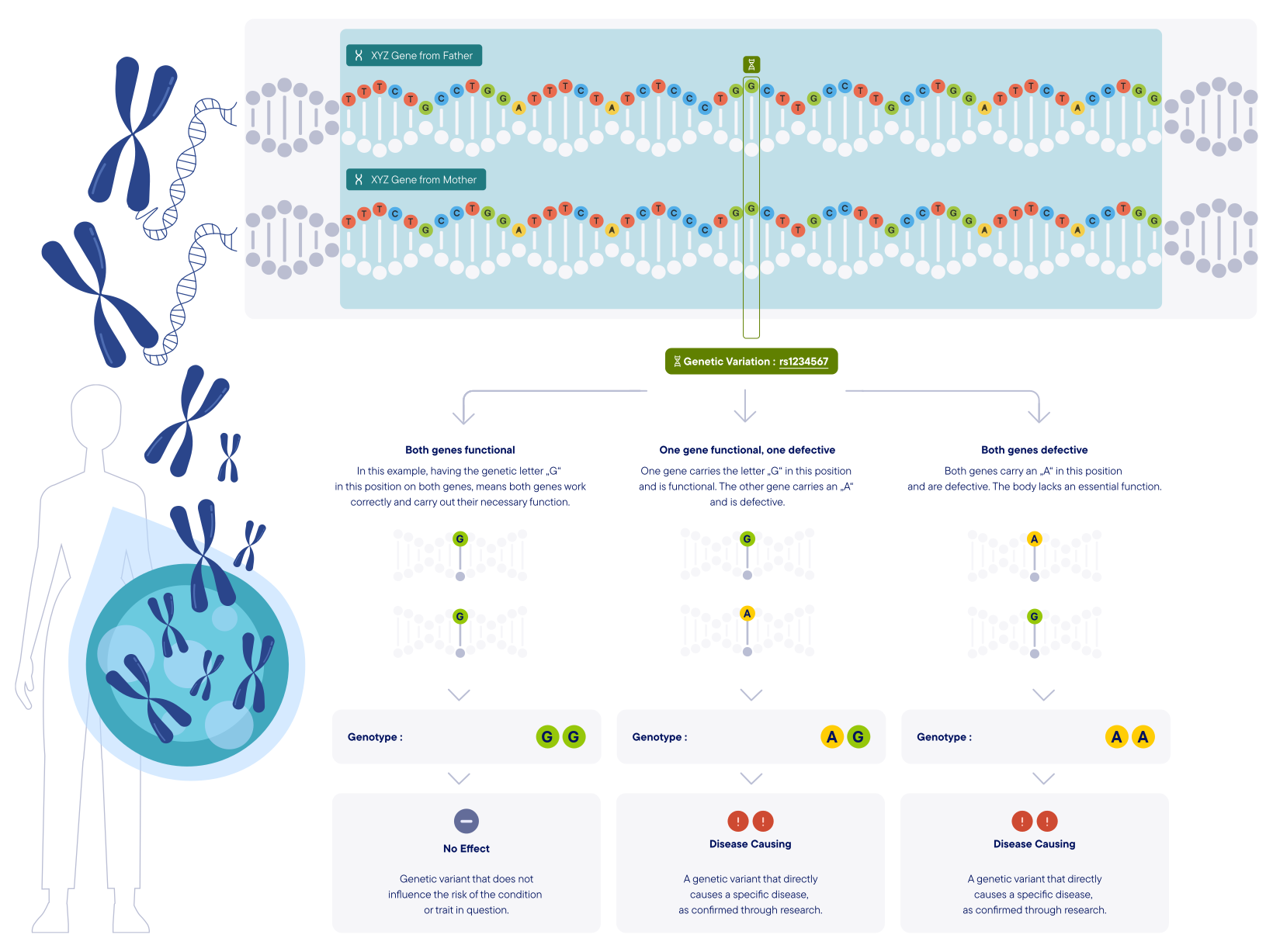
Humans have more than 20,000 genes, each carrying out one or a few specific functions in the body. One gene instructs the body to digest lactose from milk, another tells the body how to build strong bones and another prevents the body's cells from beginning to multiply uncontrollably and developing into cancer. As all of these genes combined are the building instructions for our body, a defect in one of these genes can have severe health consequences.
Through decades of genetic research, we know the genetic code of any healthy/functional human gene. We have also identified that in certain positions on a gene, some individuals may have a different genetic letter from the one you have. We call these hotspots "Genetic Variations" or "Variants" in short. In many cases, studies have been able to show that having the genetic letter "G" in the position makes you healthy, but having the letter "A" in the same position disrupts the gene function and causes a disease. Genopedia allows you to view these variants in genes and summarizes all that we know from scientific research, which genetic letters (Genotype) have good or bad consequences on your health or on your traits.
History
Families and communities once noticed patterns of children who were smaller than expected, later walked or talked, and sometimes had distinctive facial features that seemed to “run in the family.” Before modern testing, these patterns were hard to piece together. Many living with learning differences or feeding challenges in infancy grew into adulthood without a clear name for what they were experiencing, and relatives often remembered a cousin or grandparent with similar traits.
From early theories to modern research, the story of 12q15q21.1 microdeletion syndrome reflects how chromosome studies changed everyday care. In the late 20th century, routine karyotypes—broad chromosome pictures—could spot large missing or extra pieces, but smaller gaps on chromosome 12 went unnoticed. Clinicians described combinations of growth concerns, developmental delays, and subtle physical features, yet cases appeared isolated and unrelated.
As medical science evolved, high‑resolution tools such as microarray analysis and later genome sequencing made it possible to find tiny missing segments—microdeletions—between bands q15 and q21.1 on the long arm of chromosome 12. Initially, only a few cases were reported in the medical literature as isolated findings. Over time, descriptions became more consistent, and researchers began to link shared clinical features to the same stretch of missing DNA, helping define 12q15q21.1 microdeletion syndrome as a recognizable condition.
In recent decades, awareness has grown as diagnostic testing spread beyond specialty centers. What once required referral to a research laboratory gradually became available through clinical genetics services in hospitals and community clinics. This broader access allowed milder presentations to be identified alongside more obvious cases, showing that the syndrome can vary widely from person to person.
Advances in genetics also clarified why some families saw similar features across generations while others did not. Many 12q15q21.1 microdeletions arise for the first time in a child, while some are inherited from a parent with subtle or overlooked signs. Documenting both scenarios helped clinicians offer more accurate counseling about recurrence risk and future family planning.
Looking back helps explain why many adults never received a diagnosis in childhood. The tools simply weren’t sensitive enough, and early descriptions focused on more visible differences. Today, with better testing and shared case reports, healthcare teams can connect early symptoms of 12q15q21.1 microdeletion syndrome—such as feeding difficulties, delayed milestones, or shorter stature—to a specific genetic cause. This historical shift has moved care from uncertainty toward tailored supports, clearer expectations, and informed choices for families.