
Acute myeloblastic leukemia with maturation is a fast-growing blood cancer that starts in the bone marrow. People with this condition often feel very tired, bruise or bleed easily, and get infections. It usually needs urgent treatment and can be life-threatening without care. Treatment often includes chemotherapy, targeted medicines, and sometimes a stem cell transplant, and many people also need transfusions and antibiotics. It affects both adults and children, and outcomes vary by age, health, and how well the leukemia responds to therapy.
Overview
Acute myeloblastic leukemia with maturationSymptoms
Early symptoms of acute myeloblastic leukemia with maturation often include fatigue, pale skin, shortness of breath, and frequent infections or fevers. Many also notice easy bruising or bleeding, bone pain, night sweats, weight loss, or fullness from an enlarged spleen.
Outlook and prognosis
Many people with Acute myeloblastic leukemia with maturation respond well to prompt, intensive treatment, and some achieve long-term remission. Outcomes depend on age, overall health, and specific chromosome changes in the leukemia cells. Regular follow-up helps detect relapse early and guide next steps.
Causes and risk factors
Acute myeloblastic leukemia with maturation usually stems from acquired DNA changes in marrow cells, often chromosomal translocations like t(8;21). Risk rises with age, prior chemotherapy or radiation, benzene exposure, smoking, and earlier blood disorders; some inherited syndromes also increase susceptibility.
Genetic influences
Genetics play a central role in Acute myeloblastic leukemia with maturation, guiding diagnosis, risk grouping, and treatment choices. Specific chromosome changes and gene mutations can drive the disease and influence response to therapy. Testing at diagnosis and relapse is standard.
Diagnosis
Doctors suspect Acute myeloblastic leukemia with maturation from symptoms and abnormal blood counts. Diagnosis of Acute myeloblastic leukemia with maturation is confirmed by bone marrow examination with flow cytometry and genetic tests, which classify the subtype and guide treatment.
Treatment and drugs
Treatment for acute myeloblastic leukemia with maturation usually combines intensive chemotherapy to clear leukemia cells, followed by consolidation therapy. Many receive targeted drugs based on genetic testing, and some are candidates for stem cell transplant. Supportive care manages infections, anemia, and side effects.
Symptoms
In daily routines, this might show up as feeling unusually tired, catching infections more often, or bruising after very minor bumps. Early symptoms of acute myeloblastic leukemia with maturation can be subtle and easy to miss. Symptoms vary from person to person and can change over time. If something feels off for more than a couple of weeks, it’s reasonable to check in with a healthcare professional.
Feeling drained despite rest. Low red blood cells reduce oxygen delivery so muscles tire faster. Climbing stairs or carrying groceries can feel harder than usual.
Breathlessness during routine activity can show up early. It stems from anemia reducing oxygen. You may notice needing to pause while walking or talking.
Skin, lips, or gums may look paler than normal. This happens when red blood cells are low. Friends may comment you look washed out.
Colds, sinus infections, or other bugs may happen more often and take longer to clear. In acute myeloblastic leukemia with maturation, healthy white cells drop, making it harder to fight germs. Mouth sores or slow-healing cuts can be part of this.
How people usually first notice Acute myeloblastic leukemia with maturation?
Many people first notice something is off when fatigue doesn’t match their activity, bruises appear easily, or nosebleeds and gum bleeding happen more than usual. Fevers, frequent infections, or night sweats can follow, and some develop bone pain, shortness of breath, or a feeling of fullness under the ribs from an enlarged spleen. Blood tests done for these symptoms often reveal low red cells, platelets, or abnormal white cells, which prompts urgent evaluation for acute myeloblastic leukemia with maturation.
Types of Acute myeloblastic leukemia with maturation
Acute myeloblastic leukemia with maturation is a genetic/congenital condition at the cell level, defined by changes in blood-forming cells that affect how they grow up and function. Clinicians often describe them in these categories: genetic subtypes based on chromosome or gene changes that guide behavior and treatment. These variants can influence early symptoms of acute myeloblastic leukemia with maturation—like fatigue, infections, or bruising—and help predict response to certain drugs. Knowing the main variants of AML with maturation can clarify what to expect and which tests or therapies may fit best.
t(8;21) RUNX1-RUNX1T1
This well-recognized subtype often presents with low red cells, low platelets, and white cells that include abnormal but partially maturing forms. It is commonly linked to a favorable outlook with modern therapy. People with this variant may be candidates for targeted approaches and careful monitoring for co-mutations.
Normal karyotype NPM1
When standard chromosome testing looks normal but NPM1 is mutated, blasts may show some maturation and gum swelling or high white counts can occur. This variant often responds well to intensive chemotherapy, especially when FLT3-ITD is absent or low. Risk level can shift if FLT3-ITD is also present.
FLT3-ITD mutated
This variant may come with higher white cell counts and more rapid symptom onset, such as fevers and infections. Targeted FLT3 inhibitors are often added to chemotherapy. Outcome depends on the ITD burden and coexisting mutations.
CEBPA biallelic
Dual CEBPA mutations are associated with maturing myeloblasts and can present with anemia, infections, and bruising. This subtype usually carries a favorable prognosis with standard chemotherapy. Genetic confirmation helps distinguish it from single-hit CEBPA changes.
inv(16)/t(16;16) CBFB-MYH11
Although classically linked to abnormal eosinophils, some cases show features overlapping with AML with maturation. It often has good treatment responses with contemporary regimens. Doctors confirm the variant with chromosome and fusion testing.
Secondary-type mutations
Changes such as ASXL1, RUNX1 (as a mutation), or TP53 can appear, especially in older adults or after prior blood disorders. These are tied to more resistant disease and different treatment planning. Allogeneic transplant may be discussed earlier in care.
Therapy-related AML
This form develops after prior chemotherapy or radiation and can resemble AML with maturation under the microscope. It is frequently associated with complex chromosome changes and higher-risk features. Treatment choices often consider prior therapies and overall fitness.
Core-binding factor variants
Together, t(8;21) and inv(16)/t(16;16) are known as core-binding factor AML and can include maturation of blasts. They often respond well to high-dose cytarabine during consolidation. Minimal residual disease testing helps track response and relapse risk.
TP53 mutated/complex
This variant often shows very low blood counts, frequent bruising, and infections, with blasts that may partially mature. It is linked to complex karyotypes and a poorer outlook. Clinical trials and tailored approaches are commonly considered.
IDH1 or IDH2 mutated
People may present with anemia, fatigue, and infections, and blasts can show partial maturation. Targeted IDH inhibitors can be effective in newly diagnosed or relapsed settings. Monitoring for differentiation changes during therapy is important.
What genetics can tell you about symptoms
Certain RUNX1 or CEBPA gene changes can push early bone marrow cells to multiply but not fully mature, leading to anemia, infections, or easy bruising. FLT3 mutations can speed this growth even more, often causing higher white counts and rapid symptom onset.
Causes and risk factors
It usually begins when bone marrow cells gain DNA changes that make them grow out of control.
Some risks are modifiable (things you can change), others are non-modifiable (things you can’t).
Risk rises with older age, prior chemotherapy or radiation, benzene exposure at work, and smoking.
A prior bone marrow disorder increases risk, and rare inherited syndromes or a family history of blood cancers can too.
Risk factors for acute myeloblastic leukemia with maturation can add up, but many people with risks never develop it.
Environmental and biological risk factors
Understanding what increases risk for acute myeloblastic leukemia with maturation can help with timely checks and planning. It can also prompt action if early symptoms of acute myeloblastic leukemia with maturation appear. Doctors often group risks into internal (biological) and external (environmental).
The chance of developing acute myeloblastic leukemia with maturation rises with age, especially after midlife. Aging bone marrow accumulates changes that make immature white cells more likely to grow out of control.
Men have a slightly higher risk than women for this leukemia. The reason is not fully understood but is seen consistently in large studies.
Some cancer medicines can injure bone marrow stem cells over time. Therapy-related changes can lead to acute myeloblastic leukemia with maturation years after treatment.
Past treatment that exposed large areas of marrow to radiation can raise risk. The effect may appear several years after therapy and depends on the dose received.
Genetic risk factors
Changes in certain genes inside bone marrow cells can set leukemia growth in motion. In Acute myeloblastic leukemia with maturation, a few well-known chromosome swaps and gene mutations drive the disease. Some risk factors are inherited through our genes. Genetic risk factors for Acute myeloblastic leukemia with maturation include both acquired DNA changes in the marrow and, less often, inherited tendencies that raise lifetime risk.

t(8;21) fusion: A swap between chromosomes 8 and 21 creates a RUNX1-RUNX1T1 fusion that pushes early myeloid cells to grow but not fully mature. This genetic change is a hallmark cause of Acute myeloblastic leukemia with maturation. It often appears with other secondary changes that influence how the disease behaves.
KIT mutations: Changes in the KIT gene are common alongside t(8;21) and can amplify growth signals. When present, they can cooperate with the fusion to drive disease. They may also shape how the leukemia behaves over time.
CEBPA mutations: Changes in both copies of CEBPA act like a dimmer switch turned down on myeloid maturation, helping leukemia cells stall in a less mature stage. These mutations can directly cause AML that shows maturation features. This pattern can occur even when standard chromosome tests look normal.
NPM1 mutations: Alterations in NPM1 are a frequent driver in AML and can be seen in cases with some maturation. They are less typical in the t(8;21) subtype of Acute myeloblastic leukemia with maturation. When present, they reshuffle gene activity inside early myeloid cells.
FLT3 mutations: Internal tandem duplications or point mutations in FLT3 act like a stuck on switch for growth signals. They can cooperate with other genetic hits to promote Acute myeloblastic leukemia with maturation. These changes are seen more often when chromosomes are otherwise normal.
RAS-pathway changes: Mutations in NRAS or KRAS and related signaling genes push cells to divide more than they should. These lesions often partner with t(8;21) or CEBPA changes to drive disease. Their presence reflects the multi-hit nature of AML development.
Cooperating chromosomal hits: Alongside t(8;21), extra chromosome changes such as loss of a sex chromosome or deletion of part of 9q can accumulate. These secondary hits do not start the leukemia by themselves but help shape how it grows. Doctors may track them to better understand disease course.
Inherited predisposition genes: Some families carry changes in genes like RUNX1, CEBPA, GATA2, DDX41, ETV6, or ANKRD26 that raise lifetime AML risk. In these families, Acute myeloblastic leukemia with maturation can be one possible outcome. Genetic counseling and testing can clarify who carries the risk.
Age-related clonal hematopoiesis: With age, some people develop small blood-cell clones with DNA changes in DNMT3A, TET2, or ASXL1. This condition, often called CHIP, increases the chance of developing AML over time, including subtypes with maturation. Most people with CHIP never develop leukemia.
Inherited marrow syndromes: Rare inherited conditions that affect the bone marrow or DNA repair, such as Fanconi anemia, Shwachman-Diamond syndrome, or Li-Fraumeni syndrome, increase AML risk. In these settings, the specific leukemia subtype can vary, and maturation patterns may appear. Families may benefit from specialist follow-up.
Lifestyle risk factors
Several modifiable habits are linked to the risk of developing acute myeloblastic leukemia with maturation and can influence treatment tolerance and recovery. Evidence is strongest for tobacco, with growing data for body weight, physical activity, diet, and heavy alcohol use. Understanding how lifestyle affects Acute myeloblastic leukemia with maturation can help guide choices that support overall health before, during, and after therapy. Below are key lifestyle risk factors for Acute myeloblastic leukemia with maturation.
Cigarette smoking is associated with a higher risk of AML, including this subtype. It may also worsen infections and treatment side effects during chemotherapy.
Obesity is linked to a modestly higher risk of AML and can increase complications during intensive treatments. Achieving and maintaining a healthy weight may improve treatment tolerance.
Low activity levels are associated with higher AML risk partly through weight gain and systemic inflammation. Being physically active can improve fitness and resilience during therapy and recovery.
Diets high in processed meats, refined carbs, and added sugars are tied to weight gain and inflammation that relate to AML risk. Patterns rich in vegetables, fruits, whole grains, and lean proteins may support healthier metabolic profiles before and during treatment.
Risk prevention
Acute myeloblastic leukemia with maturation is a type of blood cancer that usually develops from changes in bone marrow cells over time. You can’t fully prevent it, but you can lower certain risks in day-to-day life and the workplace. Prevention is about lowering risk, not eliminating it completely. Knowing the early symptoms of acute myeloblastic leukemia with maturation won’t prevent it, but it can prompt faster care.
Tobacco exposure is linked to higher leukemia risk. Quitting lowers risk over time and supports overall blood and heart health.
Benzene, a chemical found in some fuels and solvents, raises leukemia risk. Use protective gear and proper ventilation at work, and follow safety rules closely.
Repeated high-dose imaging and radiation can add to risk. Ask if scans are necessary and whether lower-dose options or alternatives could work.
If you work around fuels, solvents, or glues, use masks, gloves, and ventilation as directed. Regular safety training and monitoring help keep exposures low.

Transmission
Acute myeloblastic leukemia with maturation is not contagious. It cannot be transferred through everyday contact, sexual activity, coughing or sneezing, or shared items. People often ask how Acute myeloblastic leukemia with maturation is transmitted; it isn’t—these changes in blood-forming cells arise within the bone marrow over time and remain limited to the affected person. It also isn’t typically inherited; while rare inherited syndromes can raise leukemia risk, the disease itself is not passed from parent to child.
When to test your genes
Acute myeloblastic leukemia with maturation is not typically found by consumer genetic tests, but genetic testing guides diagnosis and treatment once leukemia is suspected. Test promptly if you have persistent symptoms (fatigue, infections, bruising) or abnormal blood counts, or if you’re starting therapy to tailor drugs. Family testing isn’t routinely needed.
Diagnosis
When fatigue, easy bruising, or frequent infections build up over days to weeks, many people seek care and labs are the first clue. The diagnosis of acute myeloblastic leukemia with maturation usually combines blood tests, bone marrow studies, and genetic testing. Tests may feel repetitive, but each one helps rule out different causes. Knowing how acute myeloblastic leukemia with maturation is diagnosed can make next steps clearer.
Doctors ask about symptoms like fatigue, fevers, and bleeding and look for signs such as pallor, bruises, or enlarged spleen. These findings guide which tests are needed next.
A blood test checks red cells, white cells, and platelets for low counts or very high white cells. Abnormal blasts in the white cell count can point toward leukemia.
A lab specialist reviews blood under the microscope to look for immature cells called blasts. Their appearance and proportion help support the diagnosis and urgency of care.
A small sample from the hip bone is examined to confirm leukemia and estimate blast percentage. This is the key test that establishes the diagnosis and subtype.
Stages of Acute myeloblastic leukemia with maturation
Acute myeloblastic leukemia with maturation does not have defined progression stages. Instead, this blood cancer is classified by lab findings and genetic features, and care focuses on how it responds to treatment; people may first notice early symptoms of acute myeloblastic leukemia with maturation such as tiredness, easy bruising, or more frequent infections. Different tests may be suggested to help confirm what’s going on and gauge how active the disease is. This typically involves blood counts, a bone marrow exam, and genetic testing, followed by checks for very small amounts of remaining leukemia (measurable residual disease) to see how well treatment is working.
Outlook and prognosis
Treatment advances have improved survival for acute myeloblastic leukemia with maturation, but the path can vary from person to person. The outlook is not the same for everyone, but most care teams look at age, overall health, how quickly normal blood counts recover, and specific genetic changes in the leukemia cells to estimate risk. Early care can make a real difference, especially if treatment starts soon after early symptoms of acute myeloblastic leukemia with maturation such as unusual bruising, repeated infections, or deep fatigue.
Doctors call this the prognosis—a medical word for likely outcomes. In general, people with favorable-risk genetics may reach complete remission after initial chemotherapy, and many remain cancer‑free for years, sometimes after a stem cell transplant if needed. Others have a higher chance of the leukemia returning, and may need additional cycles, targeted drugs, or transplant to deepen and sustain remission. Mortality is highest in the first months if severe infections or bleeding occur, but with modern supportive care in the hospital—antibiotics, transfusions, and growth factors—treatment‑related deaths are much less common than in the past.
Looking at the long-term picture can be helpful. Five‑year survival for adults with acute myeloblastic leukemia with maturation ranges widely, from roughly one‑third to more than half depending on genetic risk and age; outcomes tend to be better in younger adults and when the leukemia responds fully to initial therapy. With ongoing care, many people maintain good quality of life between appointments, returning to work or school and building back strength. Talk with your doctor about what your personal outlook might look like, including whether consolidation chemotherapy, targeted therapy, or transplant is recommended and how follow‑up will monitor for any signs of relapse.
Long-term effects
Many people who’ve had acute myeloblastic leukemia with maturation do well after treatment, but some effects can continue for months or years. Long-term effects vary widely, and your own mix of changes may look different from someone else’s. While early symptoms of acute myeloblastic leukemia with maturation often improve after treatment, some long-term effects may remain. These can come from the leukemia itself, the chemotherapy, targeted drugs, or a stem cell transplant.
The chance of leukemia returning is highest in the first few years, then generally falls over time. Regular blood tests and check-ins help catch changes early.
After chemotherapy or transplant, infections can be more frequent or more severe. Healing from common illnesses may take longer than before leukemia.
Some chemotherapy medicines can weaken the heart muscle over time. This may lead to shortness of breath, swelling in the legs, or reduced exercise tolerance.
Tingling, numbness, or burning pain in the hands and feet can linger after treatment. For some, these symptoms make buttoning shirts or walking long distances harder.
How is it to live with Acute myeloblastic leukemia with maturation?
Living with acute myeloblastic leukemia with maturation often means life shifts into cycles of hospital visits, blood tests, and treatment days, with energy levels that can swing from manageable to wiped out in a single afternoon. People may juggle side effects like infections, bruising, or fatigue with the practicalities of work, school, or caregiving, relying on masks, hand hygiene, and careful planning to stay safe and keep some normal rhythm. Loved ones often become teammates—driving to appointments, helping with meals, and sharing the emotional load—while also needing space and support for their own worries. Many find strength in routines, clear communication with the care team, and small daily goals that keep life feeling personal, not just medical.
Treatment and drugs
Acute myeloblastic leukemia with maturation is treated urgently, usually starting with “induction” chemotherapy to clear as many leukemia cells as possible, followed by “consolidation” therapy to keep the disease in remission; some people then proceed to a stem cell (bone marrow) transplant if their risk of relapse is high. Treatment often looks different for each person, guided by age, overall health, and lab findings such as chromosome changes and gene mutations that help doctors tailor drug choices and decide on transplant. Induction commonly includes combinations like cytarabine with an anthracycline, and may add targeted medicines if certain mutations are present, while consolidation uses further chemotherapy or transplant to deepen remission. Alongside medical treatment, lifestyle choices play a role, and supportive care—such as antibiotics, transfusions, growth factors, and medicines to prevent nausea—helps you stay safer and feel better during low blood counts. Your doctor can help weigh the pros and cons of each option, and may adjust your plan over time based on how well the leukemia responds and how you tolerate therapy.
Non-drug treatment
Day-to-day life with Acute myeloblastic leukemia with maturation can be disrupted by fatigue, easy bruising, and frequent infections. Alongside medicines, non-drug therapies can ease symptoms, reduce risks, and support your strength during and after treatment. Early symptoms of Acute myeloblastic leukemia with maturation may make ordinary tasks—like cooking dinner or walking the dog—feel overwhelming, so practical supports matter.
A transplant replaces damaged blood-forming cells with healthy donor cells. It can offer a chance of long-term control but comes with significant risks and a lengthy recovery.
Targeted radiation can treat leukemia outside the bone marrow or prepare for transplant. It may also ease pain or pressure if leukemia cells collect in one area.
This procedure quickly lowers very high white blood cell counts to reduce short-term complications like breathing trouble or confusion. It’s a temporary bridge while other treatments take effect.
Red cell and platelet transfusions boost energy and reduce bleeding risks. They can rapidly improve symptoms like shortness of breath, dizziness, or nosebleeds.
Your genes may have an impact on how drugs work for you
Your genes can affect how quickly your body breaks down leukemia medicines and how strongly leukemia cells respond, which can change both effectiveness and side effects. Doctors sometimes use genetic results from you and your leukemia cells to guide drug choice and dose.
Pharmacological treatments
Treatment for acute myeloblastic leukemia with maturation aims to clear leukemia cells quickly and keep them from coming back, while helping you feel well enough to get through daily life. Choices depend on age, overall health, and the leukemia’s genetic features, which guide doctors toward the most effective drugs. Not everyone responds to the same medication in the same way. Recognizing early symptoms of acute myeloblastic leukemia with maturation—such as tiredness, frequent infections, or easy bruising—often leads to earlier treatment and better support.
Cytarabine is combined with an anthracycline like daunorubicin or idarubicin to induce remission. This intensive chemotherapy is the backbone of first treatment for many adults with AML.
This targeted antibody-drug can be added when the leukemia cells express CD33. It may be used with initial chemotherapy or for relapse, with careful monitoring for liver side effects.
For newly diagnosed AML with an FLT3 mutation, midostaurin is added to 7+3 during induction and consolidation. It helps lower the chance of the leukemia coming back.
This pill treats relapsed or refractory AML with an FLT3 mutation. It targets the mutation to reduce leukemia cell growth.
Genetic influences
People often ask if acute myeloblastic leukemia with maturation is inherited; in most cases, it is not. In this subtype, most gene changes are acquired only in the leukemia cells and are not passed down through a family. A common example is when chromosomes 8 and 21 swap pieces (t(8;21)), creating a fusion that drives the leukemia and often predicts a better response to standard chemotherapy. Other gene changes in the leukemia (for example, KIT or FLT3) can raise the chance of relapse, so genetic testing guides risk grouping, follow-up, and treatment choices for acute myeloblastic leukemia with maturation. Having a gene change doesn’t always mean you will develop the condition. True inherited risk is uncommon, but if several relatives have blood cancers or someone develops AML at a young age, a referral to genetic counseling can help clarify family risk and whether any testing for relatives is useful.
Is Acute myeloblastic leukemia with maturation genetic?
Genetics play a central role in Acute myeloblastic leukemia with maturation, guiding diagnosis, risk grouping, and treatment choices. Specific chromosome changes and gene mutations can drive the disease and influence response to therapy. Testing at diagnosis and relapse is standard.
Pharmacogenetics—how genetics influence drug effects
For many with Acute myeloblastic leukemia with maturation, specific genetic changes in the leukemia cells guide which drugs are added to standard chemotherapy and how intensive treatment should be. If the leukemia has the t(8;21) change (often seen in this subtype), doctors may favor high-dose cytarabine and sometimes add gemtuzumab ozogamicin when the CD33 marker is present, while mutations like FLT3 or IDH1/IDH2 open the door to targeted pills such as midostaurin, gilteritinib, ivosidenib, or enasidenib. Conversely, additional changes in the c‑KIT gene in t(8;21) disease can raise relapse risk, which may influence decisions about consolidation therapy or transplant. Pharmacogenetics also matters: differences you’re born with can affect how your body activates, transports, or clears drugs like cytarabine or anthracyclines, which can change the risk of side effects, though routine testing for these differences isn’t yet standard in AML. Alongside medical history and routine lab results, genetic testing for Acute myeloblastic leukemia with maturation helps match therapy to both the leukemia’s targets and, in some cases, how your body processes medicine. One important safety note: people with G6PD deficiency should avoid rasburicase, a drug sometimes used to manage tumor lysis, because it can trigger severe red blood cell breakdown; your team will screen when needed.
Interactions with other conditions
Infections like colds, flu, or pneumonia can be more frequent and more severe when blood counts are low in acute myeloblastic leukemia with maturation, and recovery can take longer. Doctors call it a “comorbidity” when two conditions occur together. Diabetes, chronic lung disease, or heart problems can raise infection risks or limit which chemotherapy drugs and doses are safe, while kidney or liver disease may require treatment adjustments to prevent side effects. Chronic viral infections such as hepatitis B or C and HIV need careful coordination so cancer therapy doesn’t flare the virus or weaken immunity further. Early symptoms of acute myeloblastic leukemia with maturation—fatigue, fevers, easy bruising—can overlap with common illnesses, which sometimes delays recognizing what’s driving the change. Interactions can look very different from person to person, so plans are often tailored by a team that considers all diagnoses together.
How genes can cause diseases
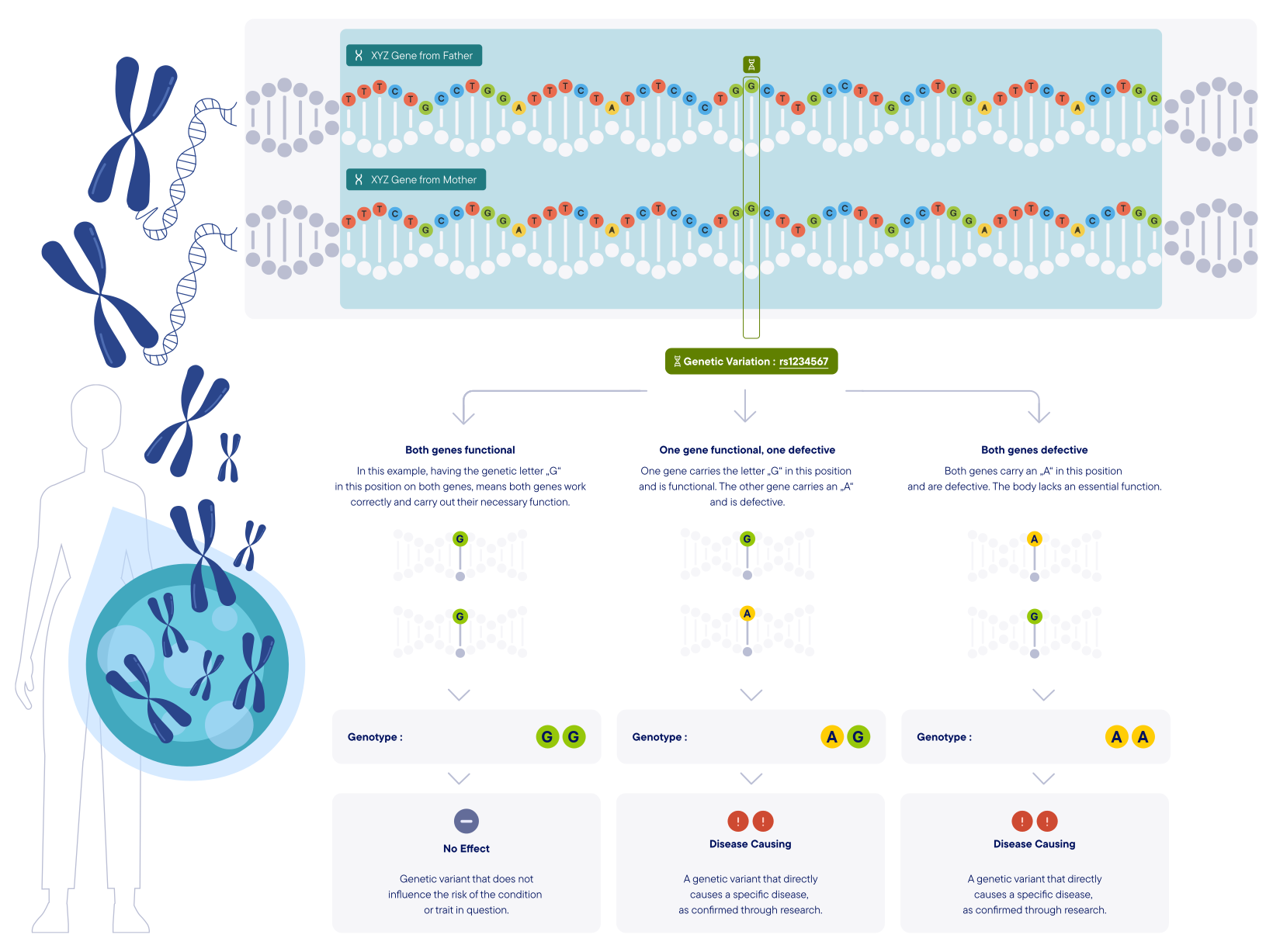
Humans have more than 20,000 genes, each carrying out one or a few specific functions in the body. One gene instructs the body to digest lactose from milk, another tells the body how to build strong bones and another prevents the body's cells from beginning to multiply uncontrollably and developing into cancer. As all of these genes combined are the building instructions for our body, a defect in one of these genes can have severe health consequences.
Through decades of genetic research, we know the genetic code of any healthy/functional human gene. We have also identified that in certain positions on a gene, some individuals may have a different genetic letter from the one you have. We call these hotspots "Genetic Variations" or "Variants" in short. In many cases, studies have been able to show that having the genetic letter "G" in the position makes you healthy, but having the letter "A" in the same position disrupts the gene function and causes a disease. Genopedia allows you to view these variants in genes and summarizes all that we know from scientific research, which genetic letters (Genotype) have good or bad consequences on your health or on your traits.
History
Throughout history, people have described sudden illnesses marked by extreme fatigue, infections that wouldn’t clear, and unexplained bruising—signs we now recognize as blood cancers. Early doctors could see pale skin and swollen spleens, but they had no way to look inside bone marrow. As medical science evolved, microscopes revealed crowded blood with immature white cells. From early theories to modern research, the story of acute myeloblastic leukemia with maturation traces how those immature cells were sorted into clearer groups.
First described in the medical literature as acute “myeloblastic” leukemia in the late 19th and early 20th centuries, it took decades to recognize that not all cases behaved the same. In the 1970s, pathologists began using stains and cell-surface markers to show that some leukemias had blasts that could partly mature into more developed myeloid cells. This pattern became one of the classic subtypes in the French–American–British (FAB) system, often referred to as M2. The label signaled an important idea: even in a fast-growing leukemia, the abnormal cells might show a degree of maturation that helped doctors predict behavior and choose treatment.
With each decade, classification improved. By the 1990s and 2000s, genetic testing moved center stage. Certain chromosome changes—like translocations involving chromosomes 8 and 21—were linked closely with this subtype. These discoveries did more than rename the condition; they refined prognosis and guided therapy, including the use of specific chemotherapy combinations that improved survival. The World Health Organization systems incorporated morphology, immunophenotype, and genetics, making “acute myeloblastic leukemia with maturation” both a descriptive and biologically grounded category.
Clinically, treatment shifted from supportive care alone to intensive combination chemotherapy beginning in the mid-20th century. Antibiotics and blood transfusions made stronger therapy possible. Over time, risk-adapted approaches emerged: people with favorable genetic features were treated with curative intent using chemotherapy and, when needed, stem cell transplant; others were steered toward clinical trials or transplant earlier. In recent decades, awareness has grown that age, overall health, and specific gene changes all shape outcomes, which led to more personalized planning.
Modern care now includes targeted agents and refined transplant strategies, but the core idea remains rooted in those early observations: how the leukemia cells look and what genetic changes they carry help define acute myeloblastic leukemia with maturation. Looking back helps explain why doctors still review slides under a microscope even in the era of advanced sequencing—the appearance and behavior of the cells continue to inform today’s decisions.