
Acrokeratoelastoidosis of Costa is a rare genetic skin condition that causes small, firm bumps on the edges of the hands and feet. The bumps are usually skin-colored or slightly yellow and can feel rough but are typically painless. Features often start in childhood or the teen years and tend to be lifelong, though they usually stay mild. Not everyone will have the same experience, and the condition does not affect life expectancy. Treatment focuses on comfort and appearance, with options like moisturizers, keratolytic creams, and sometimes procedures by a dermatologist.
Overview
Acrokeratoelastoidosis of costaSymptoms
Acrokeratoelastoidosis of Costa causes small, firm, skin-colored bumps along the edges of palms, fingers, and soles, often appearing in childhood or adolescence. These features are usually painless but may itch. Early symptoms of acrokeratoelastoidosis of costa are mainly cosmetic changes.
Outlook and prognosis
Most people with acrokeratoelastoidosis of Costa have stable, lifelong bumps on the sides of the hands and feet that don’t affect overall health. Symptoms often plateau after growing slowly in youth. Moisturizers, procedures, and sun protection can improve comfort and appearance.
Causes and risk factors
Acrokeratoelastoidosis of Costa is usually genetic, often running in families in an autosomal-dominant pattern, though sporadic cases occur. Risk may be influenced by age at onset, mechanical friction, and moisture or heat, which can accentuate lesions.
Genetic influences
Genetics play a central role in Acrokeratoelastoidosis of costa, with many cases inherited in an autosomal dominant pattern. Variations affecting elastic fiber formation in the skin are implicated. Sporadic cases occur, but family history strongly increases risk and recurrence.
Diagnosis
Clinical diagnosis of acrokeratoelastoidosis of Costa is based on small, firm bumps along hand and foot borders. A skin exam and biopsy confirming elastic fiber changes usually suffice; genetic tests are optional for families.
Treatment and drugs
Treatment for acrokeratoelastoidosis of Costa focuses on comfort, skin appearance, and preventing cracks or infections. Many do well with regular emollients, keratolytic creams (like urea or salicylic acid), and gentle filing. Dermatologists may add retinoid creams, laser, or tailored procedures.
Symptoms
People with acrokeratoelastoidosis of Costa often notice small, firm bumps along the edges of the palms and soles. You might notice small changes at first, like tiny beads that feel slightly rough when you run a finger along the border of the hand or foot. These early features of acrokeratoelastoidosis of Costa usually start in late childhood or adolescence and tend to be symmetrical. They’re typically painless and fairly stable, though heat, sweating, or friction can make them stand out more.
Small, firm, skin-colored to yellowish bumps appear along the edges of the palms and soles. In acrokeratoelastoidosis of Costa, these often feel slightly rough or rubbery to the touch.
Spots often show up in the same places on both hands and both feet. Clinicians call this a symmetric pattern, which means the left and right sides look alike. This can help separate it from random friction spots.
In acrokeratoelastoelastoidosis of Costa, changes commonly begin in late childhood or the teen years. They may slowly increase in number before leveling off. Family patterns can occur, but some cases happen without a family history.
Most people do not have pain or itch from the bumps. The main issue is the texture and look of the skin. Rarely, heavy hand use or long walks can make the area tender.
How people usually first notice Acrokeratoelastoidosis of costa?
Many families first notice small, firm bumps along the edges of the hands or feet, especially on the sides of the fingers, palms, or soles, often in late childhood or the teen years. These tiny, skin‑colored to yellowish papules tend to cluster and become more visible with pressure, friction, or after water exposure, prompting a first dermatology visit. Doctors usually recognize the pattern on exam, and that clinical look—plus family history—helps confirm the first signs of acrokeratoelastoidosis of Costa.
Types of Acrokeratoelastoidosis of costa
Acrokeratoelastoidosis of Costa is a rare genetic skin condition that typically shows up as small, firm bumps along the edges of the hands and feet. People with acrokeratoelastoidosis often first notice changes in late childhood or the teen years, and the look can vary from person to person. Not everyone will experience every type. Clinicians often describe them in these categories:
Classic Costa type
Small, skin-colored to yellowish bumps cluster along the sides of the fingers, palms, toes, and soles. The surface can feel rough or pebbled and tends to be symmetric on both sides. Spots usually appear in adolescence and slowly enlarge or increase in number.
Familial form
Similar bumps occur in several family members across generations, pointing to inherited risk. Symptoms often begin earlier and follow a similar pattern within a family. Some may notice more widespread involvement along pressure areas.
Sporadic form
Features look like the classic pattern but without a known family history. Onset can be later and the number of bumps may be fewer. For many, certain types stand out more than others.
What genetics can tell you about symptoms
Some people with acrokeratoelastoidosis of Costa have small, firm, rough bumps along the edges of the hands and feet because inherited changes in skin-structure genes alter elastic fibers and keratin. When these variants run in families, bumps often appear in childhood and slowly thicken over time.
Causes and risk factors
Acrokeratoelastoidosis of Costa is usually caused by an inherited gene change, and some cases happen as a new mutation. Some risks are modifiable (things you can change), others are non-modifiable (things you can’t). A family history is the main risk factor for acrokeratoelastoidosis of Costa. Heat, humidity, frequent water exposure, sun, friction, and pressure on the hands or feet can trigger spots to appear or make bumps more noticeable. Onset often happens in childhood or the teen years, and sweating or certain skin traits may influence how strongly it shows.
Environmental and biological risk factors
Acrokeratoelastoidosis of Costa causes small, firm bumps along the edges of the hands and feet that can catch on fabric or feel rough when you shake hands. That said, biology and environment work hand in hand. Most of the risk comes from body-based factors present from birth, while outside exposures mainly change how visible the bumps look. Early symptoms of acrokeratoelastoidosis of Costa often show up in childhood or the teen years, but the condition’s underlying tendency is there even earlier.
A fixed, body-based tendency in the skin’s elastic fibers makes acrokeratoelastoidosis of Costa possible. This tendency is present from birth even if the small rim bumps appear later in childhood or early adulthood. These internal factors are the main drivers of whether the condition occurs.
Repeated rubbing along the edges of the hands and feet can make existing bumps more pronounced. These mechanical stresses do not appear to cause the condition, but they may influence where and how visible it looks. People often notice them after manual work or sports, but the underlying tendency remains the key factor.
Frequent wet work, sweating, or humid environments may accentuate the texture on the hands and feet margins. These exposures seem to affect appearance rather than create acrokeratoelastoidosis of Costa. Reports vary, and effects can ebb and flow with seasons.
There is no proven link between sunlight and developing the condition, though some notice the rim bumps look more defined after sun. Ultraviolet light influences elastic fibers in skin broadly, but evidence specific to acrokeratoelastoidosis of Costa is limited. Observations are inconsistent across cases.
Genetic risk factors
Acrokeratoelastoidosis of Costa tends to run in families, often across several generations. Most reported families show an autosomal dominant pattern with variable expression. The precise gene change hasn’t been pinned down, and some people develop similar features without a known family history. Carrying a genetic change doesn’t guarantee the condition will appear.

Autosomal dominant pattern: Most families show an autosomal dominant pattern. Each child of an affected parent has about a 1 in 2 (50%) chance to inherit the predisposition. This does not predict how noticeable the skin changes will be.
Variable penetrance: Not everyone who inherits the predisposition will show signs; this is known medically as variable penetrance. In some families with Acrokeratoelastoidosis of Costa, a relative may carry the risk yet never develop visible bumps. This can make family patterns appear uneven over time.
Variable expressivity: Among those who are affected, severity can differ widely, even within the same family. One person may have a few small rim-of-palm bumps, while another develops more numerous lesions over years. This variability is typical of Acrokeratoelastoidosis of Costa.
De novo variants: Occasionally, a person is the first in the family to develop the condition due to a new (de novo) genetic change. Siblings generally have low risk in this scenario, but the affected individual can pass the risk to their children. Family-specific counseling can help clarify patterns.
Unknown causal gene: A single, consistent causal gene has not been confirmed for Acrokeratoelastoidosis of Costa. This suggests that more than one gene or mechanism may lead to similar skin findings. Research is ongoing.
Family history clues: Multiple relatives with similar palm or sole bumps, especially beginning in youth, point to an inherited risk. Noticing early symptoms of Acrokeratoelastoidosis of Costa in parents and children can be a strong clue for clinicians. Patterns across generations are often more informative than isolated cases.
Genetic testing limits: Because the root gene is unclear, standard genetic panels may not find a definitive answer. Diagnosis typically relies on clinical evaluation and sometimes a small skin sample examined under the microscope. Negative genetic results do not rule out a hereditary form.
Lifestyle risk factors
Acrokeratoelastoidosis of costa is a genetic skin condition; lifestyle habits do not cause it, but they can change how symptoms feel, how lesions thicken, and how often flares occur. Understanding how lifestyle affects Acrokeratoelastoidosis of costa helps you target mechanical and care routines that aggravate or ease symptoms. The following focuses on lifestyle risk factors for Acrokeratoelastoidosis of costa and ways behaviors can influence discomfort, cracking, and function.
Repeated rubbing from tools, sports equipment, or rough grips can thicken the marginal papules and make them more tender. Reducing shear on the sides of hands and feet may decrease fissures and soreness.
Long periods of standing, walking, or tight gripping concentrate pressure along the palm and foot edges, worsening callusing and pain. Using padding and taking brief offloading breaks can limit flare severity.
Sweaty hands or feet under gloves or tight shoes macerate the skin and accentuate the raised lesions. Breathable gear and sweat-wicking socks can reduce maceration and cracking.
Frequent washing with strong detergents strips oils and increases dryness over the keratotic rims. Gentle, fragrance-free cleansers help maintain barrier function and reduce fissure risk.
Risk prevention
Because this is a genetic skin condition, you can’t fully prevent acrokeratoelastoidosis of Costa, but you can reduce flare-ups and skin irritation in daily life. Prevention is about lowering risk, not eliminating it completely. Simple steps that limit friction, moisture, and harsh chemicals help keep the small, firm bumps along the edges of the palms and soles from thickening or cracking; these are often the early symptoms of acrokeratoelastoidosis of Costa. Planning for family risks through genetic counseling may also be useful.
Apply a plain, fragrance-free moisturizer to hands and feet every day, especially after washing. Products with mild keratolytics (like urea) can soften thick areas when used as directed by your clinician.
Reduce rubbing at the outer edges of the palms and soles where bumps tend to form in acrokeratoelastoidosis of Costa. Use padded grips for tools and cushioned insoles to spread pressure.
Keep hands and feet comfortably dry to limit thickening and maceration in acrokeratoelastoidosis of Costa. Choose breathable socks, change them when damp, and dry between the toes after bathing.
Wear well-fitted, cushioned shoes for long walks or standing, and use gloves for manual tasks. This lowers repeated rubbing that can worsen the rim of bumps.

Transmission
Acrokeratoelastoidosis of Costa is not contagious—you can’t catch it from someone or spread it by touch, shared items, or close contact. In most families, Acrokeratoelastoidosis of Costa follows an autosomal dominant pattern, meaning a parent who has it has about a 1 in 2 (50%) chance of passing the genetic change to each child; this is how Acrokeratoelastoidosis of Costa is inherited. Some people are the first in their family because the change happens for the first time in them (a new mutation). Severity can vary within a family, so a parent may have very mild features while a child has more noticeable skin changes.
When to test your genes
Consider genetic testing if you have small, firm, rim-like bumps on the edges of your hands or feet that began in childhood or run in your family, especially among close relatives. Testing can confirm acrokeratoelastoidosis of Costa, rule out look-alike skin conditions, and guide tailored dermatologic care. Discuss testing sooner if symptoms spread or cause pain.
Diagnosis
Small, firm bumps along the edges of the palms and soles can raise questions when they don’t go away or spread slowly over time. With Acrokeratoelastoidosis of Costa, doctors look for a recognizable pattern on the skin that often starts in childhood or the teen years and may run in families. Doctors usually begin with a careful skin exam and questions about family history. When features are typical, the diagnosis of Acrokeratoelastoidosis of Costa is confirmed with targeted testing, most often a small skin sample examined under the microscope.
Providers look for small, firm, skin-colored bumps clustered along the borders of the palms and soles, often on both sides. The texture, symmetry, and exact locations help separate it from calluses or warts.
Relatives may have similar palm or sole findings that began in youth, supporting an inherited pattern. Family history is often a key part of the diagnostic conversation.
A handheld scope can reveal surface patterns and color that fit this condition. It helps document findings and guide whether a biopsy is needed.
A tiny sample is taken under local anesthetic when the diagnosis is uncertain. Pathology typically shows a thickened outer skin layer with supportive changes in the deeper layer.
Stages of Acrokeratoelastoidosis of costa
Acrokeratoelastoidosis of costa does not have defined progression stages. It usually stays fairly stable over time, with small, firm bumps that may slowly increase in number rather than moving through set phases. Doctors usually start with a conversation about your skin changes and a close exam of the hands and feet. If early symptoms of acrokeratoelastoidosis of costa are unclear, a dermatologist may take a small skin sample (biopsy) to confirm the diagnosis and schedule periodic check-ins to monitor stability.
Outlook and prognosis
Many people ask, “What does this mean for my future?”, especially when they’re first told they have Acrokeratoelastoidosis of Costa. This rare skin condition usually causes small, firm bumps along the edges of the hands and feet, sometimes the wrists or ankles. It tends to appear in childhood or the teen years and then persist, but it’s generally stable over time and does not affect internal organs. Doctors call this the prognosis—a medical word for likely outcomes.
The outlook is not the same for everyone, but most people with Acrokeratoelastoidosis of Costa have a normal life span and overall health. The condition is considered benign: it doesn’t turn cancerous, and serious complications are uncommon. Some people notice that bumps slowly increase in number or become more noticeable with friction, heat, or moisture, while others see long periods with little change. Early symptoms of Acrokeratoelastoidosis of Costa can be subtle, so gentle skin care and avoiding repetitive rubbing can help keep lesions from thickening.
Looking at the long-term picture can be helpful. There’s no proven cure, and treatments like topical creams, peels, or lasers have mixed results; improvements are often modest and may be temporary. In medical terms, the long-term outlook is often shaped by both genetics and lifestyle, and a family history sometimes plays a role. Talk with your doctor about what your personal outlook might look like, including which treatments are worth trying and how to balance them with comfort and appearance goals.
Long-term effects
Acrokeratoelastoidosis of Costa typically has a long, steady course focused on the skin of the hands and feet. Features often begin in childhood or the teen years and tend to persist, sometimes spreading slowly along the edges of the palms and soles. It’s important to remember that “long-term” doesn’t always mean “progressive.” Overall health and life expectancy are usually unaffected.
Life expectancy is expected to be normal. Acrokeratoelastoidosis of Costa does not involve internal organs.
Small, firm bumps along the edges of the palms, fingers, and soles tend to persist. They may become more noticeable over time.
Early symptoms of acrokeratoelastoidosis of Costa often appear in childhood or adolescence as tiny rim-like bumps. Over years, clusters can extend along the borders of the hands and feet.
For many, features stay stable or change slowly after the initial years. Changes often plateau by adulthood.
How is it to live with Acrokeratoelastoidosis of costa?
Living with acrokeratoelastoidosis of Costa often means dealing with small, firm bumps along the edges of the hands, feet, fingers, or toes that are usually painless but can feel rough and be noticeable during handshakes or when going barefoot. Many find the main impact is cosmetic and social—questions, curious looks, or self-consciousness—rather than pain or loss of function, though dryness or cracking can occasionally make activities like gripping or long walks uncomfortable. People close to you may simply need a brief explanation and reassurance that it isn’t contagious, and that day-to-day activities, sports, and work are generally not limited. Gentle skincare, regular moisturization, and supportive footwear or gloves when needed can make routines smoother and confidence steadier.
Treatment and drugs
Treatment for acrokeratoelastoidosis of Costa focuses on easing symptoms and improving the look and feel of the small, firm bumps on the hands and feet. Although living with acrokeratoelastoidosis of Costa can feel overwhelming, many people manage their symptoms and live fulfilling lives. Moisturizers with urea or lactic acid, gentle exfoliating creams, and sun protection may soften the skin and reduce roughness over time; a doctor may also suggest prescription-strength retinoid creams to help smooth thickened areas. For stubborn spots, options can include cryotherapy (freezing), laser therapy, or chemical peels, though results vary and bumps can return. Keep track of how you feel, and share this with your care team, and ask your dermatologist about realistic goals since there’s no cure, but supportive care can make day-to-day comfort better.
Non-drug treatment
Small, firm bumps along the edges of the palms or soles can snag on clothing, feel rough, and make handshakes or walking a bit uncomfortable day to day. Non-drug treatments often lay the foundation for easing the feel and look of Acrokeratoelastoidosis of Costa. Early symptoms of Acrokeratoelastoidosis of Costa usually include tiny, skin‑colored bumps that slowly cluster along the borders of the hands and feet. Care focuses on softening thickened skin, reducing friction, and, when needed, using procedures to smooth or remove bothersome spots.
Apply a rich, fragrance-free cream after washing and before bed to soften rough areas. Regular hydration can lessen catching and cracking at the edges of the palms and soles.
After soaking in warm water for 5–10 minutes, use a soft pumice stone to smooth thicker spots. Light, steady care is safer than aggressive filing.
After moisturizing, wear cotton gloves or socks overnight to lock in moisture. This can make morning skin softer and easier to manage.
Choose soft, well-cushioned shoes and breathable socks, and consider silicone pads on pressure points. Minimizing rubbing may keep Acrokeratoelastoidosis of Costa from feeling more prominent during walking.
Your genes may have an impact on how drugs work for you
Drugs for acrokeratoelastoidosis of Costa are rarely standardized by genetics, but differences in skin barrier genes and immune signaling can change how well topical treatments or procedures work. Pharmacogenetic factors may also influence side‑effect risk or dosing needs for pain control or infections.
Pharmacological treatments
Treatments aim to smooth the thick bumps and reduce friction on the hands and feet so daily tasks feel easier. Options are mostly topical creams or gels, with occasional use of oral medicines for short periods. Not everyone responds to the same medication in the same way. Because Acrokeratoelastoidosis of Costa is usually long-lasting but harmless, care focuses on comfort, appearance, and avoiding side effects.
Salicylic acid, urea, or ammonium lactate can gently thin thickened skin over time. This can make gripping objects or long walks more comfortable.
Tretinoin, adapalene, or tazarotene may smooth small rim-of-palm or sole bumps. Skin can get irritated at first, so start slowly and moisturize.
Short courses of acitretin or isotretinoin may help if Acrokeratoelastoidosis of Costa is extensive or resistant to creams. These need close monitoring, and strict pregnancy prevention is essential due to birth defect risk.
Calcipotriene (calcipotriol) can soften plaques in some people. It’s often used alongside moisturizers for better effect.
Genetic influences
Some families ask whether acrokeratoelastoidosis of Costa is hereditary. In many people, it seems to run in families in an autosomal dominant pattern—meaning each child has about a 50% chance of inheriting the tendency if one parent is affected. Family history is one of the strongest clues to a genetic influence. Even within the same family, the skin changes can look different from person to person, and some relatives who inherit the risk may never develop noticeable bumps. New, first-time cases can also appear without a known family history. Because a single, consistent gene cause hasn’t been confirmed and genetic testing isn’t routinely available, meeting with a genetic counselor can help clarify how the condition may pass through a family and what that could mean for future children.
Is Acrokeratoelastoidosis of costa genetic?
Genetics play a central role in Acrokeratoelastoidosis of costa, with many cases inherited in an autosomal dominant pattern. Variations affecting elastic fiber formation in the skin are implicated. Sporadic cases occur, but family history strongly increases risk and recurrence.
Pharmacogenetics—how genetics influence drug effects
Because Acrokeratoelastoidosis of Costa often runs in families, it’s common to wonder whether your genes also affect how well treatments work. Not every difference in response is genetic, but everyday factors like skin thickness, moisture, and friction from shoes or work can change how creams or peels perform. Right now, there aren’t pharmacogenetic tests specifically used to guide treatment options for Acrokeratoelastoidosis of Costa; care teams typically start with rich moisturizers, keratolytic creams (like urea or salicylic acid), or vitamin A–based creams, and may consider lasers to smooth texture. If an oral retinoid is tried for stubborn areas, how your body breaks it down can vary between people, yet there’s no standard genetic test to set the dose, so clinicians adjust based on your response, side effects, and routine blood checks. Other medicines you take may interact with retinoids or increase sun sensitivity, so bring an up-to-date medication list to each visit. As research grows, genetics may help fine‑tune choices in the future, but for now treatment is guided more by your skin’s features and your goals.
Interactions with other conditions
For most people, Acrokeratoelastoidosis of Costa mainly affects the skin along the edges of the hands and feet and doesn’t link to problems in other organs. There are no well-established ties to heart, nerve, or immune system diseases. It can coexist with other skin conditions of the hands and soles—such as hand eczema, psoriasis, or a related disorder called focal acral hyperkeratosis—which can make the bumps feel itchier or look more inflamed during flares. A condition may “exacerbate” (make worse) symptoms of another. Sweatiness of the palms or soles and frequent friction from work or sports can also aggravate the appearance, even though infections are not typical. If early symptoms of Acrokeratoelastoidosis of Costa appear alongside long-standing hand eczema or psoriasis, treating the accompanying skin inflammation may ease irritation, while the small rim bumps of this condition often remain stable over time.
How genes can cause diseases
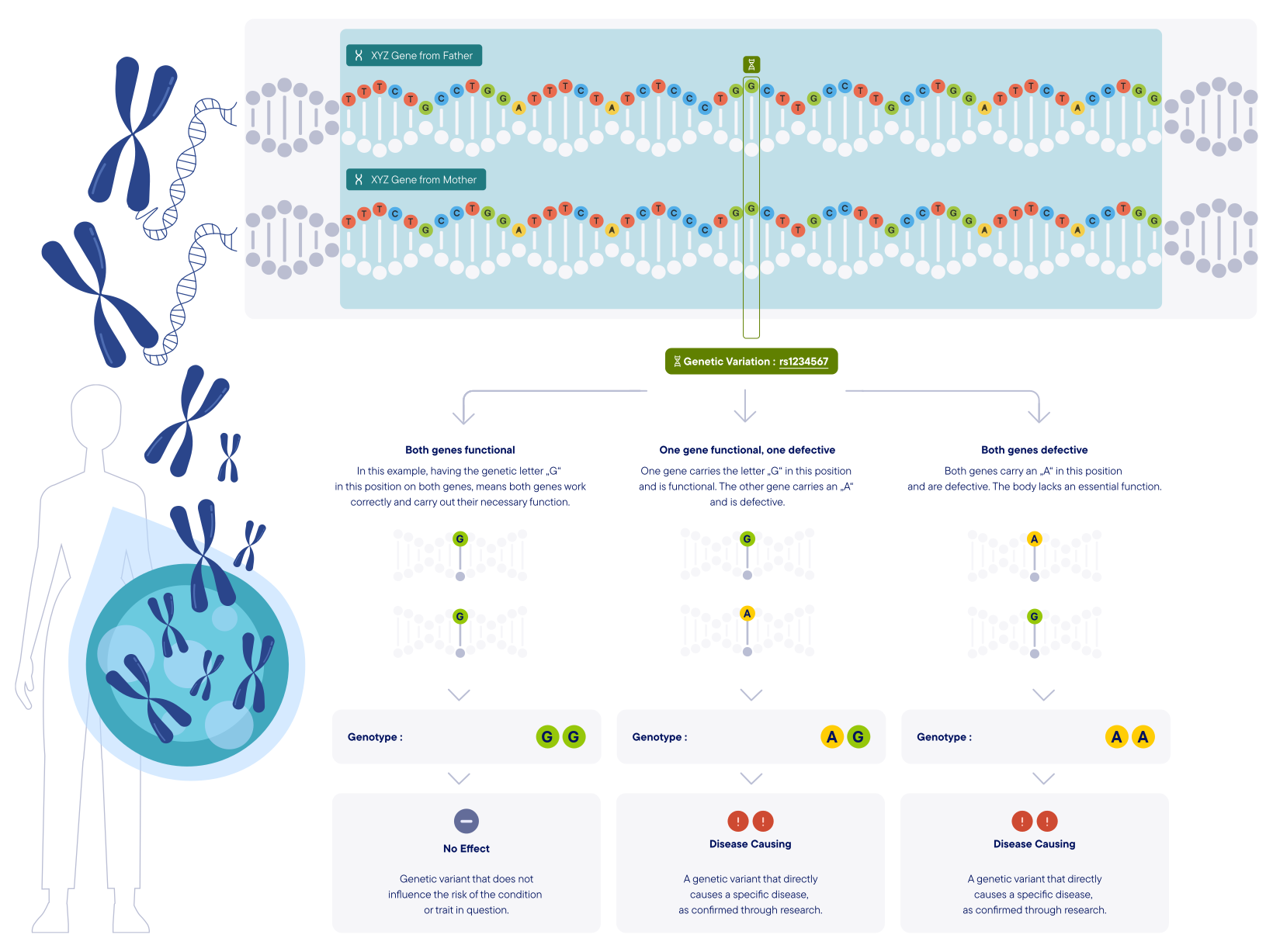
Humans have more than 20,000 genes, each carrying out one or a few specific functions in the body. One gene instructs the body to digest lactose from milk, another tells the body how to build strong bones and another prevents the body's cells from beginning to multiply uncontrollably and developing into cancer. As all of these genes combined are the building instructions for our body, a defect in one of these genes can have severe health consequences.
Through decades of genetic research, we know the genetic code of any healthy/functional human gene. We have also identified that in certain positions on a gene, some individuals may have a different genetic letter from the one you have. We call these hotspots "Genetic Variations" or "Variants" in short. In many cases, studies have been able to show that having the genetic letter "G" in the position makes you healthy, but having the letter "A" in the same position disrupts the gene function and causes a disease. Genopedia allows you to view these variants in genes and summarizes all that we know from scientific research, which genetic letters (Genotype) have good or bad consequences on your health or on your traits.
History
Throughout history, people have described small, firm bumps along the edges of the hands and feet that tended to run in families. Community stories often described the condition as harmless but stubborn, with relatives recalling similar pebbly skin along the sides of the fingers or heels that appeared in adolescence and slowly became more noticeable with age. For many, this meant tiny, skin‑colored ridges that felt rough when gripping tools, playing instruments, or walking long distances.
First described in the medical literature as acrokeratoelastoidosis of Costa in the mid‑20th century, the condition was initially recognized by its distinctive location—on the margins of the palms and soles—and its long‑lasting, non‑itchy bumps. Early clinicians relied on the look and feel of the skin and, when available, small biopsies that showed changes in the skin’s elastic fibers. Over time, descriptions became more consistent, noting that the bumps were usually symmetric, tended to cluster along the sides of fingers and toes, and did not affect overall health.
As medical science evolved, doctors realized that similar‑looking conditions existed and could be confused with acrokeratoelastoidosis of Costa. This led to careful re‑examination of case reports and the development of clearer clinical criteria. In recent decades, knowledge has built on a long tradition of observation, with dermatology teams comparing photographs, family histories, and tissue studies to tease apart closely related disorders. The understanding that some families showed a pattern across generations helped researchers suspect a genetic basis, even before modern testing was available.
Advances in genetics did not immediately identify a single cause, but they reinforced that acrokeratoelastoidosis of Costa is distinct from other palm‑and‑sole bump conditions. Reports from Europe, North America, and other regions highlighted similar features and age of onset, suggesting a shared underlying pathway. Despite evolving definitions, the historical record has consistently described a benign course: the skin changes tend to persist but do not progress to pain, infection, or internal disease.
Today, the history of acrokeratoelastoidosis of Costa helps explain why diagnosis still rests mainly on a careful skin exam and, at times, a biopsy to confirm elastic fiber changes. Knowing the condition’s history also clarifies why names and categories have shifted—early labels focused on what could be seen and felt, while later work tried to sort out look‑alike conditions. For people living with acrokeratoelastoidosis of Costa, this background offers reassurance: the bumps may be long‑standing, but they are noncancerous, stable, and recognized around the world as a rare, primarily cosmetic skin finding.