
Acquired night blindness makes it hard to see in low light or at night. People with acquired night blindness may notice trouble driving after dusk and slow adjustment when moving from bright to dim places. It usually develops over time and can affect children or adults depending on the cause. Many cases improve when the underlying issue is treated, such as vitamin A deficiency or certain eye problems, and mortality is not linked to the condition itself. Talking with your healthcare provider can bring clarity and reassurance.
Overview
Acquired night blindnessSymptoms
Acquired night blindness causes trouble seeing in dim light, slow adjustment from bright to dark, and glare sensitivity. Early symptoms of acquired night blindness often appear as difficulty driving at night or navigating dusk-lit rooms.
Outlook and prognosis
Most people with acquired night blindness improve once the underlying cause is found and treated, such as vitamin A deficiency, certain eye diseases, or medication effects. Recovery can be gradual. If retinal damage is advanced, night vision may remain limited but daytime vision often stays stable.
Causes and risk factors
Acquired night blindness often stems from vitamin A deficiency (malnutrition, malabsorption, liver disease), cataracts, uncorrected high myopia, or diabetic eye disease. Risks also include certain medicines (isotretinoin, chloroquine), alcohol misuse, bariatric surgery, and family history of retinal disorders.
Genetic influences
Genetics usually play a minor role in acquired night blindness; most cases stem from non-genetic causes like vitamin A deficiency, medication effects, or eye disease. Still, rare inherited variants can lower retinal resilience. Family history may guide testing when causes are unclear.
Diagnosis
Clinicians diagnose acquired night blindness through history, low-light vision testing, and eye exam findings, often including visual acuity, pupil responses, and imaging. Blood tests may check vitamin A or causes. Referral guides treatment after diagnosis of acquired night blindness.
Treatment and drugs
Treatment for acquired night blindness focuses on the cause. Doctors may recommend vitamin A or zinc if levels are low, adjust medications that affect vision, treat eye conditions like cataracts, and suggest nighttime lighting or anti-glare lenses to ease symptoms.
Symptoms
Acquired night blindness often shows up when the lights go down: dim restaurants, dusk walks, or driving after sunset feel harder than they used to. You might notice small changes at first—letters look less crisp, and shapes blend into the background. Early symptoms of acquired night blindness include trouble seeing in low light, more glare from oncoming headlights, and taking longer for your eyes to adjust when you step into a dark room. For many, this affects confidence with night driving or navigating uneven ground in the evening.
It’s harder to make out faces or signs in dark rooms or outdoors at dusk. Everyday tasks like finding items in a closet or reading a menu in a low-lit restaurant can feel challenging.
Moving from bright sunlight into a dark theater can leave vision murky for longer than expected. With acquired night blindness, the eyes take extra time to settle into low light.
Headlights and streetlights can feel blinding, and lane markings may be harder to follow. Some people avoid driving after sunset because judging distance and speed is tougher.
Bright lights can create halos or starbursts that make it hard to see what’s around them. This can make oncoming traffic or lit shop signs overwhelming.
How people usually first notice Acquired night blindness?
People often first notice acquired night blindness when driving at dusk or walking into a dim room feels unusually hard, with slow adjustment to low light and frequent stumbling or needing brighter lighting than others. Some describe glare and halos from headlights, trouble seeing street signs or curbs after sunset, or needing extra time for their eyes to “catch up” when moving from bright to dark places. For many, these first signs of acquired night blindness creep in gradually, prompting an eye exam after repeated evening mishaps or increasing dependence on flashlights.
Types of Acquired night blindness
Acquired night blindness can show up in a few distinct ways, depending on the cause and which parts of the eye or body are affected. Some types show up in daily routines—like driving at dusk, walking in dim hallways, or recognizing faces in low light. Clinicians often describe them in these categories: nutrition-related, eye disease–related, medication- or toxin-related, and systemic disease–related. Not everyone will experience every type.
Nutrition-related
This type is linked to too little vitamin A intake or absorption. People often struggle most in dim settings but see normally in bright light. Early symptoms of acquired night blindness may ease once vitamin A levels are restored.
Retinal disease–related
Changes in the retina from conditions like diabetic eye disease or inherited retinal wear-and-tear can reduce low-light vision first. For many, certain types stand out more than others. You might notice slow dark adaptation after lights go off and more glare at night.
Corneal or lens causes
Scarring on the cornea or early cataract can scatter light and make dim environments feel hazy. Night driving glare and halos are common. Daytime vision may be fairly sharp at first.
Medication or toxin
Some drugs or toxins can interfere with the eye’s light-sensing cells or vitamin A pathways. Symptoms may begin gradually after a new medication or exposure. Stopping or switching the drug sometimes improves night vision.
Systemic disease–related
Liver, gut, or pancreatic disorders can reduce vitamin A processing or absorption, leading to poor night vision. People may also notice dry eyes or overall fatigue if nutrition is affected. Treating the underlying condition can improve the night symptoms in many cases.
What genetics can tell you about symptoms
Some people with mutations in genes that help the retina’s rod cells work (like RHO or GRK1) notice trouble seeing in low light, slower dark adaptation, and more glare. Variants that affect vitamin A processing (such as RPE65) can add peripheral vision loss.
Causes and risk factors
Acquired night blindness often stems from low vitamin A or eye changes that block or dim light. When vitamin A is low, early symptoms of acquired night blindness can appear after dusk or in dim rooms. Risk rises with a diet low in vitamin A and with heavy alcohol use. Digestive disorders or bariatric surgery that limit absorption can add risk, and cataracts or some acne medicines based on vitamin A can make night vision worse. Doctors distinguish between risk factors you can change and those you can’t, and family history of retinal disease can raise susceptibility.
Environmental and biological risk factors
Acquired night blindness makes dim rooms, dusk, or nighttime driving harder than it used to be. Many notice early symptoms of acquired night blindness when the lights go down—headlights flare, steps seem to disappear, and it takes longer for eyes to adjust. Some risks are carried inside the body, others come from the world around us. Below are the biological and environmental factors that can raise the chance of night vision problems.
Vitamin A helps the eyes adapt to darkness. Low levels can lead to acquired night blindness, especially if they persist over time.
Conditions that limit fat absorption can reduce how much vitamin A the body takes in. This includes bowel disease or past stomach or intestinal surgery and can set the stage for acquired night blindness.
The liver stores and activates vitamin A. Ongoing liver problems can deplete those stores and slow dark adaptation.
Zinc helps vitamin A work inside the eye. A lack of zinc can slow dark adaptation and contribute to acquired night blindness.
Genetic risk factors
Difficulty seeing at dusk, missing steps in dim hallways, or glare while driving at night can appear over time, and genetics sometimes play a role. Although many cases arise from non-genetic reasons, several inherited eye conditions can lead to night vision problems that begin in adolescence or adulthood, so the symptom can feel “acquired.” Some risk factors are inherited through our genes. Early symptoms of acquired night blindness may include slower dark adaptation after lights are switched off.

Retinal dystrophies: Inherited conditions such as retinitis pigmentosa often start with poor night vision. Many people first notice trouble navigating in low light before any daytime changes. Over time, the rod cells that sense dim light are most affected.
Stargardt disease: This inherited macular condition can include delayed dark adaptation and night vision complaints. Symptoms vary; some people notice night driving becomes difficult long before central vision declines. It can present as acquired night blindness in teens or adults.
Choroideremia: This X-linked condition typically causes early night vision problems in males. Peripheral vision then narrows over time. Female carriers may have mild night vision symptoms.
Visual cycle variants: Changes in genes that recycle vitamin A in the eye can slow dark adaptation. People may see normally by day but struggle soon after the lights dim. This pattern often feels like acquired night blindness despite a genetic cause.
Stationary night blindness: Congenital stationary night blindness and Oguchi disease cause lifelong difficulty seeing in low light. Day vision can be near normal, so the problem may only become obvious in school-age years or adulthood. Some notice marked delays adjusting to darkness after bright light.
Vitamin A disorders: Rare inherited conditions that impair vitamin A transport or fat absorption can cause poor dark vision. When the eye cannot access enough vitamin A for the visual cycle because of a genetic problem, night blindness develops. These disorders can make acquired night blindness a recurring symptom across relatives.
X-linked patterns: When a genetic change sits on the X chromosome, males are more likely to have earlier, more severe night vision loss. Females who carry the change may have milder symptoms. Family trees often show affected males across generations connected through women.
Family history: Having a close relative with an inherited retinal condition raises the chance of similar night vision symptoms. Risk levels vary by the gene and inheritance pattern. People with strong family history sometimes experience acquired night blindness before other eye changes.
Lifestyle risk factors
Acquired night blindness is often driven by diet-related nutrient gaps and certain habits that limit vitamin A and carotenoid availability. Understanding the lifestyle risk factors for Acquired night blindness can guide practical changes that restore normal dark adaptation. Choices that reduce intake or absorption of vitamin A and supportive nutrients can make nighttime vision problems more likely.
Diets lacking liver, dairy, eggs, or orange/green vegetables reduce vitamin A and carotenoids needed to form rhodopsin in the retina. Chronic shortfalls impair dark adaptation and lead to night vision difficulty.
Fat‑free meals limit absorption of fat‑soluble vitamin A and carotenoids from vegetables. Adding healthy fats with produce improves delivery of these nutrients to the retina.
Unbalanced vegan or highly restrictive weight‑loss plans without fortified foods or supplements can deplete vitamin A and zinc. This raises the risk of nyctalopia even when total calories seem adequate.
Heavy drinking displaces nutrient‑dense foods and impairs liver storage and activation of vitamin A. The resulting deficiency often first appears as trouble seeing in dim light.
Risk prevention
Acquired night blindness can make dusk walks, evening driving, or dim restaurants surprisingly hard. Alongside medical care, everyday habits also matter. Knowing early symptoms of acquired night blindness—like halos, glare, or trouble finding your way in low light—can help you seek an eye exam sooner. Many steps below lower risk by protecting the retina, lens, and the nutrients your eyes rely on.
A yearly dilated exam can spot problems that lead to night vision trouble, such as cataracts or retinal changes. Catching issues early allows treatment before night blindness sets in.
Eat foods rich in vitamin A and carotenoids, like leafy greens, carrots, sweet potatoes, eggs, and dairy. Zinc from foods like beans, nuts, and whole grains helps your body use vitamin A.
Cataracts scatter light and worsen glare after sunset. Timely surgery often restores clearer, safer night vision.
An up-to-date glasses or contact lens prescription improves contrast and low‑light detail. Anti‑reflective coatings may reduce glare from headlights and streetlamps.

Transmission
Acquired night blindness isn’t contagious—you can’t catch it or pass it on. There is no person-to-person transmission of acquired night blindness; instead, it develops from underlying issues such as vitamin A deficiency, certain eye conditions, or medication side effects.
This acquired form isn’t inherited, though families may seem to have more cases when they share diet or health risks. If you’re wondering how acquired night blindness is transmitted, it isn’t—the focus is finding and treating the cause so night vision can improve.
When to test your genes
Consider genetic testing if night vision problems began early in life, run in your family, or come with other eye findings your doctor notes. Testing can confirm inherited retinal conditions, guide tailored monitoring, and inform relatives’ risks. Start by discussing symptoms with an eye specialist, who can refer you for testing.
Diagnosis
When dusk falls, street signs blur and stairs feel uncertain. For many, these changes prompt an eye exam to figure out how acquired night blindness is diagnosed. Your eye doctor looks for patterns that point to a cause, then confirms it with targeted tests. Tests may feel repetitive, but each one helps rule out different causes.
Your provider asks when night vision problems started and how they affect driving, walking outside, or moving through dim rooms. Details about glare, recovery after bright lights, and any side vision trouble help narrow the cause.
Questions cover recent weight-loss surgery, bowel disease, liver problems, or a diet very low in vitamin A. These clues can point to correctable causes of acquired night blindness.
The team checks for medicines that can impair night vision, such as some acne treatments or malaria drugs. Adjusting or stopping a culprit medication may reverse symptoms under medical guidance.
Drops widen the pupils so the retina and optic nerve can be examined. The doctor looks for lens clouding, inflammation, or retinal changes that fit an acquired pattern rather than an inherited one.
Stages of Acquired night blindness
Acquired night blindness does not have defined progression stages. It varies widely because it’s a symptom with many possible causes—some people notice it gradually, others more suddenly—and it may improve if the underlying issue is treated. Different tests may be suggested to help sort out the cause, such as a full eye exam, checks of vision in low light or dark-adaptation testing, blood tests for vitamin A, a review of medicines, and retinal imaging. Doctors usually monitor it over time with follow-up eye exams and by asking about everyday changes, including early symptoms of acquired night blindness like difficulty seeing at dusk or in dim restaurants.
Outlook and prognosis
Night driving, dim restaurants, and movie theaters are often the toughest parts of daily life with acquired night blindness. Many people ask, “What does this mean for my future?”, because it can feel unsettling when lights go down and vision doesn’t keep up. The outlook is not the same for everyone, but it largely depends on the cause—common triggers include vitamin A deficiency, certain medications, uncontrolled diabetes, or eye conditions like cataracts. If the underlying issue is found and treated early, night vision can improve over weeks to months; for cataracts, surgery often restores low‑light vision, and for vitamin A deficiency, supplements can help once levels are corrected.
Understanding the prognosis can guide planning and practical steps at home, like using brighter entryway bulbs, motion‑sensor nightlights, and anti‑glare glasses for evening errands. Early care can make a real difference, especially if you notice early symptoms of acquired night blindness such as difficulty seeing star‑lit streets, halos around headlights, or needing extra time to adapt when the lights switch off. When night blindness stems from long‑standing retinal disease or severe nerve damage, improvement may be limited, but stabilizing the cause—better blood sugar control, switching medications when appropriate, or treating eye inflammation—can prevent further decline.
Most people with acquired night blindness do not face increased mortality from the vision problem itself. Risks tend to come from the underlying condition or from safety issues like night‑time driving; reducing those risks with treatment and lifestyle changes often brings the outlook back to baseline. Talk with your doctor about what your personal outlook might look like, including how fast to expect changes and which treatments fit your situation. With ongoing care, many people maintain safe mobility and adapt their routines so evenings feel manageable again.
Long-term effects
Acquired night blindness can shape evenings and low‑light settings most: grocery parking lots, cinemas, dawn or dusk drives. Many notice early symptoms of acquired night blindness as trouble seeing when stepping into a dim room after bright daylight. Long-term effects vary widely, depending on the cause and how quickly it’s found and treated. For some, it stays mild; for others, it can limit driving, work options, and after‑dark social life.
Moving around in dim rooms, streets, or stairwells stays challenging. People may take extra time to find edges, steps, or doorways. Bumping into low‑contrast objects becomes more common.
Headlights and dark roads make hazards and road signs harder to pick up quickly. Many with acquired night blindness avoid driving at dusk or nighttime. Some regions may add restrictions if vision tests are not met.
Eyes take longer to adjust when going from bright to dim places. After a camera flash or sunlit sidewalk, vision may feel “washed out” in the dark for several minutes. This delay can disrupt daily routines in the evening.
Oncoming headlights or storefront lights can cause disabling glare and halos. Details fade when bright points of light are in view. Nighttime depth perception may also feel off.
How is it to live with Acquired night blindness?
Living with acquired night blindness can feel like the world dims too quickly at dusk, making parking lots, stairwells, and dim restaurants unexpectedly challenging. People often adjust by carrying small flashlights, choosing well-lit routes, allowing extra time after dark, and avoiding night driving when possible, which can limit social plans or work shifts. Friends and family may need to offer practical support—like guiding in low light or planning earlier meetups—and patience when plans change due to lighting conditions. With clear communication and a few simple adaptations, many find a steady rhythm that keeps evening life safer and more comfortable.
Treatment and drugs
Treatment for acquired night blindness focuses on the underlying cause and easing symptoms in the meantime. If it’s linked to low vitamin A, doctors typically prescribe vitamin A supplements and suggest foods rich in this vitamin; when absorption is the issue, shots or higher-dose supplements may be used. When acquired night blindness stems from eye conditions like cataracts, glaucoma, or diabetic eye disease, addressing that condition—such as cataract surgery, glaucoma drops, or better blood sugar control—often improves night vision. Alongside medical treatment, lifestyle choices play a role, including using brighter lighting, anti-glare lenses, avoiding night driving when possible, and giving your eyes extra time to adjust in dim settings. If you’re unsure, write down questions to bring to your next visit.
Non-drug treatment
Trouble seeing at dusk can make driving, walking the dog, or reading street signs stressful. Treatment focuses on the cause and on practical changes that make dim settings safer and clearer. Non-drug treatments often lay the foundation for everyday confidence, whether at home or outside. These steps can support people living with acquired night blindness alongside any medical care your eye doctor recommends.
Emphasize vitamin A–rich foods like eggs, dairy, leafy greens, and orange vegetables and fruits. A dietitian can help plan meals and address absorption issues if you have gut or liver conditions.
Make sure your glasses or contacts are up to date and fit well. Anti-reflective coatings and clean, scratch‑free lenses can cut glare without overly darkening your view.
Use brighter, even lighting with task lamps for kitchens, hallways, and stairs, and add motion-sensor night lights. Mark steps or thresholds with high-contrast tape to guide footing during early symptoms of acquired night blindness.
Vision rehabilitation specialists teach contrast and scanning techniques to navigate dim spaces. They can suggest tools like illuminated magnifiers, high‑contrast reading materials, and large‑print labels.
Your genes may have an impact on how drugs work for you
Some people with acquired night blindness process certain medications differently because of inherited differences in drug‑handling genes, which can change how well a drug works or how strong side effects feel. Clinicians may adjust dose or choose alternatives based on these genetic clues.
Pharmacological treatments
Acquired night blindness is often linked to vitamin deficiencies or medications, so treatment focuses on replacing the missing nutrient and fixing drug-related causes. Vitamin A is the key nutrient for low‑light vision, and doctors may prescribe it by mouth or as an injection if absorption is a problem. Some people also need zinc or vitamin E when tests show a deficit. Not everyone responds to the same medication in the same way.
Retinyl palmitate or retinyl acetate by mouth can restore low‑light vision in acquired night blindness when blood levels are low. It’s usually taken for weeks to months under medical supervision. Your team may monitor liver function and vitamin A levels.
Intramuscular vitamin A may be used if there’s malabsorption (for example after bariatric surgery or with active gut disease) or severe deficiency. This approach can raise levels quickly when tablets won’t absorb well. Doctors will track response and safety with follow‑up labs.
Zinc sulfate or zinc gluconate may be added if tests show zinc deficiency, which can impair vitamin A transport in the body. Correcting zinc can help vitamin A work properly and improve low‑light vision. Your clinician will check for interactions with other medicines.
Alpha‑tocopherol (vitamin E) can be prescribed when deficiency contributes to retinal or nerve dysfunction, especially in fat‑malabsorption. Replacing vitamin E may gradually support night vision and balance. Dosing may be increased or lowered gradually to find the lowest effective amount.
Genetic influences
For acquired night blindness, genes are usually not the main driver; most cases come from nutrition problems (such as low vitamin A), eye conditions, or certain medications. That said, inherited eye disorders that affect the retina can cause similar trouble seeing in dim light and may be mistaken for an acquired problem, especially early on. Family history is one of the strongest clues to a genetic influence. Rare genetic conditions that change how the body absorbs or transports vitamin A, and genetic diseases like cystic fibrosis that impair fat absorption, can also raise the chance of vitamin A–related night blindness. If early symptoms of acquired night blindness show up alongside relatives with retinal disease or lifelong night vision issues, your doctor may suggest genetic counseling or testing to look for an inherited cause. Otherwise, when no strong family pattern is present, focusing on reversible causes and overall eye health usually guides the workup.
Is Acquired night blindness genetic?
Genetics usually play a minor role in acquired night blindness; most cases stem from non-genetic causes like vitamin A deficiency, medication effects, or eye disease. Still, rare inherited variants can lower retinal resilience. Family history may guide testing when causes are unclear.
Pharmacogenetics—how genetics influence drug effects
While acquired night blindness often develops from nutrition gaps, eye surface problems, or certain medicines, genetics can still shape how treatments and drugs work for you. Some people inherit differences in how their bodies convert plant-based beta-carotene into active vitamin A, so diet changes alone may not correct acquired night blindness, and a clinician may prefer preformed vitamin A supplements instead. Genes can influence how quickly you process medicines linked with night-vision problems, such as retinoid acne treatments or some antimalarials, which can affect the safest dose or whether a different drug is a better fit. Your care team may respond by adjusting the dose, switching to an alternative, or focusing first on correcting a vitamin A deficiency. If early symptoms of acquired night blindness show up after starting a new prescription, let your doctor know; genetic testing isn’t routine for acquired night blindness, but it may be considered when side effects or unusual responses keep happening. In short, your genetic makeup can help fine-tune treatment of acquired night blindness by guiding vitamin A strategies and reducing the risk of drug-related night vision problems.
Interactions with other conditions
Living with other health issues can change how acquired night blindness shows up day to day—someone might notice their low‑light vision dips after weight‑loss surgery or during a flare of a gut condition that affects nutrient absorption. Doctors call it a “comorbidity” when two conditions occur together. Problems that reduce vitamin A absorption or storage—such as celiac disease, inflammatory bowel disease, chronic pancreatitis, cystic fibrosis with pancreatic insufficiency, or liver disease—can trigger or prolong acquired night blindness because the body can’t keep enough vitamin A on board. Eye diseases like cataracts or diabetic eye changes may further dim vision in the evening or in low‑contrast settings, so early symptoms of acquired night blindness can be easy to miss. Certain medicines, including isotretinoin for acne or long-term high‑dose vitamin A, can also affect how the retina works in the dark, and alcohol‑related liver disease can lower vitamin A stores, all of which may worsen acquired night blindness. Interactions can look very different from person to person, so coordinating care between your eye specialist and the team managing any digestive, liver, or metabolic conditions is often the most effective way to protect night vision.
How genes can cause diseases
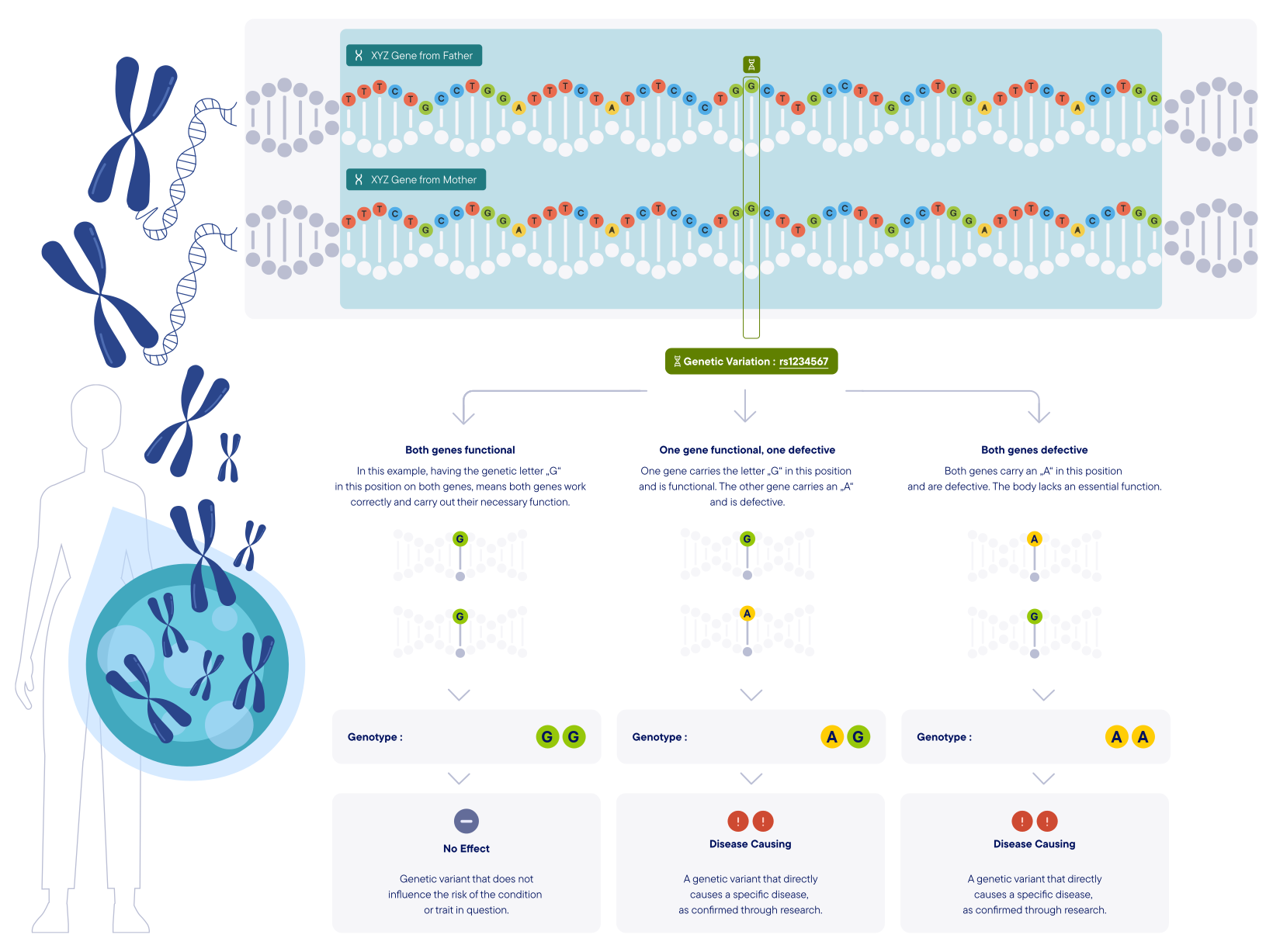
Humans have more than 20,000 genes, each carrying out one or a few specific functions in the body. One gene instructs the body to digest lactose from milk, another tells the body how to build strong bones and another prevents the body's cells from beginning to multiply uncontrollably and developing into cancer. As all of these genes combined are the building instructions for our body, a defect in one of these genes can have severe health consequences.
Through decades of genetic research, we know the genetic code of any healthy/functional human gene. We have also identified that in certain positions on a gene, some individuals may have a different genetic letter from the one you have. We call these hotspots "Genetic Variations" or "Variants" in short. In many cases, studies have been able to show that having the genetic letter "G" in the position makes you healthy, but having the letter "A" in the same position disrupts the gene function and causes a disease. Genopedia allows you to view these variants in genes and summarizes all that we know from scientific research, which genetic letters (Genotype) have good or bad consequences on your health or on your traits.
History
Throughout history, people have described trouble seeing after sunset—walking home at dusk, the road fades; in a dim theater, faces blur until the lights come up. Long before vitamin A was named, healers linked “night sight” with diet and overall health. Ancient medical texts noted that certain eye complaints eased with animal liver, a food now known to be rich in vitamin A. Community stories often described the condition easing when nutrition improved after harvest or aid arrived, and worsening during famine or long illness.
First described in the medical literature as a problem of “dim-light vision,” acquired night blindness was initially lumped together with many different eye issues. Over time, descriptions became more precise. Doctors noticed that people who developed night vision problems later in life often had clear daytime vision, a normal-looking eye exam at first glance, and a history that pointed to poor nutrition, gut disease that blocked nutrient absorption, liver disease, or certain medicines. Wartime and famine-era records in the 20th century, especially from regions with limited access to varied foods, showed clusters of night blindness that improved when vitamin A–rich foods or supplements were given.
In recent decades, knowledge has built on a long tradition of observation. Researchers learned how vitamin A is carried and stored in the body, and how the light-sensing cells in the retina depend on it to reset after each flash of light. That work clarified why night vision is often the first thing to falter when vitamin A runs low. It also explained other acquired causes: surgeries that change the eye’s optics, conditions that cloud the cornea or lens, and medications that affect the retina’s chemistry can all dim vision in low light without changing daytime sharpness early on.
Understanding has also grown around the difference between acquired night blindness and inherited forms that begin in childhood or young adulthood. Historical confusion is easy to see in older case reports, where gradual night vision loss from genetic retinal diseases was sometimes attributed to diet. With better eye imaging and blood tests, the two are now more reliably told apart, which matters because acquired night blindness can often improve when the underlying cause—like vitamin A deficiency, malabsorption, or a medication effect—is addressed.
Today’s view of acquired night blindness blends those early practical observations with modern science. Clinicians still listen for the familiar story—trouble driving at night, needing extra time to adjust in a dark room—while also looking for medical clues in the whole body. That continuity, from historical diets to present-day diagnostics, shapes how care teams prevent, detect, and treat night vision problems in everyday practice.