
Acquired dermis elastic tissue disorder with increased elastic tissue is a rare skin condition that leads to thicker or more prominent elastic fibers in the skin. People with this condition may notice skin thickening, small bumps or plaques, and changes in texture that can feel rubbery or firm. It is usually long-lasting, and early symptoms of Acquired dermis elastic tissue disorder with increased elastic tissue may be subtle. It can affect adults more often, but age and pattern can vary. Treatment focuses on managing skin changes, and the condition is not known to affect life span.
Overview
Acquired dermis elastic tissue disorder with increased elastic tissueSymptoms
Acquired dermis elastic tissue disorder with increased elastic tissue usually causes slowly appearing, soft, skin‑colored or yellowish bumps or raised patches. The areas may feel rubbery or thick, are typically painless, and rarely itch, but cosmetic changes often cause concern.
Outlook and prognosis
Most people with acquired dermis elastic tissue disorder with increased elastic tissue notice slowly changing, thickened or pebbled skin that tends to be long‑lasting but not life‑threatening. Symptoms often stabilize; gentle skin care and targeted treatments can improve comfort and appearance. Regular follow‑up helps track changes and manage complications like limited flexibility or cosmetic concerns.
Causes and risk factors
Acquired dermis elastic tissue disorder with increased elastic tissue often stems from long-term ultraviolet exposure. Risk rises with age, fair or sun‑sensitive skin, outdoor work, and tobacco use. Some medications, skin inflammation, and genetic variability in elastic-fiber repair may contribute.
Genetic influences
Genetics play a limited role in acquired dermis elastic tissue disorder with increased elastic tissue; most cases are not inherited. Variations may influence skin resilience and healing, shaping who is more susceptible. Family history rarely predicts risk or course.
Diagnosis
Doctors diagnose Acquired dermis elastic tissue disorder with increased elastic tissue by examining the skin, then confirming with a small biopsy under the microscope. Blood tests or imaging may be used to rule out related conditions or internal involvement.
Treatment and drugs
Treatment for acquired dermis elastic tissue disorder with increased elastic tissue focuses on easing itching, smoothing thickened or pebbled skin, and slowing changes. Dermatologists may use prescription creams, oral medicines, or procedures like laser therapy; gentle skincare and sun protection help. Regular follow-up tracks skin texture and comfort.
Symptoms
Small bumps, ridges, or lines in the skin often appear slowly and feel more like a texture change than pain. Early symptoms of Acquired dermis elastic tissue disorder with increased elastic tissue can be subtle and may blend into normal skin changes with age or sun. Symptoms vary from person to person and can change over time. Many notice these changes on the neck, trunk, or areas that flex such as the armpits or lower back.
Small, firm bumps can appear gradually, often skin-colored or slightly yellow. They may feel rough to the touch or have tiny plugs on top. These bumps can slowly cluster together.
Raised, rope-like lines may show up along the lower back or shoulders. They can feel like cords under the skin but usually do not hurt. They may be easier to feel when you bend or twist.
Patches can feel thicker or a bit sandpapery. Clothing seams or backpack straps may rub and make them more noticeable.
Bumps may arrange in curves, arcs, or ring-like shapes that slowly expand. This pattern can appear on the neck, arms, or trunk.
How people usually first notice Acquired dermis elastic tissue disorder with increased elastic tissue?
People usually first notice acquired disorders with increased elastic tissue in the skin when new, small, yellowish or flesh-colored bumps appear, often on the neck, underarms, or flexing areas, and the skin in those spots feels unusually soft or stretchy. Over time, the affected areas may show loose, wrinkled, or crepe-like texture that doesn’t match the person’s age, prompting a visit to a dermatologist. Some notice these changes after inflammation, injury, or certain exposures, which helps doctors connect the skin changes to an acquired elastic tissue problem.
Types of Acquired dermis elastic tissue disorder with increased elastic tissue
Acquired dermis elastic tissue disorder with increased elastic tissue is generally discussed as a group of related skin conditions rather than a single uniform illness. Clinicians often describe them in these categories: patterns with thickened, pebbly, or papular skin; localized bumps and plaques; and rarer nodular forms. Daily life often makes the differences between symptom types clearer—for example, some mainly change how the skin feels on the neck or upper back, while others create scattered small bumps on the arms or trunk. Not everyone will experience every type, and the look and feel can shift slowly over time.
Papular elastosis
Small, firm, skin-colored bumps appear where skin folds or rubs, such as the neck, armpits, or upper chest. They may feel pebbly or rough and can slowly spread or thicken. Early symptoms of acquired dermis elastic tissue disorder often start in these areas.
Plaque-like form
Thicker, raised patches form from many tiny bumps merging over time. The surface can look cobblestoned and feel rubbery to the touch. It often shows on the upper back or shoulders.
Follicle-centered bumps
Pinpoint to small bumps form around hair follicles, sometimes with a sandpaper feel. These can be more noticeable on the upper arms, thighs, or buttocks. It may resemble common “bumpy skin” but tends to persist and slowly expand.
Nodular variant
Larger, deeper-feeling lumps develop in limited areas. These nodules are usually firm and can be tender if rubbed by clothing. They are less common but may coexist with smaller bumps nearby.
Localized plaques
One or a few well-defined plaques appear without widespread involvement. Borders can be clear, and the color often matches nearby skin. Symptoms may stay stable for months or years.
Widespread papules
Numerous small bumps scatter across several body regions. For many, certain types stand out more than others. The skin may feel generally thicker or rougher in affected zones.
Photo-exposed emphasis
Changes concentrate on sun-exposed areas like the neck or upper chest. The skin can look leathery or ridged along lines of motion. Consistent sun protection may help limit further thickening.
Flexural prominence
Bumps and thickening collect in body folds such as the armpits or groin. Friction and moisture can make the texture more pronounced. Clothing seams may irritate these areas.
What genetics can tell you about symptoms
ELN gene variants can make elastic fibers overly abundant yet disorganized, leading to thickened, velvety skin and sometimes small, soft bumps. Some people also notice skin that folds easily or feels rubbery, because the altered elastin changes stretch and recoil.
Causes and risk factors
This condition develops when skin makes and stores too much elastic tissue over time. Long-term sun exposure is the main environmental cause. Risk factors for Acquired dermis elastic tissue disorder with increased elastic tissue include older age, fair or sun‑sensitive skin, outdoor work or tanning, and smoking. Doctors distinguish between risk factors you can change and those you can’t. Family traits may raise susceptibility, and some health issues or medicines such as penicillamine can trigger or worsen elastic build‑up.
Environmental and biological risk factors
Acquired dermis elastic tissue disorder with increased elastic tissue is influenced by what your skin is exposed to over time and how your body repairs that exposure. Doctors often group risks into internal (biological) and external (environmental). Understanding these helps you focus on what can be managed while recognizing factors you can't change. Knowing the risks can also help you notice early symptoms of acquired dermis elastic tissue disorder with increased elastic tissue sooner.
Long-term ultraviolet light can injure elastic fibers and drive overgrowth of abnormal elastic tissue. Repeated sun on the face, neck, and forearms accelerates these changes. This raises the chance of acquired dermis elastic tissue disorder with increased elastic tissue.
Living or working at high altitude or near the equator increases UV intensity. Thinner air and stronger sunlight add to cumulative skin exposure over years. This can make acquired dermis elastic tissue disorder with increased elastic tissue more likely.
Previous radiation therapy or occupational exposure can alter connective tissue in the skin. Changes may include increased and disorganized elastic fibers. Risk rises within the treated or exposed skin areas.
Ozone and fine particles can stress skin and speed up damage-and-repair cycles. That repeated stress can encourage build-up of abnormal elastic tissue. Urban smog exposure has been linked to more pronounced elastosis.
Genetic risk factors
Genetic causes are not well established for Acquired dermis elastic tissue disorder with increased elastic tissue. Most cases appear sporadic without a family pattern. Still, a few inherited conditions can look similar or occasionally coexist, so family history helps guide testing and follow-up. Carrying a genetic change doesn’t guarantee the condition will appear.

Typically non-inherited: Most people with Acquired dermis elastic tissue disorder with increased elastic tissue have no identifiable genetic cause. Relatives are usually unaffected, and there is no consistent inheritance pattern.
LEMD3 variants: Pathogenic LEMD3 changes cause Buschke-Ollendorff syndrome, which includes elastic tissue nevi that can resemble acquired increased elastic tissue. When present, this tends to run in families (autosomal dominant), pointing to a genetic syndrome rather than an acquired disorder.
ABCC6 (PXE): Variants in ABCC6 cause pseudoxanthoma elasticum with abnormal, often calcified elastic fibers that may be confused with dermal elastic tissue overgrowth. Eye and blood vessel involvement in PXE helps distinguish it from acquired elastic tissue disorders.
Elastic fiber genes: Alterations in ELN, FBLN5, or EFEMP2 lead to inherited cutis laxa with reduced elastic tissue, not the increased fibers seen in Acquired dermis elastic tissue disorder with increased elastic tissue. These genes become more relevant when early symptoms of Acquired dermis elastic tissue disorder with increased elastic tissue appear in childhood or come with generalized skin laxity.
Family history clues: A pattern of similar skin findings, eye changes, or connective tissue nevi across generations suggests an inherited condition rather than a purely acquired disorder. If you're unsure about your risks, a doctor can provide clarity.
Lifestyle risk factors
Acquired dermis elastic tissue disorder with increased elastic tissue is typically shaped by day-to-day habits that stress or prematurely age the skin. Behavioral sun exposure and tobacco use are among the strongest lifestyle risk factors for Acquired dermis elastic tissue disorder with increased elastic tissue. Nutrition, alcohol, and sleep patterns can also influence how quickly visible changes develop or how noticeable symptoms become.
Regular, unprotected time in midday sun accelerates elastin buildup and degeneration in the dermis. Intentional tanning or frequent outdoor leisure without shade increases actinic damage.
Indoor tanning delivers concentrated UVA that drives elastic fiber changes. Even short, repeated sessions can hasten skin thickening and texture changes associated with elastosis.
Skipping broad-spectrum SPF or failing to reapply leaves elastin vulnerable to ongoing UV injury. Consistent daily protection can slow the progression of dermal elastotic changes.
Running or cycling at peak UV hours without protective clothing or SPF increases cumulative UV dose. Simple shifts like earlier workouts and UPF gear can reduce elastin damage while keeping you active.
Risk prevention
Acquired dermis elastic tissue disorder with increased elastic tissue often develops slowly, especially with years of sun exposure and other skin stressors. Prevention is about lowering risk, not eliminating it completely. Small, everyday habits can help protect the skin’s support fibers and may delay changes. These steps also make it easier for a clinician to notice early changes and guide care sooner.
Use broad-spectrum sunscreen on exposed skin every day, even when it’s cloudy. Reapply every 2 hours and after swimming or sweating.
Aim for about 2 mg/cm² (roughly a shot-glass full, ~30 mL) for the body and a nickel-sized dollop for the face. This helps ensure the labeled SPF actually protects your skin.
Wear a wide-brim hat, UV-blocking sunglasses, and long sleeves or UPF-rated fabrics. Covering skin reduces UV damage that can drive elastosis changes.
Plan outdoor time outside peak sun (10 a.m.–4 p.m.). Shade plus clothing and sunscreen work better together than any one step alone.

Transmission
Acquired dermis elastic tissue disorder with increased elastic tissue is not contagious and cannot be passed from one person to another by touch, coughing, sharing towels, or sex. It develops within the skin over time—usually from non-infectious factors such as aging, long-term sun exposure, or local skin changes—rather than from a virus or bacteria. Because it is an acquired condition, it is generally not inherited; how Acquired dermis elastic tissue disorder with increased elastic tissue is transmitted is not a concern for family members. If similar skin changes show up in relatives, that usually suggests a different, inherited elastic tissue disorder, which a clinician can distinguish.
When to test your genes
Consider genetic testing if you developed this disorder at a young age, if multiple relatives have similar skin findings or early cardiovascular issues, or if symptoms are severe or unexplained. Test before major life events that change care—pregnancy, surgery, or starting long-term medications. Results can guide monitoring, specialist referrals, and family screening.
Diagnosis
You might notice small patches of slightly thickened or pebbly skin that don’t go away, often on the neck, underarms, or flexing areas, and wonder what’s behind it. Doctors usually begin with a careful skin exam and questions about when changes started and whether anything seems to trigger them. For many, the diagnosis of Acquired dermis elastic tissue disorder with increased elastic tissue comes from the pattern on the skin plus a small biopsy to look at elastic fibers. Knowing how Acquired dermis elastic tissue disorder with increased elastic tissue is diagnosed can make next steps clearer and more manageable.
Your provider asks about when skin changes began, any itch or discomfort, medicines, and past health issues. This helps separate an acquired condition from inherited ones.
A dermatologist looks closely at the texture, color, and distribution of affected areas. The overall pattern can point toward Acquired dermis elastic tissue disorder with increased elastic tissue.
A tiny sample is taken under local anesthesia to examine the elastic fibers under a microscope. This is the most direct way to confirm increased or abnormal elastic tissue.
Pathology labs use elastic fiber stains to highlight elastic tissue more clearly. These stains help distinguish increased elastic tissue from other skin changes.
Stages of Acquired dermis elastic tissue disorder with increased elastic tissue
Acquired dermis elastic tissue disorder with increased elastic tissue does not have defined progression stages. Changes often depend on the cause and where they occur on the skin, and may stay stable for years or slowly evolve rather than moving through set steps. Early symptoms of Acquired dermis elastic tissue disorder with increased elastic tissue can include subtle thickening, a more rubbery feel, or areas that look more creased than nearby skin. Different tests may be suggested to help confirm the diagnosis, most commonly a skin exam and a small biopsy, and your care team may also review sun exposure, medicines, and family history to rule out similar conditions.
Outlook and prognosis
Looking ahead can feel daunting, but most people with acquired dermis elastic tissue disorder with increased elastic tissue find that daily life is manageable with the right plan. Symptoms vary: some notice thickened, pebbly skin or small yellowish bumps that catch on clothing, while others mainly see cosmetic changes that raise questions about comfort or self‑image. Doctors call this the prognosis—a plain way to talk about likely outcomes over time. Early symptoms of acquired dermis elastic tissue disorder with increased elastic tissue may stabilize, and for many, the condition remains limited to the skin without affecting internal organs.
Everyone’s journey looks a little different. In some forms, elastic tissue can build up in blood vessel walls or the gastrointestinal tract; when that happens, there’s a higher chance of issues like high blood pressure, vessel stiffness, or bleeding, which need specialist care. Most people do not face life‑threatening complications, but rare systemic involvement can raise health risks, so prompt evaluation of new symptoms—like unexplained stomach pain, black stools, or sudden vision changes—matters. With ongoing care, many people maintain good quality of life, though skin texture changes often persist.
Understanding the prognosis can guide planning and routine check‑ins. Mortality is generally near normal for those with skin‑only disease; risk rises if major organs or vessels are involved, especially without monitoring. Talk with your doctor about what your personal outlook might look like, including which tests track changes over time and which signs should trigger a call. Support from friends and family can help with practical steps—like sun protection, gentle skin care, and sticking with follow‑up—which together reduce complications and keep you active in daily life.
Long-term effects
Acquired dermis elastic tissue disorder with increased elastic tissue mostly affects the skin over time, leading to changes you can see and feel in certain areas. For many, this can mean slowly enlarging patches of loose or thickened skin that don’t fully go back to baseline. Long-term effects vary widely, and some areas stay stable for years while others gradually expand. Most people do not develop internal organ problems, and the condition is generally considered skin-limited.
Areas of skin may look loose, pendulous, or thickened and don’t snap back. This tends to persist over years and can very slowly widen. Some spots remain small and localized.
New patches can appear near older ones or in new locations. The pace is usually slow rather than sudden. Some people see long plateaus with no change.
Skin can feel rubbery, doughy, or uneven compared with nearby skin. Folds may deepen over time. Fine wrinkling or crepe-like areas can also develop.
When skin over elbows, knees, or shoulders loosens, it may bunch with movement. This can make stretching or reaching feel tight or awkward. True joint damage is not expected.
How is it to live with Acquired dermis elastic tissue disorder with increased elastic tissue?
Living with an acquired elastic tissue disorder can feel unpredictable at first—skin may thicken, become pebbly or stiff, and not move the way it used to, which can make simple routines like dressing, shaving, or facial expressions feel different. Many find they adjust by choosing softer fabrics, using gentle skin care, and planning a bit more time for activities that involve stretch or friction. Work and social life usually remain possible, though people may field questions about appearance changes and appreciate understanding from friends, family, and colleagues. With clear information and a care plan from a dermatologist, most regain confidence in daily life and learn what helps their skin feel comfortable.
Treatment and drugs
Treatment for acquired dermis elastic tissue disorder with increased elastic tissue focuses on easing symptoms, improving skin comfort and appearance, and addressing any underlying trigger. Doctors may start with gentle skin care, moisturizers, sun protection, and, in some cases, prescription creams like retinoids to soften thickened areas; small procedures such as laser therapy or surgical removal can help when changes are localized. If a related condition is driving the skin changes—such as inflammation, medication side effects, or hormonal issues—treating that cause can slow or partially reverse the process. Not every treatment works the same way for every person, so plans are adjusted over time based on how your skin responds and what matters most to you. Ask your doctor about the best starting point for you, and let them know about any itching, pain, or changes in movement so they can tailor care.
Non-drug treatment
People often notice skin texture or lines that seem to thicken or bunch up over time, especially on sun‑exposed areas or along the back, before seeking care. If you’re noticing early symptoms of acquired dermis elastic tissue disorder with increased elastic tissue, simple daily steps and targeted procedures can improve comfort and appearance. Non-drug treatments often lay the foundation for long-term skin support and can be paired with medical therapies if needed. A dermatologist can tailor options based on the pattern, location, and how much the changes affect your day-to-day life.
Broad-spectrum sunscreen (SPF 30+), shade, and UV-protective clothing help slow further skin changes. Reapply sunscreen every 2 hours and after swimming or sweating. Consistent protection can prevent darkening and thickening on sun-exposed skin.
Use a mild, fragrance-free cleanser and a daily moisturizer to reduce dryness and tightness. Avoid harsh scrubs or vigorous rubbing, which can irritate textured areas. Patch test new products on a small spot first.
Fractional lasers or intense pulsed light may smooth texture and even color in select cases. Several sessions are often needed, spaced weeks apart. Discuss expected gains and downtime before starting.
Microneedling or radiofrequency can stimulate the skin’s support layers and soften lines. Results build gradually over months. Temporary redness or swelling is common after sessions.
Your genes may have an impact on how drugs work for you
Some medicines for skin inflammation, itching, or scarring can work differently depending on genes that affect drug processing and immune pathways. Pharmacogenetic differences may change dose needs or side‑effect risks, so clinicians sometimes adjust treatment or choose alternatives accordingly.
Pharmacological treatments
Medicines aim to soften thickened areas, calm bumps, and gradually improve skin texture in acquired dermis elastic tissue disorder with increased elastic tissue. Most options are used off-label and supported by small studies or case reports. It’s common to try more than one drug before finding what helps most. Depending on whether you have small clustered bumps or more widespread sun-related changes, medications for acquired dermis elastic tissue disorder with increased elastic tissue can differ.
Tretinoin or tazarotene can speed skin turnover and gently remodel the outer layer. They may smooth roughness and lessen small, raised spots over several weeks to months. Mild stinging or peeling is common at first.
This immune-activating cream (often 5%) may shrink raised lesions in localized patches. It can cause redness, crusting, and tenderness during short treatment cycles.
Isotretinoin or acitretin may be used for widespread or stubborn cases under close monitoring. These can dry the skin and lips and are not safe in pregnancy, so strict precautions are required.
This anti-inflammatory antibiotic may reduce redness and bump size in some localized forms. Sun sensitivity and stomach upset can occur, so daytime sun protection helps.
Genetic influences
If you’re wondering about genetic causes of acquired dermis elastic tissue disorder with increased elastic tissue, most cases are not directly inherited; they tend to arise over time from factors like sun exposure, aging, or long‑standing inflammation. In this acquired condition, inherited gene changes are not a typical cause, though your genes can influence how resilient your skin’s elastic fibers are and how well they repair after damage. Family history is one of the strongest clues to a genetic influence. When several relatives develop similar skin changes at a young age or along with features such as very flexible joints or easy bruising, doctors may consider an underlying inherited connective tissue syndrome that can mimic or amplify these changes. Genetic testing is rarely needed for acquired dermis elastic tissue disorder with increased elastic tissue, but a referral to genetic counseling may be helpful if the pattern suggests a broader syndrome.
Is Acquired dermis elastic tissue disorder with increased elastic tissue genetic?
Genetics play a limited role in acquired dermis elastic tissue disorder with increased elastic tissue; most cases are not inherited. Variations may influence skin resilience and healing, shaping who is more susceptible. Family history rarely predicts risk or course.
Pharmacogenetics—how genetics influence drug effects
Even though this condition develops after birth, your genes can still influence how treatments work and whether you have side effects. For people with Acquired dermis elastic tissue disorder with increased elastic tissue, some clinicians may try medicines to calm inflammation or nudge the skin’s remodeling; genes that control how fast you break down a drug can make you need more or less of a dose. If drugs like dapsone are considered, having low levels of the enzyme G6PD increases the risk of red blood cell breakdown, and a specific HLA type has been linked to severe dapsone reactions in some Asian populations. If an immunosuppressant such as azathioprine is used, checking TPMT and NUDT15 activity helps prevent serious drops in blood counts. Genetic testing can sometimes identify how your body handles certain medicines so your care team can choose safer options or adjust the dose. In select cases, genetic testing for medication response in Acquired dermis elastic tissue disorder with increased elastic tissue may help avoid severe reactions. Genetics is only one factor; age, liver and kidney health, sun exposure, and other medications also shape treatment response, so plans are tailored to the individual.
Interactions with other conditions
People often first notice skin-colored or slightly raised patches, then realize other health issues seem to influence how these areas behave. Doctors call it a “comorbidity” when two conditions occur together. Some forms of acquired dermis elastic tissue disorder with increased elastic tissue are reported alongside inherited connective tissue conditions such as Down syndrome or Ehlers-Danlos syndrome, and in people who have taken certain medicines like penicillamine for Wilson disease. When eczema or psoriasis is also present, itching and friction can make the lesions more irritated, and scratching raises the chance of minor skin infections.
Diabetes can add another layer by slowing wound healing and increasing infection risk if the skin breaks. Treatments used for other skin problems—like strong topical steroids or harsh acne therapies—may thin or irritate the skin and make affected areas more noticeable, so plans often need adjusting. If you’re tracking early symptoms of acquired dermis elastic tissue disorder with increased elastic tissue, note whether flares line up with changes in other conditions or medications, as this can help your dermatologist tailor care.
How genes can cause diseases
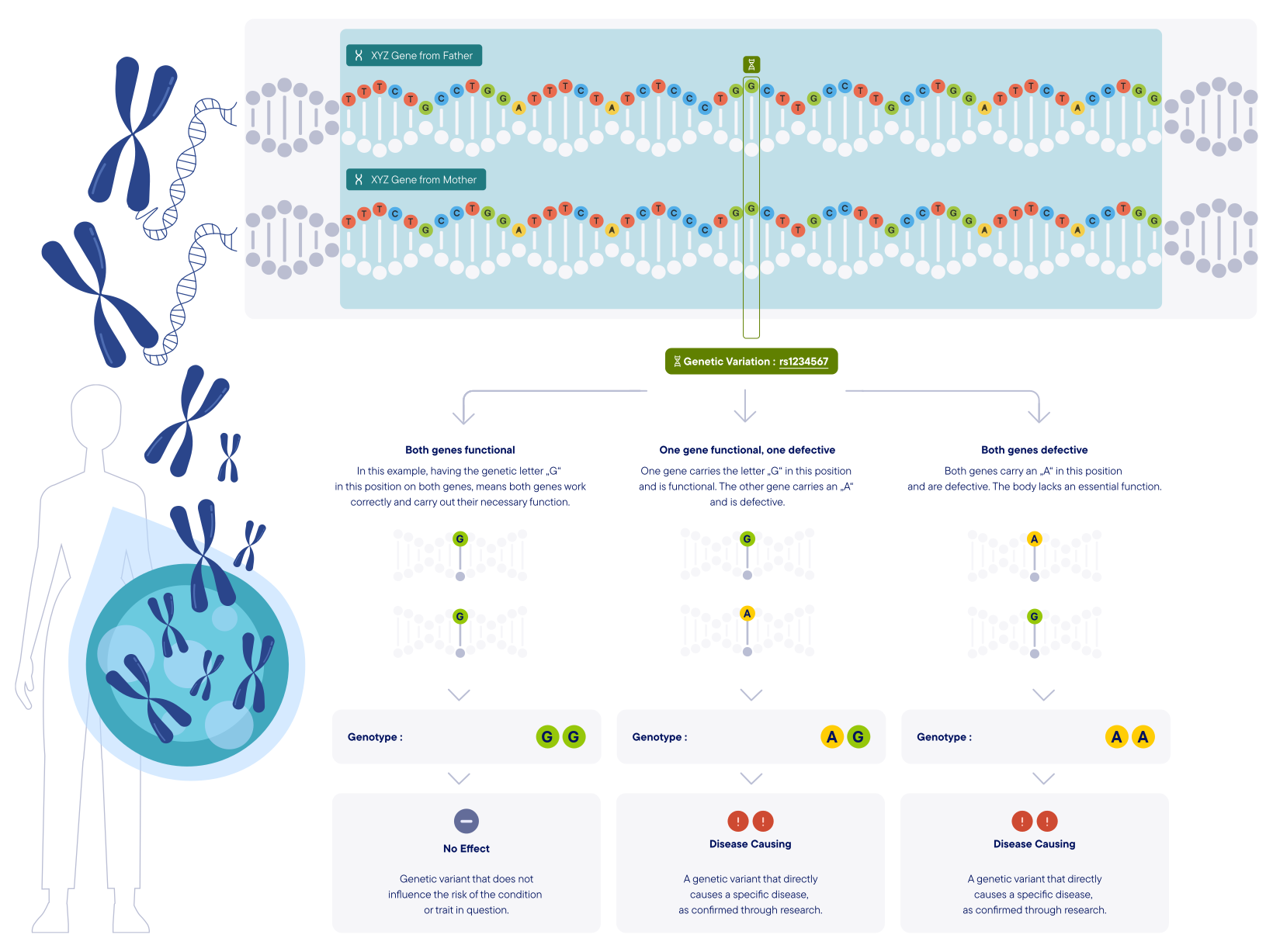
Humans have more than 20,000 genes, each carrying out one or a few specific functions in the body. One gene instructs the body to digest lactose from milk, another tells the body how to build strong bones and another prevents the body's cells from beginning to multiply uncontrollably and developing into cancer. As all of these genes combined are the building instructions for our body, a defect in one of these genes can have severe health consequences.
Through decades of genetic research, we know the genetic code of any healthy/functional human gene. We have also identified that in certain positions on a gene, some individuals may have a different genetic letter from the one you have. We call these hotspots "Genetic Variations" or "Variants" in short. In many cases, studies have been able to show that having the genetic letter "G" in the position makes you healthy, but having the letter "A" in the same position disrupts the gene function and causes a disease. Genopedia allows you to view these variants in genes and summarizes all that we know from scientific research, which genetic letters (Genotype) have good or bad consequences on your health or on your traits.
History
Families and communities once noticed patterns of unusually loose, wrinkled, or sagging skin that seemed to appear after rashes, sun exposure, or other skin injuries, then spread beyond the original spot. People described skin that stretched and sprang back more than expected, or soft folds that made clothing rub and irritate. These everyday observations came long before the condition had a name or explanation.
First described in the medical literature as changes in the deeper layer of skin that appeared after an illness or inflammation, the condition slowly became clearer as doctors connected the timing: normal skin first, then a trigger such as dermatitis, infection, or trauma, followed by patches that looked lax or thickened. Early reports focused on how the skin looked and felt, because microscopes of the time showed only broad clues. Later, better staining techniques revealed that the elastic fibers in the dermis were increased or arranged in unusual clumps, making the skin behave differently. This is where the medical phrasing “acquired dermis elastic tissue disorder with increased elastic tissue” comes from.
From these first observations, clinicians noticed that acquired cases were distinct from inherited disorders that also affect elastic fibers. People were typically healthy at birth, with changes appearing later in life and sometimes remaining limited to certain areas. Over time, descriptions became more precise, separating this condition from others that cause thinning or loss of elastic tissue. Pathologists documented that, instead of missing fibers, there could be an overgrowth or abnormal buildup in affected spots, which matched what people felt—skin that seemed heavier or more pliable than before.
In recent decades, awareness has grown that triggers can vary and that the look of the skin depends on where the changes occur and how much elastic tissue has accumulated. Reports from different regions highlighted that heat, sun, repeated friction, or prior inflammation could precede the changes, though not in everyone. Microscopic studies mapped how the elastic network in the dermis shifted, and imaging methods helped rule out deeper involvement when needed. These historical steps helped explain why two people with acquired dermis elastic tissue disorder with increased elastic tissue might look quite different, and why early symptoms of the condition can be easy to miss.
Knowing the condition’s history shows why today’s approach blends careful clinical examination with targeted skin sampling. It also explains why doctors ask about recent rashes, injuries, medications, and sun exposure, and compare new photographs to older ones to spot subtle shifts. The path from scattered case reports to more organized series sharpened definitions, set expectations for progression, and guided follow-up. Despite evolving definitions, the central insight remains: this is an acquired change in the skin’s elastic framework, recognized through a mix of lived experience, bedside observation, and microscopic confirmation.