
Achondrogenesis type ia is a rare genetic condition that affects bone and cartilage growth before birth. It causes severe short limbs, a small chest, and poor bone mineralization, and many families first learn of it during a prenatal ultrasound. The condition is present from early pregnancy and does not improve over time. Sadly, achondrogenesis type ia is usually life-limiting, and most infants do not survive because the chest is too small for effective breathing. Care focuses on prenatal counseling, delivery planning, and compassionate, supportive care for the baby and family.
Overview
Achondrogenesis type iaSymptoms
Achondrogenesis type IA is recognized before birth or at delivery. Features include extremely short arms and legs, a very small chest, and soft, poorly hardened bones on scans. Many newborns develop severe breathing problems due to underdeveloped lungs.
Outlook and prognosis
Achondrogenesis type IA is a severe skeletal condition that starts before birth and leads to profound breathing difficulties due to very small chest size. Many pregnancies end in miscarriage or stillbirth, and most affected newborns live only minutes to days. Care focuses on compassionate, family-centered support and informed planning.
Causes and risk factors
Achondrogenesis type ia results from TRIP11 gene changes, usually inherited from both parents (autosomal recessive), or rarely a new mutation; risk is higher with carrier parents, family history, or consanguinity, and not linked to environment or lifestyle.
Genetic influences
Genetics fully determines Achondrogenesis type ia. It is caused by inherited changes in a specific gene affecting cartilage and bone formation, typically passed in an autosomal recessive pattern. Genetic testing confirms diagnosis and enables carrier and prenatal screening for families.
Diagnosis
Doctors suspect Achondrogenesis type IA from distinctive skeletal features on prenatal ultrasound or newborn exam. X-rays typically confirm a severe pattern. Genetic tests provide definitive diagnosis; the genetic diagnosis of Achondrogenesis type IA verifies the specific subtype.
Treatment and drugs
Treatment for achondrogenesis type ia focuses on comfort, breathing support, and careful monitoring soon after birth. Care teams may use gentle ventilation, feeding support, and attentive skin and orthopedic care to ease complications. Families often receive coordinated palliative care and genetic counseling.
Symptoms
Achondrogenesis type ia is a rare, severe genetic condition that affects bone growth before birth. It’s usually recognized during pregnancy or at delivery because bones are extremely short and don’t harden as expected. Doctors often see early features of Achondrogenesis type ia on routine ultrasound, such as very short limbs and a small, narrow chest. In medical terms, this is a skeletal dysplasia; in everyday life, it shows up as very short bones and a chest too small for normal breathing.
Arms and legs are much shorter than expected. In Achondrogenesis type ia, this difference is severe and seen early on scans. At birth, the proportions are striking.
The rib cage is small and more flexible than usual. The lungs have too little room to grow, leading to severe breathing trouble right after delivery.
Many bones do not harden well, especially the spine and skull. This can make the skull feel soft and the ribs more likely to bend or break.
The torso is very short compared with the head and hips. Positioning and gentle handling are important because the body is compact.
How people usually first notice Achondrogenesis type ia?
Parents and clinicians often spot the first signs of Achondrogenesis type IA before birth on routine ultrasound, where the baby may show very short limbs, a small chest, and too much amniotic fluid (polyhydramnios). After delivery, doctors typically recognize the condition by extreme short stature, a very small ribcage that struggles to support breathing, and characteristic features on X‑rays, such as poor bone mineralization and incomplete bone formation. In many cases, these early findings lead to immediate neonatal evaluation and genetic testing to confirm how Achondrogenesis type IA is first noticed.
Types of Achondrogenesis type ia
Achondrogenesis type IA is a rare genetic skeletal condition with recognized clinical variants linked to changes in the TRIP11 gene and related pathways. These variants lead to differences in bone growth, chest size, and survival, which can shape how features present before birth and immediately after delivery. People may notice different sets of symptoms depending on their situation. When discussing types of achondrogenesis, clinicians rely on consensus variants rather than organ-based complications, so the main types of Achondrogenesis type IA reflect genetic and clinical severity differences.
Classic severe form
Marked underdevelopment of bones is seen on prenatal ultrasound, with very short limbs and a small, narrow chest. Newborns often have life‑limiting breathing problems right after birth. Features are typically consistent across pregnancies in the same family.
Milder allelic variant
Some TRIP11 changes can produce a slightly less severe picture within the achondrogenesis type IA spectrum. Limb shortening and chest narrowing are present but may be somewhat less pronounced on imaging. Survival is still usually limited, though a few cases show brief postnatal breathing support.
Related allelic disorder
Certain TRIP11 mutations can lead to odontochondrodysplasia, a genetically related but clinically milder disorder. In these variants, bone changes are less severe, with potential dental and cartilage findings rather than the profound skeletal underdevelopment of classic achondrogenesis type IA. Discussing these variants helps clarify the types of achondrogenesis type IA seen across the TRIP11 spectrum.
What genetics can tell you about symptoms
In achondrogenesis type IA, mutations in the TRIP11 gene disrupt Golgi function in cartilage cells, leading to severely underdeveloped bones and short limbs before birth. This genetic change is also tied to a small chest, under-ossified (poorly hardened) skull and spine, and often breathing failure.
Causes and risk factors
Achondrogenesis type ia is caused by inheriting two non-working copies of a gene called TRIP11.
When both parents carry this change, each pregnancy has a 25% chance to be affected.
Risk factors for Achondrogenesis type ia include having two carrier parents and a prior affected pregnancy.
Environmental exposures or lifestyle choices are not known to cause it, and parents who are related by blood have a higher chance of sharing the same change.
Genetic testing can sometimes clarify your personal risk.
Environmental and biological risk factors
People often ask what in the body or surroundings could raise the chance of achondrogenesis type ia. Doctors often group risks into internal (biological) and external (environmental). While early symptoms of achondrogenesis type ia are usually identified during pregnancy, the points below focus purely on what is known about environmental and biological risks. Because this condition is very rare, evidence is limited, and where research is lacking we say so clearly.
Not associated. Unlike some conditions that become more common with older parents, achondrogenesis type ia does not appear to rise with maternal or paternal age. Evidence is limited because the condition is extremely rare.
No known effect. Common pregnancy conditions such as diabetes, high blood pressure, or thyroid problems have not been shown to increase risk. Prenatal care still matters for overall pregnancy health.
No evidence of link. Available reports do not show higher risk from common viral or bacterial infections during pregnancy. Standard infection prevention remains important for general maternal and fetal health.
No proven link. Research has not connected exposures like air pollution, heavy metals, or pesticides with achondrogenesis type ia. Avoiding harmful exposures is still wise for overall pregnancy health.
Genetic risk factors
Achondrogenesis type ia usually results from harmful changes in a single gene called TRIP11 that disrupt cartilage and bone growth before birth. These genetic causes of Achondrogenesis type ia follow an autosomal recessive pattern, meaning a child is affected when they inherit two nonworking copies—one from each parent. Some risk factors are inherited through our genes. Risk is higher when both parents are carriers or when there is a known family history.

TRIP11 gene changes: Harmful variants in TRIP11 disrupt normal skeletal development. Most cases of Achondrogenesis type ia happen when two disease-causing TRIP11 changes are inherited together.
Autosomal recessive pattern: A child is affected only if they receive two nonworking copies of TRIP11, one from each parent. Carriers with a single change usually have no symptoms. This pattern explains why Achondrogenesis type ia can appear unexpectedly in families.
Two carrier parents: When both parents carry a TRIP11 change, each pregnancy has a 25% chance of an affected child. There is also a 50% chance the child will be a healthy carrier and a 25% chance of inheriting no changes.
One carrier parent: If only one parent carries a TRIP11 change, the child will not have the condition unless the other parent is also a carrier. Testing the other parent can clarify the chance in a specific pregnancy.
Prior affected pregnancy: Parents who have had an affected pregnancy with Achondrogenesis type ia face a 25% chance in each future pregnancy if both are carriers. This recurrence risk applies regardless of the sex of the child.
Family history: Having close relatives who carry TRIP11 changes suggests a higher chance of being a carrier. Genetic counseling can help estimate your personal risk for future pregnancies.
Parental relatedness: When parents are related by blood, they are more likely to share the same rare TRIP11 variant. This increases the likelihood of having an affected child.
Lifestyle risk factors
Achondrogenesis type ia is a genetic skeletal condition; lifestyle habits do not cause it. However, how lifestyle affects Achondrogenesis type ia relates to day-to-day caregiving choices that can influence comfort, breathing effort, and the likelihood of certain complications. While there are no lifestyle risk factors for Achondrogenesis type ia, small adjustments in handling, feeding, and home routines may reduce distress and secondary problems. These suggestions should be paired with the care team’s guidance and the family’s goals.
Slow, well-supported lifting can reduce pain and the risk of fractures in fragile, under-ossified bones. Using soft bedding and avoiding sudden movements may prevent discomfort and injury.
Slight head elevation and side-lying with careful padding can ease breathing when lungs are underdeveloped. Frequent, gentle repositioning helps prevent pressure sores on delicate skin.
Small, paced feeds can lessen breathing strain and reduce aspiration risk when stamina is limited. Coordinating feeds with calm, upright positioning may improve comfort and tolerance.
Rigorous hand hygiene and limiting close contact when someone is ill can lower respiratory infection risk in infants with very limited lung reserve. Fewer infections can mean less respiratory distress and hospitalizations.
Risk prevention
Achondrogenesis type ia is a rare, severe genetic condition that starts before birth. The condition itself can’t be prevented, so risk reduction focuses on planning, early detection, and informed reproductive choices. A genetics team can help families understand options before and during pregnancy. Knowing your risks can guide which preventive steps matter most.
Meet with a genetics professional to review how achondrogenesis type ia is inherited and what it means for future pregnancies. They can explain recurrence risk (often 25% when both parents are carriers) and outline testing choices.
If achondrogenesis type ia has occurred in your family, testing parents and partners for the known gene change can clarify risk. When the specific family variant is identified, future testing is faster and more accurate.
Early, detailed ultrasounds can look for signs of severe skeletal differences. On ultrasound, early symptoms of achondrogenesis type ia may appear as very short limbs and poor bone visibility, which can prompt diagnostic testing.
During pregnancy, chorionic villus sampling or amniocentesis can check the fetus’s DNA for the family’s variant. A clear molecular diagnosis confirms or rules out achondrogenesis type ia in that pregnancy.

Transmission
Achondrogenesis type ia is not contagious; it cannot be spread through everyday contact, coughing, or blood. It is passed on through genes in an autosomal recessive way: when both parents carry one changed copy of the gene, each pregnancy has a 25% (1 in 4) chance of a child with the condition, a 50% (1 in 2) chance the child will be a healthy carrier, and a 25% (1 in 4) chance of neither change. Carriers are healthy and usually have no symptoms. New, spontaneous changes causing the condition are rare; many families learn about the genetic transmission of Achondrogenesis type ia only after a pregnancy is affected. A genetics visit can explain how Achondrogenesis type ia is inherited and discuss carrier testing for parents and relatives.
When to test your genes
Consider genetic testing if you’re pregnant with concerning ultrasound findings, have a prior pregnancy affected by severe skeletal differences, or there’s a known family variant in TRIP11. Couples from affected families may test before or early in pregnancy to clarify risks. Testing guides accurate diagnosis, reproductive options, and specialist planning.
Diagnosis
Most diagnoses start during pregnancy when a routine scan shows severe limb shortening and a very small chest. Doctors then look more closely to understand how the bones are forming and whether findings point to Achondrogenesis type ia. Early and accurate diagnosis can help you plan ahead with confidence. In some situations, the genetic diagnosis of Achondrogenesis type ia is confirmed before birth; in others, confirmation happens after delivery or pregnancy loss.
Sonographers look for very short arms and legs, a small narrow chest, and reduced bone shadowing. These patterns often raise early concern for a severe skeletal condition.
A specialist repeats measurements and examines the skull, spine, ribs, pelvis, and long bones in detail. Consistent findings across several areas can point toward Achondrogenesis type ia.
MRI can add detail about the chest and soft tissues when ultrasound views are limited. It does not replace ultrasound but can support the overall assessment.
Chorionic villus sampling in the first trimester or amniocentesis later allows genetic material to be tested. These procedures help move from suspected to confirmed diagnosis.
Stages of Achondrogenesis type ia
Achondrogenesis type ia does not have defined progression stages. It is present before birth and does not change over time the way conditions with early, middle, and late phases do. During pregnancy, ultrasound can show major bone and chest differences, and genetic testing from chorionic villus sampling or amniocentesis can confirm the diagnosis; this is the basis of prenatal diagnosis of Achondrogenesis type ia. Many people feel reassured knowing what their tests can—and can’t—show.
Outlook and prognosis
Looking ahead can feel daunting, but most families first want to know what the next weeks and months may hold. Achondrogenesis type ia is a very severe skeletal condition that begins before birth. Bones, especially the spine and ribs, do not form as they should, which can lead to a very small chest and serious breathing problems right away. Many people ask, “What does this mean for my future?”, and for achondrogenesis type ia, survival beyond the newborn period is unfortunately rare due to breathing failure and complications shortly after delivery.
Doctors call this the prognosis—a medical word for likely outcomes. Most babies with achondrogenesis type ia are stillborn or pass away shortly after birth despite intensive care. When survival extends to hours or days, care focuses on comfort, easing breathing effort, and supporting families in making decisions that match their values. Early symptoms of achondrogenesis type ia, such as severely shortened limbs seen on prenatal ultrasound and signs of underdeveloped lungs, usually signal a critical course.
Everyone’s journey looks a little different. Some infants may have brief periods of stability, while others face immediate and profound breathing challenges. Genetic testing can sometimes provide more insight into prognosis, confirming the specific gene change and helping families understand recurrence risk in future pregnancies. Talk with your doctor about what your personal outlook might look like, including options for palliative care, delivery planning, and support resources.
Long-term effects
Achondrogenesis type ia is a severe, genetic skeletal condition present from early pregnancy. For most families, the prognosis is limited, with babies often dying before or shortly after birth because the chest and lungs cannot develop enough for breathing. Many people first learn about early signs of Achondrogenesis type ia during a prenatal ultrasound. The long view can feel uncertain, but support teams focus on clear information, compassionate planning, and honoring family choices.
Most pregnancies end in stillbirth or death within minutes to days after birth. This outlook reflects severe chest and lung underdevelopment in Achondrogenesis type ia.
At birth, the lungs and ribcage are too small to support effective breathing. Even intensive ventilation cannot overcome the structural limits.
Extremely short limbs, small chest, and poor bone development are present before birth and persist. These features define Achondrogenesis type ia and do not improve over time.
Excess amniotic fluid (polyhydramnios) and generalized swelling (hydrops) can develop during pregnancy. These changes can lead to earlier delivery or delivery complications.
How is it to live with Achondrogenesis type ia?
Living with achondrogenesis type IA is not something most families experience long term, because this condition is typically lethal before or shortly after birth. For many, the lived reality is a pregnancy filled with frequent ultrasounds, hard decisions, and planning for comfort-focused care, followed by profound grief and the need for support. Loved ones often become part of that circle of care—helping with appointments, holding space for uncertainty, and later navigating mourning together. Genetic counseling can be a practical anchor, offering clear information about recurrence risk and options for future pregnancies, which can help families and their supporters feel a little more steady in a very difficult time.
Treatment and drugs
Treatment for achondrogenesis type IA focuses on comfort, breathing support, and compassionate, family-centered care, because this condition is severe and usually life-limiting shortly after birth. Newborns often need help with breathing, gentle positioning, and careful management of fluids and feeding; doctors sometimes use noninvasive ventilation and monitor for complications like lung underdevelopment. Medicines that ease symptoms are called supportive or palliative treatments, and they may include pain relief, oxygen, and measures to reduce anxiety or distress for the baby. Alongside medical treatment, lifestyle choices play a role only in the sense of creating a calm, low-stress environment and supporting parents and caregivers with counseling and bereavement resources. Although living with achondrogenesis type IA can feel overwhelming, care teams work closely with families to align treatment with their goals and values.
Non-drug treatment
For families facing Achondrogenesis type ia, care focuses on comfort, clear planning, and emotional support around pregnancy and birth. Non-drug treatments often lay the foundation for compassionate, family-centered care alongside any medical decisions. Teams aim to reduce distress, support bonding, and help parents make choices that match their values. Much of this care begins before delivery and continues through the newborn period and beyond for family support.
Maternal–fetal specialists coordinate pregnancy care and monitor growth and fluid levels. Regular ultrasound or MRI helps anticipate delivery needs.
Clinicians explain what the scans show and what it may mean for your baby and delivery. Early symptoms of Achondrogenesis type ia are usually seen on prenatal ultrasound rather than felt as changes during pregnancy.
Families discuss delivery preferences, who should be present, and where birth will occur. Plans also cover whether care will focus on comfort-only measures for Achondrogenesis type ia.
A comfort-first plan reduces distress with gentle positioning, skin-to-skin time, and a calm environment. For Achondrogenesis type ia, the goal is to support bonding and minimize procedures.
Your genes may have an impact on how drugs work for you
Even when the same medicine is given, genes can change how fast a body absorbs, breaks down, or responds to it. In achondrogenesis type IA, rare and fragile physiology means careful, genetics‑aware dosing and close monitoring are essential to balance benefit and side effects.
Pharmacological treatments
Achondrogenesis type ia does not have a curative medicine; treatment focuses on comfort, breathing support decisions, and individualized newborn care. Drugs that target symptoms directly are called symptomatic treatments. Plans are often made before birth, guided by prenatal signs of Achondrogenesis type ia, and revisited at delivery based on the baby’s condition. Medicines below are chosen case by case, aiming to ease pain, reduce distress, and treat complications if they arise.
Betamethasone may be given to the birthing parent if preterm delivery is expected to help the baby’s lungs mature. It does not change the underlying bone development or the overall course of Achondrogenesis type ia.
Morphine or fentanyl can relieve pain and ease the sense of breathlessness. Doses are carefully titrated in newborns with close monitoring of breathing.
Midazolam may be used to reduce severe agitation or anxiety if breathing support is used or symptoms are intense. The goal is comfort and calm, using the lowest effective dose.
Glycopyrrolate or atropine can lessen noisy, pooled secretions that make breathing uncomfortable. These are used sparingly to avoid excessive drying or fast heart rate.
Genetic influences
Achondrogenesis type IA is almost always caused by harmful changes in a single gene called TRIP11 and follows an autosomal recessive pattern. When both parents carry one copy of the gene change, they usually have no symptoms, but each pregnancy has a 25% chance of an affected child, a 50% chance of a carrier, and a 25% chance of neither. A “carrier” means you hold the gene change but may not show symptoms. TRIP11 helps cells in growing cartilage handle and deliver proteins; when it doesn’t work, cartilage and bone formation are severely disrupted, which explains the condition’s early and serious features. Genetic testing for Achondrogenesis type IA can look for changes in TRIP11 and confirm the cause, and relatives can consider carrier testing to understand their own risks. A genetics team can also discuss options for future pregnancies, including prenatal or preimplantation testing, if that feels right for your family.
Is Achondrogenesis type ia genetic?
Genetics fully determines Achondrogenesis type ia. It is caused by inherited changes in a specific gene affecting cartilage and bone formation, typically passed in an autosomal recessive pattern. Genetic testing confirms diagnosis and enables carrier and prenatal screening for families.
Pharmacogenetics—how genetics influence drug effects
For Achondrogenesis type IA, care focuses on comfort and breathing support around birth; there are no medicines that change the underlying bone growth problem. The genetic change that causes this condition helps confirm the diagnosis and guide family planning, but it does not currently point to a specific drug or dose. Not every difference in response is genetic, but genes that affect how the body breaks down medicines can occasionally matter when pain relief or sedation is used. In urgent newborn care, there’s usually not enough time or benefit to order pharmacogenetic testing, and age, size, and organ maturity often outweigh genetic effects. For that reason, pharmacogenetic testing in Achondrogenesis type ia is not part of routine care. If genetic results are already available, clinicians may consider them when choosing or avoiding medicines with known gene–drug interactions. There are no established gene-targeted or disease-modifying therapies for Achondrogenesis type ia yet, though research on rare skeletal disorders continues.
Interactions with other conditions
During pregnancy, Achondrogenesis type ia often appears alongside complications such as excess fluid around the baby (hydrops) or too much amniotic fluid (polyhydramnios), which can also happen with infections or blood group issues, so doctors usually check for those as well. Doctors call it a “comorbidity” when two conditions occur together. In a newborn with Achondrogenesis type ia, any added heart or lung problem—or a serious infection—can further strain breathing because the chest is already very small. Changes in the same gene can cause a milder, related bone condition in some families, but that’s a shared pathway rather than two separate diseases occurring at once. For the pregnant parent, severe fetal fluid buildup can trigger mirror syndrome (maternal swelling, high blood pressure, and organ stress), which needs prompt, coordinated care. Because early symptoms of Achondrogenesis type ia on ultrasound can resemble other skeletal conditions, specialist teams often look for overlapping diagnoses and explain how any coexisting problems might influence delivery planning and comfort-focused care.
How genes can cause diseases
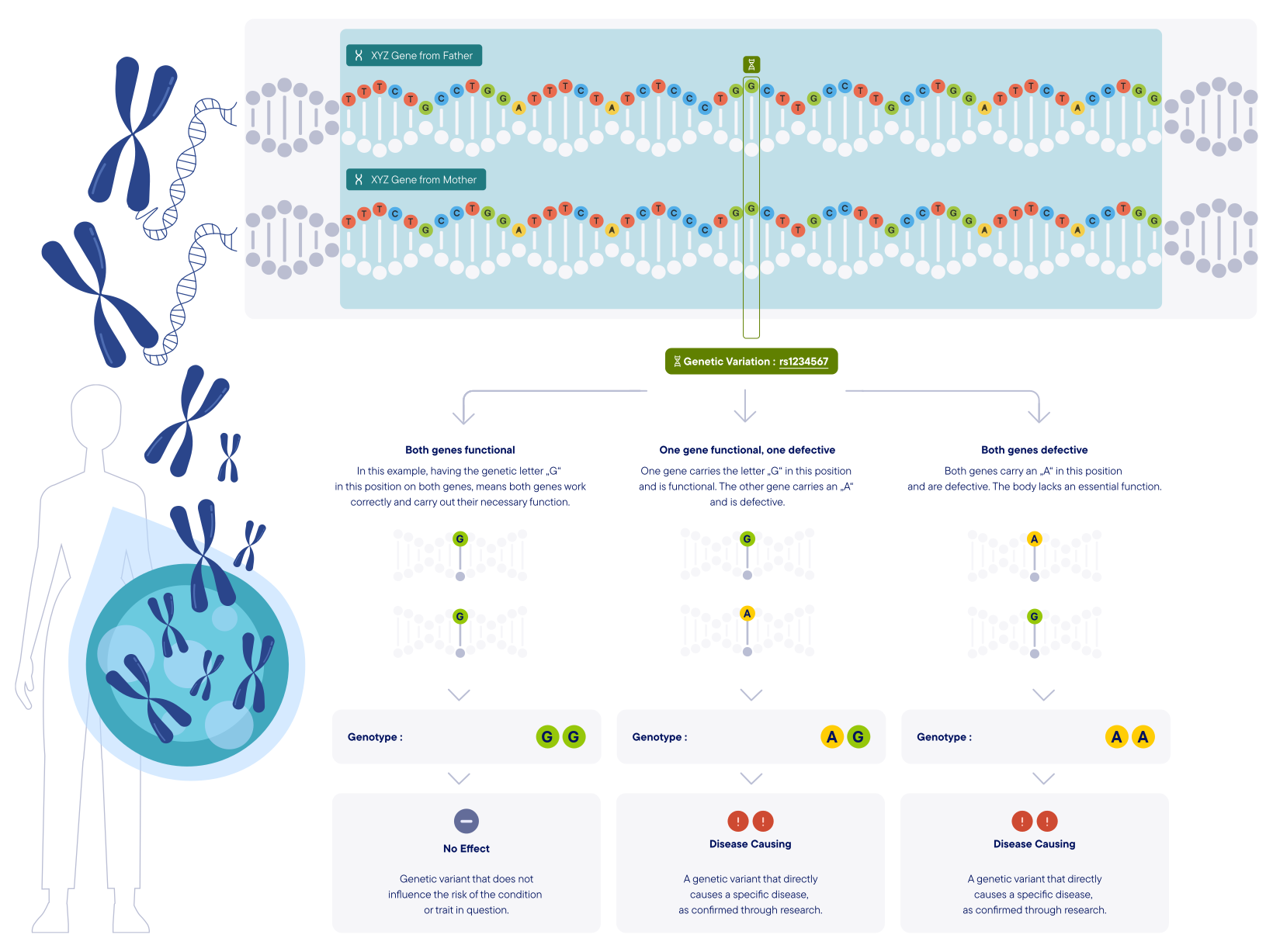
Humans have more than 20,000 genes, each carrying out one or a few specific functions in the body. One gene instructs the body to digest lactose from milk, another tells the body how to build strong bones and another prevents the body's cells from beginning to multiply uncontrollably and developing into cancer. As all of these genes combined are the building instructions for our body, a defect in one of these genes can have severe health consequences.
Through decades of genetic research, we know the genetic code of any healthy/functional human gene. We have also identified that in certain positions on a gene, some individuals may have a different genetic letter from the one you have. We call these hotspots "Genetic Variations" or "Variants" in short. In many cases, studies have been able to show that having the genetic letter "G" in the position makes you healthy, but having the letter "A" in the same position disrupts the gene function and causes a disease. Genopedia allows you to view these variants in genes and summarizes all that we know from scientific research, which genetic letters (Genotype) have good or bad consequences on your health or on your traits.
History
Families and midwives once recognized when a newborn was unusually small with very short limbs and a soft, underdeveloped chest. Some communities quietly remembered these heartbreaking births as rare events that often ended quickly. Records were sparse, but the pattern—severe skeletal differences present from birth—was noticed long before modern medicine had a name for it.
Throughout history, people have described newborns with extreme short stature and fragile ribs, features now known to fit achondrogenesis type ia. Early medical case notes from the 19th and early 20th centuries grouped many lethal skeletal conditions together because X‑rays were new and genetics was not yet available. Doctors described what they could see: short limbs, a small trunk, and breathing that could not be supported due to a tiny chest. These early reports often used broad labels, and different conditions were mistakenly blended under one heading.
Over time, descriptions became more precise as radiology improved. Clinicians began to separate several forms of severe, before-birth skeletal disorders based on patterns in the bones, especially the spine and ribs. Achondrogenesis emerged as a category for a group of the most severe forms, present before birth and typically fatal in the newborn period. Within that group, careful study of bone appearance under the microscope and characteristic X‑ray findings led to subtypes, including achondrogenesis type ia.
In recent decades, knowledge has built on a long tradition of observation. Researchers linked achondrogenesis type ia to changes in a gene important for building the scaffolding inside cartilage cells, helping explain why bones remain so underdeveloped. This genetic insight clarified why the condition appears sporadically in most families and why recurrence risk can vary depending on the exact change identified.
Once considered rare, now recognized as a distinct subtype within severe skeletal dysplasias, achondrogenesis type ia is typically diagnosed by a combination of prenatal ultrasound, characteristic X‑rays, and, when possible, genetic testing. The name has stayed, but the understanding behind it has deepened: what earlier physicians grouped together is now carefully distinguished, which matters for counseling families about cause, recurrence risk, and what to expect.
Knowing the condition’s history helps explain today’s approach. Earlier, families received only a descriptive label and little else. Now, when achondrogenesis type ia is suspected, teams can offer clearer answers, discuss early symptoms of achondrogenesis type ia seen on prenatal scans, and provide support that respects both the medical facts and the family’s values. Each step—from bedside observations to genetic discovery—has shaped a more accurate, compassionate picture of this condition.