
Accessory mitral valve tissue is a rare heart finding present from birth. It is extra tissue near the mitral valve that can affect blood flow. People with accessory mitral valve tissue may have no signs, or they may feel shortness of breath, chest discomfort, or fainting with exertion. Many live with it lifelong, and symptoms depend on how much it obstructs the outflow from the left ventricle. Treatment ranges from monitoring to heart surgery, and outlook is often good when obstruction is relieved.
Overview
Accessory mitral valve tissueSymptoms
Accessory mitral valve tissue is present from birth. Many have no signs; it’s found on echocardiogram after a heart murmur. If it blocks flow, features can include shortness of breath, chest pain, fainting, palpitations, or poor feeding in infants.
Outlook and prognosis
Most people with accessory mitral valve tissue do well, especially when the tissue is small and not blocking blood flow. If it causes obstruction or valve leakage, careful monitoring and timely heart surgery can restore good function. Long-term follow-up with cardiology is recommended.
Causes and risk factors
Accessory mitral valve tissue is congenital, from differences in valve formation before birth. Most cases are sporadic; risk factors for accessory mitral valve tissue include family history of congenital heart disease, other heart defects, and maternal diabetes or prenatal exposures.
Genetic influences
Genetics appears to play a limited, not well-defined role in accessory mitral valve tissue. Most cases seem sporadic, arising during fetal heart development without a known inherited pattern. Rare familial clustering exists, so congenital heart disease history may prompt genetic counseling.
Diagnosis
Suspicion arises from a new murmur or signs of obstruction. Diagnosis of accessory mitral valve tissue relies on imaging, primarily echocardiography; transesophageal views, cardiac MRI, or CT may be added.
Treatment and drugs
Treatment for accessory mitral valve tissue depends on symptoms and how it affects blood flow. Many people are monitored with regular echocardiograms, while those with significant obstruction, leaking, or rhythm issues may need medications or catheter-based or surgical repair. Care is tailored by a heart team.
Symptoms
Day to day, many people feel well, and some have no warning signs at all. Accessory mitral valve tissue can be silent for years and is often first picked up as a heart murmur during a routine exam. When it does cause problems, early features of accessory mitral valve tissue include breathlessness with exertion, a fast or irregular heartbeat, dizziness or fainting, or rarely, stroke-like spells from a small clot. Symptoms vary from person to person and can change over time.
Many have no noticeable issues. The extra tissue may be found by chance during a checkup or heart scan.
A whooshing sound may be heard when a clinician listens over the chest. This is a common first clue to accessory mitral valve tissue.
Shortness of breath can show up with exercise, climbing stairs, or playing sports. It often reflects mild narrowing of blood flow leaving the heart.
Tiring sooner than expected can happen, especially during sustained activity. People with accessory mitral valve tissue may feel less stamina compared to peers.
How people usually first notice Accessory mitral valve tissue?
Many people first notice accessory mitral valve tissue when a routine checkup picks up a heart murmur, leading to an echocardiogram that reveals the extra leaflet-like tissue. In babies and children, doctors may spot it earlier if there’s noisy breathing, feeding difficulty, poor weight gain, bluish lips with exertion, or fainting spells—signs that the tissue is narrowing the left ventricular outflow tract and making the heart work harder. Sometimes it’s found incidentally in adults during imaging for unrelated reasons, and only later linked to symptoms like shortness of breath, chest discomfort, or lightheadedness with activity.
Types of Accessory mitral valve tissue
Accessory mitral valve tissue is a rare congenital heart finding, so the differences usually come down to where the extra tissue sits, how it’s shaped, and whether it changes blood flow. These clinical variants can range from silent, incidental findings to forms that narrow the left ventricular outflow tract and cause symptoms like shortness of breath or fainting with exertion. Symptoms don’t always look the same for everyone. Knowing the main variants can help you and your care team talk about the types of accessory mitral valve tissue and what they might mean for daily activity and follow-up.
Fixed leaflet-like
A flap of extra tissue attaches firmly near the mitral valve and stays relatively still. It may be found by chance on an echocardiogram and cause few or no symptoms. If large or poorly positioned, it can contribute to a heart murmur or mild obstruction.
Mobile sail-like
A thin, more flexible tissue segment moves with blood flow and can prolapse toward the outflow tract. This variant is more likely to intermittently block blood leaving the heart, especially during exercise. People may notice exertional shortness of breath, chest pressure, or lightheadedness.
Chordal/filamentous
The accessory tissue looks like strands or cords connected to papillary muscles or the ventricle. These threads rarely obstruct on their own but can tug on the mitral valve and affect how it closes. Some may cause a clicking sound or mild valve leak seen on imaging.
Nodular/balloon-like
A rounded lump of tissue sits near the valve or outflow tract. Depending on size and position, it can create a fixed blockage and a louder murmur. Symptoms can include reduced exercise tolerance and, in pronounced cases, dizziness or fainting.
Outflow-impinging
Any variant whose position protrudes into the left ventricular outflow tract and restricts blood flow. This type is clinically important because it can mimic or worsen forms of subaortic stenosis. Care teams often monitor gradients and consider surgery if obstruction is significant.
Incidental/nonobstructive
Small, well-seated tissue that does not disturb valve motion or blood flow. Many living with this variant feel well and learn about it only after imaging for another reason. Regular follow-up may be all that is needed if the heart functions normally.
What genetics can tell you about symptoms
Some people with accessory mitral valve tissue have no symptoms, while others develop breathlessness, chest discomfort, fainting, or irregular heartbeats when the extra tissue narrows the left ventricular outflow tract. Specific genetic variants affecting heart development can increase this tissue’s size or position, raising blockage risk.
Causes and risk factors
This condition forms before birth when extra tissue develops near the mitral valve. It stems from small disruptions in early heart development, and no single gene has been confirmed. Accessory mitral valve tissue may occur alone or with other congenital heart differences that narrow the outflow tract. Risk factors for accessory mitral valve tissue are not well defined, but family history and maternal health in pregnancy may play a role. Doctors distinguish between risk factors you can change and those you can’t.
Environmental and biological risk factors
Accessory mitral valve tissue is present from birth, so risks start during early heart development in pregnancy. Doctors often group risks into internal (biological) and external (environmental). While early symptoms of accessory mitral valve tissue can vary, the factors below describe what may raise the chance that it forms in the first place. These reflect patterns seen across congenital heart differences rather than something you can cause or prevent later.
High blood sugar around conception and in the first trimester can disrupt cardiac formation. Pregestational diabetes is linked with more congenital heart differences, which may include accessory mitral valve tissue. Risk is greatest when glucose is not well controlled early in pregnancy.
When phenylalanine levels stay high during pregnancy, fetal development can be affected. This condition is associated with a higher rate of congenital heart defects.
Infection in the first trimester can interfere with heart development. Congenital rubella syndrome is a well-known cause of several cardiac malformations. In rare cases this pathway could include accessory mitral valve tissue.
Exposure to isotretinoin/retinoic acid in early pregnancy is a known cause of birth defects involving the heart and great vessels. Such exposure can raise the likelihood of structural heart differences.
Genetic risk factors
Research on the genetic causes of accessory mitral valve tissue is still limited, and many cases appear to arise without a clear inherited change. Carrying a genetic change doesn’t guarantee the condition will appear. Evidence points to shared developmental pathways with other congenital valve defects, which may explain why some families have more than one heart difference. When accessory mitral valve tissue occurs alongside other birth differences or a strong family history, a genetic contribution becomes more likely.

Mostly sporadic: Most cases of accessory mitral valve tissue occur as isolated findings without a known inherited cause. Current studies have not confirmed a single gene that directly causes this feature.
Family history patterns: Having close relatives with congenital heart defects, especially left-sided or valve problems, suggests a shared genetic susceptibility. The exact risk of accessory mitral valve tissue in relatives is unknown but appears low.
Shared developmental pathways: Changes in genes that guide heart valve formation can lead to various valve differences. These shared pathways may occasionally result in accessory mitral valve tissue, though direct evidence is limited.
Chromosomal syndromes (rare): Rare chromosomal differences or genetic syndromes that include multiple heart defects can feature unusual valve tissue. No consistent chromosomal change has been tied specifically to accessory mitral valve tissue.
Recurrence risk: For most families, the chance of another child with the same rare valve finding is low but not zero. Risk may be higher when several relatives have congenital heart disease, hinting at inherited factors.
When to test: Genetic testing is not routinely recommended for isolated accessory mitral valve tissue. Testing or genetic counseling may be considered if there are other birth differences or a strong family history of heart defects.
Lifestyle risk factors
Accessory mitral valve tissue is a congenital structural finding; lifestyle habits do not cause it. However, daily choices can influence symptoms like shortness of breath or dizziness, the degree of outflow obstruction, and the risk of complications such as infective endocarditis. Understanding lifestyle risk factors for Accessory mitral valve tissue can help tailor safe activity and self-care with your cardiology team.
All-out or isometric efforts can increase heart rate and contractility, worsening left‑ventricular outflow obstruction and symptoms like chest pain or fainting. Prefer moderate, steady aerobic activity individualized by your cardiologist.
Dehydration lowers cardiac preload, which can accentuate dynamic outflow obstruction and provoke dizziness or near‑syncope. Maintain steady fluid intake, especially with heat, illness, or exercise.
Caffeine, energy drinks, decongestants, and illicit stimulants raise heart rate and contractility, potentially increasing obstruction and palpitations. Limiting or avoiding stimulants can reduce symptom flares.
Elevated blood pressure increases cardiac workload and may aggravate mitral regurgitation severity. Moderating sodium and following clinician‑guided BP targets can ease strain on the valve.
Risk prevention
Accessory mitral valve tissue is present from birth, so you can’t prevent it from forming, but you can lower the chance of complications over time. For many, this means staying ahead of problems like left‑sided outflow blockage, valve leakage, rhythm issues, or infection. Prevention works best when combined with regular check-ups. Ask your heart team about tailored steps for you, and what to watch for as early symptoms of accessory mitral valve tissue change with age or activity.
See a cardiologist at intervals they recommend to track the tissue and blood flow. Echocardiograms or cardiac MRI can spot changes early and guide next steps.
Brush, floss, and get routine dental care to lower the risk of heart infection. Ask about antibiotics before dental work only if you have high‑risk features or prior valve surgery.
Most people can be active, but type and intensity should match your heart’s status. Avoid all‑out exertion if you have obstruction or symptoms, and follow your cardiologist’s advice.
Keep blood pressure in a healthy range to reduce strain across the valve and outflow tract. Limit stimulants that raise heart rate, and take prescribed medicines consistently.

Transmission
Accessory mitral valve tissue is present from birth and is not infectious—it cannot be caught, spread, or passed through casual contact. Most cases of accessory mitral valve tissue happen sporadically during early heart development, with no known single gene cause. Families rarely have more than one affected member, and there is no established pattern for how accessory mitral valve tissue is inherited. When there’s a strong family history of congenital heart disease, clinicians may discuss the small possibility of genetic transmission of accessory mitral valve tissue or related heart differences and may offer family or prenatal heart screening.
When to test your genes
Accessory mitral valve tissue is a congenital heart finding; genetic testing isn’t routinely needed unless there’s a strong family history of congenital heart disease, sudden cardiac death, or syndromic features. Consider testing if multiple relatives are affected, you have additional left‑sided heart defects, or a cardiologist suspects a genetic syndrome. Otherwise, echocardiography guides care.
Diagnosis
People with accessory mitral valve tissue are often picked up because of a new heart murmur or symptoms like shortness of breath during activity, chest tightness, or lightheaded spells. For some, routine check-ups reveal the first clues. The diagnosis of Accessory mitral valve tissue is usually made with echocardiography, then refined with other imaging if needed. Doctors focus on how the extra tissue affects blood flow out of the heart and whether it needs treatment.
A provider listens for a whooshing heart sound and checks for signs of reduced blood flow from the heart. They also look for symptoms that suggest outflow blockage, such as breathlessness or fainting spells.
This ultrasound of the heart is the first-line test for diagnosis of Accessory mitral valve tissue. It can show the extra tissue near the mitral valve and whether it narrows the outflow tract.
An ultrasound probe in the esophagus gives sharper images when the standard echo is unclear. It helps define exactly where the accessory tissue attaches and guides treatment planning.
Doppler on the echo measures how fast blood is moving and calculates pressure gradients across the outflow tract. These numbers help judge how severe any blockage is and whether intervention is needed.
Stages of Accessory mitral valve tissue
Accessory mitral valve tissue does not have defined progression stages. It’s a structural difference present from birth, and any symptoms—if they occur—depend on how much the extra tissue narrows the heart’s outflow tract rather than a predictable, step-by-step decline. Diagnosis relies mainly on echocardiography to see the extra tissue and measure any blockage, with cardiac MRI or CT used if the ultrasound view is unclear; early symptoms of accessory mitral valve tissue can include breathlessness during exercise, chest discomfort, or fainting when significant obstruction is present. Different tests may be suggested to help clarify the anatomy and plan follow-up.
Outlook and prognosis
Many people ask, “What does this mean for my future?”, especially after learning they have accessory mitral valve tissue. For many, the finding is incidental during an echocardiogram, and life carries on with little change. Others may notice exercise intolerance, shortness of breath, or a new heart murmur; rarely, the extra tissue can narrow blood flow out of the left ventricle or raise the risk of clots and stroke. Early care can make a real difference, particularly when symptoms or obstruction appear in childhood.
Prognosis refers to how a condition tends to change or stabilize over time. In mild cases without obstruction or valve leakage, outlook is generally good, and people with accessory mitral valve tissue often live normal lifespans. When the tissue causes left‑ventricular outflow obstruction, the long-term outlook depends on how severe that blockage is and whether it’s corrected. Surgical removal or repair, when needed, usually relieves obstruction and improves symptoms, with low operative risk at experienced centers.
Looking at the long-term picture can be helpful. The risk of serious events is mainly tied to complications such as significant obstruction, rhythm problems, or embolic stroke; these are uncommon but more likely if the tissue is mobile or sizable. Children with early symptoms of accessory mitral valve tissue are monitored closely because growth can change the degree of obstruction over time. After successful surgery or in stable, non-obstructive cases, most people return to regular activities with ongoing follow-up. Talk with your doctor about what your personal outlook might look like, including how often to check the heart and whether medicines, activity adjustments, or surgery are recommended for you.
Long-term effects
Accessory mitral valve tissue is a congenital heart difference that can range from silent to noticeable over time. Long-term effects vary widely, mainly depending on how much the extra tissue narrows the pathway out of the left ventricle. Some were flagged in childhood due to early symptoms of accessory mitral valve tissue, while others reach adulthood with no clear signs. Thinking about the long-term effects helps set expectations about exercise tolerance, heart muscle changes, and rare infection risk.
The extra tissue can narrow the pathway where blood leaves the heart’s main pumping chamber. This narrowing may remain stable for years or gradually increase, which can limit stamina.
Pushing against a narrowed pathway can lead the left heart muscle to thicken. Over time, this stiffness can raise pressures inside the heart and affect how efficiently it fills.
Accessory mitral valve tissue can tug on or distort the mitral valve, allowing a small backflow of blood. Mild leakage may stay steady, while more pronounced leakage can enlarge the upper left chamber.
Many people have a lasting heart murmur from fast, swirling flow across the narrowed area. Doctors may track these changes over years to see how the pattern evolves.
How is it to live with Accessory mitral valve tissue?
Living with accessory mitral valve tissue can range from not noticing anything at all to feeling shortness of breath, fatigue, or palpitations during exercise or illness, depending on whether the extra tissue affects blood flow. Some people discover it incidentally on an echocardiogram and simply have periodic checkups, while others may need medicines or a procedure if it causes significant obstruction or valve leakage. Daily life often centers on listening to your body—pacing activity, reporting new symptoms, and keeping cardiology visits—so you can stay ahead of changes. For family and friends, understanding that energy can fluctuate and plans may need flexibility helps them support you without limiting what you can still do confidently.
Treatment and drugs
Accessory mitral valve tissue is treated based on how much it affects blood flow and symptoms. Many people with accessory mitral valve tissue have no symptoms and only need regular checkups with echocardiograms to watch for changes, especially blockage of flow from the left ventricle to the aorta (left ventricular outflow tract obstruction) or new mitral valve leakage. If symptoms such as shortness of breath, chest discomfort, fainting spells, or reduced exercise tolerance develop—or if scans show significant obstruction or valve leakage—cardiac surgeons may remove the extra tissue through open-heart surgery, often at the same time as repairing the mitral valve if needed. Medicines can ease related symptoms like high blood pressure or irregular heart rhythms, but they don’t remove the tissue; doctors sometimes recommend a combination of lifestyle changes and drugs to support heart function while planning the best procedure and timing. Ask your doctor about the best starting point for you, and keep follow-up appointments so any change is caught early.
Non-drug treatment
Accessory mitral valve tissue is rare, and many people do well with careful follow-up and practical day-to-day steps. Non-drug treatments often lay the foundation for staying active and avoiding complications while your care team watches for any change. These approaches focus on monitoring, reducing strain on the heart, and planning safely for life events like pregnancy or surgery. Knowing the early symptoms of accessory mitral valve tissue—like new shortness of breath, chest tightness, or fainting—can help you seek care promptly.
Periodic echocardiograms check whether the tissue is blocking blood flow or affecting the valve. Your cardiologist will set the interval based on age, symptoms, and prior results.
Keep notes on breathlessness, chest discomfort, palpitations, dizziness, or fainting. Sudden changes or exercise-triggered symptoms should prompt earlier review.
Most people can stay active with moderate, regular activity. High-intensity or competitive bursts may be limited if there is outflow obstruction.
Good daily oral hygiene and routine dental visits lower infection risk that could stress the heart. Tell your dentist about your heart condition before procedures.
Your genes may have an impact on how drugs work for you
Sometimes the same heart medicine calms one person’s rhythm yet barely nudges another’s, and genes often explain that split. Genetic differences can change how drugs are absorbed, broken down, or activate targets, guiding dose choices and alternative therapies for accessory mitral valve tissue.
Pharmacological treatments
Medicines can ease day-to-day symptoms from accessory mitral valve tissue, like shortness of breath with activity or fluttering heartbeats, even though they don’t remove the extra tissue. Drugs that target symptoms directly are called symptomatic treatments. If the tissue causes significant blockage or valve leakage, medicines may steady things while a heart team plans surgery. Medicines won’t reliably change early symptoms of accessory mitral valve tissue when obstruction is severe, but they can help you feel better and reduce risks until definitive care is decided.
Metoprolol or atenolol can slow the heart and reduce strain, easing chest discomfort or palpitations. They may also lessen flow turbulence across the outflow tract when rates are high. Dizziness or fatigue can occur when the dose is too strong.
Verapamil or diltiazem can help with rate control and chest tightness if beta‑blockers aren’t a good fit. They may ease exercise-related breathlessness by allowing more filling time. Avoid if there’s very low blood pressure or certain conduction issues.
Furosemide or spironolactone help the body offload extra fluid, easing ankle swelling and nighttime breathlessness. This can make daily activities feel easier when valve leakage causes congestion. Electrolytes and kidney function need check-ins.
Lisinopril, enalapril, or losartan can lower afterload, which may reduce leakage across the mitral valve and improve stamina. They support heart function in people with symptoms of heart failure. Cough (with ACE inhibitors) or high potassium can occur and may require a switch or dose change.
Genetic influences
Most cases of accessory mitral valve tissue seem to arise sporadically during early heart development before birth. It’s natural to ask whether family history plays a role. So far, researchers haven’t found a single gene that consistently causes accessory mitral valve tissue, and it usually does not run strongly in families.
That said, a family history of congenital heart defects in general can slightly increase the chance of heart differences in a baby, and a few rare genetic syndromes can include changes involving the mitral valve or the pathway blood takes out of the heart. Because of this, genetic testing for accessory mitral valve tissue is usually considered only when there are additional heart findings, features outside the heart, or a clear pattern across relatives. If you’re concerned about inherited risk, talking with your doctor about your family’s health history can help decide whether a referral to a genetic counselor—and any testing—might be helpful.
Is Accessory mitral valve tissue genetic?
Genetics appears to play a limited, not well-defined role in accessory mitral valve tissue. Most cases seem sporadic, arising during fetal heart development without a known inherited pattern. Rare familial clustering exists, so congenital heart disease history may prompt genetic counseling.
Pharmacogenetics—how genetics influence drug effects
For people with accessory mitral valve tissue, treatment choices are guided mainly by heart imaging, symptoms, and whether the extra tissue is blocking blood flow; genes rarely decide the core plan. Genes can influence how quickly you clear some of these medicines, which may change the dose you need and your chance of side effects. For example, inherited differences can affect dose needs for warfarin, how well clopidogrel works, and whether pain relievers like codeine or tramadol are too strong or too weak after a procedure. If surgery is planned, let your team know about any family history of anesthesia reactions (such as malignant hyperthermia) or unusual responses to muscle relaxants, because this can prompt specific precautions or testing. There isn’t a routine genetic test that tells doctors who with this condition needs surgery, but if medicines are part of your care, your cardiologist or pharmacist can use available pharmacogenetic results to tailor therapy. These considerations matter most if you need medication management after accessory mitral valve tissue surgery or for related rhythm or clotting issues.
Interactions with other conditions
For people with accessory mitral valve tissue, other heart conditions can change how noticeable the problem is from day to day. Early symptoms of accessory mitral valve tissue may not appear until something else—like thickening of the heart muscle or a stiff aortic valve—adds extra strain and narrows the heart’s outflow path. A condition may “exacerbate” (make worse) symptoms of another. When accessory mitral valve tissue occurs alongside hypertrophic cardiomyopathy or a subaortic membrane, the combined blockage can lead to more breathlessness, chest pressure, or lightheadedness during exercise. If there’s also mitral leakage or aortic valve disease, the extra turbulence may increase the risk of rhythm problems or, rarely, infection of the heart lining. Accessory mitral valve tissue can also be found with other congenital heart defects, and in those situations, teams often treat whichever issue is causing the most strain first while keeping an eye on how the conditions influence one another.
How genes can cause diseases
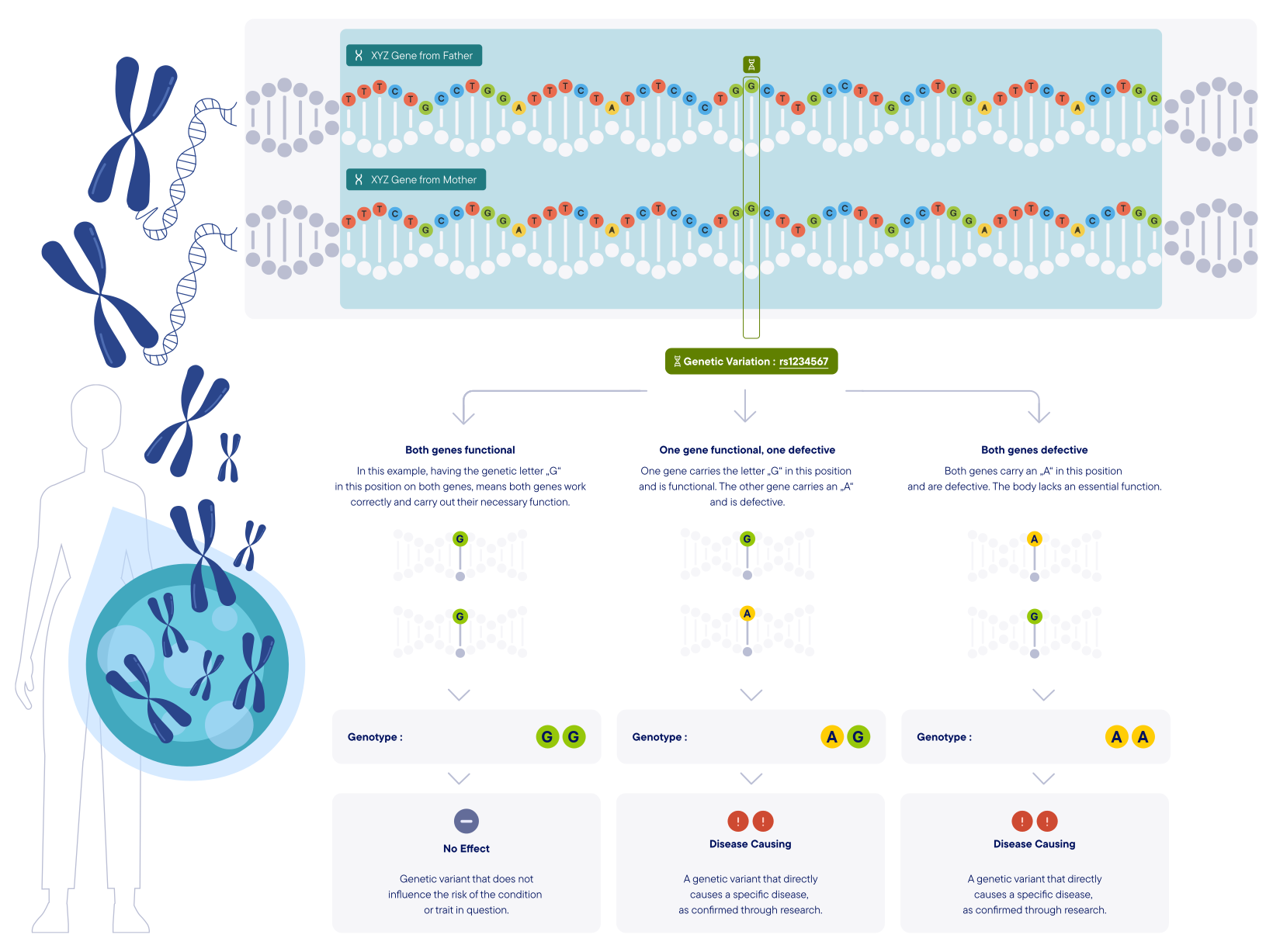
Humans have more than 20,000 genes, each carrying out one or a few specific functions in the body. One gene instructs the body to digest lactose from milk, another tells the body how to build strong bones and another prevents the body's cells from beginning to multiply uncontrollably and developing into cancer. As all of these genes combined are the building instructions for our body, a defect in one of these genes can have severe health consequences.
Through decades of genetic research, we know the genetic code of any healthy/functional human gene. We have also identified that in certain positions on a gene, some individuals may have a different genetic letter from the one you have. We call these hotspots "Genetic Variations" or "Variants" in short. In many cases, studies have been able to show that having the genetic letter "G" in the position makes you healthy, but having the letter "A" in the same position disrupts the gene function and causes a disease. Genopedia allows you to view these variants in genes and summarizes all that we know from scientific research, which genetic letters (Genotype) have good or bad consequences on your health or on your traits.
History
Families and midwives sometimes noticed a newborn with a soft heart murmur who otherwise seemed well. Years later, a teenager might feel short of breath during sports, and a doctor would hear the same gentle whoosh. These observations, made long before heart scans existed, slowly drew attention to an uncommon finding inside the heart now known as accessory mitral valve tissue.
Throughout history, people have described unusual heart sounds and fainting spells, but the true shape and location of accessory mitral valve tissue only became clear with advances in imaging. Early case reports came from surgery and autopsies, where doctors found an extra flap or strand near the mitral valve that could brush against the outflow tract to the aorta. Initially understood only through symptoms, later descriptions linked this extra tissue to narrowing of the pathway blood takes out of the heart, which can cause breathlessness, chest discomfort, or palpitations.
From early theories to modern research, the story of accessory mitral valve tissue follows the growth of heart imaging. The introduction of echocardiography in the late 20th century let clinicians see moving structures inside the beating heart without surgery. What once was discovered by chance at operation could now be recognized in a clinic visit. Over time, descriptions became more precise, separating small, harmless strands from larger, mobile tissue that can obstruct blood flow, especially during exercise.
In recent decades, awareness has grown as pediatric and adult cardiology teams have shared detailed images and outcomes. Labeled initially as rare, accessory mitral valve tissue is now recognized more often because doctors know to look for it when a patient has unexplained murmurs or signs of outflow obstruction. Some people are identified in childhood, while others are diagnosed as adults during evaluation for a new murmur or after an episode of dizziness.
Historical differences highlight why careful imaging matters today. Early reports emphasized severe cases seen in operating rooms, which made the condition seem uniformly risky. Broader use of ultrasound has shown that many living with accessory mitral valve tissue have mild or no symptoms and simply need periodic follow-up. At the same time, clinicians have learned to spot early symptoms of accessory mitral valve tissue that may lead to obstruction, guiding timely decisions about monitoring or surgery.
Advances in genetics have sparked questions about why the extra tissue forms during heart development, but most cases appear to be isolated, without a clear inherited pattern. Even so, the journey from scattered case notes to clear, visual diagnosis has shaped current care: listen carefully, image thoughtfully, and tailor follow-up to the person, not just the finding.