
Abruzzo-Erickson syndrome is a rare genetic condition that affects development and learning. People with Abruzzo-Erickson syndrome often have intellectual disability, delayed speech, and distinctive facial features that a doctor may notice. Signs start in infancy or early childhood and usually last lifelong, but not everyone will have the same experience. Treatment focuses on supportive care like speech, occupational, and physical therapy, and regular monitoring for associated health needs. The outlook varies, and many living with Abruzzo-Erickson syndrome benefit from early intervention and coordinated care.
Overview
Abruzzo-erickson syndromeSymptoms
Abruzzo-Erickson syndrome features early developmental delay and learning and speech difficulties. Many have low muscle tone, coordination challenges, or feeding troubles in infancy. Seizures, behavioral differences, and distinctive facial features may also be noticed.
Outlook and prognosis
Many living with Abruzzo-Erickson syndrome grow and learn at their own pace, often needing long‑term support for development, learning, and daily skills. With early therapies and tailored education, communication and independence can improve. Lifespan appears near typical, though needs vary.
Causes and risk factors
Abruzzo-Erickson syndrome stems from a single-gene change, inherited in some families or occurring as a new (de novo) variant. Risk is higher with family history or carrier status; parental relatedness slightly increases chance. Environment and lifestyle don’t cause it.
Genetic influences
Genetics fully determines Abruzzo-Erickson syndrome; it results from pathogenic changes in a single gene. Most cases are de novo, meaning the variant appears for the first time in the child. Recurrence risk depends on parental testing, mosaicism, and inheritance pattern.
Diagnosis
Doctors suspect it based on developmental history and distinctive clinical features, sometimes with family patterns. The genetic diagnosis of Abruzzo-erickson syndrome is confirmed by targeted gene testing or broader panels. Additional assessments or imaging may document associated findings.
Treatment and drugs
Treatment for Abruzzo-Erickson syndrome focuses on supportive care tailored to each person’s needs. Plans often include early developmental therapies, educational supports, seizure management if present, and regular monitoring for growth, feeding, sleep, and movement concerns. A care team may involve neurology, genetics, physiotherapy, speech-language, occupational therapy, and nutrition.
Symptoms
You might first notice a baby or toddler taking longer to sit, crawl, or say first words, or seeming a bit floppy when held. Feeding can be slow, and later learning and coordination may take extra support. Early features of Abruzzo-Erickson syndrome often include motor and speech delays, along with subtle facial traits that specialists recognize. Features vary from person to person and can change over time.
Sitting, crawling, and walking may happen later than expected. Many children need physical therapy to build strength and skills.
First words and combining words often come later. Speech therapy can support clearer communication.
Babies can feel floppy and tire easily when holding their head up. In Abruzzo-Erickson syndrome, this can make coordinated movements harder.
Sucking, chewing, or coordinating swallowing may be hard in infancy. Some children with Abruzzo-Erickson syndrome grow better with feeding support.
How people usually first notice Abruzzo-erickson syndrome?
Families often first notice Abruzzo-Erickson syndrome in infancy when a baby has unusual facial features, feeding difficulties, or muscle weakness that makes holding up the head or meeting early motor milestones harder than expected. Pediatricians may pick up the first signs of Abruzzo-Erickson syndrome during routine checkups by noting significant developmental delay, distinctive facial traits, or congenital anomalies, and then refer for genetic testing. In some cases, clues appear prenatally on ultrasound, but most diagnoses are considered after birth when delays and physical features prompt evaluation for how Abruzzo-Erickson syndrome is first noticed.
Types of Abruzzo-erickson syndrome
Abruzzo-Erickson syndrome is a rare genetic condition. Based on current knowledge, there aren’t established clinical subtypes that consistently differ in course, severity, or features. Not everyone will experience every type of symptom or at the same intensity. If you’re looking for “types of Abruzzo-Erickson syndrome,” clinicians generally describe one recognized condition rather than multiple variants.
No distinct variants
Experts currently recognize Abruzzo-Erickson syndrome as a single clinical entity. Published reports do not support consistent, separate variants.
What genetics can tell you about symptoms
Some people with Abruzzo-Erickson syndrome who have larger deletions on the X chromosome show more pronounced developmental delays, feeding difficulties, and low muscle tone. Others with smaller changes in the same gene may have milder learning challenges, subtle facial differences, and shorter height.
Causes and risk factors
Abruzzo-erickson syndrome is caused by a change in a gene that is present from birth. The change can be inherited from a parent, or it can arise for the first time in a child. Family history raises the chance, and genetic counseling can explain patterns and carrier risk. Not everyone with the same risk develops the condition. Lifestyle and environment do not cause the syndrome, but early care and healthy routines may shape how early symptoms of Abruzzo-erickson syndrome are noticed and managed.
Environmental and biological risk factors
Abruzzo-erickson syndrome is rare, and non-inherited influences on whether it occurs are limited. Doctors often group risks into internal (biological) and external (environmental). Most relate to factors that can slightly raise the chance of a new change in sperm or egg before conception. People searching for environmental risk factors for Abruzzo-erickson syndrome should know that everyday exposures are not known to cause it.
As a father's age increases, new changes build up more often in sperm. This may slightly raise the chance of Abruzzo-erickson syndrome arising as a one-time event. The overall risk per pregnancy remains small.
Aging eggs carry a higher chance of chromosomal changes; the effect on single-gene conditions is smaller and less consistent. Any increase in new changes tied to maternal age appears modest. Most older pregnancies are healthy.
Radiation from cancer therapy or severe accidents can damage sperm or egg cells. This could raise the chance of a new change before conception. Routine medical imaging uses far lower doses and is not linked to this condition.
Medicines that directly damage DNA can affect sperm or eggs. This may slightly increase the chance of a de novo change related to Abruzzo-erickson syndrome. Effects depend on the specific drug and dose.
Genetic risk factors
Families often want to know how Abruzzo-erickson syndrome runs in families and who else may be at risk. Some risk factors are inherited through our genes. Because early symptoms of Abruzzo-erickson syndrome can be subtle, many first learn about genetic risk only after a relative is diagnosed.

X-linked pattern: Reports in multiple families point to an X-linked inheritance pattern, with boys typically more affected. If a mother carries the change, each son has a 50% chance of being affected and each daughter has a 50% chance of being a carrier. This pattern can make Abruzzo-erickson syndrome cluster in maternal branches.
Carrier variability: Females who carry the change may have few or no features because one X chromosome can be naturally dialed down in many cells. Some may notice subtle learning differences, while others feel entirely unaffected. This variability can mask Abruzzo-erickson syndrome in a family.
Single-gene change: Evidence suggests a change in a single gene on the X chromosome underlies the condition. The exact gene has not been confirmed across all reports. Finding the family’s specific change clarifies who is at risk.
De novo variants: In some children, the genetic change arises for the first time and is not inherited from either parent. When this happens, parents typically do not carry the change on standard blood testing. Future pregnancies can still carry some risk if a parent has germline mosaicism.
Family history clues: A pattern of affected brothers, maternal uncles, or male cousins with similar features can signal risk for Abruzzo-erickson syndrome. Lack of a clear family history does not rule it out. A detailed pedigree often helps estimate who in the family could carry the change.
Variable expression: The same genetic change can affect relatives differently. One person may have more pronounced developmental differences, while another has milder features. This wide range is common in X-linked conditions.
Lifestyle risk factors
Abruzzo-erickson syndrome is a genetic, congenital condition; lifestyle habits do not cause it, but they can influence day-to-day function, symptom control, and quality of life. The most helpful lifestyle choices typically target movement, sleep, nutrition, learning, and seizure risk where relevant. Below are practical ways showing how lifestyle affects Abruzzo-erickson syndrome and what to consider as potential lifestyle risk factors for Abruzzo-erickson syndrome.
Regular, guided physical activity can support motor skills and reduce deconditioning that can worsen mobility limits. Overexertion without supervision may increase falls or fatigue that hinders therapy progress.
Consistently doing PT and OT home programs helps maintain strength, balance, and daily living skills. Skipping exercises can lead to stiffness and regression in motor milestones.
A balanced, fiber-rich diet supports growth and energy for therapies and school participation. Poor intake or highly selective eating can worsen low muscle tone, constipation, and fatigue.
Drinking enough fluids helps prevent constipation that can aggravate abdominal discomfort and behavioral dysregulation. Dehydration may also reduce exercise tolerance during therapies.
Risk prevention
Abruzzo-Erickson syndrome is a genetic condition, so you can’t prevent it outright. Prevention can mean both medical steps, like vaccines, and lifestyle steps, like exercise. The goal is to lower the chance of complications and support development, comfort, and independence over time. A proactive plan with your care team can make everyday life safer and smoother.
Learn how Abruzzo-Erickson syndrome is inherited and what that means for future pregnancies. Carrier testing and options like prenatal testing or IVF with embryo testing may be available. A genetic counselor can help you weigh benefits and limits.
If you notice early symptoms of Abruzzo-Erickson syndrome, ask for timely developmental and medical assessments. Starting therapies early can reduce complications and build skills. Keep updated referrals as needs change.
Stay current with routine shots, including flu and COVID-19, to lower risks from chest and ear infections. Good hand hygiene and prompt care for fevers can prevent setbacks in feeding, sleep, and development. Screenings and check-ups are part of prevention too.
Regular screening can catch treatable issues that affect speech, learning, and balance. Glasses, hearing aids, or ear treatments can prevent avoidable delays. Ask for audiology and eye exams on a set schedule.

Transmission
Abruzzo-Erickson syndrome is a genetic condition, not an infection. It can’t be caught or spread through everyday contact, coughs, sex, or blood; the only way it passes on is from parent to child through genes.
In some families, it’s inherited from a parent who carries the genetic change; in others, it happens for the first time as a new change in the egg or sperm. The chance of genetic transmission of Abruzzo-Erickson syndrome varies with the inheritance pattern in your family and which parent carries the change, so each pregnancy may carry a specific risk. A genetic counselor can explain how Abruzzo-Erickson syndrome is inherited in your situation.
When to test your genes
Test if you or your child show features consistent with Abruzzo–Erickson syndrome, or if a clinician suspects it based on development, growth, or facial features. Genetic testing is also reasonable when there’s a known family variant, or for confirming a diagnosis to guide therapies and support. A genetics referral can time testing and interpret results.
Diagnosis
For many families, the first clues are delayed milestones, learning differences, or subtle facial features noticed during check-ups. Abruzzo-Erickson syndrome is a rare genetic condition, and confirmation usually relies on a combination of clinical evaluation and specialized lab testing. In practice, teams look for a consistent pattern of findings and then use genetic tests to pinpoint the cause; this is the genetic diagnosis of Abruzzo-Erickson syndrome. Genetic testing may be offered to clarify risk or guide treatment.
A genetics-focused physical exam looks for patterns in growth, muscle tone, and facial features. These clinical features can raise suspicion for Abruzzo-Erickson syndrome and guide which tests to order.
A detailed three-generation family history helps identify relatives with similar learning or developmental patterns. This context can point toward an inherited cause such as Abruzzo-Erickson syndrome.
Standardized assessments document speech, motor, and learning skills. Clear baselines help teams track progress and tailor supports while evaluation for Abruzzo-Erickson syndrome is underway.
This test surveys the genome for missing or extra pieces of DNA. It helps rule out common chromosomal causes that can mimic Abruzzo-Erickson syndrome.
Stages of Abruzzo-erickson syndrome
Abruzzo-erickson syndrome does not have defined progression stages. It’s a lifelong developmental condition, so features tend to show up early and change slowly with growth rather than following a step-by-step decline. Different tests may be suggested to help confirm what’s going on, including a detailed developmental history, physical examination, and sometimes genetic testing of a gene called MED12. If you’re wondering about early symptoms of Abruzzo-erickson syndrome, families often first notice delayed milestones or feeding challenges in infancy, followed by speech and motor delays that lead to a specialist evaluation.
Outlook and prognosis
Looking at the long-term picture can be helpful. For most people with Abruzzo-Erickson syndrome, daily life centers on developmental support, communication strategies, and managing associated medical needs like feeding issues, low muscle tone, or seizures if they occur. Many people ask, “What does this mean for my future?”, and the answer is that abilities often grow over time with therapies, though progress may be slower than peers. Some children walk later and use alternative communication, and as teens and adults they may continue to learn practical skills, especially when supports are consistent.
Prognosis refers to how a condition tends to change or stabilize over time. The limited research suggests life expectancy can be near typical when serious complications—such as severe heart, breathing, or uncontrolled seizure problems—are not present. When these complications do occur, they can increase health risks, so early symptoms of Abruzzo-Erickson syndrome like poor feeding, recurrent chest infections, or new seizures deserve prompt attention. Everyone’s journey looks a little different.
With ongoing care, many people maintain steady health and make gains in mobility, communication, and self-care. Early care can make a real difference, including physical, occupational, and speech therapy, nutritional support, vision and hearing checks, and seizure management if needed. Talk with your doctor about what your personal outlook might look like, including any monitoring for complications and planning for school, work skills, and adult services. Understanding the prognosis can guide planning and help families match supports to changing needs over time.
Long-term effects
Day to day, many people with Abruzzo-Erickson syndrome grow and learn at their own pace, often needing extra support with communication, movement, and learning. Some features remain fairly stable, while others—like seizures or behavior patterns—can change over time. Long-term effects vary widely. Life expectancy is often shaped by the severity of neurological and medical issues rather than the diagnosis alone.
Intellectual disability can range from mild to significant. Learning often progresses slowly but steadily over years. The pattern may be uneven, with strengths in some areas and more challenges in others.
Speech may be delayed or limited. Understanding language is often stronger than speaking. Alternative ways to communicate may become important over time.
Low muscle tone and poor coordination can affect walking, balance, and fine motor tasks. Many continue to make gains, but movements may remain slower or less precise. Fatigue with activity can be common.
Some develop seizures that can start in childhood or adolescence. Seizure patterns may change across the years. Long-term control varies from person to person.
How is it to live with Abruzzo-erickson syndrome?
Living with Abruzzo-Erickson syndrome often means navigating global developmental delays, intellectual disability, and low muscle tone that can affect speech, learning, coordination, and daily self-care. Many need ongoing therapies—physical, occupational, and speech—plus structured routines and educational supports, which can make progress steady but slower and require extra time for tasks like dressing, feeding, and communication. Families and caregivers frequently take on coordinating appointments, advocating at school, and adapting the home environment, and they may benefit from respite care and community resources to prevent burnout. With consistent support, people with the syndrome can build meaningful skills, connect with others, and participate in family and community life at their own pace.
Treatment and drugs
Treatment for Abruzzo-Erickson syndrome focuses on easing symptoms, supporting development, and preventing complications, since there’s no single cure. Care usually includes early intervention with physical, occupational, and speech therapy, educational supports, and regular check-ins with specialists such as cardiology, neurology, eye, and hearing care, tailored to the features each person has. Doctors may use medications to address specific issues—such as seizures, attention or behavior symptoms, sleep problems, reflux, or constipation—while monitoring for side effects and benefits over time. Alongside medical treatment, lifestyle choices play a role, including nutrition guidance, mobility aids, communication devices, and family support services. It’s common to try more than one medication before finding what helps most, and genetic counseling can guide families on inheritance and future planning.
Non-drug treatment
For Abruzzo-Erickson syndrome, day-to-day support focuses on building skills, communication, mobility, and independence at home and school. Non-drug treatments often lay the foundation for progress, while medicines—if used—address specific symptoms like seizures or reflux. If early symptoms of Abruzzo-Erickson syndrome appear, such as slower skill milestones, starting therapies sooner can make goals easier to reach. Care typically blends therapy, education supports, and practical tools tailored to the person’s strengths.
Therapy in infancy and toddler years can support motor, language, and social skills. Services are usually provided through public programs and can continue into preschool.
Speech-language therapy builds understanding, verbal skills, and social communication. Augmentative and alternative communication (AAC) tools, like picture boards or speech-generating devices, can give a reliable voice.
OT helps with daily activities such as dressing, feeding, and handwriting. Sensory-based strategies can improve focus, tolerance of textures, and body awareness.
PT strengthens core and limb muscles to improve sitting, standing, balance, and walking. Home exercise plans help maintain gains between sessions.
Your genes may have an impact on how drugs work for you
Medicines used in Abruzzo-Erickson syndrome can work differently based on a person’s genetic variants, which affect how fast drugs are broken down or how sensitive brain and body receptors are. Pharmacogenetic testing may guide dosing or drug choice, but clinical monitoring remains essential.
Pharmacological treatments
Medicines for Abruzzo-Erickson syndrome focus on easing day-to-day symptoms such as seizures, reflux, sleep difficulties, and muscle stiffness; there is no single drug that treats the underlying genetic cause. Not everyone responds to the same medication in the same way. Choices are tailored to the person’s age, specific features, and other health needs, and they may change over time. Some medicines are used for early symptoms of Abruzzo-Erickson syndrome, including infantile seizures and feeding-related reflux.
Levetiracetam, valproate, oxcarbazepine, and clobazam are commonly used to prevent seizures. Rescue options like intranasal midazolam or rectal diazepam can stop prolonged events.
Baclofen or tizanidine can ease tight muscles and reduce spasms. In focal areas, botulinum toxin type A injections may help movement and comfort.
Melatonin can help shift the body clock and improve sleep onset. When needed, low-dose clonidine or hydroxyzine may be considered under specialist guidance.
Proton pump inhibitors such as omeprazole or lansoprazole reduce stomach acid and protect the esophagus. Famotidine is an H2 blocker option if PPIs are not suitable.
Genetic influences
Genetics play a central role in Abruzzo‑Erickson syndrome, shaping who is affected in a family and how the features show up. Family history is one of the strongest clues to a genetic influence. In some families, the underlying gene change is passed down, while in others it occurs for the first time in a child.
Genetic testing for Abruzzo‑Erickson syndrome may confirm the diagnosis and, when a change is found, can show whether a parent carries it. Even within the same family, the effects can range from subtle learning differences to more noticeable developmental and medical needs. Clarifying the inheritance pattern helps with care planning and family planning, including options for future pregnancies and testing for relatives.
Is Abruzzo-erickson syndrome genetic?
Genetics fully determines Abruzzo-Erickson syndrome; it results from pathogenic changes in a single gene. Most cases are de novo, meaning the variant appears for the first time in the child. Recurrence risk depends on parental testing, mosaicism, and inheritance pattern.
Pharmacogenetics—how genetics influence drug effects
Treatment for Abruzzo-Erickson syndrome is usually tailored to day-to-day needs—such as learning support, behavior, sleep, or seizures—so the medicines used can vary widely. Genes can influence how quickly you process certain medicines, which can change the chance of side effects or whether a drug helps enough. The genetic change that causes Abruzzo-Erickson syndrome typically doesn’t point to one specific medication, but a separate type of testing (pharmacogenetics) can sometimes guide dosing for drugs used to manage symptoms, like some antidepressants, pain relievers, or anti-seizure medicines if those are needed. These tests don’t pick a single “right” drug; instead, they can help a doctor choose a starting dose, avoid options more likely to cause side effects for you, and plan closer monitoring. For example, if your results suggest slower breakdown by liver enzymes, a lower dose may be safer; if faster, a higher dose or a different option may work better. Other factors—age, other prescriptions, overall health, and treatment goals—still play a big role, so genetic information is used alongside your medical history. If past medicines caused strong side effects or didn’t help, you can ask whether pharmacogenetic testing for Abruzzo-Erickson syndrome care could help personalize your plan.
Interactions with other conditions
People with Abruzzo-Erickson syndrome often live with other health issues that can influence day-to-day life, including autism features, attention difficulties, anxiety, seizures, reflux or constipation, sleep problems, and sometimes vision or hearing concerns. Early symptoms of Abruzzo-Erickson syndrome like low muscle tone and feeding challenges can combine with reflux to increase the risk of choking or chest infections, which in turn may sap energy and slow progress in therapy. A condition may “exacerbate” (make worse) symptoms of another, so pain from constipation, poor sleep, or an active infection can trigger more seizures or heighten irritability and behavior challenges. Hearing or vision problems can also compound communication delays, making learning and social situations feel harder. Medicines used for seizures, attention, or mood may interact or cause side effects such as sleepiness, appetite changes, or constipation, so coordinated prescribing and regular reviews matter. Interactions can look very different from person to person, but working with neurology, gastroenterology, therapy teams, and primary care together can help keep these overlapping issues in balance.
How genes can cause diseases
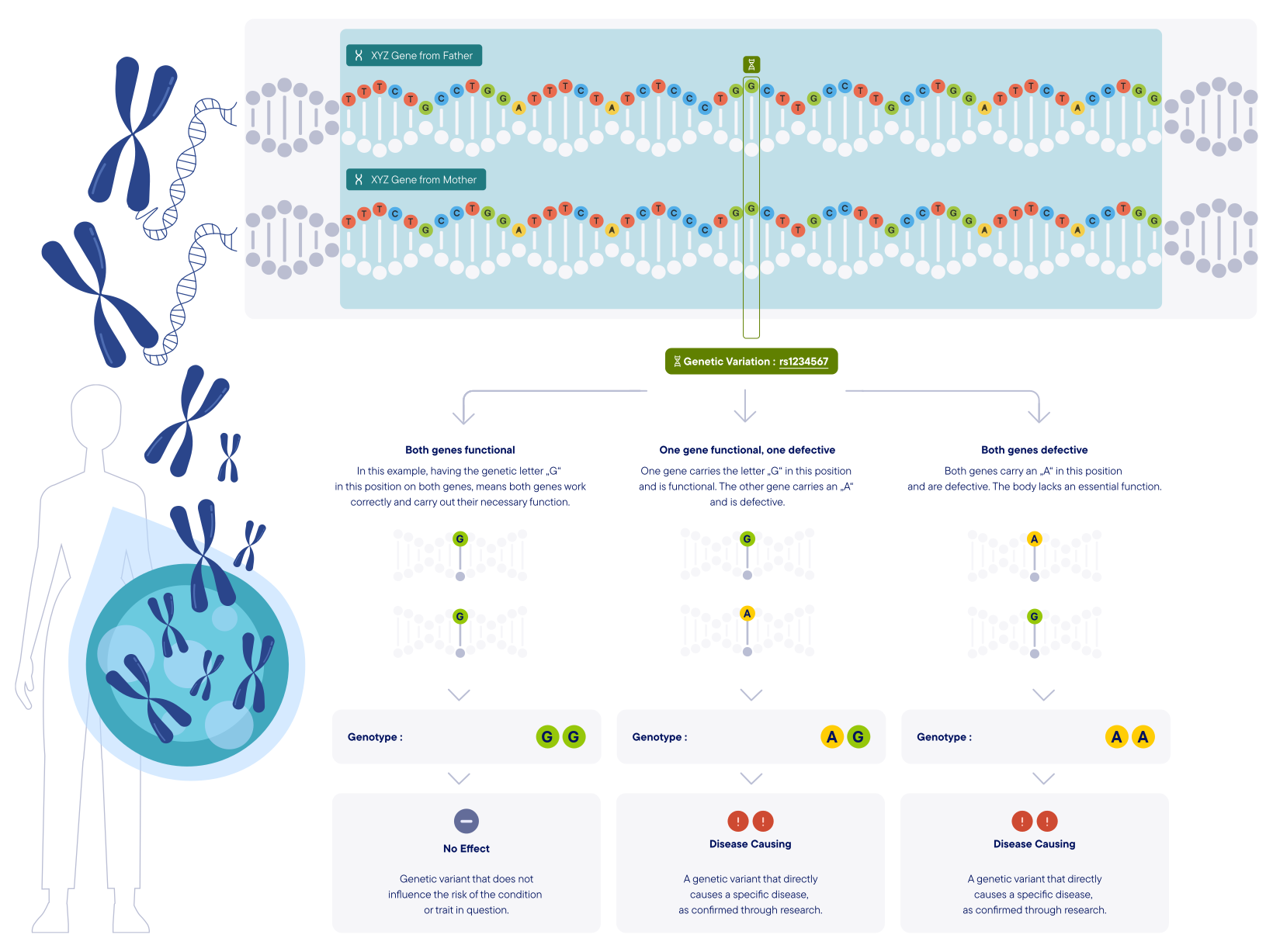
Humans have more than 20,000 genes, each carrying out one or a few specific functions in the body. One gene instructs the body to digest lactose from milk, another tells the body how to build strong bones and another prevents the body's cells from beginning to multiply uncontrollably and developing into cancer. As all of these genes combined are the building instructions for our body, a defect in one of these genes can have severe health consequences.
Through decades of genetic research, we know the genetic code of any healthy/functional human gene. We have also identified that in certain positions on a gene, some individuals may have a different genetic letter from the one you have. We call these hotspots "Genetic Variations" or "Variants" in short. In many cases, studies have been able to show that having the genetic letter "G" in the position makes you healthy, but having the letter "A" in the same position disrupts the gene function and causes a disease. Genopedia allows you to view these variants in genes and summarizes all that we know from scientific research, which genetic letters (Genotype) have good or bad consequences on your health or on your traits.
History
Throughout history, families and midwives noticed babies who were small at birth, had tight joints, and later showed delays in movement and speech. Relatives might recall a child who needed help to straighten elbows or knees, or whose fingers seemed stiff from the start. As these children grew, many needed extra support in school and regular visits with therapists, while doctors documented facial features and body measurements that seemed to cluster together.
First described in the medical literature as a recognizable pattern of growth restriction, joint stiffness, and developmental differences, what we now call Abruzzo-Erickson syndrome was initially pieced together from careful bedside notes and family histories. Early reports focused on what could be seen and measured: limited range of motion, short stature, and learning challenges. Some authors grouped these children under broader labels for joint contractures. Others proposed new names, reflecting the features they thought most important.
Over time, descriptions became more precise as specialists compared cases across clinics and countries. Photographs, X-rays, and later, detailed muscle and connective tissue exams helped narrow the picture. From early theories to modern research, the story of Abruzzo-Erickson syndrome shows how a condition moves from a cluster of signs to a defined diagnosis.
Advances in genetics brought a turning point. Instead of relying solely on outward features, researchers began to look for the underlying cause. Studies uncovered changes in a single gene that acts like a dimmer switch for growth and tissue flexibility, helping explain why some children had more pronounced joint contractures while others had milder findings. This also clarified why early symptoms of Abruzzo-Erickson syndrome could vary widely, even within the same family.
In recent decades, awareness has grown as case reports and registries connected families and clinicians. With each decade, diagnostic criteria have been refined, and the name Abruzzo-Erickson syndrome became linked to a consistent genetic explanation. Not every early description was complete, yet together they built the foundation of today’s knowledge.
Today’s history of the condition continues to evolve. Genetic testing allows earlier and more confident diagnosis, sometimes even before joint problems become obvious. Looking back helps explain why an older relative might have been labeled with a different term, while a child today receives a clear diagnosis of Abruzzo-Erickson syndrome and access to targeted care and supports.