
6p22 microdeletion syndrome is a genetic condition caused by a tiny missing segment on the short arm of chromosome 6. It often features developmental delay, learning differences, and speech-language delays, and some people also have attention, behavior, or social communication challenges. Many children with 6p22 microdeletion syndrome have low muscle tone, feeding issues in infancy, and mild differences in facial features that doctors may notice. The condition is lifelong, but supports such as early therapies, special education, and behavioral and speech therapy can help, and the outlook varies. Most people with 6p22 microdeletion syndrome have a normal life span, and talking with your healthcare provider can bring clarity and reassurance.
Overview
6p22 microdeletion syndromeSymptoms
Early signs of 6p22 microdeletion syndrome include developmental and speech delay, low muscle tone, and learning difficulties. Some have attention or autism‑spectrum traits, seizures, or congenital differences in the heart, kidneys, or eyes. Features appear in infancy or early childhood.
Outlook and prognosis
Most people with 6p22 microdeletion syndrome grow and live into adulthood, though learning, speech, and attention differences often persist. Early therapies—speech, occupational, behavioral, and educational supports—can markedly improve skills and independence. Regular hearing, vision, heart, and developmental checks guide care over time.
Causes and risk factors
6p22 microdeletion syndrome results from a missing segment on chromosome 6, usually arising de novo before birth. Risk increases when a parent carries the deletion or a balanced rearrangement; parental age and environmental or lifestyle factors play minimal roles.
Genetic influences
Genetics is central in 6p22 microdeletion syndrome because the condition results from a missing segment on chromosome 6. The size and exact genes deleted can shape severity and features. Most cases are de novo, though parental testing helps clarify recurrence risk.
Diagnosis
Doctors suspect 6p22 microdeletion syndrome from clinical features, including developmental delays and congenital differences. Chromosomal microarray or other genetic tests confirm the diagnosis. Imaging and organ-specific tests assess related issues and support the genetic diagnosis of 6p22 microdeletion syndrome.
Treatment and drugs
Treatment for 6p22 microdeletion syndrome focuses on each person’s needs. Care may include early developmental therapies, special education supports, speech and physical therapy, behavioral strategies, and monitoring by cardiology, neurology, ophthalmology, and hearing specialists. Genetic counseling helps families plan care and supports.
Symptoms
6p22 microdeletion syndrome affects development, especially speech, learning, and movement, which can shape daily routines from infancy through school years. Early features of 6p22 microdeletion syndrome can include slower motor milestones and delayed first words. Features vary from person to person and can change over time.
Many children reach milestones like sitting, crawling, or walking later than peers. Timelines are individual, and with therapies many continue to gain skills over time.
First words and sentences often come later, and speech may be hard to understand. Understanding language can be stronger than speaking, so extra time to respond helps. Speech therapy can boost clarity and confidence.
Reading, memory, and problem-solving can take more repetition and structure. Classroom supports and tailored teaching often help children in 6p22 microdeletion syndrome make steady progress.
Attention, impulsivity, or sensory sensitivities are common, and some children show social communication differences. Loved ones often notice the changes first. Predictable routines and behavioral therapy can make days go more smoothly.
How people usually first notice 6p22 microdeletion syndrome?
Families often notice the first signs of 6p22 microdeletion syndrome in early infancy or toddlerhood as delays in sitting, crawling, or talking, sometimes alongside low muscle tone that makes babies feel “floppy.” Doctors may first suspect it because of feeding difficulties, subtle facial differences, or learning and behavioral differences that become clearer when preschool skills don’t keep pace with peers. When these patterns appear together, clinicians may recommend genetic testing to confirm the diagnosis, which is how 6p22 microdeletion syndrome is often first noticed.
Types of 6p22 microdeletion syndrome
6p22 microdeletion syndrome is a genetic condition caused by a small missing piece on the short arm of chromosome 6. Variants of the deletion can differ in size and in which genes are lost, which can change how symptoms show up and how severe they are. People may notice different sets of symptoms depending on their situation. Clinicians often describe these categories: interstitial (within the arm segment), terminal (end of the arm), and the specific gene content involved; these types of 6p22 microdeletion syndrome help explain differences in development, learning, behavior, and physical features.
Interstitial 6p22
The missing segment sits within the p22 region, sparing the chromosome end. Symptoms often include developmental delay, differences in speech and language, learning challenges, and sometimes behavioral features like attention or anxiety concerns.
Terminal 6p deletion
The deletion extends to the tip of the chromosome’s short arm, which can remove more genes than interstitial changes. People with larger terminal losses may have more pronounced developmental delays, growth differences, or structural features noticed on exam.
Gene-content specific
The exact genes lost within 6p22 shape the picture, acting like a dimmer switch on certain functions. When key neurodevelopmental genes are included, language delay, social‑communication differences, or motor coordination challenges may stand out more. If those genes are spared, symptoms may be milder or more focused.
What genetics can tell you about symptoms
Some people with 6p22 microdeletion syndrome have learning and speech delays, smaller head size, distinctive facial features, or behavioral differences because missing genes in the 6p22 region can disrupt brain and development signals. Deleting specific genes like ATXN1 or JARID2 is linked to coordination issues, attention challenges, and congenital anomalies.
Causes and risk factors
6p22 microdeletion syndrome happens when a small piece of chromosome 6 at region p22 is missing.
In most people, this change starts fresh in the egg, sperm, or very early embryo and is not inherited.
In some families, a parent carries the same missing piece or a balanced chromosome change, which raises the chance in future pregnancies.
Day‑to‑day exposures do not cause the deletion, but other genes, pregnancy factors, and overall health can shape how severe the features are.
Doctors distinguish between risk factors you can change and those you can’t, and this helps explain why early symptoms of 6p22 microdeletion syndrome can vary widely.
Environmental and biological risk factors
Most cases of 6p22 microdeletion syndrome arise by chance with no clear trigger in the parents or pregnancy. Doctors often group risks into internal (biological) and external (environmental). Below are environmental and biological factors that may influence the chance of this microdeletion, even though for most families the exact cause remains unknown. Understanding risk factors for 6p22 microdeletion syndrome can help frame discussions during preconception or prenatal visits.
Conception at older maternal or paternal age may slightly raise the chance of new chromosomal changes. This can include changes that lead to 6p22 microdeletion syndrome. The absolute risk for any one pregnancy remains low.
Small mistakes when eggs or sperm are made can create missing DNA segments. This process happens in everyone and is usually corrected, but rarely a deletion at 6p22 can occur. These events are typically random and not due to anything the parents did.
Strong ionizing radiation can damage DNA in eggs or sperm and increase the chance of chromosomal breaks. Rarely, this could result in a microdeletion on chromosome 6p22 in a child. Everyday background or standard diagnostic imaging uses much lower doses than those linked with this risk.
High-level exposure to certain chemicals such as heavy metals or some solvents can injure reproductive cell DNA. This may slightly raise the chance of chromosomal changes in offspring, including small deletions. Workplace safety measures help keep exposures well below levels tied to risk.
Genetic risk factors
The root cause is a tiny missing segment on the short arm of chromosome 6, usually arising as a new change in the egg or sperm. While early symptoms of 6p22 microdeletion syndrome vary from person to person, what unites cases is this loss of DNA in the 6p22 region. People with the same risk factor can have very different experiences. Inheritance is possible when a parent carries the same deletion, and the chance of passing it on follows a 1-in-2 pattern.

De novo deletion: In many people with 6p22 microdeletion syndrome, the deletion is a new event that began in the egg or sperm. It is not caused by anything either parent did. When both parents test negative for the deletion, the chance it will happen again in another child is usually low.
Inherited deletion: If a parent carries a 6p22 deletion, each child has a 50% (1 in 2) chance to inherit it; this is known medically as autosomal dominant. The impact can range from mild to more noticeable, even within the same family. Family studies help clarify who carries the change.
Variable deletion size: The exact size of the missing segment, and which genes are included, can shape the features seen. Larger deletions may remove more genes and have broader effects. Even strong risks don’t guarantee a specific outcome.
Balanced rearrangement: Sometimes a parent has a balanced translocation or inversion that causes no health issues for them but can produce eggs or sperm with a 6p22 deletion. In these families, the recurrence risk is higher than average. Chromosome studies in parents can check for this possibility.
Parental mosaicism: Rarely, a parent carries the deletion in only some cells or only in egg or sperm. Standard blood testing may look normal, which is why a recurrence can still happen even when both parents test negative. Overall risk remains low but not zero.
Recombination errors: Errors during the natural swapping of DNA between chromosomes can lead to a missing segment at 6p22. These events are random genetic accidents. They explain why many cases occur without any family history.
Family history: A known 6p22 deletion in a relative raises the chance that other family members could carry the same change. Targeted genetic testing can identify who is affected. Genetic counseling can help clarify risks for future pregnancies.
Lifestyle risk factors
Lifestyle habits do not cause this syndrome, but they can shape symptom management, learning progress, and day-to-day function. Thoughtful routines may lessen challenges such as hypotonia, speech delay, attention difficulties, sensory sensitivities, and feeding issues. The following points emphasize how lifestyle affects 6p22 microdeletion syndrome with concrete, daily choices. Consistent habits can also lower lifestyle risk factors for 6p22 microdeletion syndrome by reducing preventable setbacks.
Regular, low-impact exercise can improve hypotonia, balance, and coordination. Better motor control may also support attention and sleep, which often affect learning in 6p22 microdeletion syndrome.
Calorie-dense, texture-appropriate meals can address feeding difficulties and support growth when oral-motor skills are delayed. Adequate fiber and fluids may reduce constipation that can worsen behavior and discomfort.
A fixed bedtime, calming wind-down, and dark room can reduce night wakings and daytime irritability. More stable sleep often improves attention, learning carryover from therapy, and seizure threshold if seizures are present.
Predictable schedules and visual supports can lower anxiety and behavioral dysregulation linked to executive-function and attention challenges. Consistent routines help children participate more fully in therapy and school tasks.
Risk prevention
Because 6p22 microdeletion syndrome is genetic, there’s no way to prevent the condition itself, but you can lower the chance of complications and support healthy development. Different people need different prevention strategies—there’s no single formula. Planning before pregnancy, early checks after birth, and steady follow-up over time make the biggest difference.
Meet with a genetics professional to understand inheritance, recurrence risk, and testing choices. This can include options like preimplantation testing and discussions about prenatal diagnosis for future pregnancies.
During pregnancy, screening and diagnostic tests can look for chromosomal changes. Your care team can explain what each test can and cannot tell you.
Regular screening helps spot early symptoms of 6p22 microdeletion syndrome and guides timely therapy. Early intervention services can improve communication, motor skills, and learning.
Schedule hearing and eye evaluations in infancy and early childhood. Treating hearing loss or vision issues early supports language and school readiness.

Transmission
6p22 microdeletion syndrome is a genetic condition caused by a small missing piece of chromosome 6; it isn’t contagious, and it can’t be passed by everyday contact. Most people with 6p22 microdeletion syndrome have a change that happened for the first time in them (a new change in an egg or sperm), not something either parent carried. If a parent does have the same deletion, it usually follows an autosomal dominant pattern—each pregnancy has a 50% chance to inherit the deletion—though the health effects can differ from one person to another. A genetics team can explain how 6p22 microdeletion syndrome is inherited in your family and may suggest parental testing to refine the chance of it happening again, including the rare possibility that some egg or sperm cells carry the change even when a parent’s blood test is negative.
When to test your genes
6p22 microdeletion syndrome is a genetic/congenital condition, so genetic testing is most useful when there’s a known deletion in the family, developmental delays, learning differences, congenital anomalies, or unexplained medical features. Test earlier if pregnancy screening or ultrasound flags concerns. Testing can guide tailored therapies, monitor associated risks, and inform family planning.
Diagnosis
For many families, the first clues are delays in speech and learning, challenges with attention or behavior, or low muscle tone that make everyday activities feel harder. Doctors look for a pattern of developmental and physical features and then use chromosome-based testing to confirm what’s going on; providers typically rely on genetic tests for the diagnosis of 6p22 microdeletion syndrome. Genetic testing may be offered to clarify risk or guide treatment. Findings can vary from child to child, so the exact testing plan may be adjusted by your care team.
A pediatrician or geneticist reviews development, health history, and family background and performs a detailed physical exam. They look for patterns of features that are seen with 6p22 microdeletions.
Standardized tests check speech, learning, motor skills, and behavior. Documenting strengths and delays supports the clinical picture and guides therapies.
This first-line genetic test can detect small missing pieces of chromosome 6 at the p22 region. It has high sensitivity for copy number changes that routine karyotypes may miss.
FISH or qPCR may be used to confirm the deletion and better define its boundaries. This can help with result clarity and future family planning.
Stages of 6p22 microdeletion syndrome
6p22 microdeletion syndrome does not have defined progression stages. It’s a genetic difference present from birth, so while early symptoms of 6p22 microdeletion syndrome may be noticed as a child grows—such as delays in sitting, speaking, or learning—the condition doesn’t follow a predictable step-by-step course. Doctors usually start with a conversation about development, medical history, and family background, followed by a physical exam and checks of hearing, vision, and growth. Diagnosis is often confirmed with genetic testing such as a chromosomal microarray, and care is tailored over time with periodic assessments to monitor learning, behavior, and any organ-specific concerns.
Outlook and prognosis
Looking ahead can feel daunting, but many people with 6p22 microdeletion syndrome make steady gains with the right therapies. Daily routines often adapt, with added supports like speech therapy, occupational therapy, and school-based services, and progress is typically gradual rather than quick. Prognosis refers to how a condition tends to change or stabilize over time. Many people ask, “What does this mean for my future?”, and the short answer is that development often continues across childhood and adolescence, though learning and communication challenges may persist into adulthood.
Everyone’s journey looks a little different. Some children walk and talk later than peers, while for others the early symptoms of 6p22 microdeletion syndrome are milder and school accommodations cover most needs. Seizures, if present, can often be managed, and muscle tone and coordination usually improve with therapy. Life span is usually near typical when medical issues such as heart, kidney, vision, or seizure-related concerns are identified early and followed closely; deaths directly related to the microdeletion itself are uncommon in published reports.
Knowing what to expect can ease some of the worry. With ongoing care, many people maintain increasing independence in self-care, communication, and social participation, though academic and vocational supports may be needed long term. In medical terms, the long-term outlook is often shaped by both genetics and lifestyle. Talk with your doctor about what your personal outlook might look like.
Long-term effects
6p22 microdeletion syndrome can have lifelong effects that differ from person to person, with changes most noticeable in learning, communication, and behavior. Long-term effects vary widely, and not everyone will experience the same challenges. Parents may notice early features of 6p22 microdeletion syndrome in infancy or early childhood, with the long-term picture becoming clearer over school years. Some health issues present at birth can persist into adulthood, while others improve over time.
Many have mild to moderate learning challenges that become clearer in school years. Academic progress is often steady but slower than peers.
Speech and language can be delayed, with expressive language usually more affected than understanding. Some continue to prefer simple phrases or need extra time to find words.
Ongoing attention, impulsivity, or hyperactivity issues can affect school and work. Planning, organization, and flexible thinking may remain harder than expected for age.
Autism spectrum features and social communication differences are common. Reading social cues and building peer relationships can take extra practice over time.
How is it to live with 6p22 microdeletion syndrome?
Living with 6p22 microdeletion syndrome often means navigating developmental delays, learning differences, and sometimes behavioral challenges like attention difficulties or sensory sensitivities, which can make school, transitions, and crowded environments harder. Daily life may involve therapies—speech, occupational, physical—structured routines, and extra time to learn new skills, with progress that can be steady but slower than peers. Families, caregivers, and teachers play a central role, coordinating care, advocating in educational settings, and adapting communication and expectations so the child—or adult—can participate and thrive. Many find that early supports, clear routines, and a strengths-focused approach ease stress for everyone and build confidence over time.
Treatment and drugs
Treatment for 6p22 microdeletion syndrome focuses on supporting development, learning, and day-to-day function rather than correcting the chromosome change itself. Care typically involves a tailored mix of services such as early intervention, speech and language therapy, occupational and physical therapy, educational supports, and behavioral strategies; some may also benefit from vision or hearing care, sleep support, and feeding or nutrition guidance. Doctors sometimes recommend a combination of lifestyle changes and drugs, for example using medication to help with attention, anxiety, significant irritability, or seizures if they occur. Regular check-ins with a pediatrician, neurologist, geneticist, and therapists help track progress and adjust the plan as needs change. Although living with 6p22 microdeletion syndrome can feel overwhelming, many people manage their symptoms and live fulfilling lives.
Non-drug treatment
Support focuses on development, communication, learning, and day-to-day function. For many families, recognizing early symptoms of 6p22 microdeletion syndrome helps them start services sooner. Non-drug treatments often lay the foundation for progress across childhood. Plans are tailored to each child, since strengths and needs vary.
Birth-to-school services help build communication, motor, and self-help skills. Starting early is especially helpful for children with 6p22 microdeletion syndrome.
A speech-language pathologist works on first words, understanding language, and clear speech. Therapy can also target social communication like turn-taking.
OT builds fine-motor skills for play, dressing, and school tasks. Sensory strategies can help with touch, sound, or movement sensitivities.
PT strengthens core and leg muscles and improves balance. It can help with sitting, crawling, walking, and stairs.
Your genes may have an impact on how drugs work for you
Medications can work differently in people with 6p22 microdeletion syndrome because genes affecting how drugs are absorbed, broken down, and transported may be altered. Pharmacogenetic testing and cautious, stepwise dosing help clinicians choose safer, more effective treatments.
Pharmacological treatments
Medicines for 6p22 microdeletion syndrome are chosen to ease everyday challenges like focus, behavior, sleep, seizures, and anxiety. Not everyone responds to the same medication in the same way. Doctors weigh age, early symptoms of 6p22 microdeletion syndrome, and any heart, kidney, or feeding issues when deciding what to try. The goal is to support learning, comfort, and routines, while therapies and school supports continue to do their part.
Methylphenidate or amphetamine medicines can improve attention, reduce impulsivity, and help learning time last longer. First-line medications are those doctors usually try first, based on safety and effectiveness in children and teens.
Atomoxetine, guanfacine, or clonidine may help when focus problems or hyperactivity persist or stimulants cause side effects. Dosing may be increased or lowered gradually to balance benefits and tolerability.
Risperidone or aripiprazole can reduce severe irritability, self-injury, or aggressive bursts sometimes seen alongside autism features. Side effects, if they occur, can often be managed by dose changes or switching medicines.
SSRIs such as fluoxetine or sertraline may ease anxiety, obsessive thoughts, or repetitive behaviors that disrupt school or home life. Benefits usually build over weeks, with regular check-ins to watch mood, sleep, and appetite.
Genetic influences
Most cases arise as a new change at conception rather than being inherited from a parent. The underlying change is a tiny missing segment on the short arm of chromosome 6 (the 6p22 region), which can remove one or more genes important for brain development and growth. Even with the same gene change, people can have very different symptoms and developmental needs. If a parent does carry the same microdeletion, each child has a 50% chance of inheriting it, though the specific features can still vary from one family member to another. Genetic testing for 6p22 microdeletion syndrome is usually done with a chromosomal microarray or similar tests that look for missing or extra DNA, and testing both parents helps clarify the chance of the deletion happening again in future pregnancies.
Is 6p22 microdeletion syndrome genetic?
Genetics is central in 6p22 microdeletion syndrome because the condition results from a missing segment on chromosome 6. The size and exact genes deleted can shape severity and features. Most cases are de novo, though parental testing helps clarify recurrence risk.
Pharmacogenetics—how genetics influence drug effects
Because a small piece of chromosome 6 is missing, some people with 6p22 microdeletion syndrome may also be missing genes that help the body handle specific medicines. One important example is TPMT, a gene in the 6p22 region that helps break down thiopurine drugs such as azathioprine and mercaptopurine; if TPMT is deleted or not working, even routine doses can cause severe bone marrow suppression (very low blood counts). Because the exact size of the deletion differs from person to person, your genetics team can review which genes are involved and adjust treatment plans accordingly. Genetic testing can sometimes identify how your body handles these and other medicines, helping doctors choose safer starting doses or alternative drugs. For seizures, attention, or mood symptoms in 6p22 microdeletion syndrome, many useful drug–gene guides involve genes on other chromosomes, so standard pharmacogenetic testing may still inform dosing even though those genes lie outside 6p22. Let your care team, lab, and pharmacy know about the microdeletion and any pharmacogenetic results before starting new medicines so doses can be tailored with extra care.
Interactions with other conditions
People with 6p22 microdeletion syndrome often also live with neurodevelopmental conditions such as autism, ADHD, or anxiety, and these overlaps can shape how learning supports and therapies work day to day. Doctors call it a “comorbidity” when two conditions occur together. If epilepsy or frequent sleep problems are also present, tiredness and medication side effects can lower attention and raise irritability, which may make behavior symptoms seem more intense. Low muscle tone, vision differences, or hearing loss can add extra hurdles for speech and social communication, sometimes making it hard to tell what comes from 6p22 microdeletion syndrome versus what stems from sensory or motor challenges. A smaller number have heart or kidney differences, which can affect anesthesia planning and medication choices, so bringing cardiology, neurology, and developmental teams together is important. When families track early symptoms of 6p22 microdeletion syndrome alongside signs of autism or ADHD, it becomes easier to see how one condition may amplify the other and to adjust care without duplicating efforts.
How genes can cause diseases
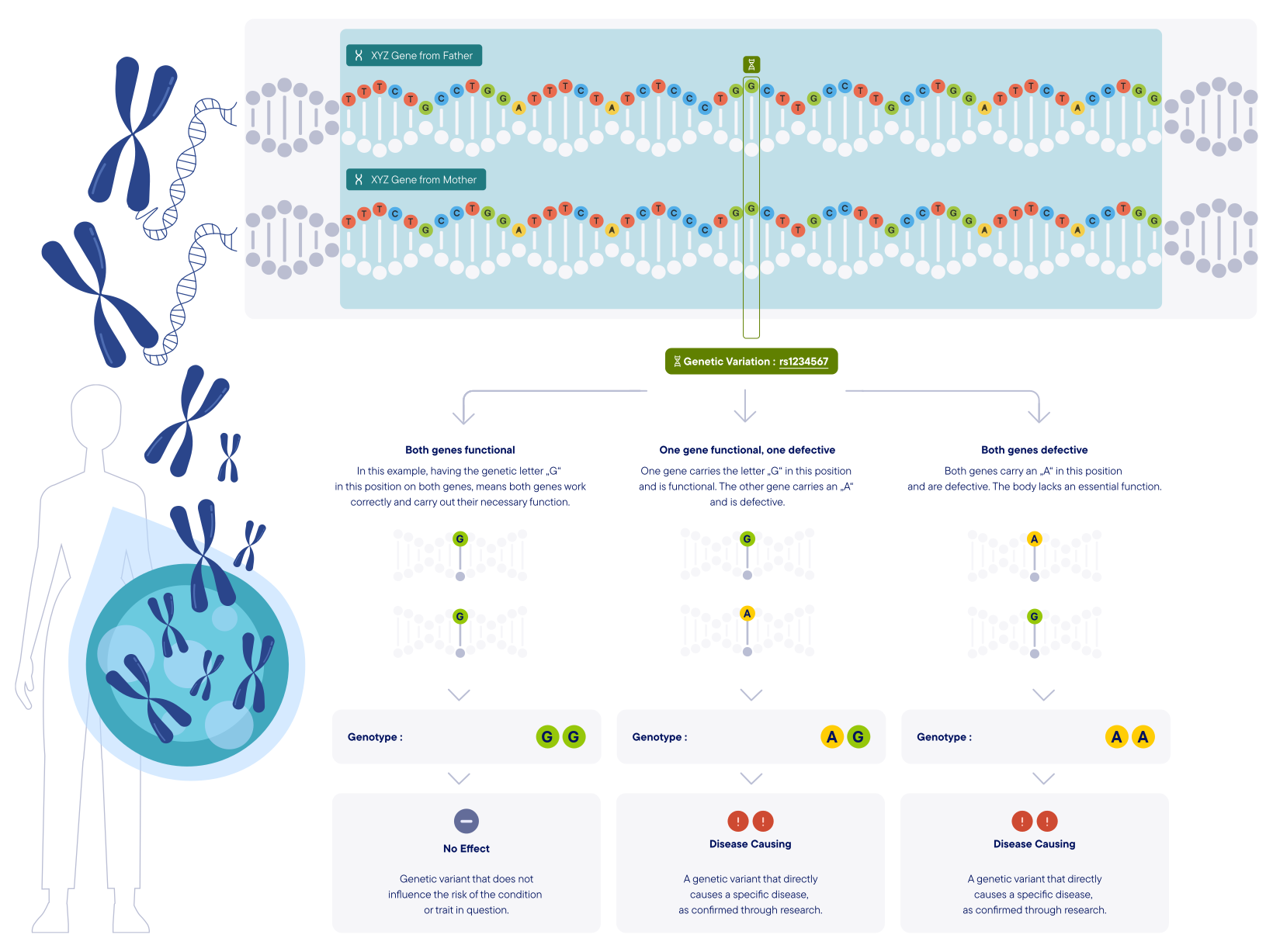
Humans have more than 20,000 genes, each carrying out one or a few specific functions in the body. One gene instructs the body to digest lactose from milk, another tells the body how to build strong bones and another prevents the body's cells from beginning to multiply uncontrollably and developing into cancer. As all of these genes combined are the building instructions for our body, a defect in one of these genes can have severe health consequences.
Through decades of genetic research, we know the genetic code of any healthy/functional human gene. We have also identified that in certain positions on a gene, some individuals may have a different genetic letter from the one you have. We call these hotspots "Genetic Variations" or "Variants" in short. In many cases, studies have been able to show that having the genetic letter "G" in the position makes you healthy, but having the letter "A" in the same position disrupts the gene function and causes a disease. Genopedia allows you to view these variants in genes and summarizes all that we know from scientific research, which genetic letters (Genotype) have good or bad consequences on your health or on your traits.
History
Throughout history, people have described children who learned to speak later than expected, struggled with reading or attention, or needed extra support in school. Families sometimes noticed more than one relative with similar challenges, even when medical tests were “normal.” Before modern genetics, these patterns were recorded as learning differences or developmental delay without a clear cause.
From early theories to modern research, the story of 6p22 microdeletion syndrome reflects how medicine moved from observing symptoms to pinpointing tiny changes in chromosomes. In the 1970s and 1980s, standard chromosome studies could spot large missing pieces, but very small losses went unseen. Many living with subtle features—such as mild differences in facial shape, coordination, or behavior—didn’t have an explanation. As high‑resolution chromosome tests arrived in the 1990s and 2000s, followed by chromosomal microarray and rapid DNA-based tools, clinicians began to detect microdeletions on the short arm of chromosome 6, in a region called p22.
Initially understood only through symptoms, later cases could be linked to specific genes within 6p22 that help guide brain development and learning. Doctors recognized that a tiny missing stretch in this region could be enough to affect speech, reading, attention, or muscle tone, while physical features might be minimal or variable. Case reports collected across Europe and the United States showed a spectrum: some people with 6p22 microdeletion syndrome had broader developmental needs; others had milder differences noticed mainly in school years.
Over time, descriptions became more precise as larger patient groups were studied. What once seemed rare turned out to be underdiagnosed, uncovered more often as genetic testing became part of evaluations for developmental delay, autism spectrum features, or unexplained learning differences. Researchers also learned that the same microdeletion can appear in someone with significant challenges and in a parent with few or no obvious symptoms, highlighting real variability within families.
With each decade, the focus has shifted from naming the condition to understanding supports that help people with 6p22 microdeletion syndrome thrive—early speech therapy, tailored learning plans, and attention to mental health and behavior. Today, laboratories can define the exact size of the missing piece and which genes are involved, giving families clearer answers than were possible a generation ago. Knowing the condition’s history helps explain why many adults never received a diagnosis in childhood and why modern testing can change care plans, not by labeling, but by pointing to practical, personalized support.