
6-pyruvoyl-tetrahydropterin synthase deficiency is a rare genetic condition that affects how the body makes a cofactor needed for brain chemicals. Babies with 6-pyruvoyl-tetrahydropterin synthase deficiency may develop early symptoms of irritability, stiffness, poor feeding, or delayed milestones. Without treatment it can cause movement problems and developmental delays, but timely therapy helps many children improve. Treatment usually includes sapropterin, L‑Dopa and carbidopa, and sometimes 5‑hydroxytryptophan, plus folinic acid and regular monitoring. It is lifelong, and outcomes vary, but with early care many people with 6-pyruvoyl-tetrahydropterin synthase deficiency can live into adulthood.
Overview
6-pyruvoyl-tetrahydropterin synthase deficiencySymptoms
6-pyruvoyl-tetrahydropterin synthase deficiency often shows in early infancy with poor feeding, sleepiness or irritability, and floppy or stiff muscles. Many develop developmental delay, movement problems like tremor or twisting postures, and seizures if untreated. Newborn screening may flag high phenylalanine.
Outlook and prognosis
Many living with 6-pyruvoyl-tetrahydropterin synthase deficiency do well with early diagnosis, regular dopamine- and serotonin-targeted treatment, and phenylalanine control. This lowers movement problems and supports development. Delays or missed therapy can lead to lasting neurologic challenges.
Causes and risk factors
6-pyruvoyl-tetrahydropterin synthase deficiency results from pathogenic changes in the PTS gene and is inherited in an autosomal recessive pattern. Risk rises when both parents are carriers, particularly with consanguinity; environment or lifestyle don’t cause it, though illness can worsen symptoms.
Genetic influences
Genetics is central in 6-pyruvoyl-tetrahydropterin synthase deficiency, a rare inherited disorder. Most cases result from pathogenic variants in the PTS gene, typically passed in an autosomal recessive pattern. Different variants can change enzyme activity, influencing symptom severity and treatment needs.
Diagnosis
Doctors suspect it after newborn screening shows high phenylalanine or neurologic symptoms. Diagnosis is confirmed by blood and urine pterin tests and enzyme studies, plus genetic tests of the PTS gene. This supports the genetic diagnosis of 6‑pyruvoyl‑tetrahydropterin synthase deficiency.
Treatment and drugs
Treatment for 6-pyruvoyl-tetrahydropterin synthase deficiency focuses on restoring brain neurotransmitters and supporting normal growth. Care often includes sapropterin (BH4), levodopa/carbidopa and 5‑hydroxytryptophan, plus folinic acid, with careful dose adjustments. Regular monitoring guides nutrition, physical therapies, and seizure management when needed.
Symptoms
Features of 6-pyruvoyl-tetrahydropterin synthase deficiency often begin in the first weeks or months of life and tend to involve feeding, sleep, and muscle control. Families may notice early features of 6-pyruvoyl-tetrahydropterin synthase deficiency such as poor feeding, unusual sleep, or floppy or stiff muscles. Features vary from person to person and can change over time. Some features are subtle at first and become clearer as developmental milestones approach.
Babies may feed slowly, tire easily, or vomit after feeds. In 6-pyruvoyl-tetrahydropterin synthase deficiency this can lead to poor weight gain if not addressed.
Muscles may seem unusually floppy or, at times, stiff. This can make it harder to hold the head steady or sit without support.
Repetitive twisting, tremors, or sudden jerks can appear. Clinicians call this dystonia, which means involuntary muscle contractions that twist or pull. These movements may come and go through the day.
Brief spells of upward eye gaze with restlessness can occur. These are oculogyric crises and can look alarming but often pass on their own. Recording a short video can help the care team understand them.
How people usually first notice 6-pyruvoyl-tetrahydropterin synthase deficiency?
Many families first notice something is off in the first weeks to months of life: a very sleepy or irritable baby who feeds poorly, has trouble maintaining body temperature, or shows unusual movements like stiffness, tremors, or jerky eye movements. Doctors may pick up the first signs of 6-pyruvoyl-tetrahydropterin synthase deficiency when newborn screening suggests low phenylalanine processing or later when blood tests show high phenylalanine alongside signs of low brain chemicals (dopamine and serotonin), such as worsening rigidity, delayed milestones, or episodes that resemble seizures. In some regions without newborn screening, how 6-pyruvoyl-tetrahydropterin synthase deficiency is first noticed is often through progressive developmental delay and movement problems in infancy, prompting metabolic and genetic testing.
Types of 6-pyruvoyl-tetrahydropterin synthase deficiency
People with 6‑pyruvoyl‑tetrahydropterin synthase (PTPS) deficiency can have different clinical variants that shape when symptoms start, how severe they are, and how the brain and body are affected. This is a genetic disorder in the BH4 (tetrahydrobiopterin) pathway, which influences neurotransmitters like dopamine and serotonin as well as how the body handles phenylalanine. Clinicians often describe them in these categories: classic neonatal-onset, later-onset (mild) forms, and forms with or without significant phenylalanine elevation. Knowing the types of PTPS deficiency helps explain why early symptoms of PTPS deficiency may be striking in some newborns but subtler in others.
Classic neonatal-onset
Symptoms begin in the first days to weeks with poor feeding, low energy, irritability, or jerky movements. Blood tests often show elevated phenylalanine alongside low dopamine and serotonin signaling. Without prompt BH4 and neurotransmitter support, neurologic issues can progress.
Mild/late-onset
Signs emerge later in infancy or childhood, sometimes after normal newborn screening. Phenylalanine may be normal or only mildly high, but movement issues, stiffness, or developmental concerns can appear as demands on the brain’s chemical messengers increase. Not everyone will experience every type.
Hyperphenylalaninemic form
Phenylalanine is clearly elevated on screening, which may first trigger evaluation. Symptoms can include feeding difficulties, tone changes, or delayed milestones if neurotransmitter deficits are not treated. Early BH4-guided care often improves outcomes.
Normophenylalaninemic form
Phenylalanine stays normal, so newborn screening may miss it. People may present with movement problems, drooling, temperature instability, or sleep disturbance due to dopamine and serotonin shortages. Targeted neurotransmitter replacement is key even when phenylalanine is not high.
Genotype–phenotype spectrum
Different PTS gene variants act like a dimmer switch on enzyme activity, creating a continuum from severe to milder disease. More severe variants tend to cause earlier, more obvious neurologic symptoms, while milder variants may present subtly. This spectrum explains why types of PTPS deficiency can overlap rather than fit into strict boxes.
What genetics can tell you about symptoms
Some people with 6-pyruvoyl-tetrahydropterin synthase deficiency (often due to PTS gene variants) have low brain dopamine and serotonin, causing stiff muscles, tremor, poor coordination, and developmental delays. Certain variants also lower brain BH4, leading to high phenylalanine, irritability, seizures, and feeding problems.
Causes and risk factors
6-pyruvoyl-tetrahydropterin synthase deficiency happens because of changes in the PTS gene. A child is affected when both parents carry the change and both pass it on, which gives a 1 in 4 (25%) chance with each pregnancy. Some risks are written in our DNA, passed down through families. Risk is higher when parents are related by blood or when a rare gene change is more common in a community. Illness, stress, and protein intake do not cause the disorder, but they can influence how severe it is and the timing of early symptoms of 6-pyruvoyl-tetrahydropterin synthase deficiency.
Environmental and biological risk factors
For 6-pyruvoyl-tetrahydropterin synthase deficiency, current evidence suggests that common outside exposures or pregnancy-related factors do not meaningfully change the chance of it occurring. Doctors often group risks into internal (biological) and external (environmental). At this time, no specific biological or environmental factor has been confirmed to raise or lower the likelihood. If questions come up after reading about early symptoms of 6-pyruvoyl-tetrahydropterin synthase deficiency, your care team can explain what testing and follow-up may make sense for your family.
No established environmental exposure has been shown to increase the chance of 6-pyruvoyl-tetrahydropterin synthase deficiency. Research to date has not linked air pollution, heavy metals, pesticides, or medical radiation to higher risk.
No specific maternal health condition has been shown to raise the likelihood of this condition. Available studies have not identified infections, fever, or metabolic conditions in pregnancy as triggers.
Advanced maternal or paternal age does not appear to increase the chance of 6-pyruvoyl-tetrahydropterin synthase deficiency. Age-related risks seen in other conditions have not been demonstrated here.
Mode of delivery, preterm birth, or labor complications do not cause this condition. These factors may affect a newborn’s immediate health but are not linked to whether the condition occurs.
Genetic risk factors
6-pyruvoyl-tetrahydropterin synthase deficiency happens when both copies of a gene called PTS carry disease-causing changes. These changes reduce the enzyme needed to make a small molecule that helps process phenylalanine and support brain chemicals. Carrying one genetic change doesn’t guarantee the condition will appear. Family history and shared ancestry patterns can affect who carries these changes and the chance two carriers have a child together.

PTS gene variants: Changes in the PTS gene reduce the body’s ability to make BH4, a helper needed to process phenylalanine and brain-signaling chemicals. This directly lowers the enzyme activity required for normal function. Genetic testing can identify the specific changes carried in a family.
Autosomal recessive: Two disease-causing changes—one on each copy of the PTS gene—are usually required for the condition to develop. People with only one change are carriers and typically have no symptoms. All genders are affected at similar rates.
Carrier parents: When both parents are carriers, each pregnancy has a 25% chance (1 in 4) of an affected child. There is a 50% chance the child will be a carrier, and a 25% chance of inheriting no changes. Siblings of someone affected may also be carriers.
Shared ancestry: In families or communities with shared ancestry, a single variant can become more common over generations. This raises the chance that two carriers meet and have a child with 6-pyruvoyl-tetrahydropterin synthase deficiency. Carrier rates can cluster within certain regions or groups.
Variant type matters: Different PTS changes can leave varying amounts of enzyme activity, which can influence how early and how strongly symptoms appear. More disruptive changes tend to cause more severe shortages of BH4. This can shape the early symptoms of 6-pyruvoyl-tetrahydropterin synthase deficiency.
Lifestyle risk factors
6-pyruvoyl-tetrahydropterin synthase deficiency is a genetic condition; lifestyle habits do not cause it, but they can influence symptom control and complications. Day-to-day choices around food, activity, sleep, and medication routines can shift phenylalanine levels and neurotransmitter balance, affecting movement, mood, and cognition. Understanding how lifestyle affects 6-pyruvoyl-tetrahydropterin synthase deficiency helps tailor routines that support treatment. Below are practical lifestyle risk factors for 6-pyruvoyl-tetrahydropterin synthase deficiency that directly impact metabolic and neurologic stability.
Large or frequent high-protein meals can raise blood phenylalanine and worsen neurologic symptoms. Following the prescribed phenylalanine restriction and evenly spacing protein across the day helps stabilize levels.
Skipping prescribed phenylalanine-free amino acid formula reduces essential nutrients and can impair growth and metabolic control. Taking the full daily dose as directed supports stable phenylalanine and neurotransmitter synthesis.
Missing sapropterin (BH4) doses or not taking it with food can lower its effectiveness and allow phenylalanine to rise. Consistent daily dosing with meals improves absorption and metabolic control.
Taking levodopa or 5-HTP with high-protein meals can reduce absorption and blunt symptom relief. Spacing doses away from protein can improve motor and mood stability.
Risk prevention
Because 6-pyruvoyl-tetrahydropterin synthase deficiency is genetic, you can’t prevent the condition itself, but you can lower the chance of complications and support healthy development. Prevention is about lowering risk, not eliminating it completely. Catching it early, keeping phenylalanine levels in range, and replacing missing brain chemicals make the biggest difference day to day. Plans for illness, medicines, and follow-up help many families feel prepared and in control.
Ensure your baby’s newborn screen is completed and any abnormal result is followed up quickly. Early diagnosis allows treatment before symptoms progress.
See a metabolic and neurology team as soon as 6-pyruvoyl-tetrahydropterin synthase deficiency is suspected. Fast coordination reduces delays in starting proven therapies.
If prescribed sapropterin (BH4), give it exactly as directed every day. Consistent use helps control phenylalanine and protects brain function.
Use prescribed L‑dopa/carbidopa and 5‑HTP as instructed. Keeping dopamine and serotonin levels supported may prevent movement issues and irritability.

Transmission
6-pyruvoyl-tetrahydropterin synthase deficiency is not contagious and cannot be caught from someone else. The genetic transmission of 6-pyruvoyl-tetrahydropterin synthase deficiency is autosomal recessive: most often, both parents are healthy carriers of one nonworking PTS gene, and a child who inherits two nonworking copies is affected. When both partners are carriers, each pregnancy has a 25% (1 in 4) chance of the condition, a 50% chance the child will be a healthy carrier, and a 25% chance of inheriting no nonworking copies. New, spontaneous gene changes can occur but are uncommon; a genetics professional can explain how 6-pyruvoyl-tetrahydropterin synthase deficiency is inherited and discuss carrier and newborn testing.
When to test your genes
Consider genetic testing if you or a child show early signs of hyperphenylalaninemia despite dietary treatment, or if newborn screening suggests tetrahydrobiopterin (BH4) deficiency. Testing is also reasonable before pregnancy or if there’s a family history of 6-pyruvoyl-tetrahydropterin synthase (PTS) deficiency. Results can guide BH4 therapy, neurotransmitter supplementation, and monitoring.
Diagnosis
People with 6-pyruvoyl-tetrahydropterin synthase deficiency are often first flagged when a baby’s newborn blood spot shows high phenylalanine, or when early symptoms like feeding difficulties, stiffness, or unusual movements raise concern. From there, doctors piece together lab results and clinical findings to separate it from classic phenylketonuria and other rare causes. Finding out the cause is the first step toward treatment. In many families, the genetic diagnosis of 6-pyruvoyl-tetrahydropterin synthase deficiency helps clarify care for the child and guides testing for relatives.
A routine heel-prick test may show high phenylalanine in the first days of life. This result prompts follow-up to confirm the level and look for causes beyond classic PKU.
Repeat blood tests check whether phenylalanine stays high over time. The degree of elevation helps set urgency and monitor response once treatment begins.
Urine or dried blood spot testing measures neopterin and biopterin, which are building blocks related to phenylalanine breakdown. A characteristic pattern points toward PTPS deficiency rather than other conditions.
A simple test checks the activity of an enzyme called dihydropteridine reductase. Normal DHPR activity helps rule out DHPR deficiency and supports a PTPS-related cause.
Stages of 6-pyruvoyl-tetrahydropterin synthase deficiency
6-pyruvoyl-tetrahydropterin synthase deficiency does not have defined progression stages. It’s an inherited metabolic condition identified by specific lab tests rather than a step-by-step clinical decline, and doctors consider early symptoms of 6-pyruvoyl-tetrahydropterin synthase deficiency alongside results because features can vary from child to child. Different tests may be suggested to help confirm the diagnosis, starting with newborn screening that shows high phenylalanine and followed by blood and urine pterin testing and genetic testing of the PTS gene. Doctors also monitor phenylalanine levels and response to treatments such as BH4 (sapropterin), and may check markers of dopamine and serotonin to guide care over time.
Outlook and prognosis
Looking at the long-term picture can be helpful. For most people with 6-pyruvoyl-tetrahydropterin synthase deficiency, the outlook depends on how early the condition is recognized and how well dopamine and serotonin are replaced alongside careful phenylalanine control. Many living with 6-pyruvoyl-tetrahydropterin synthase deficiency do well when treatment starts in infancy, with improved movement, attention, and learning over time. Early care can make a real difference, especially for speech, school progress, and avoiding prolonged “off” periods with stiffness or tremor.
The outlook is not the same for everyone, but most children who receive timely therapy reach adulthood and can lead active lives. Seizures, movement problems, or developmental delays are more likely if treatment is delayed or dosing is inconsistent, and some adults still notice fine-motor challenges, attention issues, or mood changes despite good care. Serious complications and increased mortality are uncommon when treatment is started early and monitored, though untreated or poorly controlled disease can raise the risk of hospitalizations from infections, feeding problems, or severe movement crises. If you’re wondering about early symptoms of 6-pyruvoyl-tetrahydropterin synthase deficiency, they often include poor muscle tone, unusual stiffness, jittery movements, or feeding difficulty in the first months of life, which is why prompt evaluation matters.
Over time, most people need dose adjustments during growth spurts, illness, pregnancy, or aging, and some benefit from physical, occupational, and speech therapy to build skills and independence. With ongoing care, many people maintain good quality of life and stable health into adulthood. Talk with your doctor about what your personal outlook might look like. Genetic testing can sometimes provide more insight into prognosis, but not everyone with the same gene change will have the same outlook.
Long-term effects
6-pyruvoyl-tetrahydropterin synthase deficiency is a lifelong, genetic condition that mainly affects brain development and movement control over time. Outcomes range from mild learning differences to significant motor disability, and early detection and consistent care often shape that trajectory. Long-term effects vary widely, and two children in the same family may follow very different paths. Thinking about the long-term effects helps families and clinicians plan monitoring across childhood, adolescence, and adulthood.
Many children show ongoing speech, learning, and problem-solving challenges. These can range from mild school support needs to intellectual disability.
Stiffness, tremor, or twisting postures (dystonia) can persist or fluctuate over years. Some develop parkinsonian features such as slow movement and rigidity.
Seizures may begin in infancy or childhood and continue intermittently. For some, they lessen with age, while others have a long-term tendency to recur.
Attention difficulties, irritability, and sleep disruption can be part of the long-term picture. These features may ebb and flow during growth spurts and stress.
How is it to live with 6-pyruvoyl-tetrahydropterin synthase deficiency?
Living with 6-pyruvoyl-tetrahydropterin synthase deficiency can mean carefully planned days centered on medication timing, regular feeds, and close monitoring for changes in movement, mood, or alertness, especially in infancy and early childhood. Many families learn to manage a tailored mix of BH4 (tetrahydrobiopterin), amino acid–restricted diet, and neurotransmitter supplements, and they work closely with specialists to adjust doses as a child grows. School, play, and sleep can be affected by motor stiffness, developmental delays, or attention challenges, so routines, therapies, and supportive educators make a real difference. For those around the child—parents, siblings, caregivers—there’s a learning curve and emotional load, but with a clear care plan, emergency instructions, and shared responsibilities, daily life becomes more predictable and connected.
Treatment and drugs
Treatment for 6-pyruvoyl-tetrahydropterin synthase deficiency focuses on replacing missing brain chemicals and reducing high phenylalanine levels in the blood to protect the brain. Doctors typically use sapropterin (a form of BH4) to boost the body’s own pathway, along with phenylalanine-restricted nutrition using specialized medical formulas and careful diet planning; some people also need amino acid supplements to support growth. Many with 6-pyruvoyl-tetrahydropterin synthase deficiency require medicines that replace neurotransmitters, such as L-dopa with carbidopa for dopamine and 5-hydroxytryptophan (5-HTP) for serotonin, with doses adjusted over time based on symptoms, growth, and lab tests. Regular monitoring includes blood phenylalanine (and sometimes tyrosine) levels, urine or blood pterin studies, and clinical checks for movement, mood, sleep, and development; a doctor may adjust your dose to balance benefits and side effects. Supportive care can make a real difference in how you feel day to day, so care usually involves a metabolic specialist, dietitian, and neurologist, with early treatment tied to the best developmental outcomes.
Non-drug treatment
Daily life with 6-pyruvoyl-tetrahydropterin synthase deficiency often involves balancing nutrition, therapy, and routines that support brain and body development. Alongside medicines, non-drug therapies can make a meaningful difference in learning, movement, and day-to-day well-being. Recognizing early symptoms of 6-pyruvoyl-tetrahydropterin synthase deficiency can guide timely supports at home, in clinics, and at school. Plans usually evolve with age, so regular check-ins with a metabolic team help keep care on track.
Limiting high-protein foods helps keep phenylalanine levels in a safer range. This diet is often tailored by a metabolic dietitian for people with 6-pyruvoyl-tetrahydropterin synthase deficiency.
Special medical foods provide protein and nutrients without extra phenylalanine. These formulas help growth while protecting brain health.
Illness can raise phenylalanine as the body breaks down its own protein. A written plan helps adjust food, fluids, and monitoring during fevers or poor intake.
Aspartame contains phenylalanine and can raise levels. Checking labels on diet sodas, sugar-free gums, and light desserts helps people with this condition stay within targets.
Your genes may have an impact on how drugs work for you
Medicines for 6‑pyruvoyl‑tetrahydropterin synthase deficiency can work differently depending on genes that affect how the body makes, transports, or breaks down BH4 and neurotransmitters. Genetic testing can guide choices and doses of BH4, L‑dopa, and other supplements.
Pharmacological treatments
Treatment aims to replace missing cofactors and restore brain dopamine and serotonin so day‑to‑day skills like feeding, movement, and attention can develop more smoothly. Recognizing early symptoms of 6-pyruvoyl-tetrahydropterin synthase deficiency and starting treatment promptly can help prevent complications. Not everyone responds to the same medication in the same way. Care is usually long term, with regular checks to fine‑tune doses as children grow.
Sapropterin dihydrochloride replaces the missing BH4 cofactor to lower blood phenylalanine and support neurotransmitter production. Many with 6-pyruvoyl-tetrahydropterin synthase deficiency need this as a foundation medicine.
Levodopa restores dopamine in the brain, while carbidopa reduces stomach-side conversion so more reaches the brain. This can ease stiffness, tremor, slow movement, and drooling.
5-HTP boosts brain serotonin to support mood, sleep, and temperature control. Some clinicians combine 5-HTP with carbidopa to reduce nausea and improve tolerability.
In selected cases, specialists may add selegiline or entacapone to help levodopa last longer and smooth out wearing‑off. These add‑on drugs are tailored to response and side effects in 6-pyruvoyl-tetrahydropterin synthase deficiency.
Genetic influences
6-pyruvoyl-tetrahydropterin synthase deficiency usually happens when a child inherits two nonworking copies of the same gene, one from each parent (a recessive pattern). Some conditions are passed down through families (inherited disorders). The gene involved (called PTS) helps the body make a helper molecule, often shortened to BH4, that’s needed to break down phenylalanine and to make brain messengers like dopamine and serotonin. Parents who each carry one PTS change typically have no symptoms, but when both pass it on, a child can develop 6-pyruvoyl-tetrahydropterin synthase deficiency. How strongly someone is affected can vary with the specific gene changes. If you’re wondering whether 6-pyruvoyl-tetrahydropterin synthase deficiency is inherited, genetic testing for the PTS gene and a visit with a genetic counselor can clarify carrier status, guide family planning, and help relatives understand their risks.
Is 6-pyruvoyl-tetrahydropterin synthase deficiency genetic?
Genetics is central in 6-pyruvoyl-tetrahydropterin synthase deficiency, a rare inherited disorder. Most cases result from pathogenic variants in the PTS gene, typically passed in an autosomal recessive pattern. Different variants can change enzyme activity, influencing symptom severity and treatment needs.
Pharmacogenetics—how genetics influence drug effects
In 6-pyruvoyl-tetrahydropterin synthase deficiency, the specific change in the PTS gene shapes how well certain treatments work. People with variants that leave some enzyme activity often respond more to sapropterin (tetrahydrobiopterin, BH4), needing lower doses to bring phenylalanine down, while those with little or no activity may require higher doses and closer monitoring. Most still need neurotransmitter replacement—levodopa/carbidopa and 5‑hydroxytryptophan—to support dopamine and serotonin in the brain, with doses adjusted over time based on growth, symptoms, and lab results.
Genetic testing can sometimes identify how your body is likely to handle BH4 therapy and predict the need for add‑on treatments. Other genes that affect how medicines are broken down may also play a role, but care is primarily guided by the PTS result, clinical features, and regular blood phenylalanine checks. This gene‑guided approach helps your team fine‑tune diet, BH4, and neurotransmitter therapy to reduce complications and support development.
Interactions with other conditions
Illnesses that stress the body—like a fever, stomach bug, or surgery—can raise protein breakdown and push up blood phenylalanine, so people with 6-pyruvoyl-tetrahydropterin synthase deficiency may notice more stiffness, irritability, sleep problems, or feeding trouble during those times. In babies, early symptoms of 6-pyruvoyl-tetrahydropterin synthase deficiency can be mistaken for colic or a viral infection, and the overlap can become more obvious when an infection is active. A condition may “exacerbate” (make worse) symptoms of another. If liver or kidney disease is also present, or if nutrition is poor, it can be harder to keep phenylalanine in range and to fine‑tune treatments such as sapropterin, L‑dopa/carbidopa, and 5‑hydroxytryptophan. When depression, anxiety, ADHD, or psychosis need treatment, some antidepressants and antipsychotics can interact with the dopamine‑ and serotonin‑related medicines used for 6-pyruvoyl-tetrahydropterin synthase deficiency, so care teams usually coordinate doses and watch closely for side effects.
How genes can cause diseases
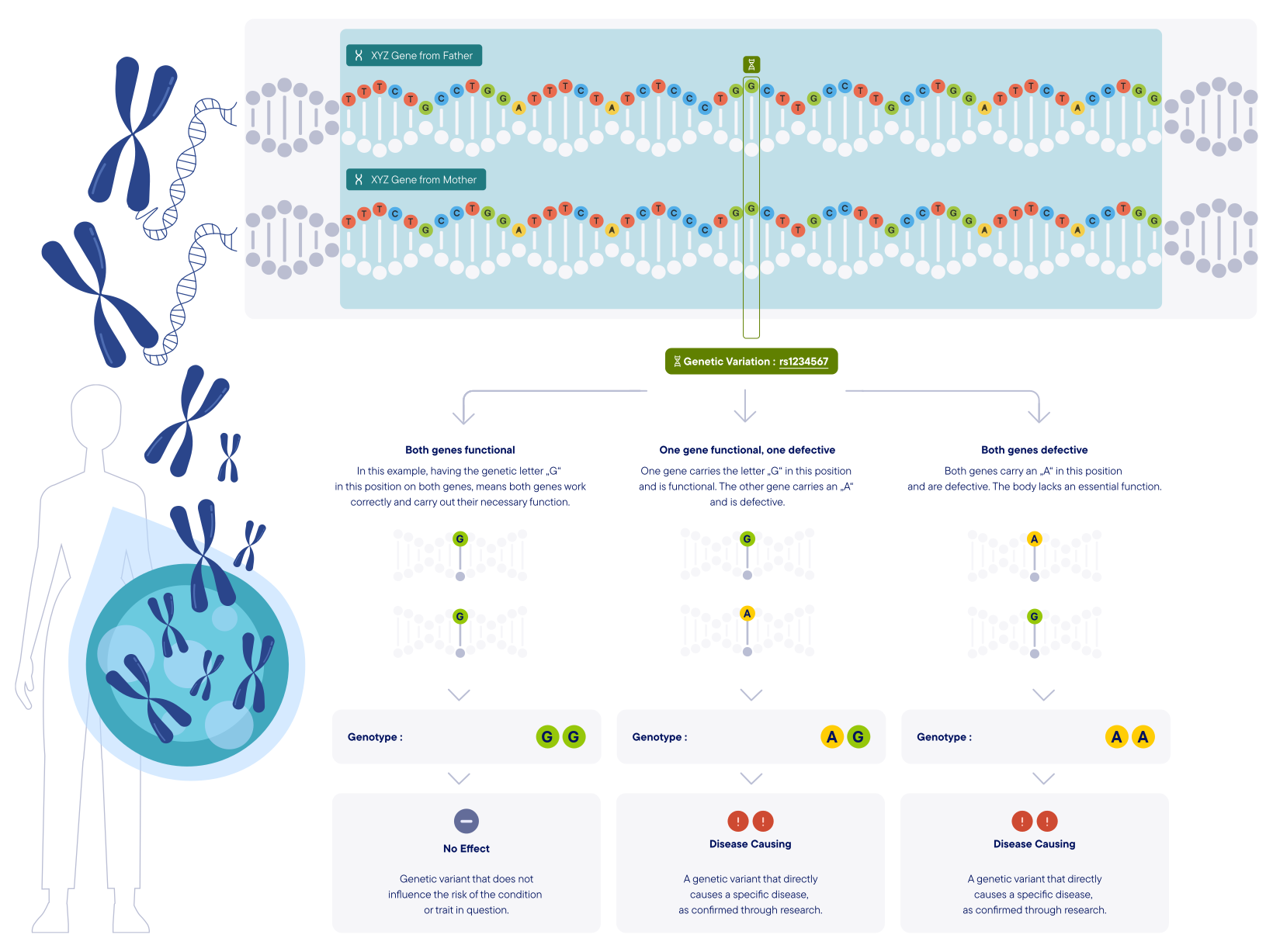
Humans have more than 20,000 genes, each carrying out one or a few specific functions in the body. One gene instructs the body to digest lactose from milk, another tells the body how to build strong bones and another prevents the body's cells from beginning to multiply uncontrollably and developing into cancer. As all of these genes combined are the building instructions for our body, a defect in one of these genes can have severe health consequences.
Through decades of genetic research, we know the genetic code of any healthy/functional human gene. We have also identified that in certain positions on a gene, some individuals may have a different genetic letter from the one you have. We call these hotspots "Genetic Variations" or "Variants" in short. In many cases, studies have been able to show that having the genetic letter "G" in the position makes you healthy, but having the letter "A" in the same position disrupts the gene function and causes a disease. Genopedia allows you to view these variants in genes and summarizes all that we know from scientific research, which genetic letters (Genotype) have good or bad consequences on your health or on your traits.
History
Throughout history, people have described infants who seemed well at birth but, within weeks, became unusually sleepy, stiff, or hard to soothe. In some families, a few relatives across generations had similar early neurologic troubles, hinting that something inherited might be at play. Doctors noticed that these babies often did not improve with the standard diet used for classic phenylketonuria, suggesting a different problem was hiding behind similar newborn screening results.
First described in the medical literature as a distinct cause of high phenylalanine that did not fully respond to diet, 6-pyruvoyl-tetrahydropterin synthase deficiency gradually took shape as its own condition. Early clinicians saw movement difficulties, delayed development, and changes in muscle tone, but they could not yet connect these signs to the brain chemicals involved in movement and mood. Over time, careful testing showed that the issue was not just with processing phenylalanine. It also lowered the body’s ability to make key neurotransmitters, especially dopamine and serotonin, which helped explain the stiffness, tremors, and irritability many parents described.
From these first observations, researchers developed simple bedside clues and lab tests to separate this disorder from classic PKU. In the 1970s and 1980s, specialized urine and spinal fluid studies revealed patterns in pterins—small helper molecules—that pointed to a block in a specific step of the pathway. This step depended on an enzyme later linked to the PTS gene. As medical science evolved, gene testing confirmed that changes in this gene cause the enzyme to work poorly or not at all, clarifying why symptoms varied from mild to severe.
Treatment history followed the science. Once clinicians understood that low dopamine and serotonin were part of the picture, they began adding targeted medicines—such as precursors to these neurotransmitters—alongside BH4 (tetrahydrobiopterin) and careful diet. Many families saw better muscle control, calmer sleep, and more progress in development when therapy started early. Newborn screening programs in several countries began to include follow-up pterin testing when phenylalanine was high, catching cases that would have been missed by diet response alone.
In recent decades, knowledge has built on a long tradition of observation. Collaborative registries, standardized testing of pterins, and broader access to genetic testing have refined diagnosis and helped tailor treatment to each child. Today, the history of 6-pyruvoyl-tetrahydropterin synthase deficiency shows how watching real-life patterns—what parents noticed at home, what clinicians saw on exam—and pairing them with biochemistry and genetics can change outcomes. It also explains why early symptoms of 6-pyruvoyl-tetrahydropterin synthase deficiency deserve quick attention: the sooner the right pathway is supported, the better the chances for steadier growth, learning, and movement.