
1q41q42 microdeletion syndrome is a rare genetic condition that affects development and learning. Many people with 1q41q42 microdeletion syndrome have low muscle tone, feeding difficulties in infancy, and delayed speech and motor skills. Features can include distinctive facial traits, seizures in some, and congenital differences such as heart or brain structure changes. The condition is lifelong, and severity can vary by the size of the deletion and the genes involved. Care focuses on supportive therapies, early intervention, seizure management if needed, and regular follow-up with specialists, and the outlook depends on individual needs rather than a single treatment.
Overview
1q41q42 microdeletion syndromeSymptoms
1q41q42 microdeletion syndrome is usually recognized in infancy or early childhood. Common features include low muscle tone, feeding difficulties, developmental delay, and learning challenges; some have seizures or distinctive facial traits. Heart, brain, or palate differences may also be present.
Outlook and prognosis
Most children with 1q41q42 microdeletion syndrome grow and learn at their own pace, often needing long‑term therapies for movement, speech, and learning. Seizures and feeding issues can improve with consistent care. Lifespan is usually near typical when major organ problems are managed.
Causes and risk factors
1q41q42 microdeletion syndrome results from a missing piece of chromosome 1 (region q41–q42) that typically arises de novo before birth. Rarely, risk increases if a parent carries a balanced chromosomal rearrangement; environmental or lifestyle factors are not known contributors.
Genetic influences
Genetics is central in 1q41q42 microdeletion syndrome; the condition results from a missing segment on chromosome 1. Most cases happen as new (de novo) changes, though some can be inherited. Genetic testing confirms the deletion, informs recurrence risk, and guides care.
Diagnosis
Doctors suspect 1q41q42 microdeletion syndrome based on developmental delays, distinctive features, and congenital anomalies. The diagnosis of 1q41q42 microdeletion syndrome is confirmed with genetic tests—typically chromosomal microarray; targeted tests or parental studies and imaging may further define the deletion.
Treatment and drugs
Treatment for 1q41q42 microdeletion syndrome is tailored to each person’s needs. Care often includes early developmental therapies, seizure management if epilepsy is present, support for feeding or growth, and monitoring of heart, kidney, or brain differences. A coordinated team—pediatrics, neurology, genetics, therapy, and education—helps guide ongoing care.
Symptoms
People with 1q41q42 microdeletion syndrome often share a set of early developmental and physical traits noticed in infancy or early childhood. Families tend to first spot feeding challenges, slow motor milestones, or low muscle tone, while clinicians may note distinct facial features or brain structure differences on imaging. Early features of 1q41q42 microdeletion syndrome can include learning differences that become clearer with age. Features vary from person to person and can change over time.
Many children reach sitting, crawling, or walking later than peers. In 1q41q42 microdeletion syndrome, speech may emerge slowly and learning often needs tailored support. These delays range from mild to significant.
Babies may feel floppy when held and can tire easily during tummy time. Low tone can affect balance and coordination as children grow. Physical and occupational therapy often help build strength.
Early feeding can be hard due to a weak suck or reflux. Meals may take longer, and some infants gain weight slowly and need high-calorie strategies. A feeding therapist can guide safe swallowing and pacing.
Some children have brief staring spells, stiffening, or rhythmic jerks. Seizures can start in infancy or childhood and vary in frequency. Medicines and regular follow-up aim to reduce episodes.
How people usually first notice 1q41q42 microdeletion syndrome?
Families often first notice something is different when a baby has low muscle tone that makes them feel “floppy,” feeding difficulties, or slower-than-expected milestones like rolling or sitting; some babies have distinctive facial features or a small head size that prompt a checkup. During pregnancy, an ultrasound may show growth restriction or certain structural differences, and chromosomal microarray or other genetic tests can confirm the diagnosis, capturing the first signs of 1q41q42 microdeletion syndrome. In early childhood, developmental delays, seizures, or congenital differences such as heart, brain, or kidney anomalies may be how 1q41q42 microdeletion syndrome is first noticed.
Types of 1q41q42 microdeletion syndrome
1q41q42 microdeletion syndrome is a genetic condition caused by a missing segment on the long arm of chromosome 1. The exact size and location of the missing piece can vary, which shapes the mix and severity of features. People may notice different sets of symptoms depending on their situation. Broadly, clinicians often describe them in these categories to reflect how the deletion maps to certain genes and regions, which helps explain differences in development, learning, growth, and organ findings.
q41-only deletions
The missing piece lies within band 1q41 without extending into 1q42. This variant often involves developmental delay, low muscle tone, and speech delay, with fewer malformations than larger deletions.
q42-only deletions
The deletion is confined to band 1q42. People often have developmental delay and learning differences, and some may have seizures or structural brain differences.
q41–q42 contiguous
The deletion spans both 1q41 and 1q42 bands. Features may be broader, including global developmental delay, feeding and growth challenges, and a higher chance of congenital anomalies.
Large terminal deletions
The deletion extends toward the chromosome end and covers additional genes. Symptoms can be more pronounced, with multi-organ involvement and higher rates of epilepsy and vision or hearing issues.
Small interstitial deletions
The missing segment is relatively small and sits between intact chromosome ends. Some have milder developmental and speech delays, though specific features depend on which genes are involved, illustrating why types of 1q41q42 microdeletion syndrome can differ.
What genetics can tell you about symptoms
Some people with 1q41q42 microdeletion syndrome have missing stretches of genes that guide brain and facial development, linking to developmental delay, low muscle tone, seizures, and distinctive facial features. Deletions affecting genes like WNT3, DISP1, and FBXO28 can relate to limb differences, midline defects, and learning challenges.
Causes and risk factors
1q41q42 microdeletion syndrome happens when a small section of chromosome 1 in the q41 to q42 region is missing from birth. Most cases occur as a new change in the egg or sperm and are not inherited. The chance is higher if a parent has the same deletion or a balanced chromosome change, so testing may be offered before early symptoms of 1q41q42 microdeletion syndrome appear. There are no known pregnancy or lifestyle causes for this deletion, and day to day habits do not create it. Genetic testing can sometimes clarify your personal risk.
Environmental and biological risk factors
Here’s what we know about environmental and biological risk factors for 1q41q42 microdeletion syndrome. Most cases start as a one‑time change in an egg or sperm, without a clear outside trigger. Some biological risks are written in our genes, others arise through environment. The points below explain what can raise, or clarify, the chance.
Most cases arise as a one‑time change in chromosome 1 during formation of an egg or sperm. This is a chance event and is not linked to exposures during pregnancy.
When a parent carries a balanced change involving 1q41–q42, there is a higher chance of a child with 1q41q42 microdeletion syndrome. Targeted chromosome testing in parents can clarify recurrence risk.
Rarely, a parent may have a small proportion of egg or sperm cells with the deletion even if blood testing is normal. This can slightly raise the chance of having another affected child.
Unlike some chromosome conditions, a strong, consistent link with maternal or paternal age has not been shown. This deletion can occur at any parental age.
Genetic risk factors
The underlying genetic change is a tiny missing piece on chromosome 1 in the 1q41–q42 region, and it can arise in several ways within a family. Risk is not destiny—it varies widely between individuals. Understanding the cause can help families make sense of early symptoms of 1q41q42 microdeletion syndrome and plan care.

De novo deletion: In many families, the missing 1q41–q42 segment occurs for the first time in the child. This is known medically as a de novo change and is the most common situation in 1q41q42 microdeletion syndrome. Parents usually have typical chromosomes, so the chance of it happening again is low, though not zero due to rare germline mosaicism.
Inherited deletion: Less often, a parent carries the same 1q41–q42 deletion and passes it on. Because it sits on chromosome 1 (a non‑sex chromosome), each child has a 50% chance to inherit it, with features that can range from very mild to more pronounced.
Balanced translocation: A parent can be healthy but carry a balanced translocation involving 1q41–q42, a swap of chromosome pieces without missing or extra DNA. This can lead to eggs or sperm with a missing segment, raising the chance of 1q41q42 microdeletion syndrome in a pregnancy.
Germline mosaicism: Rarely, a parent’s egg or sperm cells carry the deletion even when the parent’s blood chromosome test is normal. This slightly increases the recurrence risk compared with the general population.
Deletion size and genes: The number and type of genes missing within 1q41–q42 influence which features appear and how severe they are. Larger deletions tend to remove more genes, which can increase the chance or intensity of developmental differences.
Variable expressivity: People with the same 1q41–q42 deletion can have very different experiences. This helps explain why two relatives may differ in learning, growth, or medical needs even when both have 1q41q42 microdeletion syndrome.
Autosomal pattern: Because chromosome 1 is not a sex chromosome, people of all sexes can be affected. Family history on either the maternal or paternal side can be relevant.
Lifestyle risk factors
Lifestyle choices do not cause this condition, but they can shape symptoms, development, and complications over time. While there are no lifestyle risk factors for 1q41q42 microdeletion syndrome, daily routines can support safer feeding, better mobility, and fewer hospitalizations. The points below focus on how lifestyle affects 1q41q42 microdeletion syndrome in practical, measurable ways.
Upright posture, slow pacing, and appropriate food textures can lower aspiration risk in those with swallowing difficulties. Consistent mealtime strategies may reduce coughing, pneumonias, and distress during feeds.
Calorie-dense, nutrient-rich meals support catch-up growth when low muscle tone and feeding inefficiency limit intake. Managing reflux triggers and offering small, frequent meals can lessen vomiting and discomfort.
Adequate fluids and fiber help counter constipation that is common with low muscle tone and reduced mobility. Regular bowel routines can reduce abdominal pain and feeding refusal.
Sufficient, regular sleep can lower seizure likelihood and improve daytime learning and behavior. A steady schedule and calming bedtime routine help stabilize neurologic function.
Risk prevention
1q41q42 microdeletion syndrome is genetic, so the condition itself isn’t preventable after conception. Prevention focuses on reducing complications, planning future pregnancies, and creating a safer day-to-day routine. Some prevention is universal, others are tailored to people with specific risks. Noticing early symptoms of 1q41q42 microdeletion syndrome and acting quickly can improve comfort and lower long-term risks.
A genetic counselor can explain recurrence risk and which tests apply to your family. This helps plan future pregnancies and organize care for 1q41q42 microdeletion syndrome.
Chromosome testing in parents can find a balanced change that raises recurrence risk. Results guide options such as IVF with testing or targeted prenatal testing.
If there is a known risk, options include chorionic villus sampling, amniocentesis, or preimplantation genetic testing. Early answers can guide pregnancy choices and delivery planning.
Recognizing early symptoms of 1q41q42 microdeletion syndrome, like feeding trouble or low muscle tone, triggers timely therapies. Earlier support can lower risks of aspiration, poor growth, and delays.

Transmission
1q41q42 microdeletion syndrome is a genetic condition and cannot be caught or spread between people. In most children, the deletion happens for the first time as a new change in the egg or sperm (a de novo event), so parents do not carry it and the chance of it happening again is usually low. Less often, the deletion is inherited from a parent who also carries it—sometimes with mild or no symptoms—in which case there is a 50% chance of passing it to each child. Occasionally, a parent has a balanced chromosome rearrangement that increases the chance of a child having the deletion; the exact risk depends on the specific rearrangement. Parental chromosome testing and genetic counseling can clarify how 1q41q42 microdeletion syndrome is inherited and the genetic transmission of 1q41q42 microdeletion syndrome in your family.
When to test your genes
Consider genetic testing if a child shows developmental delays, seizures, feeding difficulties, distinctive facial features, or multiple birth differences suggestive of 1q41q42 microdeletion syndrome. Testing is also appropriate when a known family variant exists, or before pregnancy for carrier screening and reproductive planning. Earlier confirmation can guide tailored therapies, education supports, and medical surveillance.
Diagnosis
Early clues often come from day-to-day changes like slower speech or motor milestones, feeding challenges, or seizures that prompt a closer look. For many families, the path to answers blends what doctors see in a careful exam with genetic tests that look for small missing pieces of a chromosome. Many people feel relief just knowing what’s really going on. In practice, the genetic diagnosis of 1q41q42 microdeletion syndrome usually confirms clinical suspicions and helps guide care and family planning.
Doctors look for a pattern of developmental delay, low muscle tone, seizures, and feeding or growth challenges. Distinctive facial features or congenital differences can raise suspicion for 1q41q42 microdeletion syndrome.
Standardized checks of movement, speech, learning, and daily skills help document the profile seen in 1q41q42 microdeletion syndrome. These results support testing and track progress over time.
A genetics-focused physical exam looks for subtle, recurring patterns in body shape and facial features. These patterns can point toward 1q41q42 microdeletion syndrome before genetic tests confirm it.
This first-line genetic test can detect the small missing piece on chromosome 1 seen in 1q41q42 microdeletion syndrome. It also maps the size of the deletion, which may relate to the range of features.
Stages of 1q41q42 microdeletion syndrome
1q41q42 microdeletion syndrome does not have defined progression stages. It stems from a small missing segment of chromosome 1 that is present from birth, so features vary widely and change at each person’s own pace rather than following a predictable sequence. Early symptoms of 1q41q42 microdeletion syndrome may include low muscle tone, delays in sitting or talking, feeding challenges, or seizures, which usually prompt an evaluation. Different tests may be suggested to help confirm the diagnosis and check for related health needs over time.
Outlook and prognosis
Looking at the long-term picture can be helpful. For many living with 1q41q42 microdeletion syndrome, the day-to-day impact centers on developmental delays, learning differences, and varying levels of muscle tone and coordination. Some children also have seizures, feeding difficulties, or congenital differences such as cleft palate or heart defects, which can shape early health needs. Early care can make a real difference, especially when physical, occupational, and speech therapy start in infancy and continue through school years.
The outlook and prognosis vary widely because the deleted genes and their size are not the same in every person. Some children walk and talk later but gain steady skills over time; others need ongoing support with mobility, communication, or self-care. Seizures, when present, often improve with standard medicines, though a few children require combinations or device-based therapies. Serious complications are more likely in those with major organ differences, but with coordinated care many children with 1q41q42 microdeletion syndrome reach adolescence and adulthood.
When thinking about the future, it helps to ask your care team about early symptoms of 1q41q42 microdeletion syndrome that might signal seizures, feeding issues, or breathing trouble, and what to do if they appear. Life expectancy is usually shaped by associated medical issues rather than the chromosome change itself; children without significant heart, brain, or airway problems often have a good long-term outlook. Education plans, mobility aids, and communication supports can open doors to greater independence and quality of life. Talk with your doctor about what your personal outlook might look like, including therapies, school supports, and transition planning for adulthood.
Long-term effects
In 1q41q42 microdeletion syndrome, long-term effects mostly center on development, learning, and organ systems present from birth. Long-term effects vary widely, depending on the exact genes involved and any associated brain or organ differences. Families often first notice early signs of 1q41q42 microdeletion syndrome in infancy, and many features continue into adolescence and adulthood.
Learning is typically slower than peers and ranges from mild to more pronounced challenges. Many need extra support with reading, math, and problem‑solving across school years.
First words and sentences often arrive late. Speech may remain limited or hard to understand, and some rely more on gestures or other ways to express needs.
Sitting, standing, and walking often take longer due to low muscle tone and coordination differences. Some continue to have balance issues or fatigue with longer distances.
Many with 1q41q42 microdeletion syndrome develop seizures in childhood, though the type and frequency vary. Some have periods of good control and others experience ongoing episodes over time.
How is it to live with 1q41q42 microdeletion syndrome?
Daily life with 1q41q42 microdeletion syndrome often revolves around extra time and support for developmental skills—speech, learning, and motor coordination—along with regular medical visits to monitor seizures, growth, feeding, and vision or hearing. Many families build routines that make therapies feel like part of everyday play, use adaptive equipment when needed, and celebrate steady, small gains that add up over time. Caregivers, siblings, and teachers usually become part of a close team, sharing strategies for communication and safety at home, school, and in the community. While the care load can be significant, connecting with early intervention, special education, and family support networks often lightens the lift and helps everyone thrive.
Treatment and drugs
Treatment for 1q41q42 microdeletion syndrome focuses on easing symptoms, supporting development, and preventing complications rather than “curing” the chromosome change itself. Care usually includes early intervention therapies—physical, occupational, and speech therapy—to build motor skills, communication, and independence, and many children benefit from individualized education plans at school. Doctors sometimes recommend a combination of lifestyle changes and drugs, such as medicines for seizures, reflux, constipation, sleep problems, or behavior and attention concerns, with regular follow-up to fine‑tune doses and watch for side effects. Alongside medical treatment, lifestyle choices play a role, including nutrition support, safe swallowing strategies when needed, and adaptive equipment for mobility or daily tasks. Supportive care can make a real difference in how you feel day to day, and a coordinated team—pediatrics, neurology, genetics, gastroenterology, cardiology, ophthalmology, audiology, and therapy services—can adjust the plan as needs change over time.
Non-drug treatment
Families often focus on day-to-day function—moving, feeding, learning, and communicating—because these shape quality of life most. Early symptoms of 1q41q42 microdeletion syndrome may include weak muscle tone, feeding trouble, and delayed speech, so supportive care usually starts early. Alongside medicines, non-drug therapies can build skills, protect safety, and ease stress for children and caregivers. Plans are individualized and may change as your child grows.
Coordinated services in infancy help build motor, speech, and social skills during key developmental windows. Starting early can improve long-term independence.
Targeted exercises strengthen low muscle tone and improve coordination and balance. Therapists also teach safe positioning and stretches to prevent stiffness.
Daily living skills—like dressing, play, and fine hand control—are practiced step by step. Adaptive tools are introduced to make tasks easier at home and school.
Sessions work on understanding language, making sounds, and using words or signs. Therapists also support social communication and early literacy.
Your genes may have an impact on how drugs work for you
Medicines for 1q41q42 microdeletion syndrome can work differently because genes involved in drug processing, brain signaling, or seizure pathways may be missing or altered. Genetic testing can guide safer dosing, reduce side effects, and help clinicians choose medications more likely to help.
Pharmacological treatments
Medicines for 1q41q42 microdeletion syndrome focus on easing daily symptoms rather than changing the chromosome itself. Drugs that target symptoms directly are called symptomatic treatments. Care plans are personalized to seizure patterns, muscle tone, feeding or reflux issues, sleep, and behavior that often track with early symptoms of 1q41q42 microdeletion syndrome. Medicines are often combined with therapies like physiotherapy, feeding support, and education plans.
Levetiracetam, valproate, oxcarbazepine, or topiramate are commonly used to reduce seizure frequency. Not everyone responds to the same medication in the same way.
Midazolam nasal spray or diazepam rectal gel can stop a prolonged seizure per an emergency plan. Caregivers may help with reminders or keeping track of when rescue medicine was given.
Omeprazole or lansoprazole can reduce stomach acid and ease pain from reflux. Alginate preparations may help with regurgitation after feeds or meals.
Polyethylene glycol/macrogol, lactulose, or senna can soften stools and improve regularity. Adequate fluids and fiber remain important alongside medicines.
Genetic influences
In most families, this chromosome change happens for the first time during egg or sperm formation, so there’s no prior family history. In 1q41q42 microdeletion syndrome, a small stretch of DNA is missing from the long arm of chromosome 1 (regions q41–q42), removing several genes important for brain development, growth, and facial formation. The size and exact location of the missing piece differ from person to person, which is why features and learning needs can vary widely. Sometimes the deletion is inherited, for example when a parent has a balanced chromosome change or very mild signs; testing parents helps estimate the chance of it happening again in a future pregnancy. DNA testing can sometimes identify these changes. A positive result confirms the diagnosis, shows which genes are affected, and can inform discussions about early symptoms of 1q41q42 microdeletion syndrome, but it cannot predict the exact course for any one child.
Is 1q41q42 microdeletion syndrome genetic?
Genetics is central in 1q41q42 microdeletion syndrome; the condition results from a missing segment on chromosome 1. Most cases happen as new (de novo) changes, though some can be inherited. Genetic testing confirms the deletion, informs recurrence risk, and guides care.
Pharmacogenetics—how genetics influence drug effects
In 1q41q42 microdeletion syndrome, medicines are chosen to manage day-to-day needs—often seizures, reflux, sleep, or behavior—and genetic differences can influence which drug is a good fit and how much is needed. Genetic testing can sometimes identify how your body processes certain medicines, helping your care team choose and dose treatments more safely. The chromosome change itself may not directly alter the liver pathways that clear drugs, so most medication-response differences come from other, separate genes; when there’s a history of side effects or several medicines are used, a dedicated pharmacogenetic panel may be considered. Early symptoms of 1q41q42 microdeletion syndrome, such as seizures, often lead to anti-seizure medications, where being a “slow” or “fast” metabolizer can affect how quickly drug levels build up and whether side effects appear, so doctors typically start low and adjust gradually, sometimes with blood level checks. If reflux or behavior medicines are added, interactions can compound, so keeping an up-to-date list of all prescriptions and reporting any unusual reactions helps tailor care for people with 1q41q42 microdeletion syndrome. Genetics is just one piece of the puzzle—age, weight, liver and kidney health, and other medicines also matter—so plan new treatments and anesthesia with your team to reduce trial-and-error.
Interactions with other conditions
For many families, other health issues often travel alongside the condition, and the mix can shape day-to-day care. People with 1q41q42 microdeletion syndrome commonly also have epilepsy, autism characteristics, feeding and reflux problems, or heart and kidney differences, and these can influence one another. Doctors call it a “comorbidity” when two conditions occur together. Seizures can slow developmental progress and disrupt sleep; reflux can worsen breathing problems and raise the risk of chest infections, especially if swallowing is unsafe. Low muscle tone and flexible joints may add to constipation and scoliosis, while heart or kidney issues can limit which seizure or behavior medicines are safest. Early symptoms of 1q41q42 microdeletion syndrome, such as weak muscle tone and feeding trouble, can overlap with separate conditions like gastroesophageal reflux disease or sleep apnea, making diagnosis and follow-up more complex. Coordinated care among neurology, cardiology, gastroenterology, and therapy services helps align treatments and avoid medication conflicts.
How genes can cause diseases
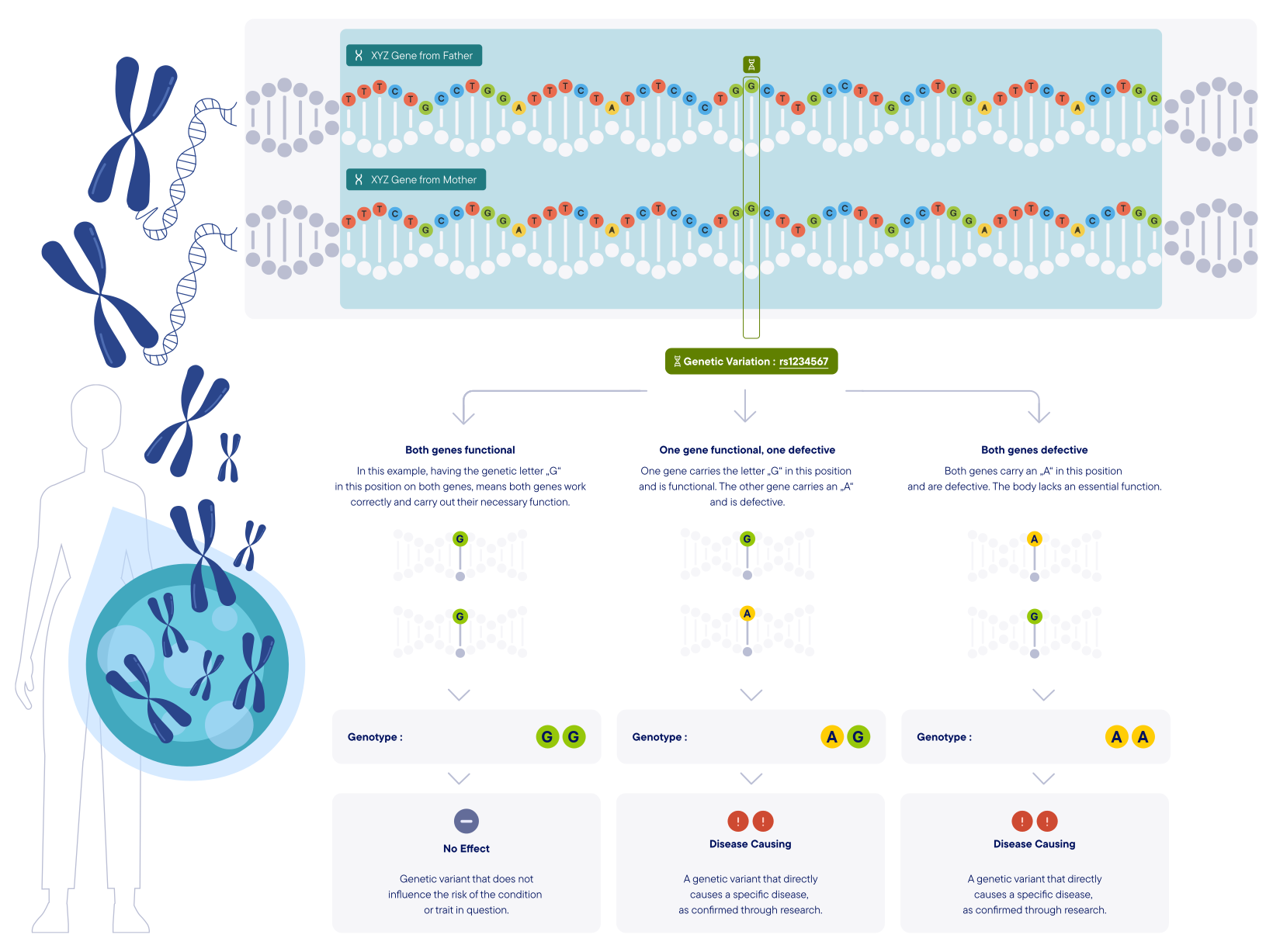
Humans have more than 20,000 genes, each carrying out one or a few specific functions in the body. One gene instructs the body to digest lactose from milk, another tells the body how to build strong bones and another prevents the body's cells from beginning to multiply uncontrollably and developing into cancer. As all of these genes combined are the building instructions for our body, a defect in one of these genes can have severe health consequences.
Through decades of genetic research, we know the genetic code of any healthy/functional human gene. We have also identified that in certain positions on a gene, some individuals may have a different genetic letter from the one you have. We call these hotspots "Genetic Variations" or "Variants" in short. In many cases, studies have been able to show that having the genetic letter "G" in the position makes you healthy, but having the letter "A" in the same position disrupts the gene function and causes a disease. Genopedia allows you to view these variants in genes and summarizes all that we know from scientific research, which genetic letters (Genotype) have good or bad consequences on your health or on your traits.
History
Throughout history, people have described babies who struggled to grow, feed, and meet early milestones, with families recalling similar challenges across generations even when no one knew the cause. Community stories often described the condition as a mix of low muscle tone, developmental delays, and distinctive facial features that doctors could not neatly explain. Some children had seizures; others did not. For many families, this uncertainty meant years of piecing together care without a clear name.
First described in the medical literature as a cluster of findings rather than a single diagnosis, 1q41q42 microdeletion syndrome began to come into focus only as chromosome testing improved in the late 20th and early 21st centuries. Earlier tools saw broad chromosomal changes but missed very small segments. When higher‑resolution tests became available, clinicians started to see a recurring, tiny missing piece on the long arm of chromosome 1. This helped connect scattered case reports and explain why different specialists had been describing overlapping features.
As medical science evolved, the historical record shows why the condition seemed so variable. Before modern testing, doctors labeled children by the most visible feature—such as seizures, feeding problems, or learning differences—so the shared genetic cause remained hidden. Over time, descriptions became more consistent: low muscle tone in infancy, delays in speech and motor skills, and, in some, seizures or structural differences seen on imaging. Importantly, not everyone with 1q41q42 microdeletion syndrome has the same features, a pattern that earlier reports hinted at but could not fully define.
In recent decades, knowledge has built on a long tradition of observation. Chromosomal microarray and, later, genome‑based methods showed that the missing segment can vary in size, which helps explain differences in symptoms and strengths from one person to another. These advances also clarified that many cases happen as new (de novo) changes, while a smaller number are inherited from a parent with a very mild form or a balanced change that went unnoticed.
Looking back helps explain why 1q41q42 microdeletion syndrome was once considered rare and puzzling. It was present but largely unseen, folded into broader categories of developmental disorders. With better tools, the picture sharpened, allowing earlier recognition, clearer counseling about inheritance, and more tailored support. Today’s understanding rests on those early observations, now linked by genetics into one condition with many faces, and it continues to evolve as more families and clinicians share their experiences.